VK

visits on art, design, architecture and literature

Category: ARCHITECTURE & DESIGN

New York “Imperfection in Eero Saarinen’s MIT Chapel” by Andrew Ferentinos

Honoured to present this morning my new contributor writer in my blog, Andrew Ferentinos, architect, industrial furniture designer, based in New York); “Imperfection in Eero Saarinen’s MIT Chapel”  photos @Andrew Ferentinos   www. andrewferentinos.com and follow on Instagram: Ferentinos
01

photo @Andrew Ferentinos

The MIT Chapel by Eero Saarinen has always intrigued me. The architecture is simple and direct. It embodies a rare universality and timelessness.

The chapel was dedicated in 1955 by the Kresge Foundation for The Massachusetts Institute of Technology. Its mission is to serve as a non-denominational space of worship. As the dedication at the entrance states, its purpose is “to maintain an atmosphere of religious freedom wherein students may deepen their understanding of their own spiritual heritage.” In other words the chapel must resonate and evoke feelings and thoughts with people across culture and time.
02

photo@Andrew Ferentinos

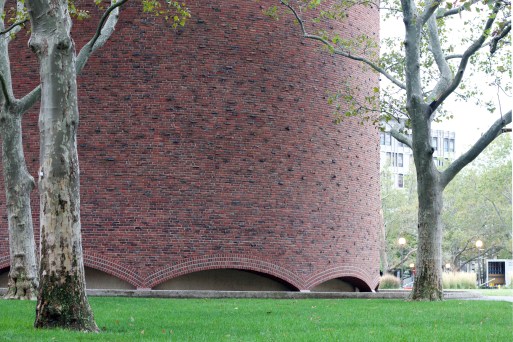
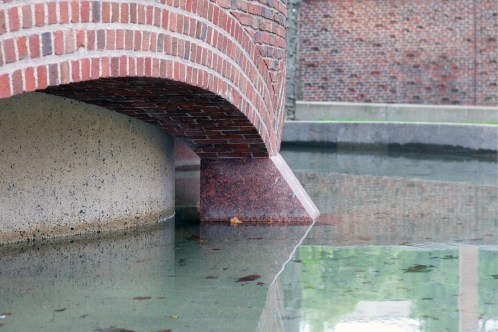
Upon approach, we see a cylinder sitting on top of a shallow pool of water. Low arches of various sizes skip across the pool and seem to hover. Underneath we see a concrete shell that is separate from the cylinder and barely visible. There are no windows in this large volume. We only see a blank wall and anticipate the interior.

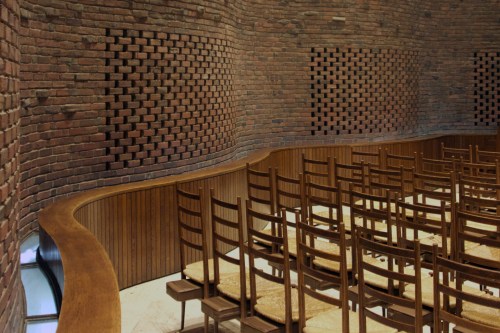
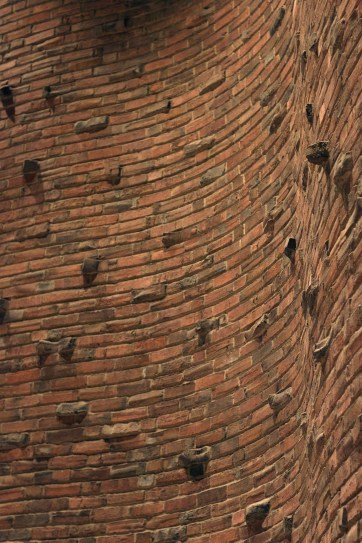
The blank wall has an oddness about it. The brick has an irregular texture. Saarinen adopted rejected bricks from a brickworks precisely for the beauty in their imperfection, a subtle statement that goes beyond brick and mortar and speaks about the purpose of the chapel.
03

photo @Andrew Ferentinos

We enter the vestibule. It is dark and intimate. This long and slender space leads to the chapel through a small opening. As our eyes adjust to the dim light, the dark glass walls of the vestibule change color. They brighten. Like a monochromatic Ad Reinhardt painting, the dark glass releases subtle shades of color. Each pane of glass, like the brick, appears hand made reflecting the imperfections of the brick.
04

photo@Andrew Ferentinos

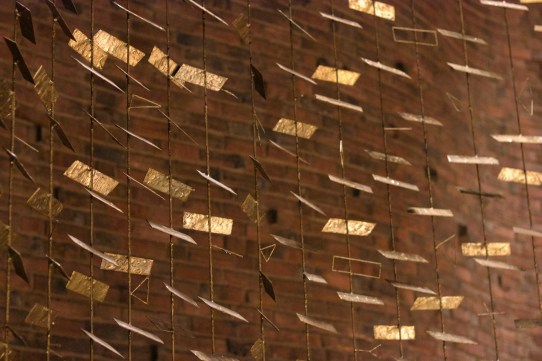
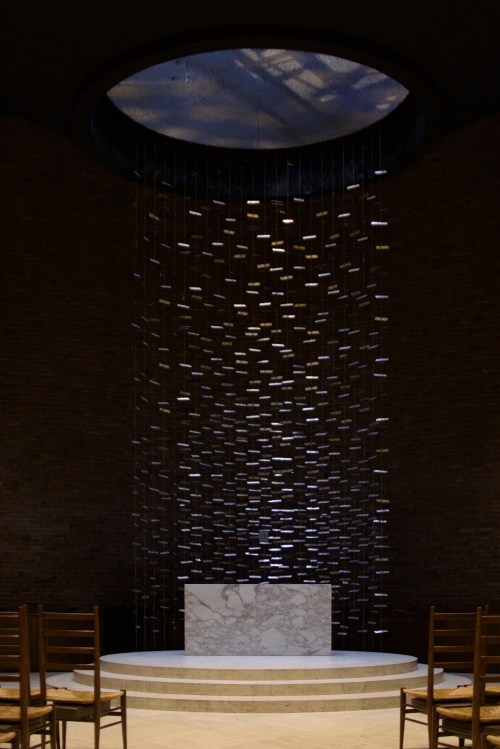
When we enter the chapel we are struck by what we see. We are caught between opposites. Our attention focuses on a perfectly geometric and rectangular marble altar at the center of the space. In the background, the interior walls undulate and radiate. The shimmering gold sculpture by Harry Bertoia flutters down from the oculus above like leaves falling to the ground. The varying angles of the petals mirror the varying angles of the imperfect brick. The entire chapel is a frozen moment in time and space except for the one solid piece of marble in the center. It is our only sense of stability, perfection, and permanence in an otherwise dynamic and irregular field. (Andrew Ferentinos) 
06

photo@Andrew Ferentinos

05

photo@Andrew Ferentinos
Andrew Ferentinos opened his architecture office Ferentinos Architecture in 2012 after working in New York City for such prestigious architects as Skidmore, Owings & Merrill (SOM), Raimund Abraham, and Francois de Menil.
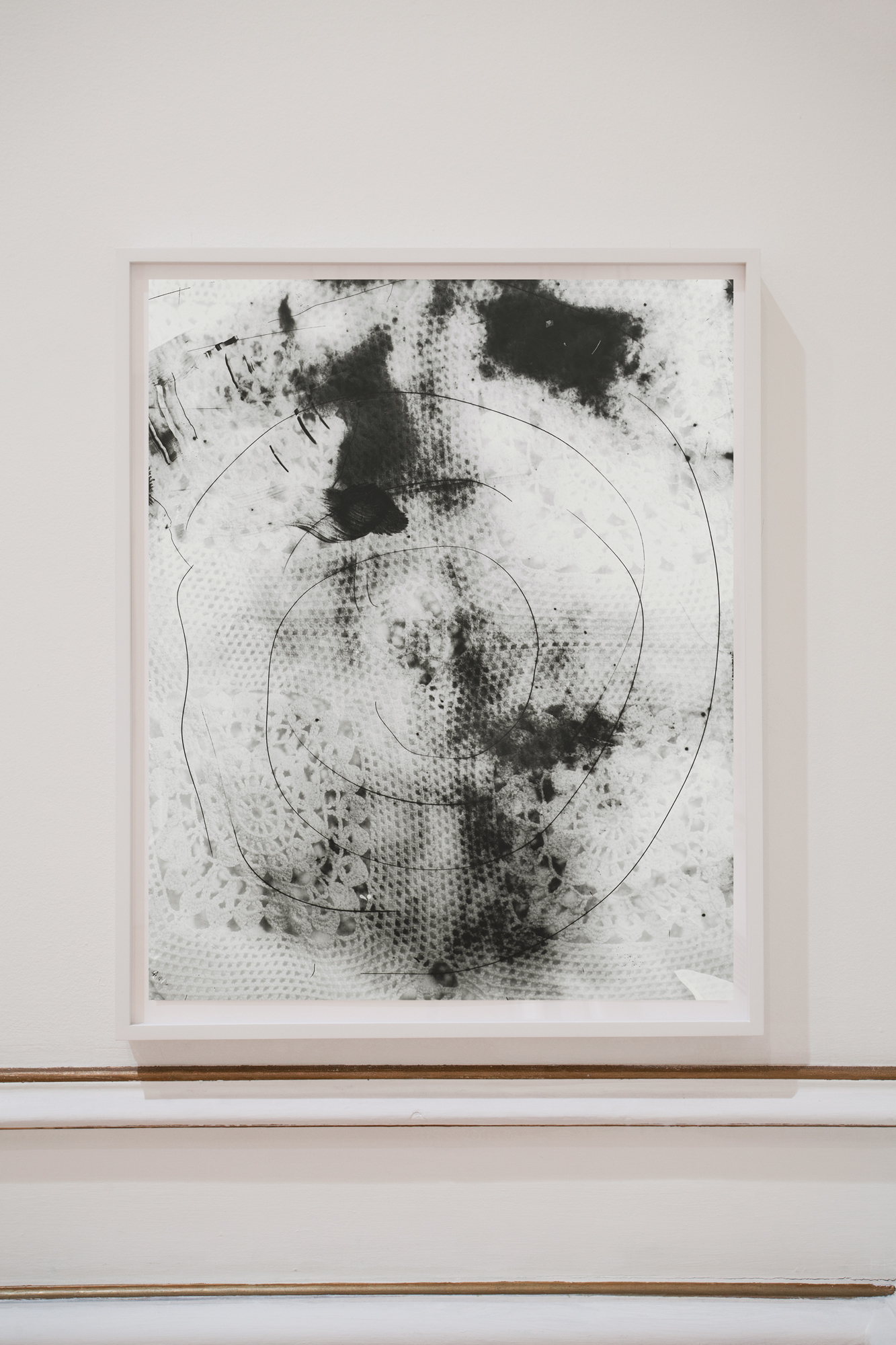
Ferentinos studied architecture and art at The Cooper Union in New York City and at Massachusetts Institute of Technology. He received a BArch from Cooper Union and an advanced Masters degree from MIT. He is a professionally licensed architect.   (follow his amazing Instagram: Ferentinos)
Munich; “Murano. Milano. Venezia. Glass” at The Design Museum

Curators: Dr. Xenia Riemann, Dr. Josef Straßer ; Assistant curator: Nadine Engel; July 1, 2016 – Oct. 16, 2016 (Die Neue Sammlung, Pinakothek der Moderne,Rotunde, 2nd floor)

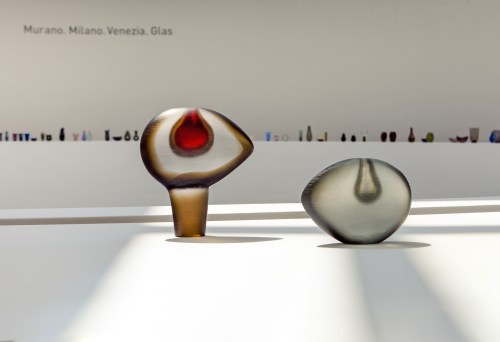
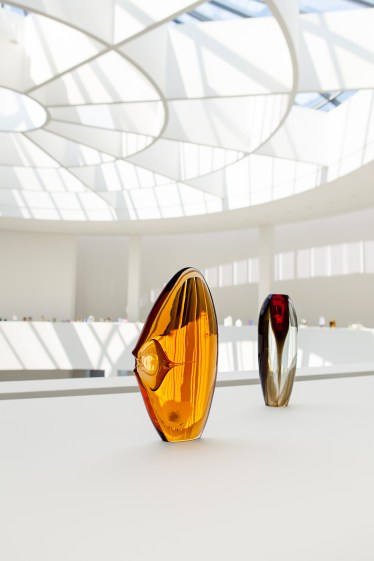
While I am enjoying some days in Maremma/Toscana,  I reflect back to Munich with a beautiful exhibition that opened few weeks ago in Munich “Murano. Milano. Venezia, Glass” with around 200 object and accompanying drawings from the Holz Collection (Berlin) which is deemed one of the most important collections of glass from Murano world wide.

Murano. Milano. Venezia. Glas - die Ausstellung der Neuen Sammlung
Vases “A Piume” (Installation view), Archimede Seguso,
c. 1956, XXVIII. Biennale di Venezia, 1956, Sammlung Holz, Berlin, Photo: Anna Seibel

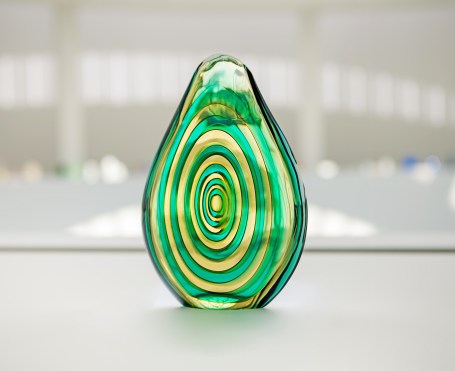
The international exhibitions held at the Triennale di Milano and the Biennale di Venezia are barometers of the most significant developments in twentieth century contemporary design and art. It is therefore no coincidence that Murano glass regularly attracts awards at both Milan and Venice. Having resurrected a range of centuries-old techniques, glassmakers such as A.V.E.M, Archimede Seguso, Barovier & Toso, and Venini learned to apply this knowledge in new and ingenious ways. Their work is a synthesis of the master glassmakers’ craftsmanship and the designers’ artistry. The objects they create attest to a successful renaissance of glass design that continues to the present day. (edited text/press/ Die Neue Sammlung) 

4_0556_Img12549

Vase “Cinese”, Carlo Scarpa for Venini, c. 1940, XXII. Biennale di Venezia, 1940,  Sammlung Holz, Berlin, Foto: Atelier  Martin Adam, Berlin

“…Murano is the embodiment of Italian glass design. Venice had advanced to being a centre for Middle European glass art as early as the 13th century and when the entire glass production was moved to the neighbouring islands, glass from Murano gained world-wide importance from the 14th century onwards. As the Republic of Venice’s power dwindled, glass production on Murano also declined. Yet it was revived during the 19th century and enjoyed another peak in the 1950s and early 1960s.“(Angelika Nollert,director of Die Neue Sammlung  at preface of published book/catalogue of the exhibition )

Calice a spirale”, an object from the Artisti Barovier factory, is one of the oldest pieces. The cup on a spiral-shaped base went on display during the very first Venice Biennale in 1895. While the glass objects realized prior to the First World War were typically designed by the factories themselves, from the 1920s on designers and artists were brought in to decide the shape and appearance of objects. Collaborating closely with the glass-makers enabled them to explore the creative and technical scope glass afforded. Indeed, opaque vessels by architect Carlo Scarpa inspired by Chinese vases stand for a new design idiom as championed by the Venini glass factory……. (Die Neue Sammlung press)

Murano. Milano. Venezia. Glas - die Ausstellung der Neuen Sammlung

Objects “Vetro Pesante”(installation view), Alfredo Barbini, c. 1962, XXXI. Biennale 1962, photo:Anna Seibel

“…Workshops such as A.Ve.M., Archimede Seguso, Barovier & Toso or Venini managed to develop a contemporary formal language by employing new shapes and decors and in this way assumed a leading role alongside countries such as the Netherlands, the Scandinavian countries, France or the former Czechoslovakia. In the 1950s and 1960s in particular, peak performances were achieved in Murano glass in terms of an autonomous design that certainly possessed analogies to abstract art. “(Angelika Nollert,director of Die Neue Sammlung; preface in the  book/catalogue of the exhibition )

“Barovier is one of the oldest Italian glassmakers and family businesses, founded in 1291 on the island of Murano. Murano was where the glaziers had to do their work to prevent the risk of fires in the cities as well as to preserve the secrets of the trade. The first member of the family on record is Jacobello in 1295. Two centuries later, Angelo Barovier became a great name creating precious pieces, one of which; the ‘Barovier wedding cup’ is now in the Murano museum and said to date from 1450.” (Barovier & Toso,biography at Rose Uniacke

06_22000_2a-200x300
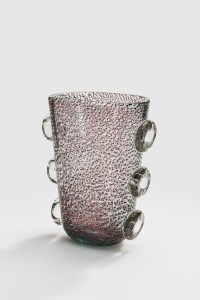
Vase, c. 1935/36, Ercole Barovier for Barovier & Toso, XX. Biennale di Venezia, 1936 Sammlung Holz, Berlin, Foto: Atelier Martin Adam, Berlin

The unusual designs by Ercole Barovier or the polychrome “Oriente” vases by painter Dino Martens attest to a great delight in experimentation during the 1950s.  The popular “Pezzati”, masterminded by the versatile Fulvio Bianconi, or the sophisticated “Merletti” by Archimede Seguso, stand for excellent artistry and a complete mastery of technical challenges. Fratelli Toso were especially renowned for black glass designs.

08_IMG_5955_Foto-Anna-Seibel-300x200
Vase “Diamantato“ (Installation view), c. 1968, Ercole Barovier for Barovier & Toso, XXXIV. Biennale di Venezia, 1968,
Sammlung Holz, Berlin, Photo: Anna Seibel

Murano. Milano. Venezia. Glas - die Ausstellung der Neuen Sammlung

Vase “Siderale”(installation view) c. 1952, Flavio Poli for Seguso Vetri d’Arte, XXVI. Biennale di Venezia, 1952, photo: Anna Seibel

Influenced by Abstract Expressionism, the works by artist Luigi Scarpa Croce are rarely exhibited. The “Rotellato” pieces by Barovier & Toso demonstrate that in the 1960s glass objects were more colorful and decorative, while the shapes became more classical and plain. Finally, in the early 1970s large vessels and simple interlayer techniques produced spectacular results. (Die Neue Sammlung, press)

Among the few international designers represented in shows in Milan and Venice were the Swedish artist Tyra Lundgren, American sculptor Thomas Stearns or the two Swedish designers Birgitta Karlsson and Ove Thorssen.  They all worked with Venini, one of the world’s most famous makers of Murano glass.

A beautiful book/catalogue is published for the exhibition:curatorial team: Dr Xenia Reimann and Dr Josef Strasser  who developed the exhibition concept with Steffen John (who maintains the Holz collection).

Murano. Milano. Venezia. Glas - die Ausstellung der Neuen Sammlung

Vases “Pesce“ and “Tulipano“ (Installation view), c. 1960,
Alfredo Barbini, XXX. Biennale di Venezia, 1960,
Sammlung Holz, Berlin, Photo: Anna Seibel

Basel “Maxeville Design Office” by Jean Prouvé unveiled by Galerie Patrick Seguin

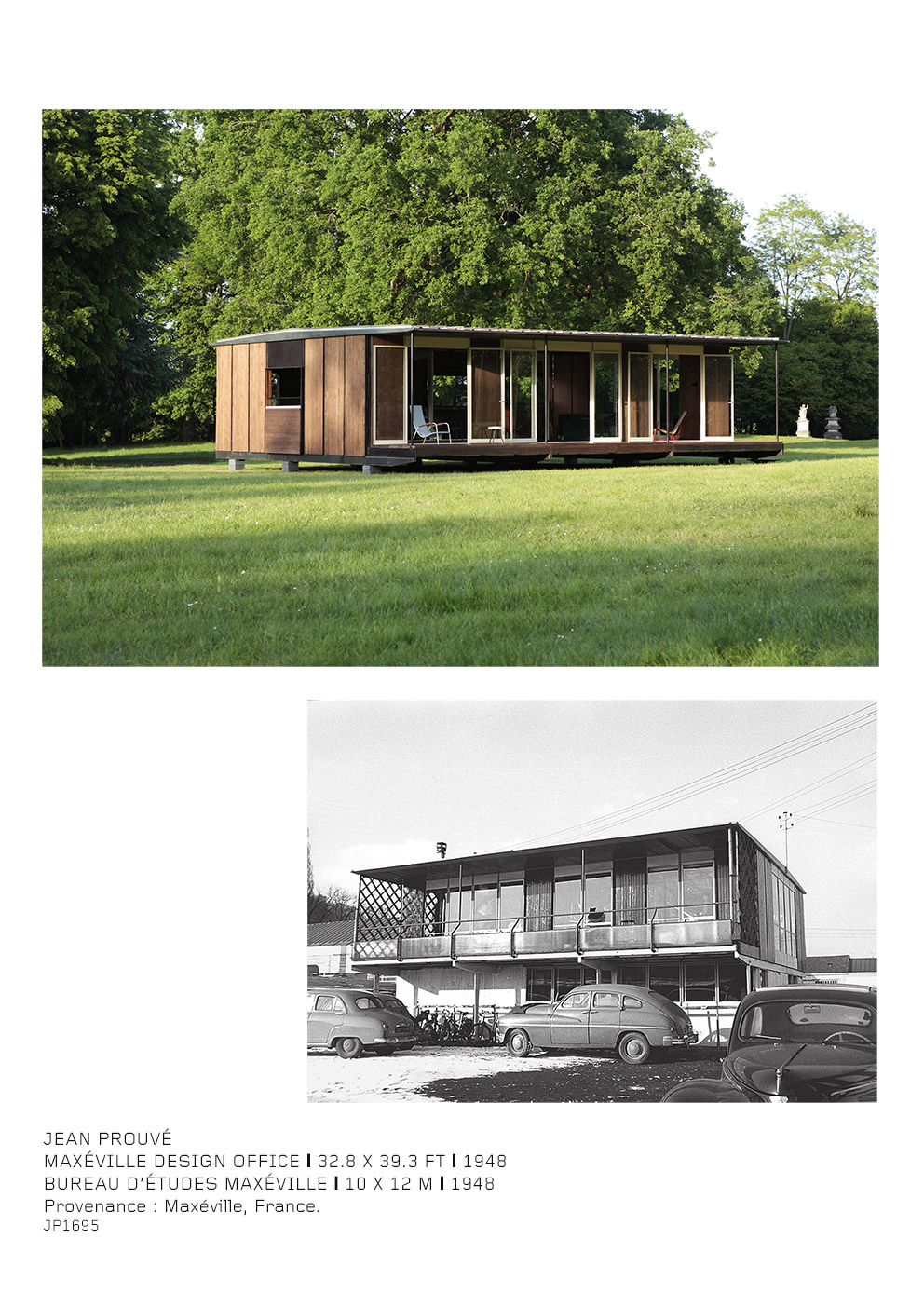
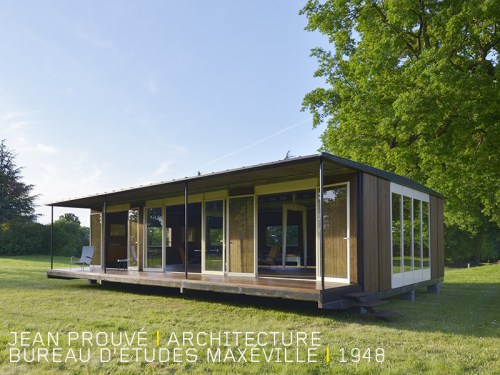
This last June at Design Miami/Basel, Galerie Patrick Seguin, frequent purveyors of Prouve’s work  unveiled  the Jean Prouvé’s Maxéville Design Office to the public for the first time, lovingly restored down to the last screw. It was presented at the Design Miami/Basel collectors’ fair in Switzerland, taking place from 14 to 19 June 2016, along with documentation of the restoration process.

bureau-etude-jp1695a

photos@Courtesy Galerie Patrick Seguin

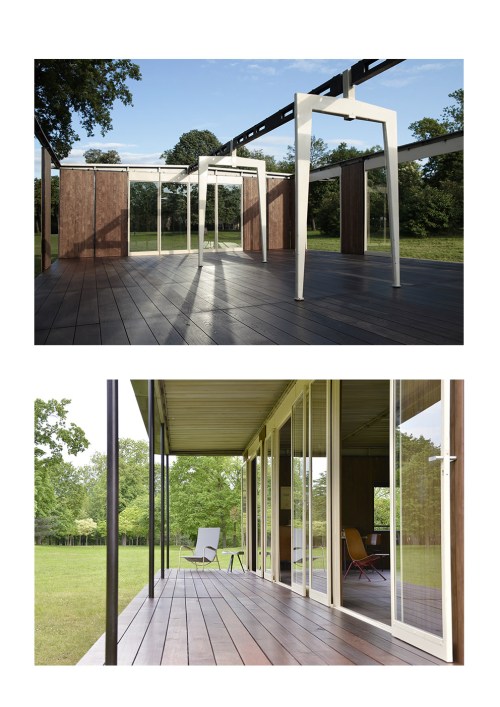
This piece of architecture was originally produced in 1948 as a prototype for the reconstruction after the war. Prouvé decided to place the house in his own plant in Maxéville, where it became the Ateliers Jean Prouvé Design Office; as demountable houses were still a little too avant-garde then, no serial production were made.  However, the  buildings of the plant were demolished except for the Design Office who luckily survived; it might now be considered as a rare witness of XXth century modern architecture.

Born in Nancy, France, in 1901, Prouvé rose to become one of the most important architects and designers of the mid-20th century. In 1947 Jean Prouve moved his workshop to Maxéville, a suburb outside of Nancy, in eastern France, and his company became a hotbed of innovative constructional thinking in France. Technicians, draftsmen and laborers worked together in an ambience of mutual respect. This version of 10 x 12 meter demountable house with a 2 x 2 canopy was originally produced in 1948 as a prototype for the reconstruction after the War. Intended as a demonstration model that would convince the public of the virtues of prefabricated housing, this was a copybook model: the use of structural axial portal provides an open, fluid plan rendered highly adaptable by interchangeable partitions and one-piece glazed or solid facing panels. (Galerie Patrick Seguin press) 

set up of the house http://www.patrickseguin.com/en/videos/maxeville-design-office/

Thanks to Patrick Seguin, the French design dealer who owns the world’s largest collection of Prouvé architecture – 23 houses. Founded in 1989 to promote 20th-century French design, Galerie Patrick Seguin has been leading the resurgence of interest in Prouvé’s work recently. They have hunted down and restored a variety of examples of his demountable houses. With 19 of these structures ranging from 172 to 2054 sq. ft., the gallery has worked strenuously to promote Jean Prouvé’s architecture through numerous exhibitions and fairs throughout the world, including at the MoMa in New York, DesignMiamiBasel/, the Venice Biennale, and the Pinacoteca Govanni e Marella Agnelli in Turin.

bureau-etude-jp1695b

 photos @Courtesy Galerie Patrick Seguin
Patrick Seguin discovered the Maxéville which was covered as a club called Le Bounty, in an industrial suburb of the French city of Nancy. Seguin knew the Maxéville Design Office might still exist. He had driven by the original site where it had stood. And he had seen Le Bounty without realising that it was indeed the Prouvé structure – for it was now covered in blue aluminium siding and stuck on top of another building. Unrecognisable, it was hiding in plain sight. (Amy Serafin, in Wallpaper, june 15, 2016)

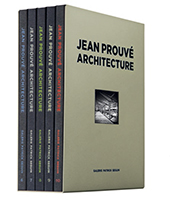
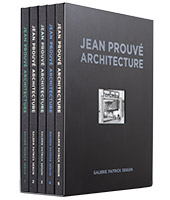
Accompanying its exhibitions, Galerie Patrick Seguin has also developed an editorial line of comprehensive publications and is currently releasing a set of 5 monographs dedicated to Jean Prouvé’s demountable architecture, illustrated with archival and contemporary photographs.
These 5 volumes are the first of 15 that will be released in 3 separate boxed sets over the course of 2015 and 2016.

jean-prouve-architecture-5-volume-box-set-2coffret1

designmiami-basel-news


Athens; “Wols & Eileen Quinlan”at Museum of Cycladic art; curated by Helena Papadopoulos

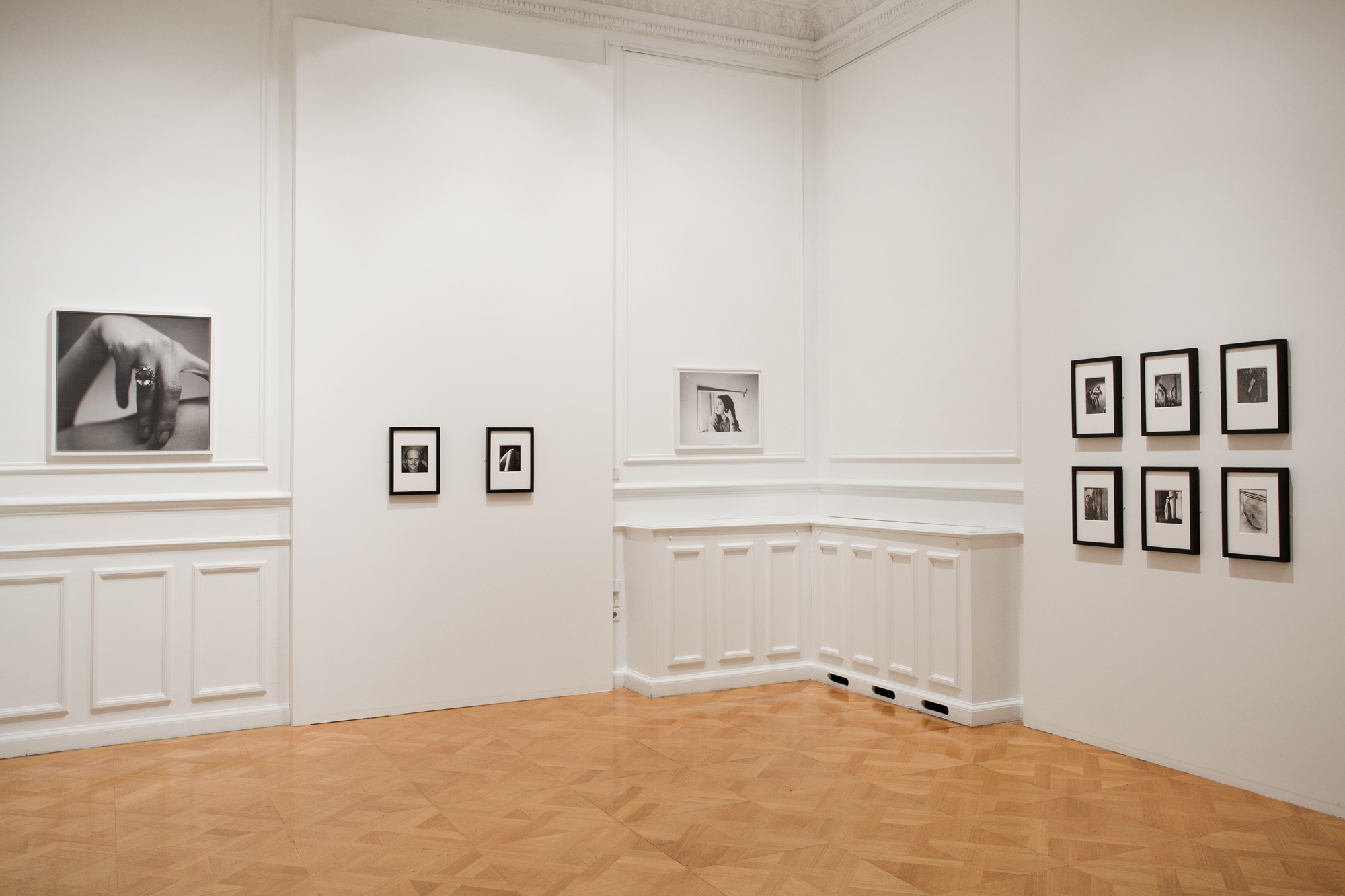
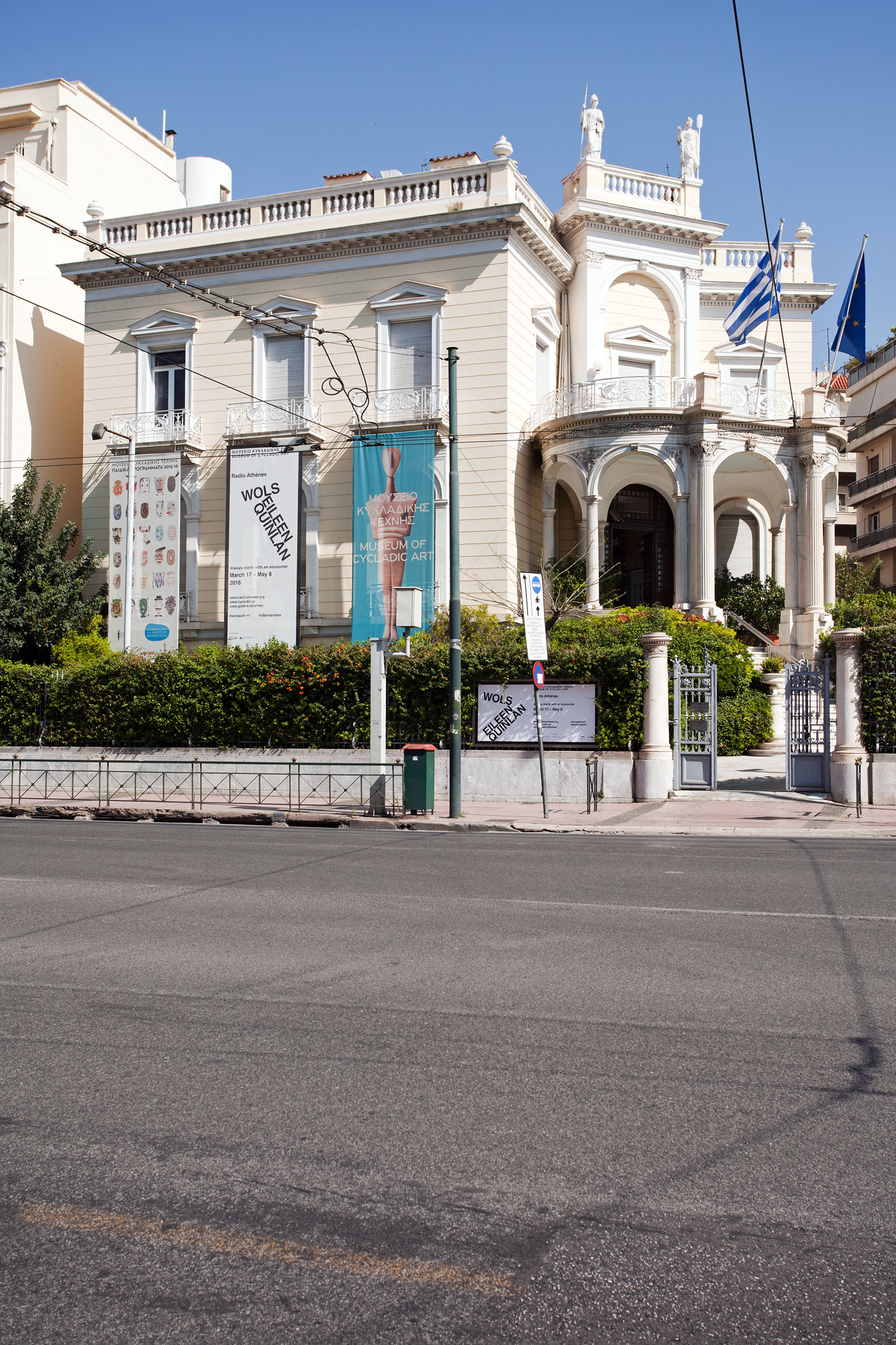
During my short visit in Athens 2 weeks ago,  I had the pleasure and honour to see a beautiful, vibrant and poetic exhibition at the Museum of Cycladic Art, “Always starts as an encounter; Wols /Eileen Quinlan”curated by Helena Papadopoulos &  produced by radio athènes.  (March 17-May 8, 2016) . Walking thru the exhibition with my long time friend lovely Helena whom I fully admired for her curatorial practice for years. Helena so accurately  had been preparing  this exhibition from the last 2 years.  An artist talk and lecture with Quinlan and art historian Olivier Berggruen took place on March 18, 7PM

Wols_Quinlan_Radio_Athenes21

Wols_Quinlan_Radio_Athenes09

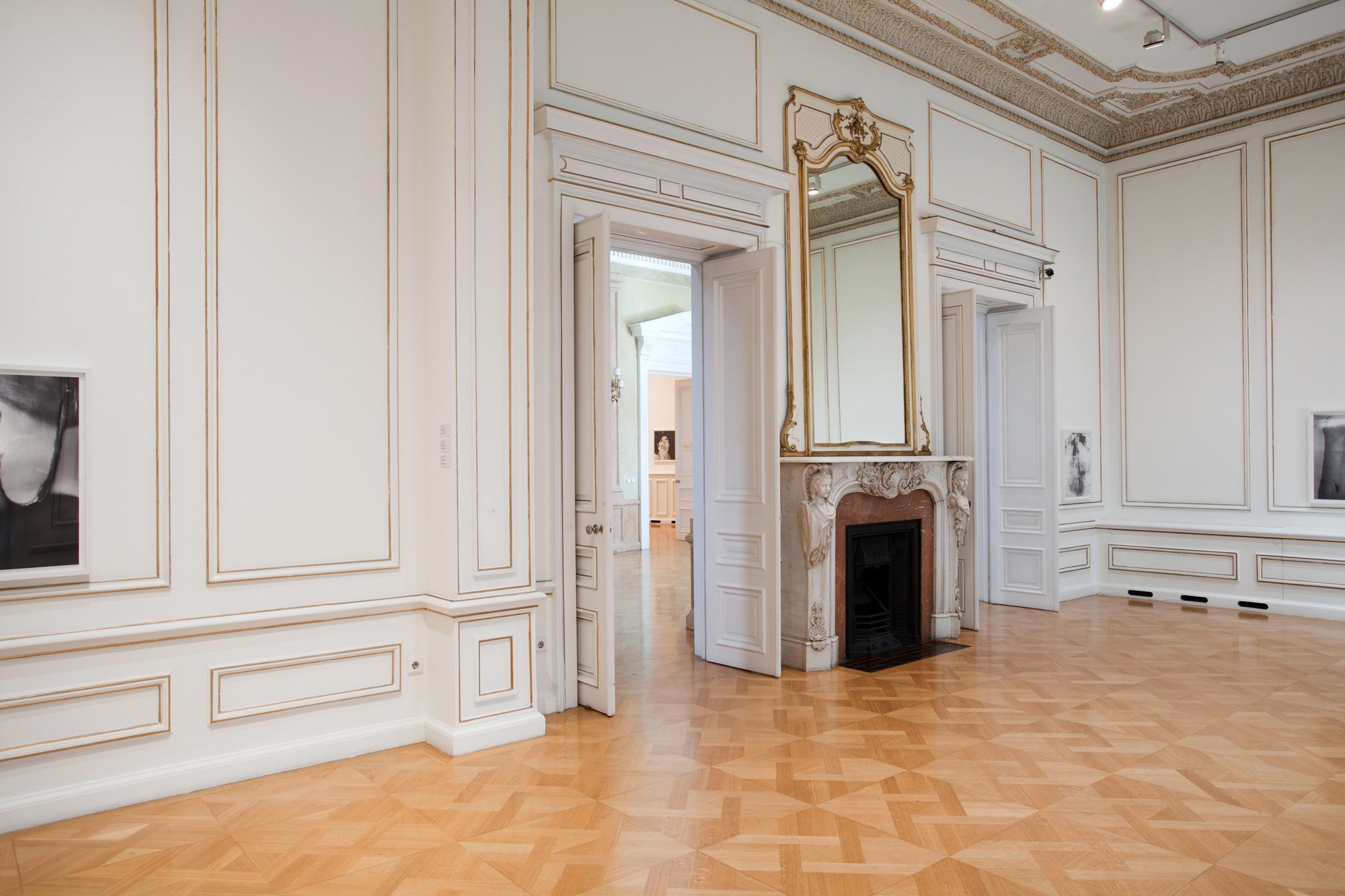
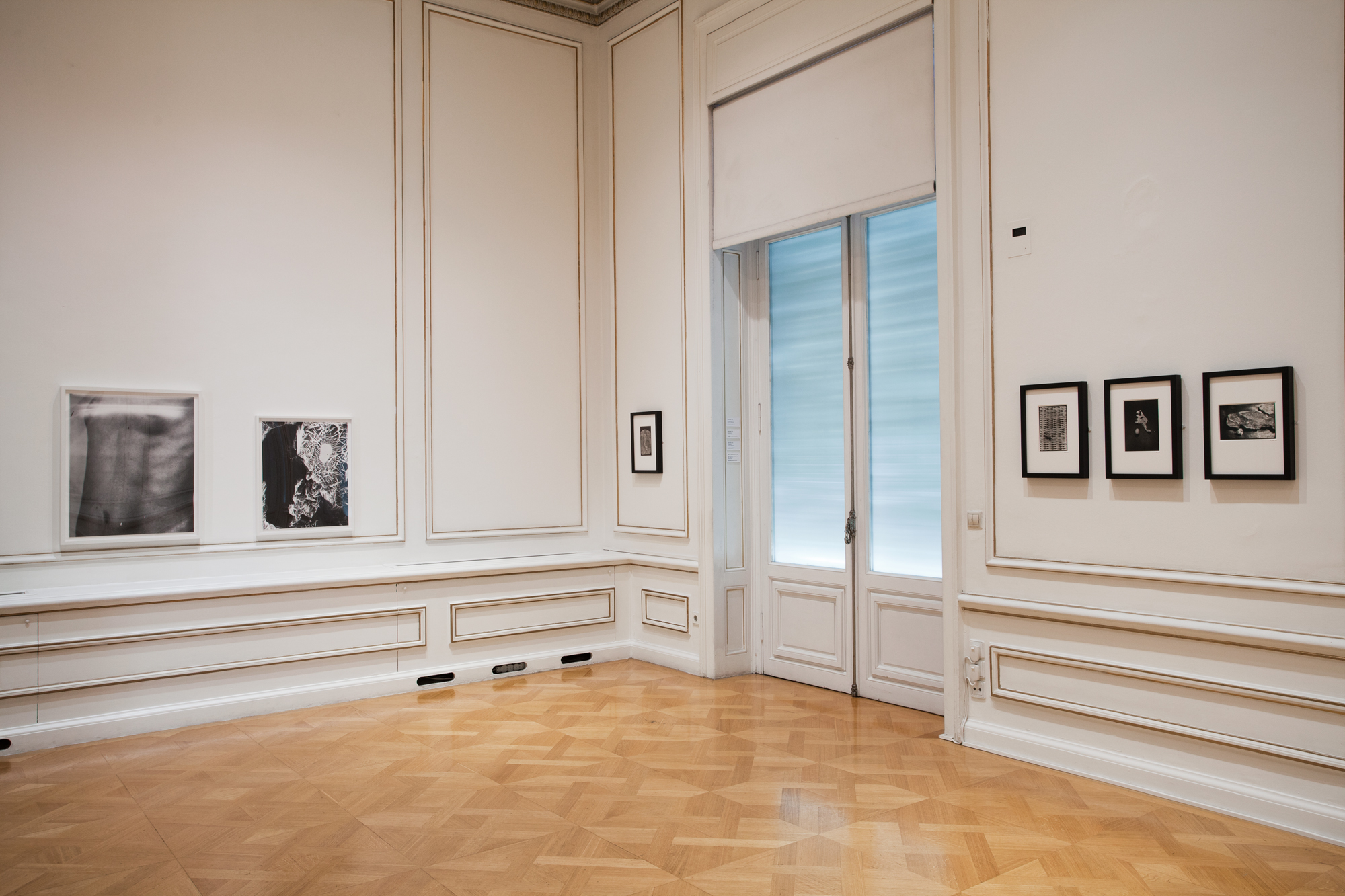
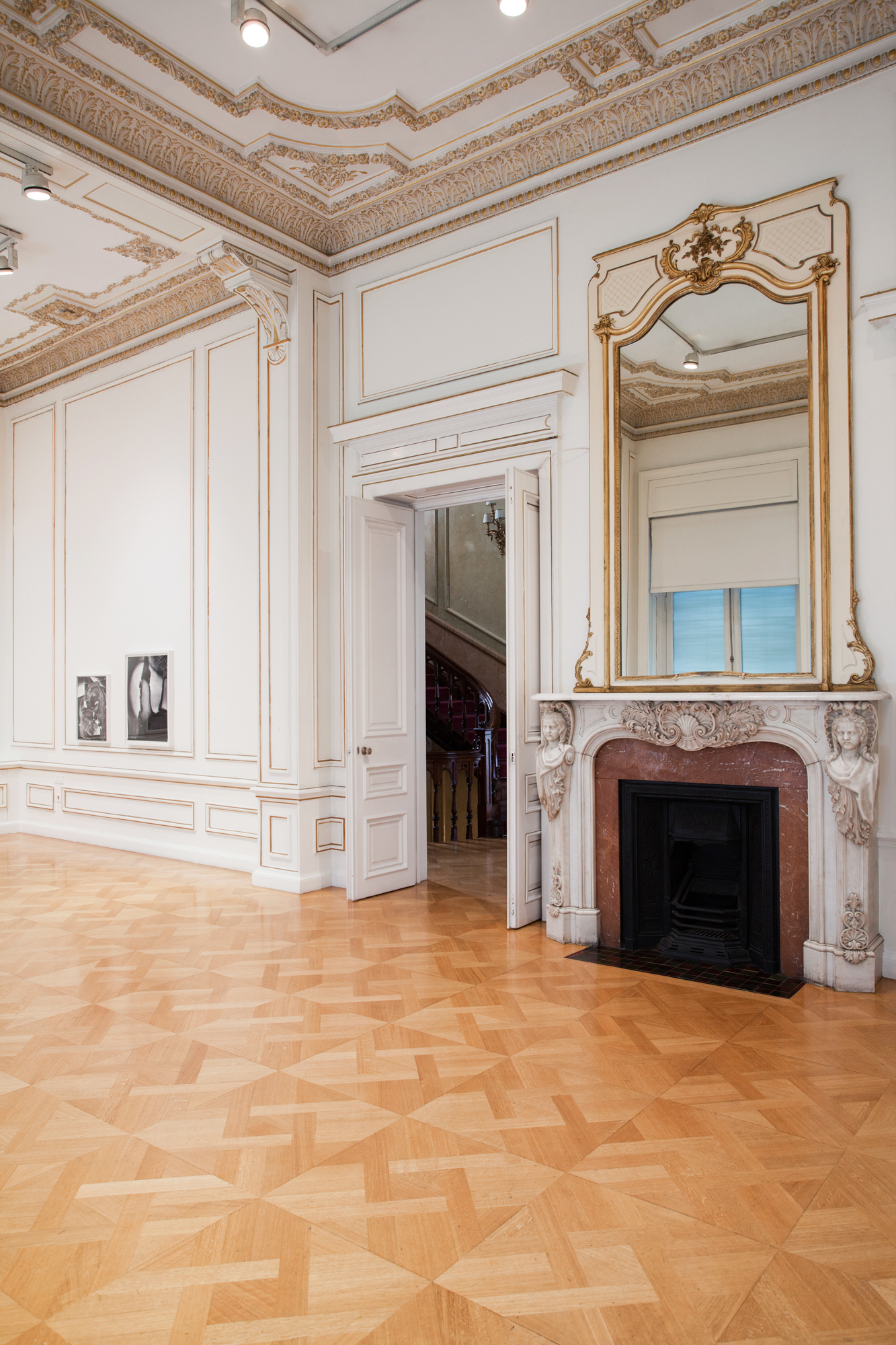
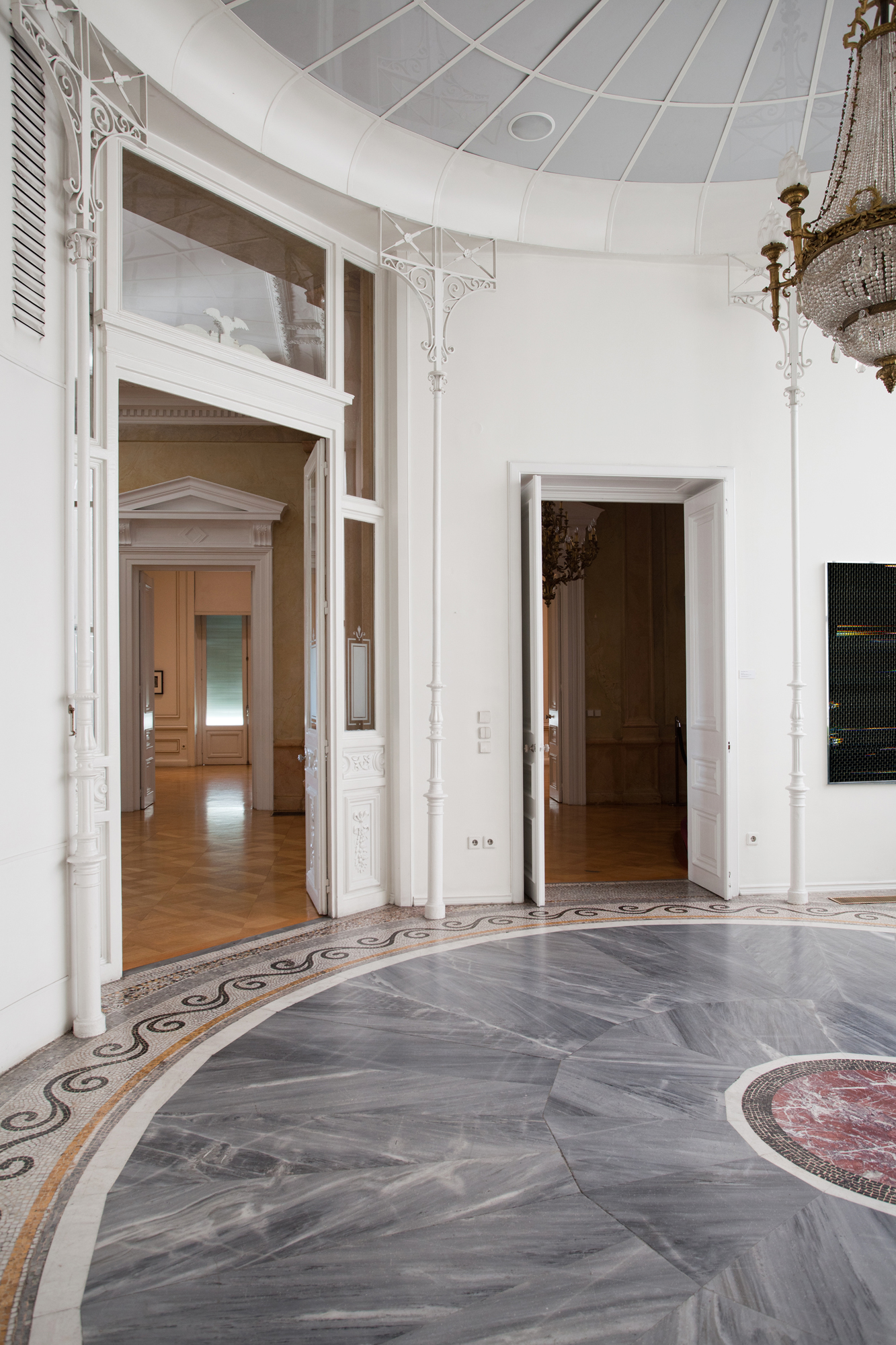
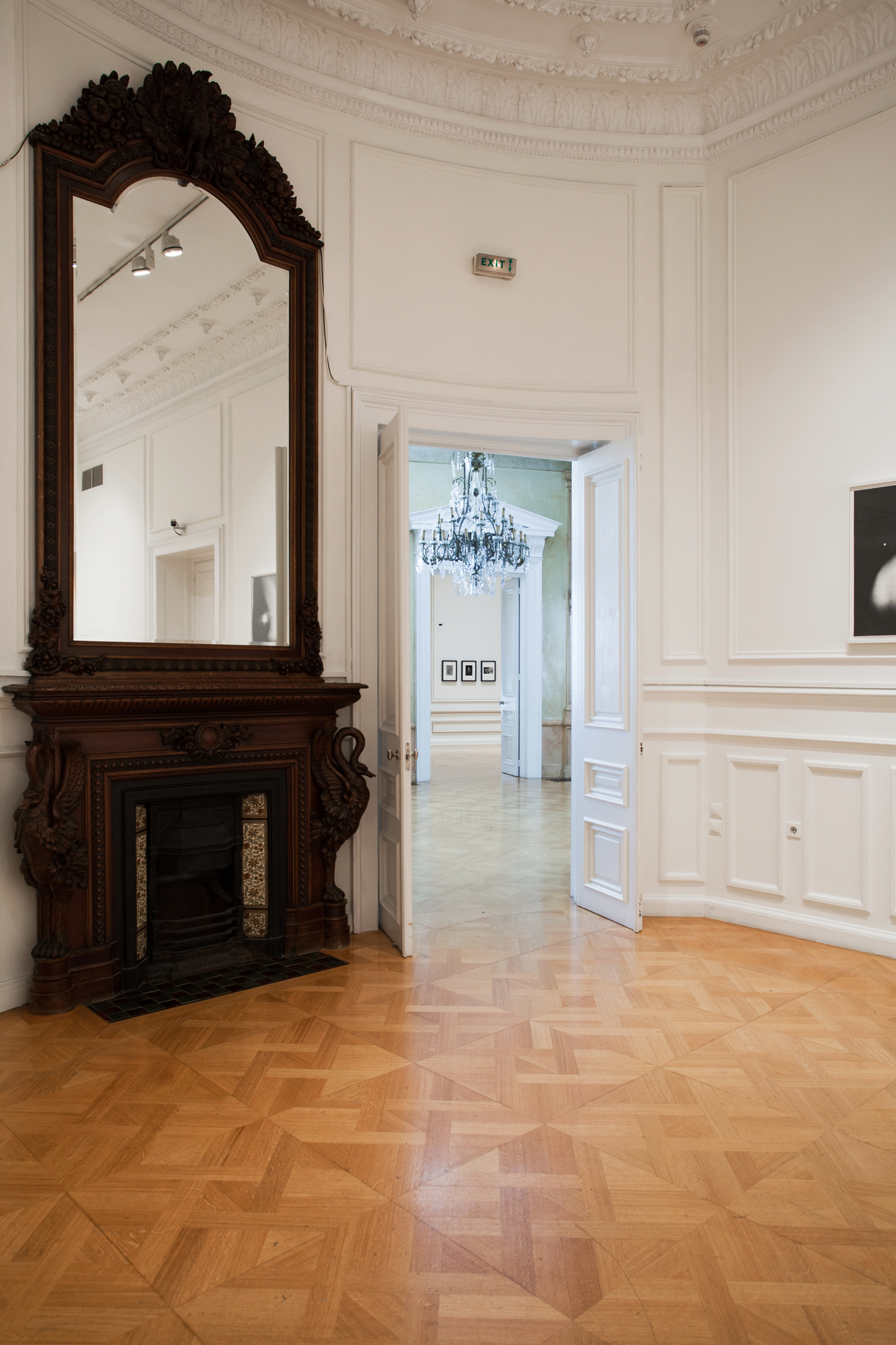
The Stathatos mansion : A marble staircase leads up to the elevated ground floor of the mansion, to the dining room and the main drawing room, as well as a cast-iron rotunda axial to the entrance. No alterations have been made to these rooms, which have retained their original gilded stucco mural decorations, chandeliers, and fireplaces (during exhibitions parts of these are covered by wooden revetments).

Wols_Quinlan_Radio_Athenes22jpg

Wols_Quinlan_Radio_Athenes17

“Always starts as an encounter” Wols/Eileen Quinlan,
curated by Helena Papadopoulos, produced by Radio Athènes
Museum of Cycladic Art, Athens; photos: Yiannis Hadjisaslanis
courtesy of Radio Athènes

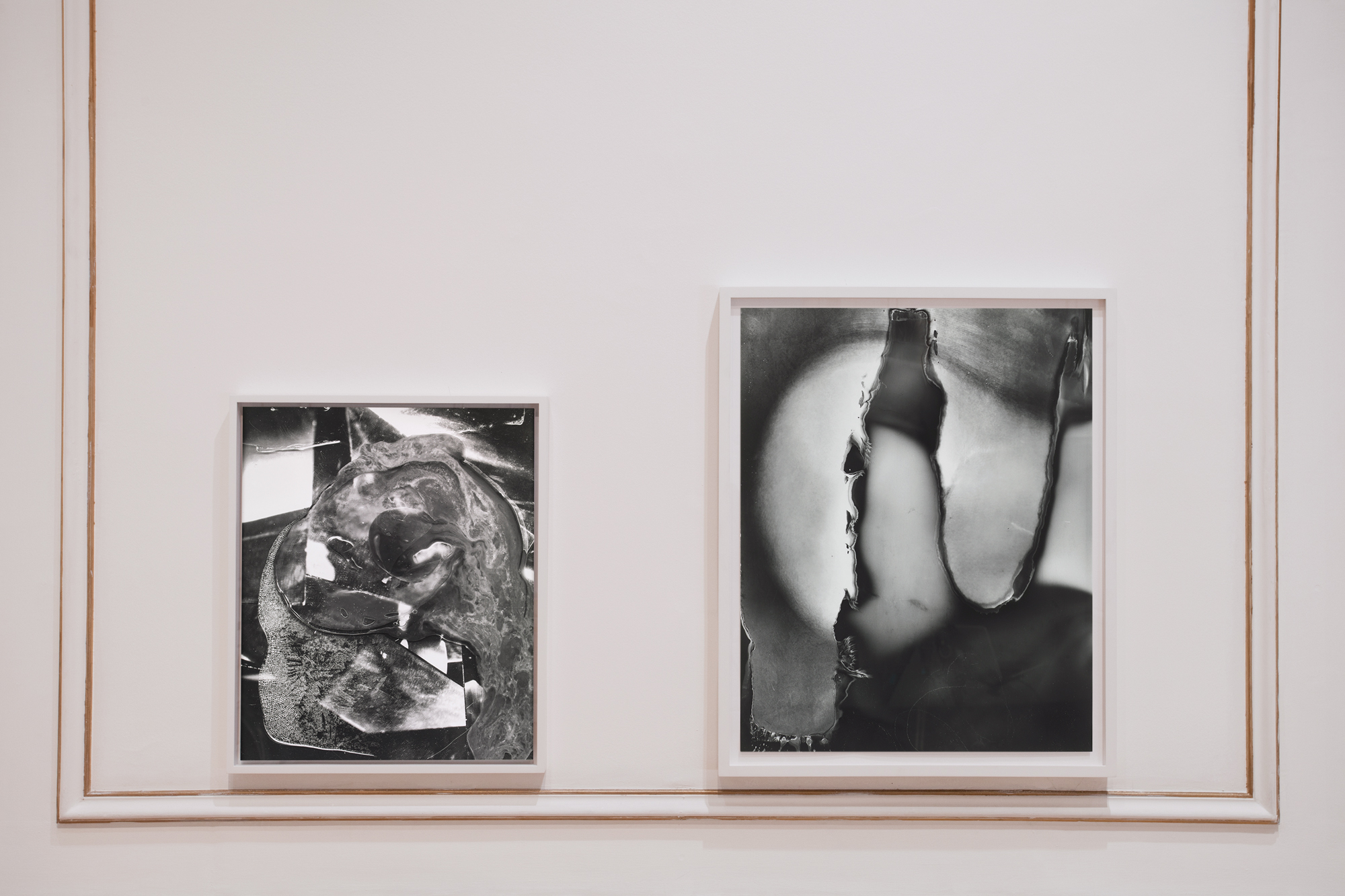
Quinlan and Wols are separated by time, historical circumstances and distinct photographic processes. And yet, their works embody the ambiguity of time, and yet both appear to delegate a part of their process to matter itself, as they travel across several genres: ‘por- traits’, ‘abstractions’, ‘fashion photographs’ and ‘still lives’. (curator’s notes)

[…] why is there a shadow in a kitchen, there is a shadow in a kitchen because every little thing is bigger” writes Gertrude Stein under the entry “Roastbeef” in the section Food of her 1914 volume “Tender Buttons” in which she looks at everyday, familiar, unexceptional ob- jets. (curator’s notes) 

Wols_Quinlan_Radio_Athenes10

Wols_Quinlan_Radio_Athenes07

“Always starts as an encounter” Wols/Eileen Quinlan,
curated by Helena Papadopoulos, produced by Radio Athènes
Museum of Cycladic Art, Athens; photos: Yiannis Hadjisaslanis
courtesy of Radio Athènes

Unpacking the photographic images of German born Alfred Otto Wolfgang Schulze (1913-1951), known as Wols, and American artist Eileen Quinlan (*1972) a similar encounter with familiar objects, -cheese, beans, mud, esh, liquids, cloths, a hand or a face- pro- duces indelible imprints, representations of temporal operations and elemental materiality.

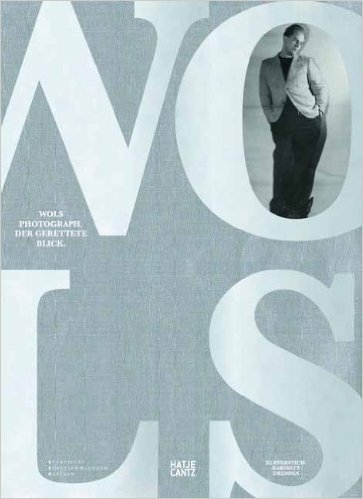
Wols, cited by art historians as one of the three pioneering art informel artists, together with Jean Fautrier and Jean Dubuffet, became known post-humously for his watercolours, drawings, writings and his heavily worked paintings with scratched layers of oil of the mid 1940s. His photographic work of the 1930’s had been largely ignored until photography historian Volker Kahmen and photographer Georg Heusch produced modern prints in 1976 from negatives made available by Wols’s sister, Dr. Elfriede Schulze-Battmann. Wols made numerous portraits, close-ups of pavements and dilapidated walls, rocks and beaches and was commissioned to photograph the ‘Pavillion de l’ Élégance’ in the 1937 Paris World Fair. Often working with borrowed cameras and more often than not unable to procure materials to print his negatives, he used his kitchen as makeshift studio and darkroom. It is in the kitchen that Wols produced some of his most outstanding images: “He went shopping and cooked Spanish or Chinese…..but first everything was photographed [raw]-the rabbit, the onions”, writes his wife Gréty, in a 1966 letter. Defamiliarizing the ordinary through the devolution of objects, Wols still lifes echo Georges Bataille’s writings on the ‘informe’ and ‘base materialism’. They are symptomatic of a feeling of insecurity permeating Paris in the 1930s, an atmosphere mirrored, one can claim, in today’s uncertain developments and imminent changes in Europe. (curator’s notes and exhibition press release).

41qq6LjR32L._SX361_BO1,204,203,200_

Born in Berlin in 1913, Wols left Germany in 1932 to live in France except for a two-year residence in Spain. After the outbreak of the Second World War, he was interned for over a year in various camps. After his death in 1951, Wols was represented in the rst three Documenta exhibitions (1955, 1959, 1964) and at the Venice Biennale in 1958. Major exhibitions of his photographic oeuvre include: Wols, der gerettete Blick, curated by Michael Hering, Kupferstich Kabinett, Staatliche Kunstsammlungen, Dresden (2013) and Martin Gropius Bau, Berlin (2014); Wols Photographs, curated by Christina Mehring, Busch-Reisinger Museum, Harvard University Art Museum, Cambridge, MA (1999) and Wols, Photographe, curated by Laszlo Glozer, Centre Georges Pompidou, Paris (1980).

Wols_Quinlan_Radio_Athenes03

the exhibition continuer in the cast-iron rotunda axial to the entrance

Wols_Quinlan_Radio_Athenes05

Wols_Quinlan_Radio_Athenes20

Wols_Quinlan_Radio_Athenes28

“Always starts as an encounter” Wols/Eileen Quinlan,
curated by Helena Papadopoulos, produced by Radio Athènes
Museum of Cycladic Art, Athens; photos: Yiannis Hadjisaslanis
courtesy of Radio Athènes

Born in Boston in 1972, Eileen Quinlan lives and works in New York. She has been explor- ing the layers that constitute the photographic apparatus, the materiality of both image and lm, often turning the transformative processes that take place, into her very subject. She has produced ‘still lifes’, ‘abstractions’ and ‘portraits’ oscillating between colour and black and white in order to ‘posit neither chromatic register as truer than the other’, as she notes. She sometimes shoots with outdated polaroid lm, or adds tequila in the water in which the lm may be bathed for weeks. Quinlan’s manipulations of the surface of her negatives include abrasions with steel wool and ballpoint pens, ngerprints and liquids, her active interventions resulting in textured prints. Matter (the body or the photographic materials) and memory (as after image) are inscribed within a medium which is treated ‘not as uncon- ditional reception of the perceived world, but as a position within a scopic regime mediated and in ected by barriers, screens, curtains’. (curator’notes and exhibition’s press release)

Eileen Quinlan teaches at Bard College’s Milton Avery School of the Arts. Her work has been featured in solo and thematic exhibitions internationally including Image Support, Ber- gen Kunsthall, Bergen (2016); Lens Work, LACMA, Los Angeles, CA (2015); What is a Photograph?, ICP, New York (2014) and Momentum 13: Eileen Quinlan, ICA, Boston, MA (2009). She is represented by Miguel Abreu Gallery, New York and Campoli Presti, London/ Paris. Her work is in the permanent collections of the Hammer Museum, Los Angeles; the Metropolitan Museum of Art, New York; the Whitney Museum of American Art, New York and the Museum of Modern Art, New York among others. Eileen Quinlan is represented by Miguel Abreu Gallery/New York.

Helena Papadopoulos carefully chose the pieces by Wols and Eileen Quinlan and placed them in this environment of Cycladic Museum.  I loved the exhibition! Walking from the Athens streets in the  Stathatos Megaro was  a  poetic wave. Thank you Helena!  Couple of years ago in Berlin I had the chance to see the “Wols Photograph – Der gerettete Blick: Ausstellung des Informel-Künstlers im Martin-Gropius-Bau, Berlin .  Moreover, I believe the “Always starts as an encounter ; Wols/Eileen Quinlan” exhibition  is a truly  gem.

Organized by Radio Athènes with the collaborationof the Goethe-Institut, with additional support from Outset. Greece; the Kupferstich-Kabinett, Staatliche Kunstsammlungen Dresden; Miguel Abreu Gallery, New York; Aegean; New Hotel, member of Yes! Hotels and Design Hotels and the generous participation of Olivier Berggruen. Ms Papadopoulos and the Cycladic museum want to acknowledge with warmest thanks to :  Eileen Quinlan, Miguel Abreu, Olivier Berggruen, Stephanie Buck, Aphrodite Gonou, Michael Hering, Maria Joannou, Elina Kountouri (NEON) , Samuel Merians, the Eileen Quinlan Studio and Juliane Stegner.

The Museum of Cycladic Art is dedicated to the study and promotion of ancient cultures of the Aegean and Cyprus, with special emphasis on Cycladic Art of the 3rd millennium BC.It was founded in 1986, to house the collection of Nicholas and Dolly Goulandris. Since then it has grown in size to accommodate new acquisitions, obtained either through direct purchases or through donations by important collectors and institutions. Read more here on the history of Cycladic Museum in Athens 

Wols_Quinlan_Radio_Athenes21

The Stathatos Mansion gracefully combines elements of Greek and Roman architecture with the canons of Romantic Classicism, prevailing in nineteenth-century Europe. The building is articulated with two virtually identical fronts, which meet at a monumental porch of Renaissance form. The entrance is emphasized by an arched façade supporting a balcony on the first floor, as well as by two statues crowning the roof; work of the Bavarian architect Ernst Ziller, is one of the most important extant examples of Neoclassical architecture in nineteenth-century Athens. It was built in 1895 as the residence of the family of Othon and Athina Stathatos, to whom it belonged until 1938. It subsequently housed diplomatic representations of various states. In 1982 it was purchased by the Greek State and was restored and refurbished by the architect P. Kalligas, with a view to its use as accommodation for VIP guests of the State.For various reasons this plan was abandoned and in 1991 the building was leased to the MCA, in order to cover its increased needs for exhibition space. In 2001 the Greek State decided to concede its use for another 50 years to the N.P. Goulandris Foundation, to facilitate the operation of the museum.

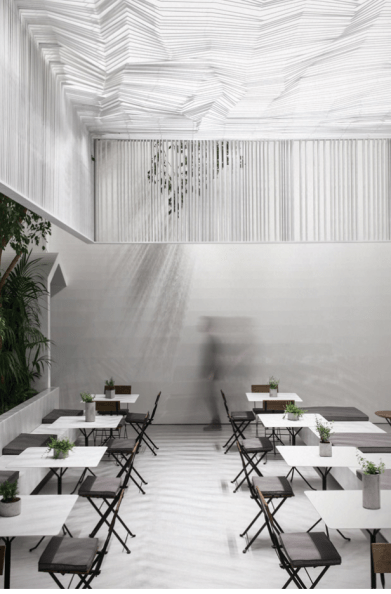
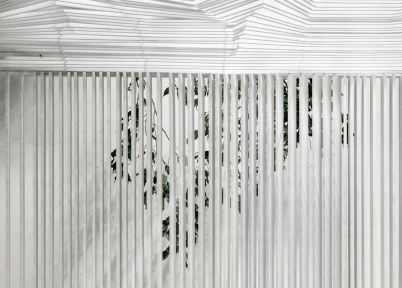
one of the best -designed spaces in Greece, the Cycladic Art Cafe, concept and designed by the wonderful KOIS Associated Architects.

Screen Shot 2016-08-31 at 09.02.09

Screen Shot 2016-08-31 at 09.02.28

Wols_Quinlan_Radio_Athenes01

“Always starts as an encounter” Wols/Eileen Quinlan,
curated by Helena Papadopoulos, produced by Radio Athènes
Museum of Cycladic Art, Athens; photos: Yiannis Hadjisaslanis
courtesy of Radio Athènes

Munich; “Thomas Gentille – An American Jeweller”at Die Neue Sammlung

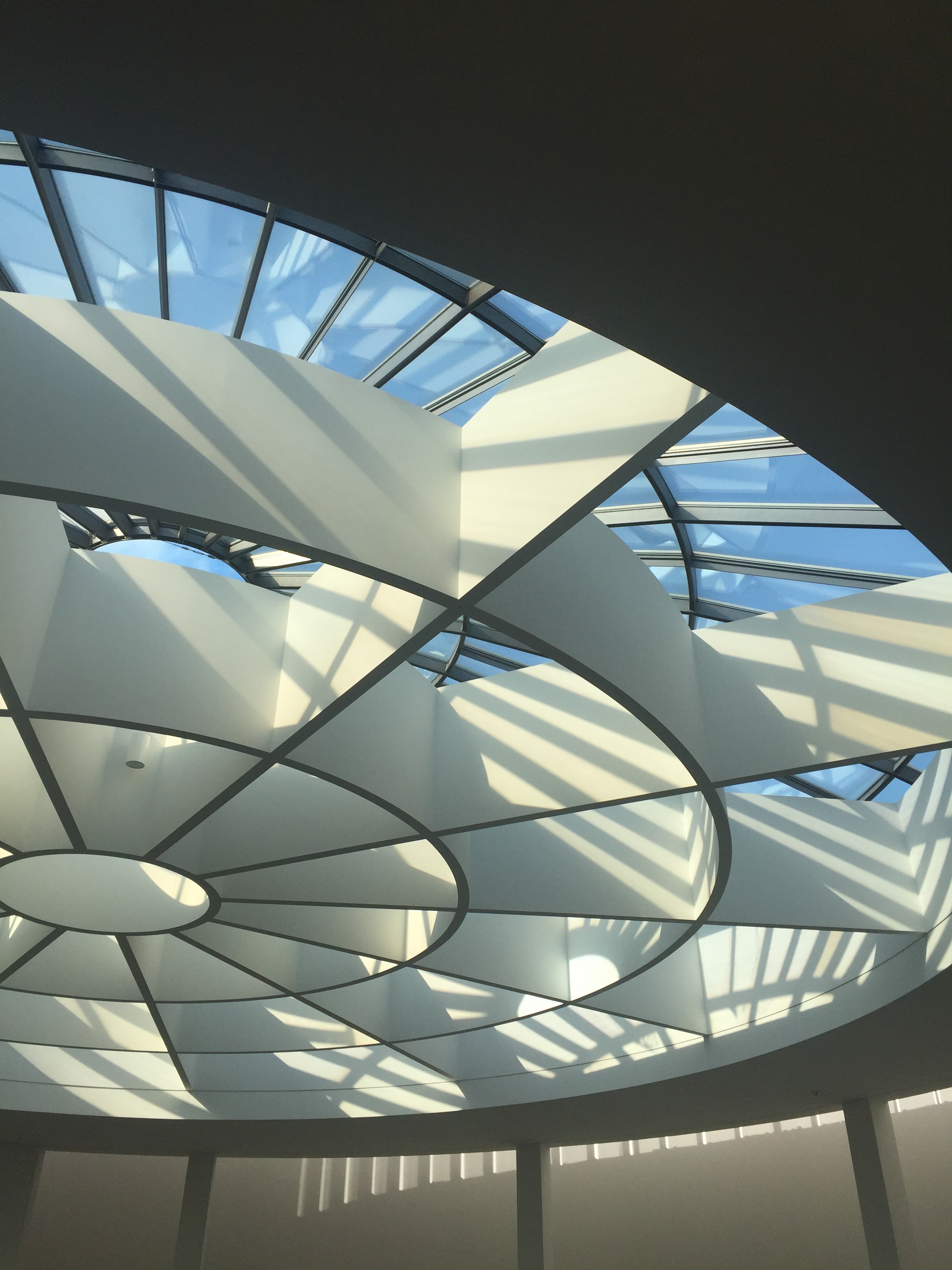
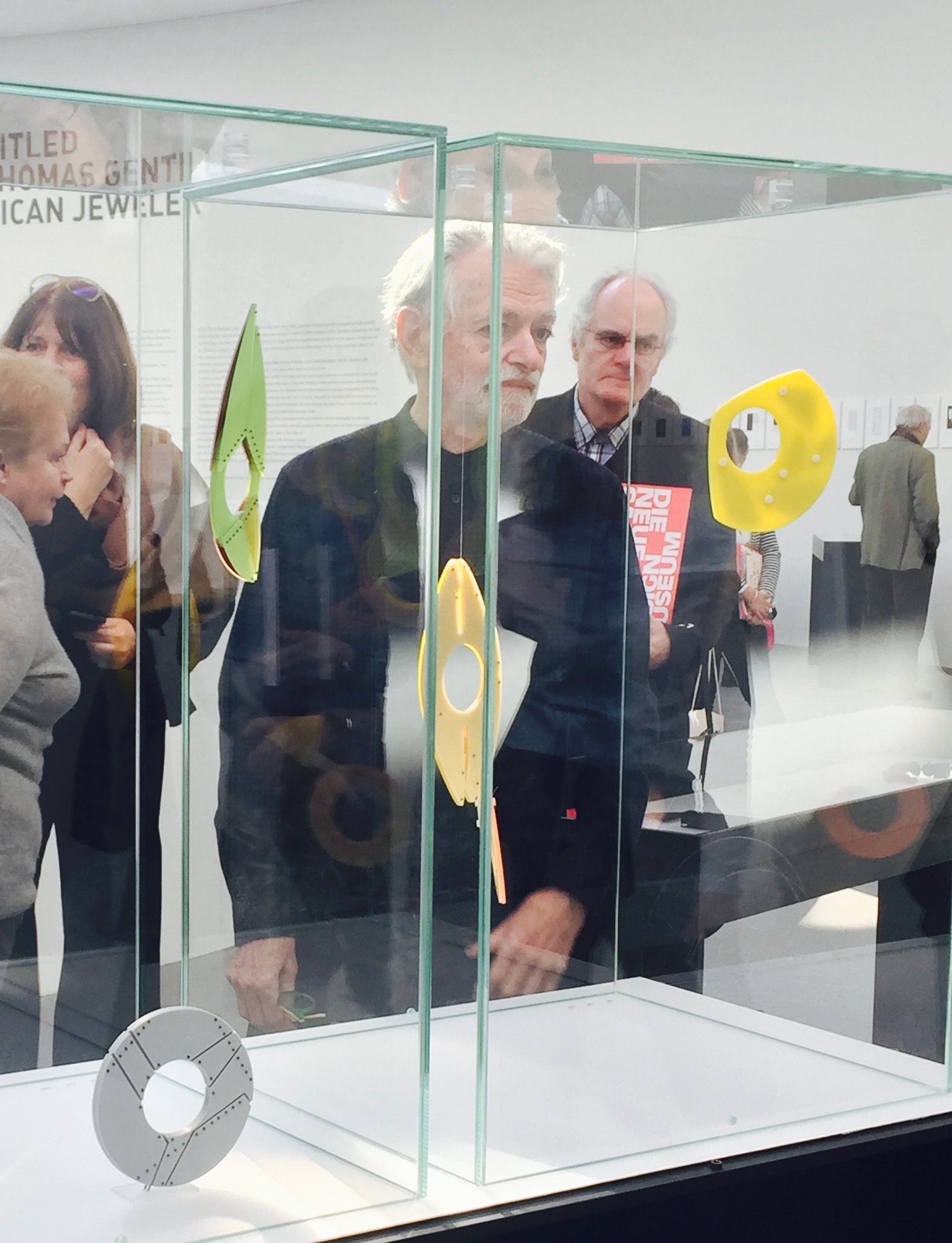
A fabulous exhibition at the Die Neue Sammlung ( The Design Museum, Munich) opened few weeks ago “Untitled. Thomas Gentille. American Jeweler”.  American Thomas Gentile  a leading studio jewelery artist in his first comprehensive exhibition on his oeuvre.  Die Neue Sammlung is presenting  190 jewelery objects and over 90 sketches supplemented by a film on the second floor of the Rotunda in Pinakothek der Moderne. Conception and curation of the exhibition: Dr Petra Hölscher. The exhibition will run through June 5 and is accompanied by a beautiful book by Arnoldsche Art Publishers.

5_gt

Thomas Gentille, Pin, 20th century
Cherry, maple
Back: Industrial pins (h. 16.2 cm, b. 4.3 cm, d. 0.6 cm)
Photo: Eva Jünger

It is a body of work to be conceived in its entirety, in which Gentille has developed over six decades without hierarchy or genealogy; he  refrains from providing any kind of information on dates.  Gentle  favors innovative plastics, solid aluminium  wide variety of woods, papier-mâché, sawdust, silk threads, old glass spheres hand blown in Bohemia and air – over gold, silver and precious stones.

7_gt-225x300

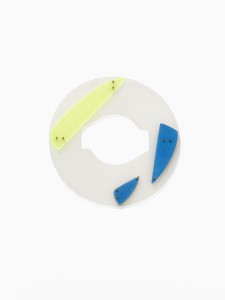
Thomas Gentille, Armlet, 20th century
Acrylic, nodized aluminum, bronze bolts
ø 15.5 cm, d. 0.7 cm
Photo: Eva Jünger

10_gt

Thomas Gentille, Pin, 20th century
Colorcone (plastic), steel
Back: Industrial pins
h. 6.5 – 8 cm, b. 4 – 7.5 cm, d. 1 – 2.5 cm
Die Neue Sammlung – The Design Museum. Permanent loan of the Danner Foundation, Munich, photo: A. Laurenzo

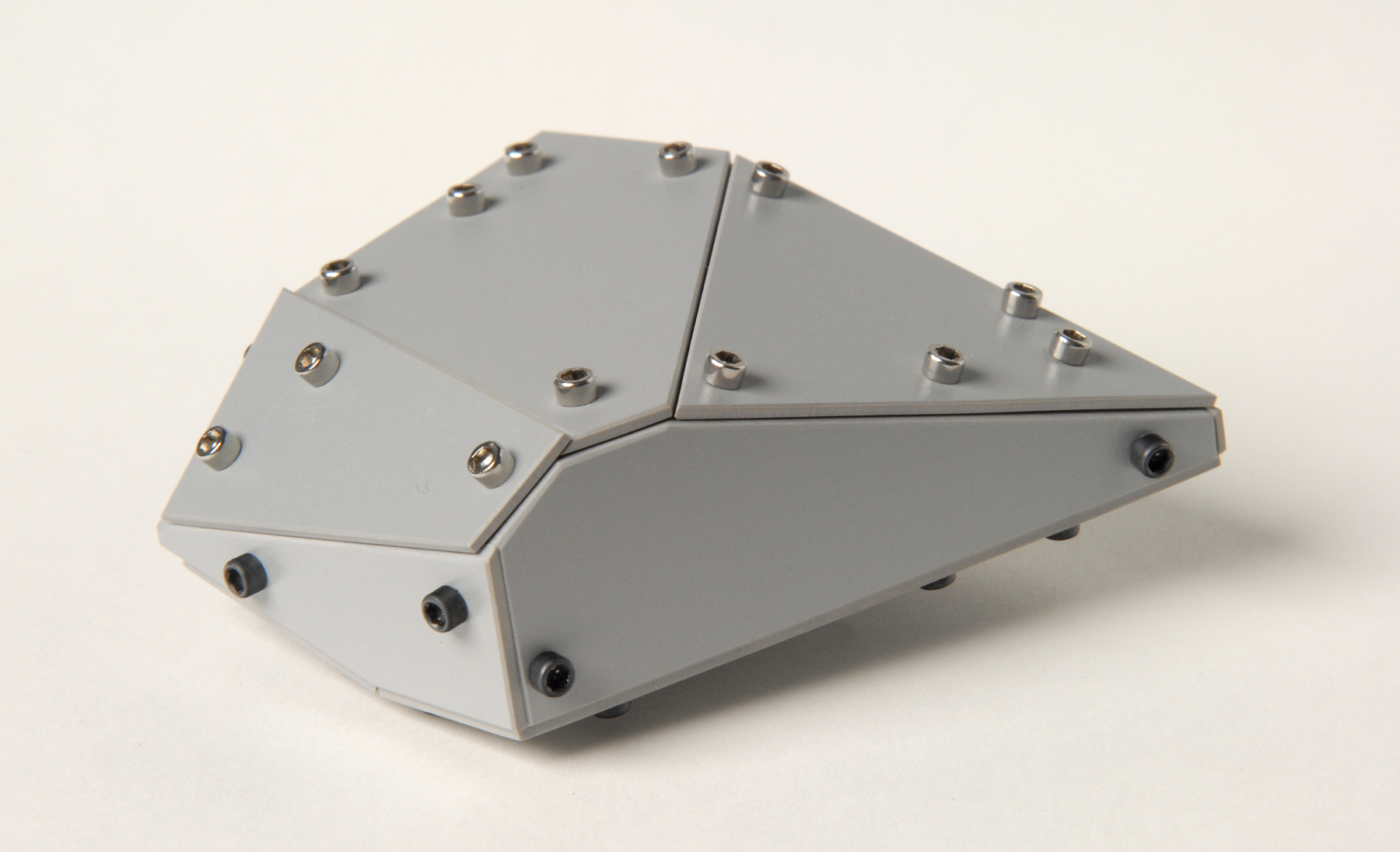
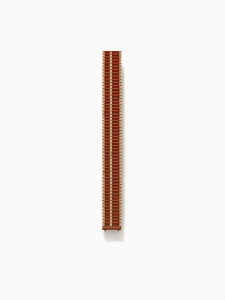
The pieces of jewelery created by Thomas Gentile possess their own unmistakable pictorial language. Their geometrical and polygonal forms play with surfaces that are combined with three-dimensional and sometimes architectural shapes. The surfaces are primarily monochrome or display the colors and internal structure of the material used…..

The jewelery objects by Thomas Gentille developed in the context of the international emergence of studio jewelery as a field in its own right, but also in light of an approach that bridged the ornament as an all over- structure.  This means the works also forge a lint to art, to representatives of Minimalism, such as Donald Judd or Robert Mangold, and to Hard Edge approaches, such as that of Frank Stella. Such ideas are as relevant as is Jackson Pollock as a campion of Abstract Expressionism.  (Dr. Angelika Nollert, at foreword of the Thomas Gentille publication)

3_gt-225x300

Thomas Gentille, Pin, 20th century
Eggshell inlay (Emu)
Back: Industrial pins (h. 14.9 cm, b. 5.2 cm, d. 0.8 cm)
Photo: Eva Jünger

4_gt-225x300

Thomas Gentille, Pin, 20th century
Eggshell- inlay
Back: Industrial pins (h. 7.2 cm, b. 13.8 cm, d. 0.8 cm)
Photo: Eva Jünger

His works with an eggshell overlay are famous. Using this mysterious method and even without employing the old Asian lacquer technique he produces a krakelée surface on his works. Gentille explains that it takes years of experimentation and practice with the technique until you finally grasp the “soul of the material”. (press)

11_gt

Thomas Gentille, late 1980s
Photo: Bill Philipps
Archive: Thomas Gentille

Thomas Gentille is born 1936 in Mansfield, Ohio, and a resident of New York since 1960. With Gentille, Die Neue Sammlung is continuation its tradition of exhibiting international studio jewelery.  Following extensive monographs of the works by Hermann  Jünger, Gijs Bakker, Dorothea Prühl, Giampaolo Babette, Peter Skubic, Otto Künzli and Anton Cepka, with Thomas Gentille another broad oeuvre is acknowledged – one which is closely linked to Munich and its development as a centre for studio jewelry. It was back in 2001 that Thomas Gentile was awarded the Herbert Hofmann Award in the jewelry section of the Internationale Handwerksmesse, Munich’s annual exhibition of craftsmanship, and since the artist has exhibited regularly in the city. In 2004 he was presented with he Bavarian State Award, in Munich. (Dr Angelika Nollert, foreword of published book, ‘Untitled. Thomas Gentille. American Jeweller.’) 

2_gt

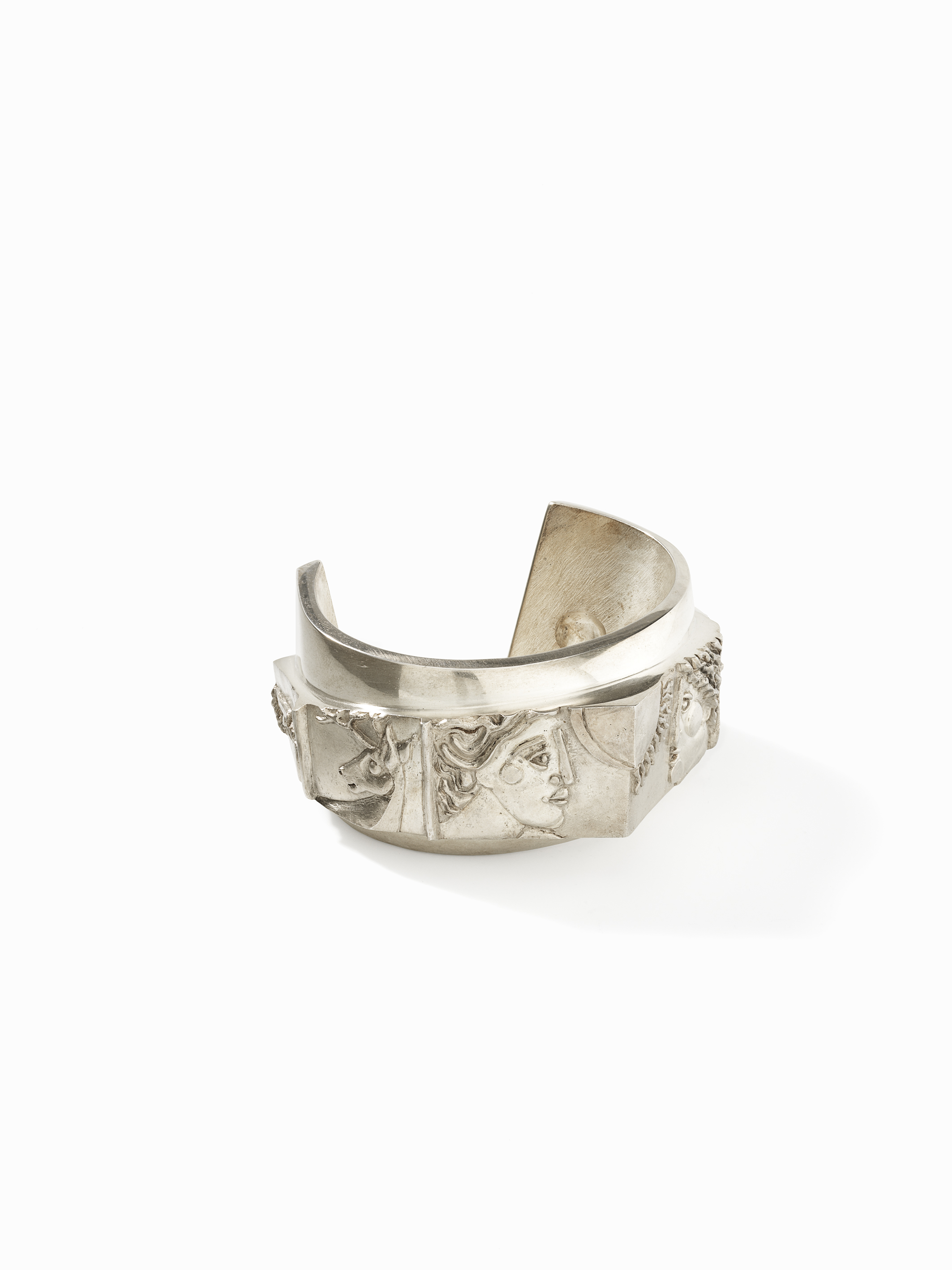
Thomas Gentille, Bracelet, 20th century
silver
h. 6.9 cm, b. 3.8 cm
Photo: Eva Jünger

IMG_1552

IMG_1564

                                                                  Thomas Gentille, feb 26th, 2016,  photo@Venetia Kapernekas
a film conceived and realized by the artist about the two most important cities in his life, namely New York and Munich is projected in the premised of the Rotunda at Pinakothek der Moderne.

466-8_thomasgentille

A beautiful  230-page catalog  by Arnoldsche Publications on the life and work of the artist with a preface by Dr.Angelika Nollert, an essay by Andrea DiNoto and an interview with Thomas Gentille conducted by Bettina Dittlmann and Dr.Petra Hölscher.

6_gt-225x300

Thomas Gentille, Pin, 21st century
Air, plywood, maple, paint
Back: Industrial pins
h. 22.3 cm, b. 2.2 cm, d. 1.2 cm
Photo: Eva Jünger

Gentille’s works are owned by leading museums worldwide, including The Metropolitan Museum of Art, New York, Cleveland Museum of Art, Philadelphia Museum of Art, The Museum of Fine Arts, Houston, National Gallery of Victoria, Melbourne, Victoria and Albert Museum, London and Die Neue Sammlung – The Design Museum, Munich.

New York; Catherine Opie ‘Portraits & Landscapes’ and ‘700 Nimes Road’ at Lehmann Maupin

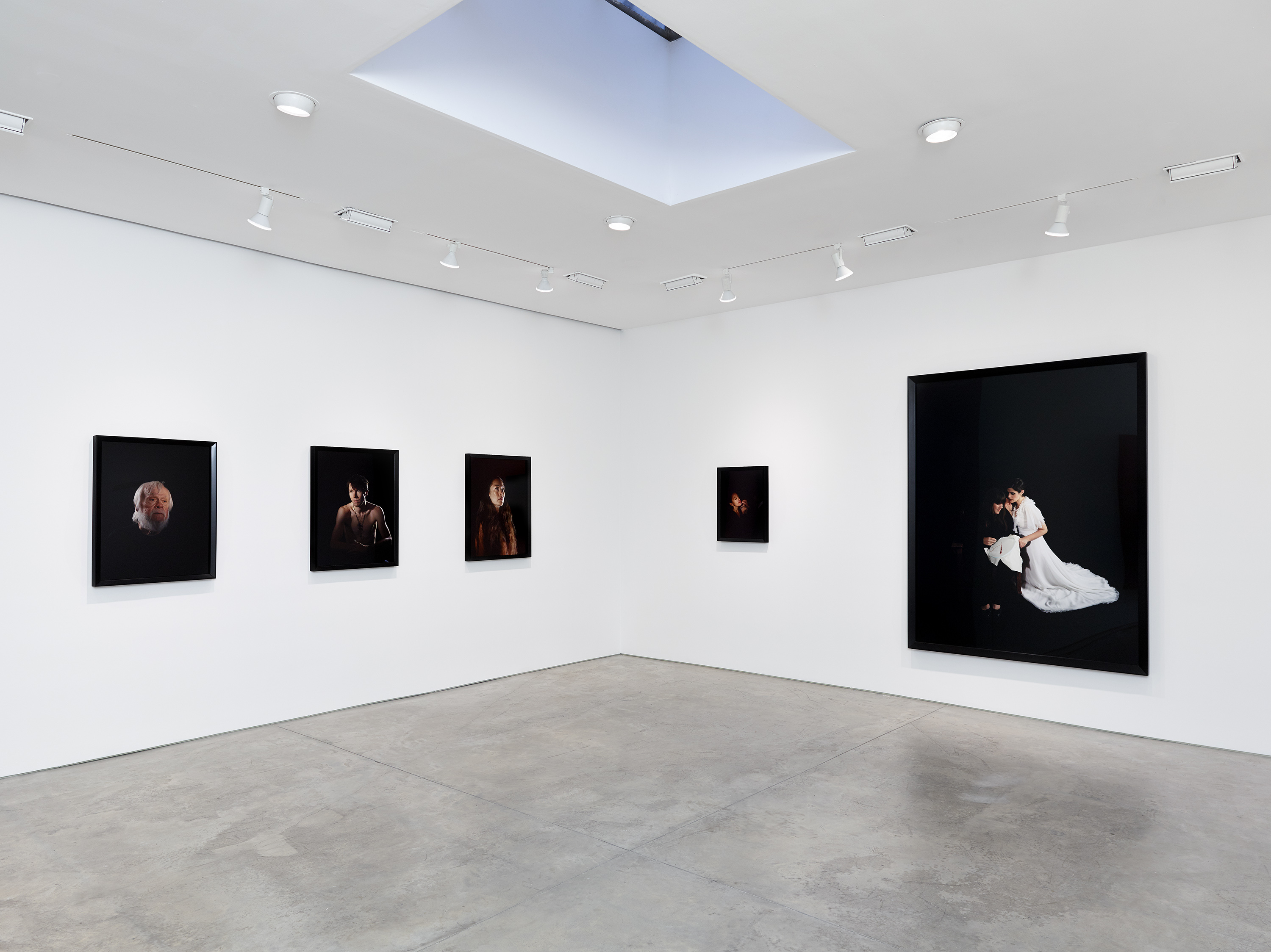
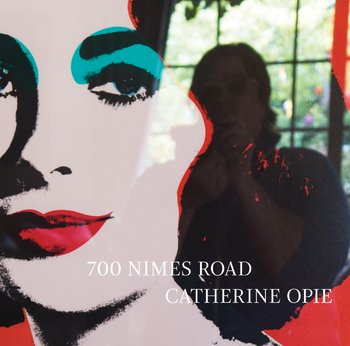
Catherine Opie : ‘700 Nimes Road’  January 14 – February 20, 2016 , at 201 Chrystie Street & ‘Portraits and Landscapes’ January 14 – March 5, 2016 at 536 W 22nd Street

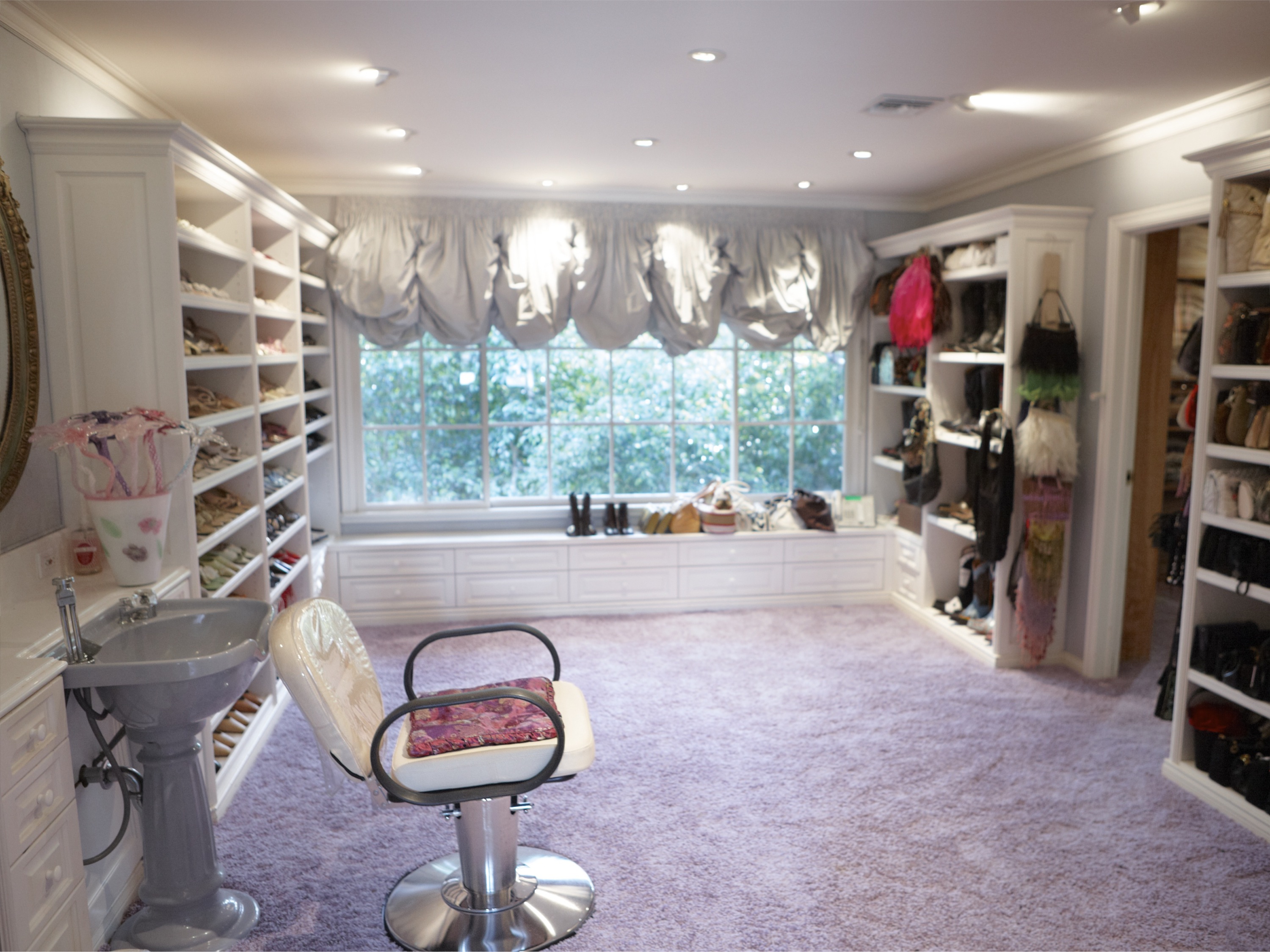
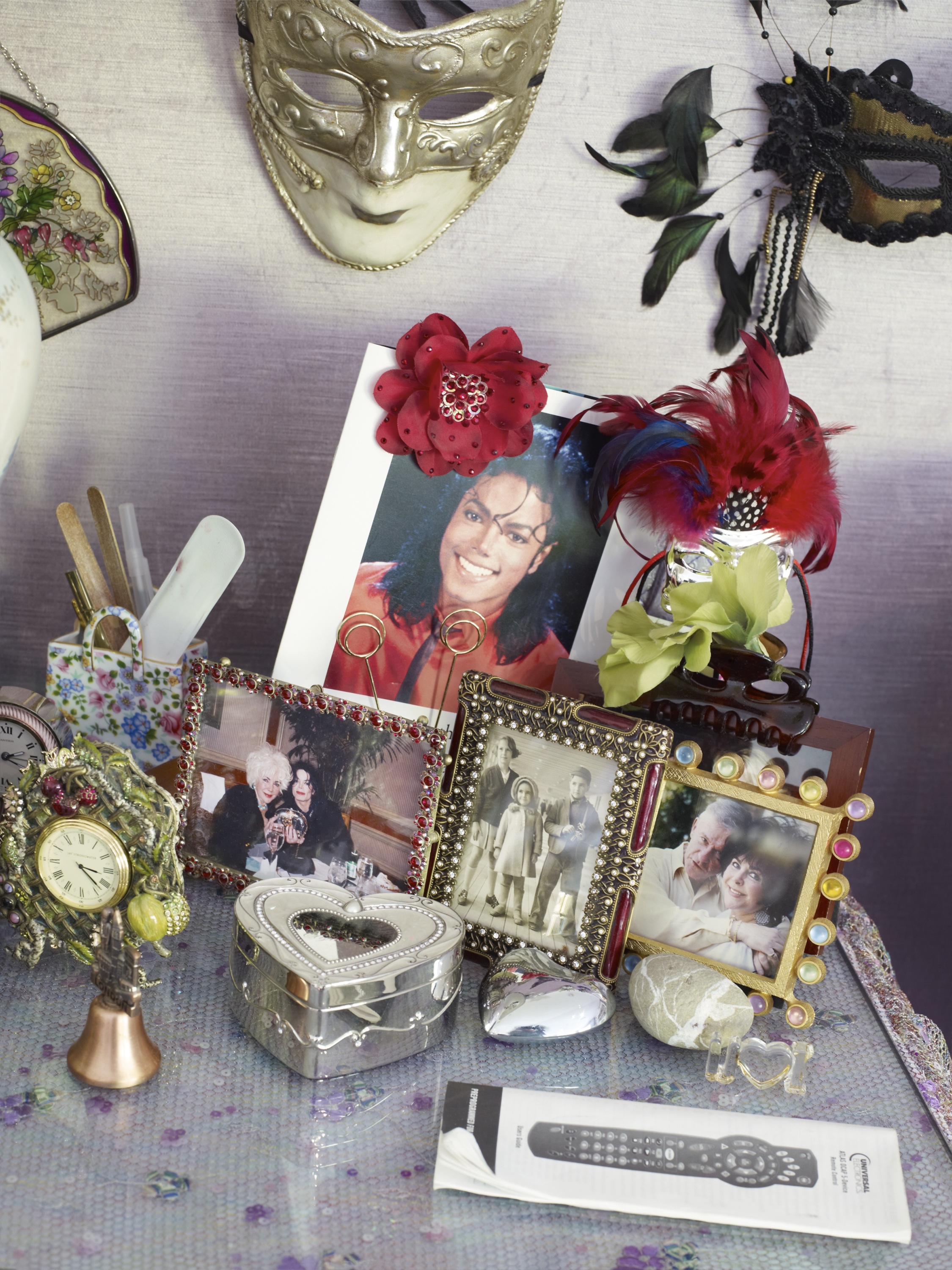
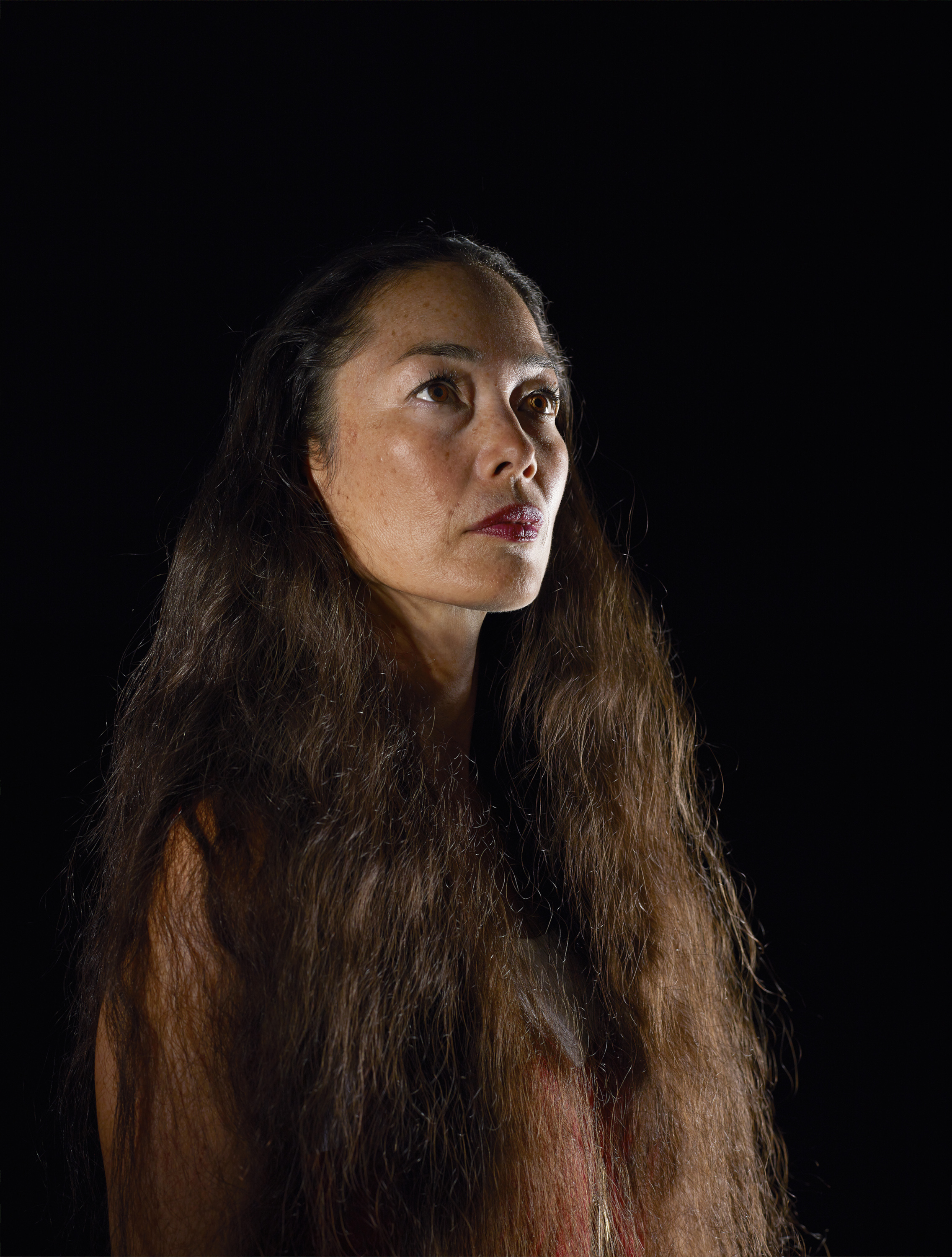
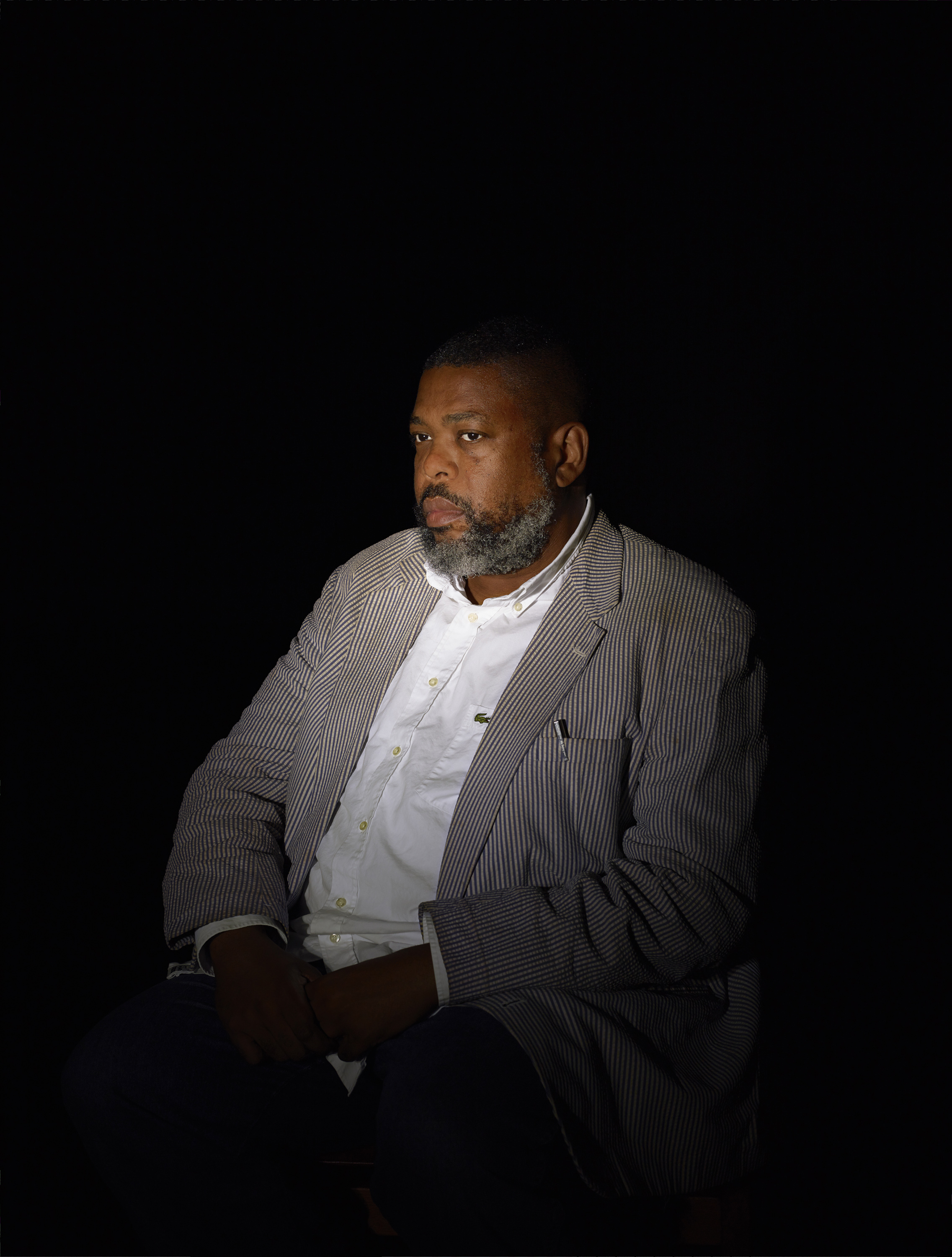
Few days in my beloved New York City,  and a  long time admirer of Catherine Opie ‘s  work since the beginning of her career, early 90s, I enjoyed her double -venue exhibition, on view  at Lehman Maupin galleries which encompasses abstract landscapes, formal portraits, and the “700 Nimes Road” featuring  the artist’s portfolio of 50 photographs documenting the interiors and belongings of the late Elizabeth Taylor.

50 20x24 prints

CATHERINE OPIE, The Quest for Japanese Beef from the 700 Nimes Road Portfolio, 2010-11, pigment print, 24 x 20 in, 60.9 x 50.8 cm. © Catherine Opie. Courtesy Regen Projects, Los Angeles and Lehmann Maupin, New York and Hong Kong.

The artist Catherine Opie on conversation with  Juliet Helmke how she relates the  two different ‘bodies of work’ in the galleries, she says,
    “I think of them as two different ways of looking at portraiture. The Chrystie Street space is showing the Elizabeth Taylor portfolio, “700 Nimes Road,” the address of Taylor’s home, in which the series was shot. The Chelsea location has the abstract landscapes taken in national parks, along with new portraits of my friends emerging from this very black background. They have a very strong compositional relationship to history painting, such as Da Vinci’s, shown with the abstract landscapes that act as moments of memory. I feel like this is a body of work where I’m departing from my history of documentary photography, because the portraits in particular are about a very internal space, even though they’re images of real people. They have more to do with the subconscious, and desire, and the question of what a portrait does for us in the age of social media. Can we be held? I’m interested in this question of being held by an image now, in a society in which they are constantly passing in front of us. We flip through our screens. Making these portraits, I was using an idea of history painting, so to speak, to remind people about desire, and to will them to look longer.” (Blouin Artinfo, Modern Painters, “Catherine Opie on her Diverse Body of work, jan 10, 2016) 

50 20x24 prints

CATHERINE OPIE, The Shoe Closet from the 700 Nimes Road Portfolio, 2010-11, pigment print, 24 x 20 in, 60.9 x 50.8 cm. © Catherine Opie. Courtesy Regen Projects, Los Angeles and Lehmann Maupin, New York and Hong Kong.

50 20x24 prints

CATHERINE OPIE, Bedside Table from the 700 Nimes Road Portfolio, 2010-11, pigment print, 24 x 20 in, 60.9 x 50.8 cm. © Catherine Opie. Courtesy Regen Projects, Los Angeles and Lehmann Maupin, New York and Hong Kong.


Juliet Helmke: How did the “700 Nimes Road” series come about?Catherine Opie: It happened that Elizabeth Taylor and I shared the same business manager. I had just finished the inauguration portfolio of the 2008 election of Obama. After that, I wanted to work with a subject as iconic as Elizabeth Taylor, but to make a quieter, humbler, more humanistic portrait of her by looking at her through her home and her belongings. It was six months of very carefully figuring out how to do it, and in the middle of it, in March of 2011, sadly, she passed away. It changed the meaning. All of a sudden I became the last person there, the person bearing witness to her home. I tried not to let that dictate it entirely, but it certainly was present in finishing the body of work. (published at Modern Painters, January 10, 2016) 

CO_LMG_2016_Inst_Chrystie_Street_02_hrCATHERINE OPIE 700 Nimes Road Installation view, Lehmann Maupin, 201 Chrystie Street, New York January 14 – February 20, 2016 © Catherine Opie. Courtesy Lehmann Maupin, New York and Hong Kong                                     Photo: Elisabeth Bernstein

…Opie’s photographs present Taylor’s domestic sphere as a minutely observed landscape of  fragments, surfaces and textures. The photogra­pher spent six months  in the house, including entire days spent srudying how the  light moved through particular rooms. Again and again, Opie would zoom in rightly on an object  or group of objects (pantsuits hanging in a closer, knickknacks gathered on a tabletop, a diamond tiara on a furniture cushion) as though to isolate particular things without intrusion from the many other things just beyond the frame. Because the images remain so resolutely focused, they rarely offer a sense of the overall logic of a room, much less the layout of the house. (Star Turn, Richard Meyer, Artforum, January 2014)

about her “Portraits and Landscapes”,  Catherine Opie says to Juliet Helmke,

…..I worry about losing how our imagination can lead us to other ways of answering questions in life, because in terms of fulling curiosity, everything is answered by the click of anger. The works at Lehmann Maupin’s Chelsea space are so much about this, especially the abstract landscapes. They’re saying, imagine the place you might be. I’m putting you somewhere literal, in an actual national park, but that you can’t recognize and so you’re slightly displaced—in a way that a portrait won’t displace you.  The portraits just ask you to keep staring. But then the landscapes ask you to keep staring as well, because they harken back to the idea of American genre painting, without the clarity of American genre painting. You imagine a moment of Bierstadt, but at the same time, you’re not looking at Bierstadt because the detail’s not there. You’re left only with the atmosphere.”   (Blouin Modern Painters, Q&A with Juliet Helmke, January 2016)

Final print files

CATHERINE OPIE Cecilia, 2013 pigment print 33 x 25 inches (print)  88.9 x 68.6 x 4.1 cm Edition of 5 (c) Catherine Opie. Courtesy Regen Projects, Los Angeles and Lehmann Maupin, New York and Hong Kong.

CO_LM22034_Untitled_13_hr0

CATHERINE OPIE Untitled #13, 2015 pigment print 77 x 51.25 inches 195.6 x 130.2 cm Edition of 5  (c) Catherine Opie. Courtesy Regen Projects, Los Angeles and Lehmann Maupin, New York and Hong Kong.

Final print files

CATHERINE OPIE Hilton, 2013 pigment print 33 x 25 inches (print) 88.9 x 68.6 x 4.1 cmEdition of 5 (c) Catherine Opie. Courtesy Regen Projects, Los Angeles and Lehmann Maupin, New York and Hong Kong.


CO_LMG_2016_Inst_22nd_Street_02_hr

CATHERINE OPIE: Portraits and Landscapes Installation view, Lehmann Maupin, 536 West 22nd Street, New York January 14 – February 20, 2016 © Catherine Opie. Courtesy Lehmann Maupin, New York and Hong Kong  Photo: Elisabeth Bernstein

“….I love editorial photography. I like thinking about the platform and how images are put out in the world. I don’t talk a lot when I’m photographing, even in making portraits. I’m posing people and really watching them; looking for more of an internal space that probably mirrors my internal space too. It’s de nitely a portrait of the person, but I think, as with every portrait, there’s an element of self-portrait to it. I don’t want that to be confused, for example, in the football players series, with wanting to be a high school football player; I don’t. It’s more about bearing witness to each other. There’s a moment: I’m looking at you, you’re looking at me. We’re here for this one little, teeny moment together. It’s just such a wonderful short dance. You’ll never see them again, yet you carry them with you your entire life because you’ve had this exchange. I really love that. That goes back to humanism. We’re all in this together. Let’s all be human together, whether our political views or aspirations in life are different. We get to have this shared moment.” (Catherine Opie in conversation with Juliet Helmke of Modern Painters, January 2016) 

423_5425_163691_t_xxl

Opie would take about three thousand pictures of the house and grounds, from which she would ultimately select the sequence a group of fifty for a limited-edition portfolio. (In additions a selection of 129 pictures, including all fifty  from the portfolio, appears in the  book “”700 Nimes Road” Published by Prestel Verlag (2015) with contributions by Hilton Als,Ingrid Sischy, Tim Mendelson.

Thank you Lehman Maupin gallery for gifting me a copy of  this fabulous publication.

“Inside the World of Elizabeth Taylor”; Artist Catherine Opie on photographing the late actress and activist’s home for a new book, ‘700 Nimes Road’ at Harper’s Bazaar (sept 2015)

In 2016,  the Hammer Museum in Los Angeles is showing work from Opie’s new portrait series inspired by Old Masters paintings (Portraits, 30 January-22 May 2016)  and the Museum of Contemporary Art’s branch at the Pacific Design Center is showing the “700 Nimes Road” 23 January-8 May 2016).

@all images generously supported by  Lehman Maupin gallery press office

the magic of extraordinaire pianist Ezio Bosso- “Following a Bird”

“La musica è una vera magia, è la nostra vera terapia”Ezio Bosso 

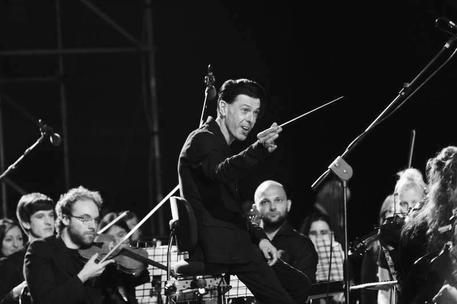
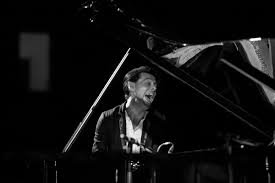
Upon my return from New York  this rainy morning in Munich I had the desire to share my  listening to  an  extraordinaire pianist and composer Ezio Bosso. I am overwhelmed by the endless landscapes of emotions that his music delivers to me;  words would not be enough to describe his music, his light and powerful melodies; his slender hand has a magic and may take you where the senses are declined to listen to the world.

ezio-bosso

I place here one of my favourite pieces “Rain in Your Black Eyes” that he performed in Palazzo Reale in Torino, (2012)

https://www.youtube.com/watch?v=4qwf1D5r4Sc

Ezio Bosso has ALS – a form of motor neuron disease. It is obvious that he has to exert enourmous effort to control his muscle movements. That is why the control he shows when playing is stunning.

He is 44 years old and is from Turin. He learned to read music before the letters…thanks to a great aunt pianist began studying music at four years. Then he studied in Vienna, under the guidance and Streicher Österreicher and Schölckner.
At 16, his debut as a soloist. Composer, conductor (including the London Symphony), also wrote the score for “I’m Not Scared”, by Gabriele Salvatores. In 2011 he had to undergo brain surgery for the removal of a tumor that has precipitated, in his words, in “a history of the dark.” After surgery it has been suffering from an autoimmune disease. He had forgotten how to speak and to play, he had to relearn everything. But he did not stop.
Only in 2015 he recorded his first album “The 12th Room”, double CD for only registered plan with public room in Gualtieri (Reggio Emilia).

Here you can see at San Remo Festival his performance at the piano “Following a Bird”published Feb 2, 2016..When Carlo Conti asks Ezio Bosso  ‘where do you find this energy’, Ezio says, ‘La musica è una vera magia, è la nostra vera terapia ‘Music is a real magic, is our true therapy'(at Rai. tv).  What happened to him. He had long ago told La Stampa. “At one point I had lost everything, the language, the music: I remembered it, but I did not understand. I was playing and I cried, for months I could not do anything. The music was not part of my life, was far away, I could not grasp it. I discovered that I could do without it. It was not bad. It was different, it was another experience. I learned that music is part of me, but it’s not me. At best, I am at the service of music.

Tears are unavoidable…  no words…

http://www.rai.tv/dl/RaiTV/programmi/media/ContentItem-306e05f7-a102-42fb-bf8b-dfeca642a88c.html

you may see all the interview here and enjoy “Following A Bird”

http://www.huffingtonpost.it/2016/02/11/ezio-bosso-pianista-sanremo_n_9206706.html

Exio Bosso

images

enjoy here Ezio Bosso e Mario Brunello in concerto al Teatro Sociale di Gualtieri ‘On the Roots-Sonata no 1’ https://www.youtube.com/watch?v=fXuZggyKELc

Enjoy here a lovely dance piece, Ezio Bosso as composer in collaboration with choreographer Rafael Bonachela,  winner of Australian Dance Awards 2011 Outstanding Achievement in Choreography,  a symphony of dance, music and artistry performed by the Sydney Dance Company.https://www.youtube.com/watch?v=AGJkJNO3dvU


Munich; ‘Konstantin Grcic:the Good, the Bad, the Ugly’ at Die Neue Sammlung (the Design Museum)

12.11.2015-18.09.2016 (Paternoster Halle) &  12.11.2015-28.02.2016 (Temporär 2)  Die Neue Sammlung-The Design Museum/Pinakothek der Moderne
Curator: Dr. Angelika Nollert
Co-Curator: Dr. Xenia Riemann

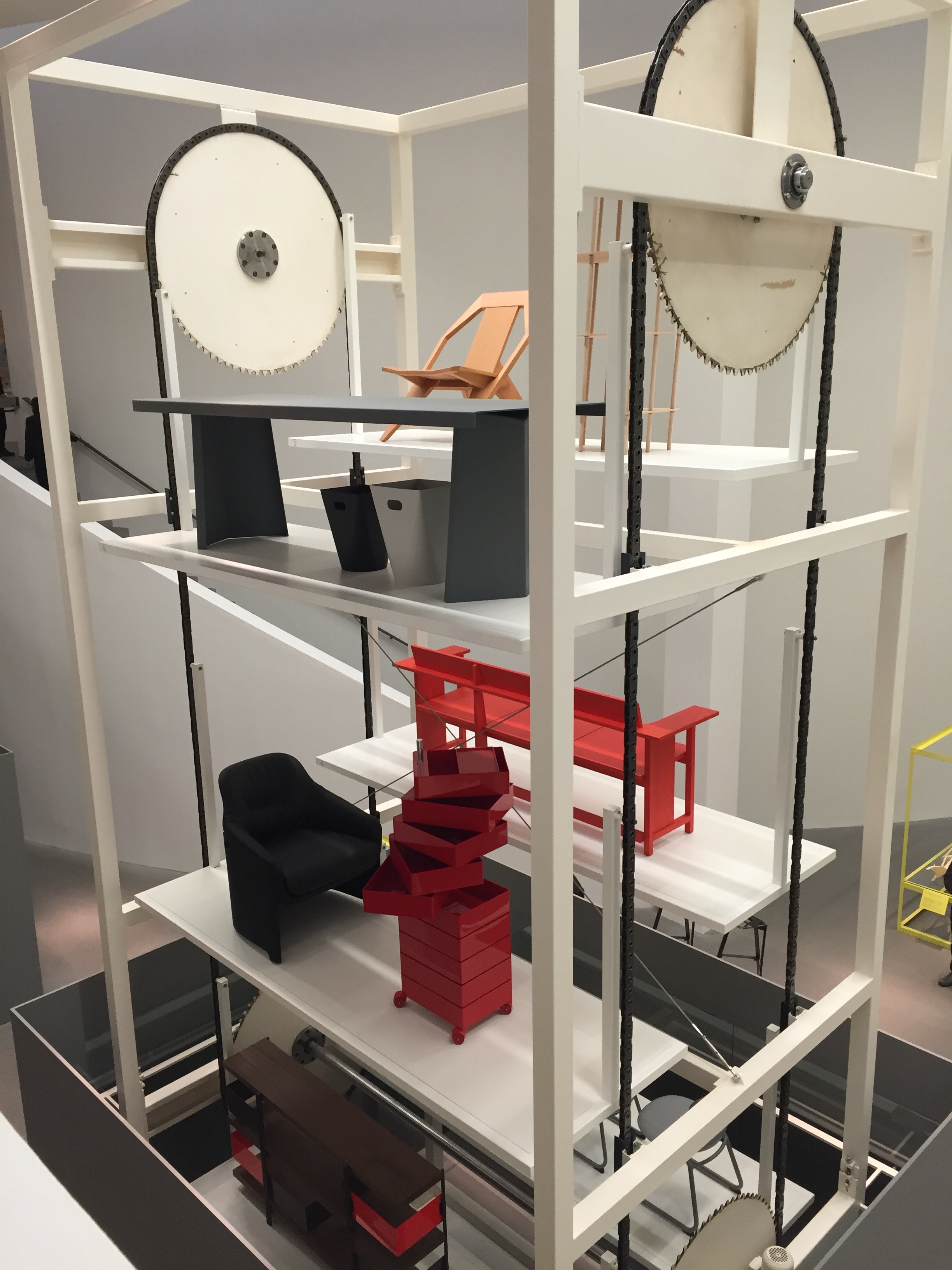
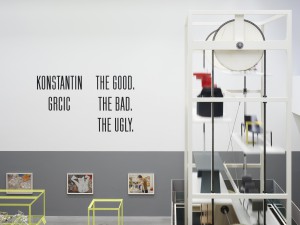
Acclaimed international designer Konstantin Grcic (born 1965 in Munich, where he now lives) commenced with his exhibition  “the Good, the Bad, the Ugly”at Die Neue Sammlung, part of the new series “Mobile Structures”: Die Neue Sammlung has devised  a new exhibition  format specifically in order to emphasise the special architectural quality of the two-story Paternoster Hall, visible from one of the museum galleries.

The revolving movement of the paternoster elevators reflects the motto of an active Neue Sammlung.

IMG_8939

photo@VK by permission

01_DSC9450-300x225

Blick in die Ausstellung “Konstantin Grcic: The Good, The Bad, The Ugly”, Foto: Gerhardt Kellermann © Konstantin Grcic

Grcic is an industrial designer and in this field above all a furniture designer.  Since the beginning of his career has has also been involved in devising presentations and representations…. His concept for the Paternoster Hall comprises a small number of interventions, which thanks to their precision are in fact highly effective.

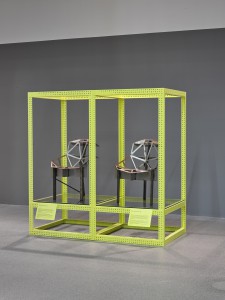
The display cases, specially made for the models, are evidence of the importance of the design  process of chair _ONE  for Grcic, who makes it the central focal point of the exhibition.

“…here materials and design enter into a perfect symbiosis. Chair _ONE is a new milestone in design in its form and in its technical process. “(Dr. Angelika Nollert, director of die Neue Sammlung, in ‘Mobile Structures, museum publication ‘the Good, the Bad, the Ugly).

04_CF007134-225x300

Blick in die Ausstellung “Konstantin Grcic: The Good, The Bad, The Ugly”, Foto: Gerhardt Kellermann © Konstantin Grcic

The exhibition is complex, but quite challenging and beautiful. A lovely afternoon I met  Dr Angelika Nollert, director of Die Neue Sammlung over lunch and passionately she  talked about the exhibition and some important  points of references marvellously gave me a different awareness  of the exhibition.

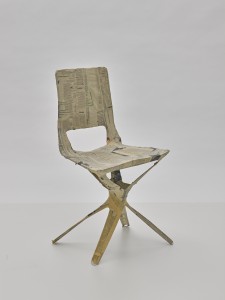
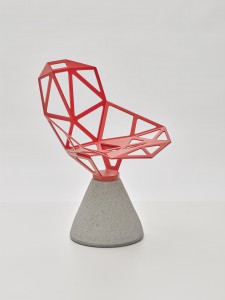
…Despite its uniqueness chair_ONE possesses numerous qualities that are characteristics of works by Grcic. Just as chair_ONE is reminiscent of architectural load-bearing structures by Buckminster Fuller, other products by Grcic reflect pieces by other designers.  For instance, the cantilever chair Myto is an homage to the S-Chair by Verner Panton, and 360 Container cites Joe Colombo’s tower of drawers. Le Corbusier, Franco Albini, Jasper Morrison, De Stijl and the Shakers and kindred spirits with Grcic and  his idea of reduction, essentiality and substance, as expressed in the seating designs Traffic, Parrish, Medici Lounge and Dahlem’ (Dr Angelika Nollert)

1_Grcic_Foto_G.Kellermann-225x300

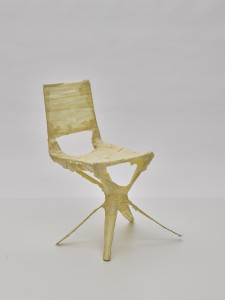
Konstantin Grcic, model #1 for chair_ONE, 1999/2000-2004
Photo: Gerhardt Kellermann © Konstantin Grcic

2_Grcic_Foto_G.Kellermann-225x300

Konstantin Grcic, model #2 for chair_ONE, 1999/2000-2004
Photo: Gerhardt Kellermann © Konstantin Grcic

grc_084-225x300

Konstantin Grcic, chair_ONE, Magis, 2004
Photo: Gerhardt Kellermann © Konstantin Grcic

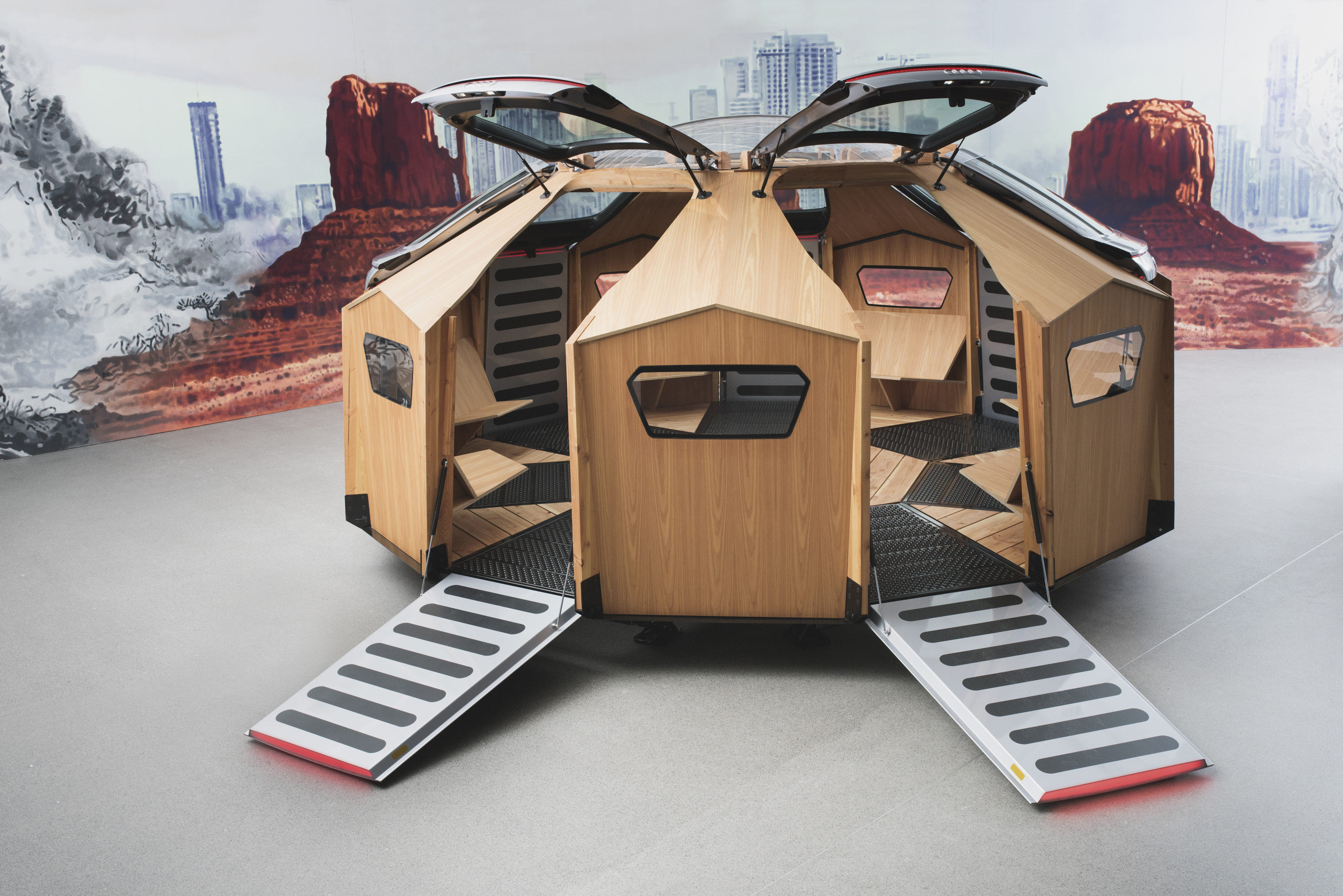
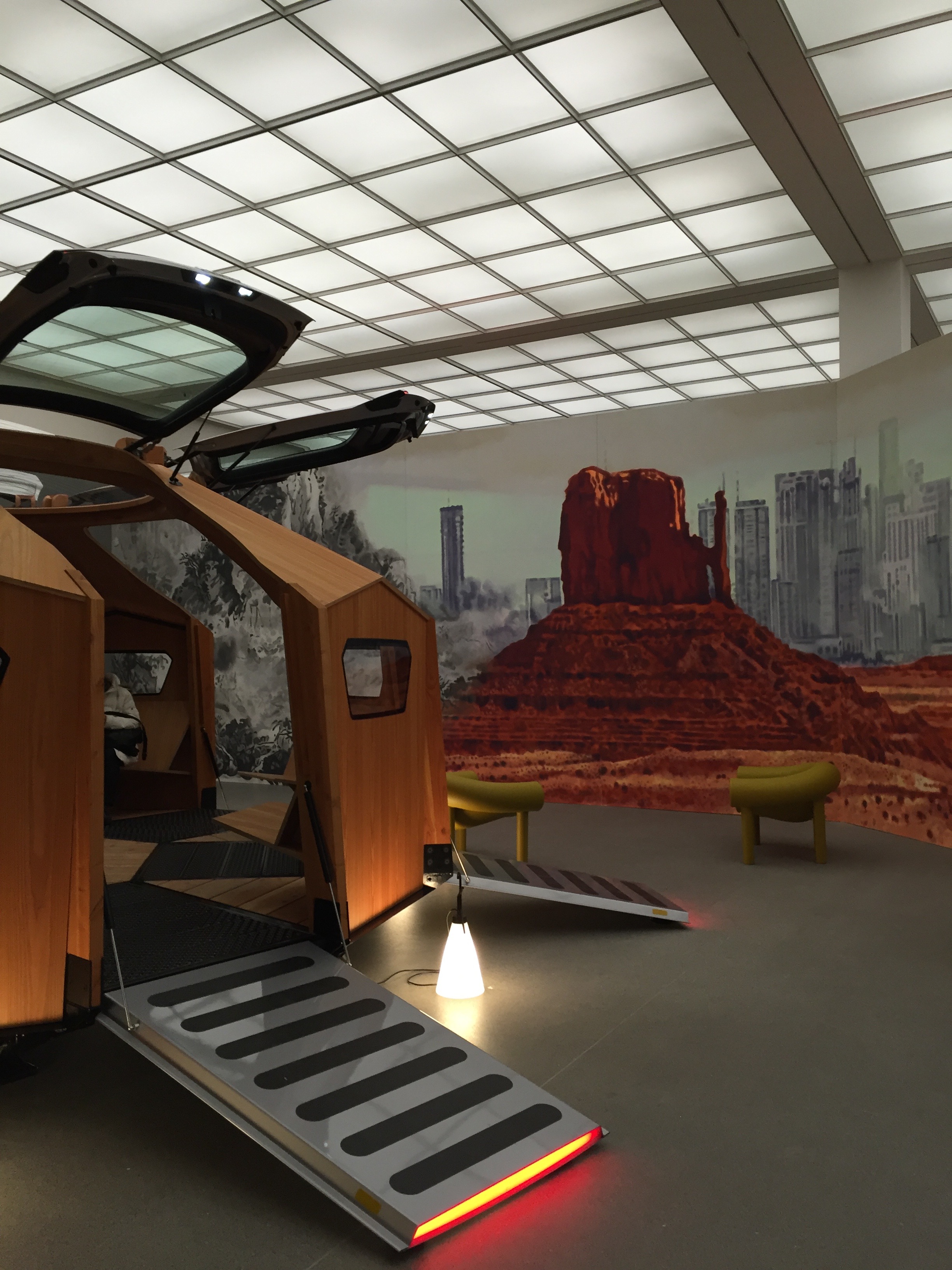
The third section in the exhibition. quite impressive and complex concept,  is called “TT-Pavilion.  Dr Angela Nollert explains to me, ‘…when designing his TT-Pavilion Grcic sought to transfer advanced automotive technology into an architectural context…’

In  this exhibition Grcic presents the TT-Pavilion, conceived in 2014 as the trade fair stand for Audi, in a scenographic installation…The octagonal mobile architecture brings to mind the mobile wooden houses of Jean Prouvé or Charlotte Perriand as well the plastic pavilion utopias by Jean Benjamin Manual or Matti Suuronen. 

07_DSC7478

Blick in die Ausstellung “Konstantin Grcic: The Good, The Bad, The Ugly”, Foto: Gerhardt Kellermann © Konstantin Grcic

The transformation of the space is achieved thanks to a panorama picture carried out by poster artist René Birkner and painter Alina Birkner.  Dr Angelika Nollert says, ” …Just as the UFO is a hybrid, the landscape is a pasticcio of the motifs of Monument Valley, the backdrop of skyscrapers in a megacity and non-cultivated vegetation…”


IMG_9234

IMG_9232

photos@Venetia Kapernekas, by permission

The exhibition title, “The Good, The Bad, The Ugly’, borrowed from a classic Western, highlights this relation between aesthetics and character and in so doing ironically references the great emotional potential of design and reception.

5_Grcic_Foto_G.Kellermann-225x300

Konstantin Grcic, prototype #4 (stress model) for stool_ONE (bar stool), 2004-2006
Photo: Gerhardt Kellermann © Konstantin Grcic
The exhibition will be accompanied by a publication featuring photos by Gerhardt Kellermann, designed by Lambl/Homburger, with an essay by Hubert Filser based on a conversation he moderated between Konstantin Grcic and Tim Bechthold, Head of Conservation, as well as an introduction to Grcic’s oeuvre by Angelika Nollert. The exhibition catalogue is published by Verlag der Buchhandlung Walter König, Cologne.

Munich; ‘SÍ/NO: THE ARCHITECTURE OF Urban-Think-Tank’ at Architekturmuseum of TU München at Pinakothek der Moderne

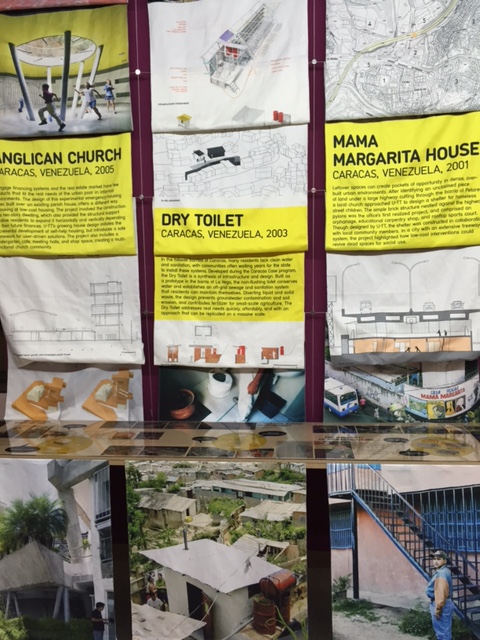
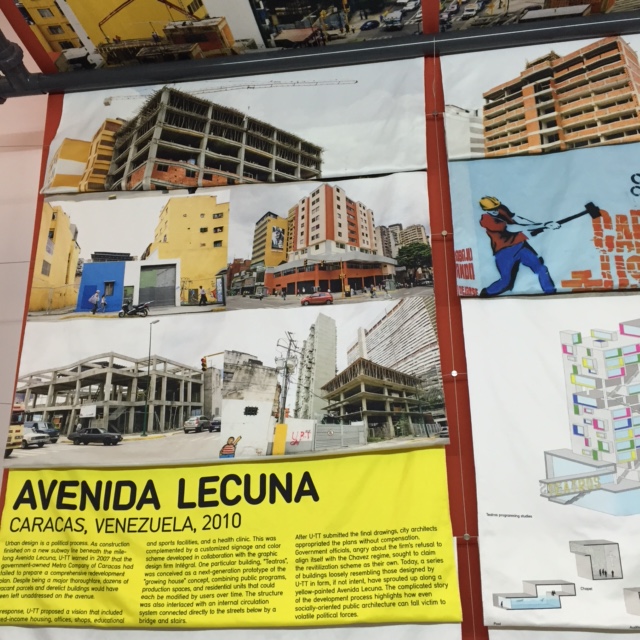
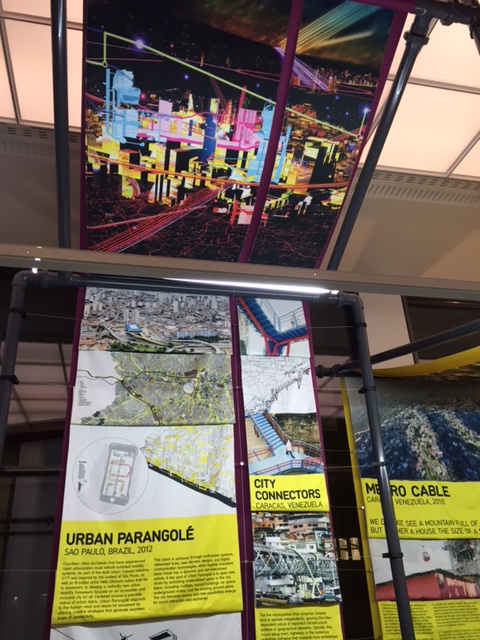
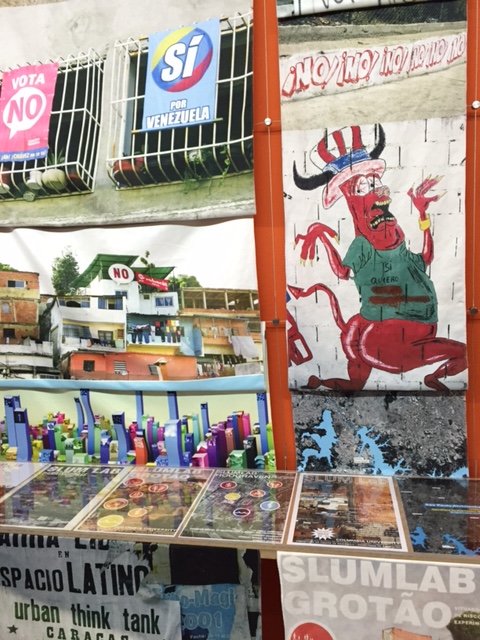
A truly amazing  exhibition opened last night at the Architektur Museum at Pinakothek der Moderne of  “SI/NO: The ARCHITECTURE of Urban-Think Tank”.  A great concept and fabulous installation;  presented to us an architecture of uncertainty, fixed images of the profession from the inside.  It clearly reflects the present state of our global society. Congratulations to Dr Andres Lepik, director of TU/München and Alfredo Brillembourg and Hubert Klumpner (direct the Chair of Architecture and Urban Design at ETH Zurich)

IMG_8872

exhibition view at Architekturmuseum, Munich  photo@VK

Urban-Think Tank (U-TT) is an interdisciplinary design studio, founded in 1998 by architects Alfredo Brillembourg and Hubert Klumpner in Caracas, Venezuela.

according to some estimates, around 60% of the population lives in informal settlements due to the long-term failure of official housing policy. Urban Think Tank has addressed this extreme situation from the very beginning, having recognised the chance for its research to result in insights that might be transferrable to other, comparable locations around the world. … the practices’ founders, Brillembourg and Klumpner went beyond simply analysing the existing situation, and instead attempted as architects and planners to develop concrete contributions for upgrading the barrios in small steps, or linking them to the planned city in the long-term.

011

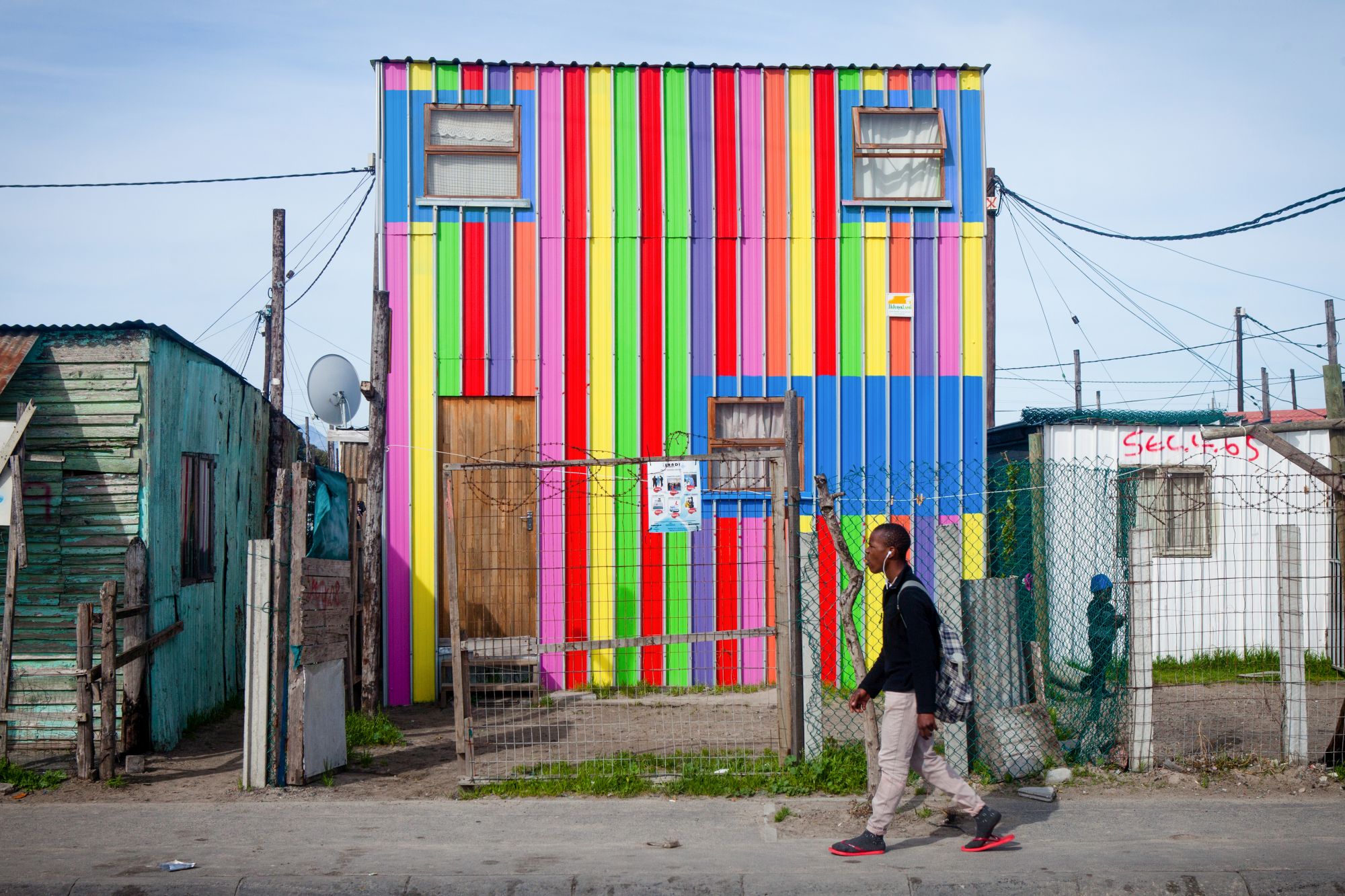
U-TT, Empower Shack
Khayelitsha, Cape Town, South Africa
© U-TT, photo: Daniel Schwartz/U-TT at ETH
010
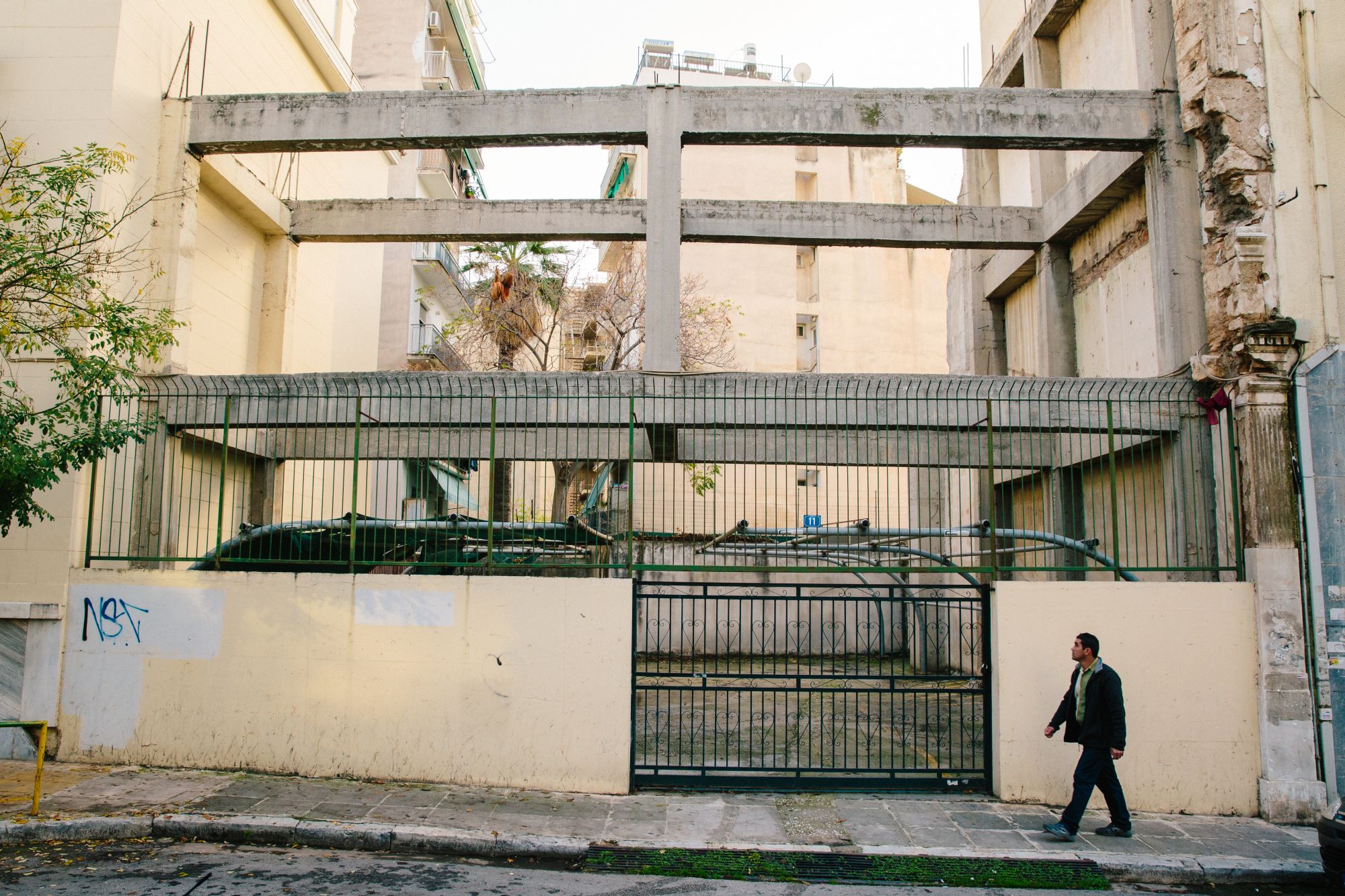
U-TT, Reactivate Athens, Greece
© U-TT, photo: Daniel Schwartz/U-TT at ETH
Daniel Will, exhibition architect; Daniel Schwartz, filmmaker, photographer and the leading person in the organisation of the exhibition and Helen Bendixen, architect who are  involved in the exhibition with curatorial support say about the structure:
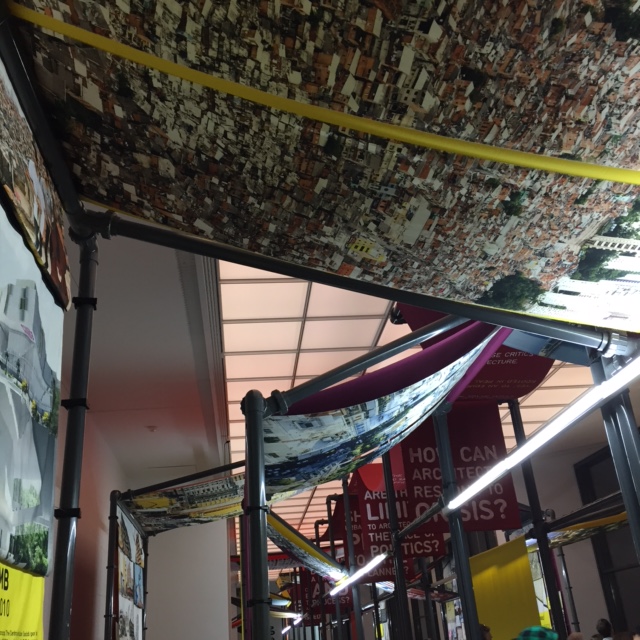
.. it was inspired by marketplaces, circuses, and favelas – places which show extreme concentrations of spatial density and where the effect of moving through these spaces changes each time and depends on how it is approached.  Ultimately, we wanted to create an exhibition that was both didactic and experiential, and this design allowed us to do so.  (from the interview to Ayca  Beygo, at TU newsletter, 11/2015)

IMG_8863

IMG_8868

 exhibition view at Architekturmuseum,Munich @photoVK


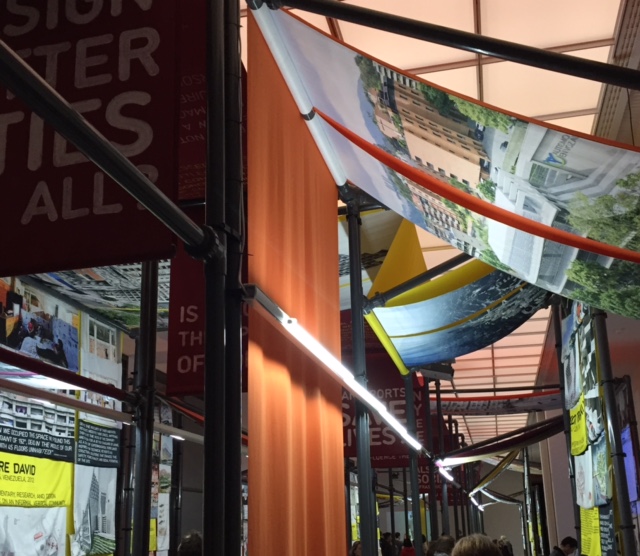
With this exhibition, Brillembourg and Klumpner work to advance their vision in another unusual way: much of U-TT’s collected research and project-based stories are distributed through a spatial installation. PVC water pipes generate a series of tents and passageway, covered by two layers of fabrics. The visitor is encouraged to find her personal path, discover and interact with the material e.g. touching the fabric and lift it up. The simplicity of the structure, the easy installation and dismantling that enable easy transportation, the adaptability, as well as the minimum employment of tools, show the originality of the design. Such process- oriented components represent the approach of U-TT in their projects.

IMG_8865

exhibition view at Architekturmuseum, Munich, photo@VK

What is the role of the architect today? How feasible is the status quo for future cities? With focus on the political and economic conflicts of Caracas, U-TT principals Brillembourg und Klumpner point out that the profession of architects is no longer engaged with social reality. This is the case not only in Caracas but all around the world. Although cities matter more than ever to the future of the humanity, they are sites of inequality and exclusionary growth. A combination of idealism and criticality is essential to redefining the possibilities of design and usher in an alternative to the status quo.

02 2

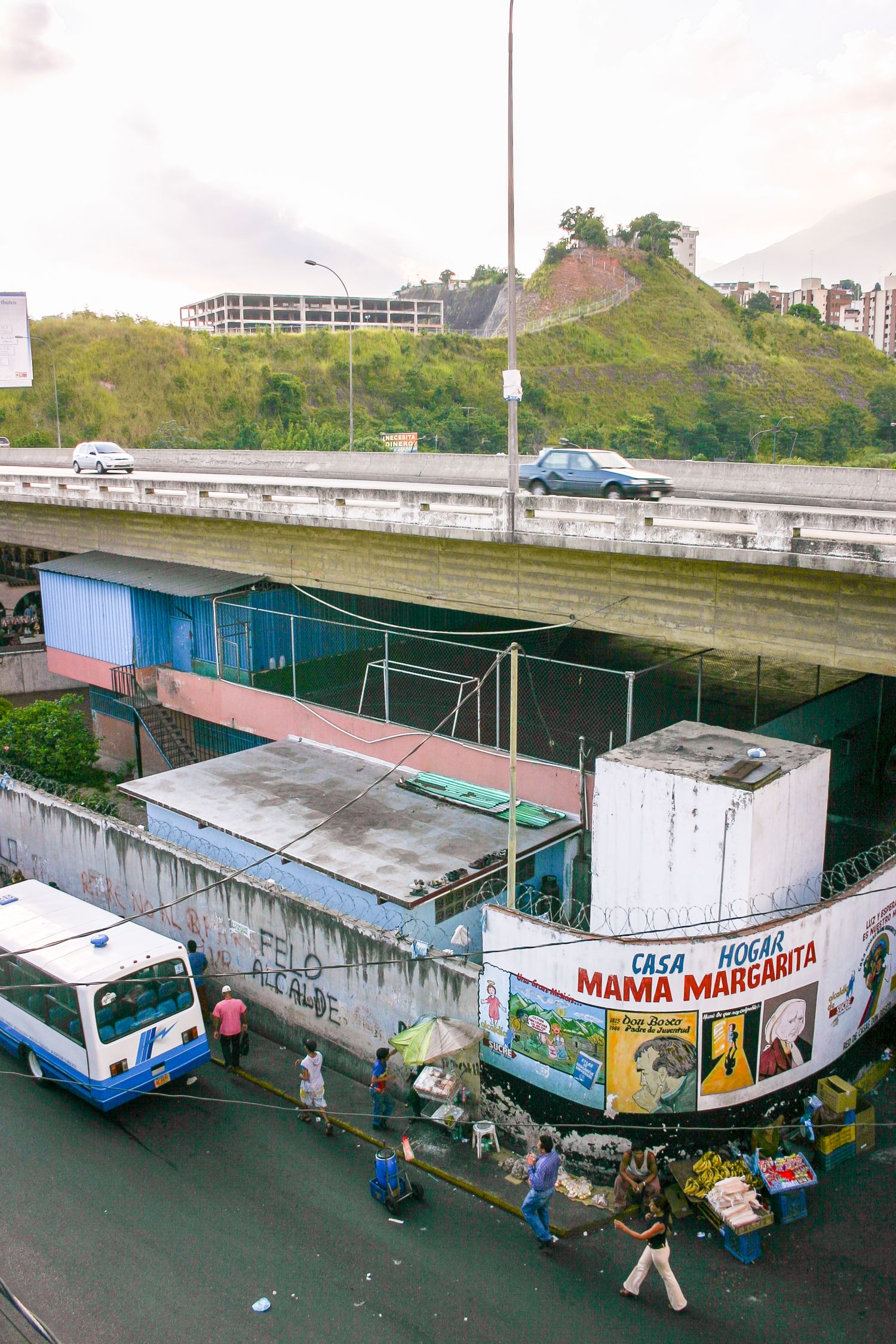
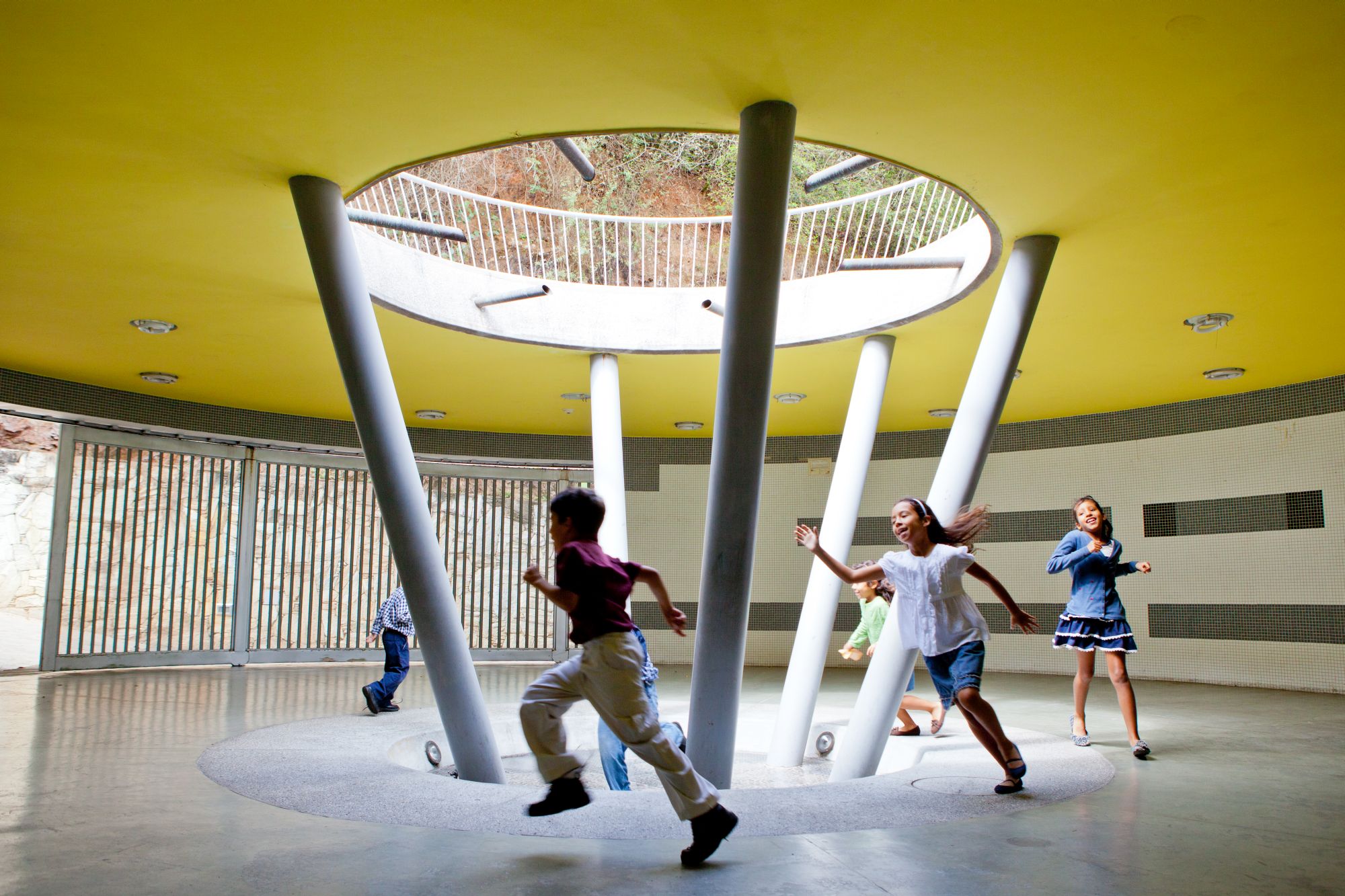
U-TT, Mama Margarita Children’s Home Caracas, Venezuela
© U-TT, photo: U-TT at ETH


The Architecture of Urban-Think Tank is already the third show in which the Architecturmuseum of TU Munich is addressing that new generation of architects who are radically questioning the traditional occupational profile, and developing new approaches in practice to once again bring the profession closer to the social problems of today.

IMG_8879

exhibition view at Architekturmuseum, Munich, photo@VK

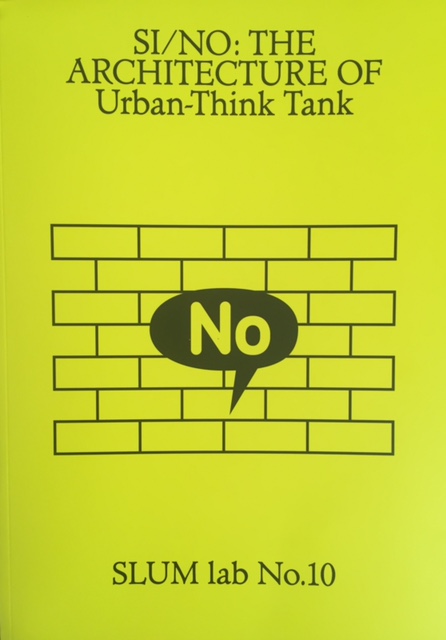
The fact that with this exhibition Urban-Think Tank is also trying out new and unusual strategies for presenting architecture is a logical extension of the practice up to this point. The provocation generated in the process will not, however, be beneficial in every case, since Urban-Think Tank allows visitors to participate in the complex questions that Brillembourg and Klumpner ask themselves on a day-to-day basis in order to position architecture as a relevant discipline.  What they present to us is an architecture of uncertainty, questioning fixed images of the profession from the inside. Their work clearly reflect the present state of our global society.  (Dr Andres Lepik. director of TU/Munich, ‘Healing Provations’ at the Intro of the publication “SI/NO: The Architect of Urban-Think Tank, Slum lab No. 10”

A  wonderful publication for the Exhibition is published by Slum Lab magazine (is a unique lab that works as a nomadic enterprise, bringing planners, academics, architects, and students from all areas of the globe to converge and work towards an understanding of the link between urban planning. poverty alleviation, and sustainable urban development. It was founded by Alfredo Brillembourg and Hubert Clumpier at Columbia University and is now part of their curriculum at ETH Zurich).

FullSizeRender 2

FullSizeRender

exhibition view at Architekturmuseum, photo@VK
05
U-TT, The Anglican Church Upgrade
Baruta Caracas, Venezuela
© U-TT, photo: Daniel Schwartz/U-TT at ETH

Since 2010, Alfredo Brillembourg und Hubert Klumpner  direct  the Chair of Architecture and Urban Design at ETH Zurich. Through teaching, they have focused on the education of a new generation of socially engaged architects. Through exhibitions, publications, and films, they ask questions that challenge public perceptions and design dogmas.

A corresponding lecture series will take place during the exhibition in the Architekturmuseum.

Design strategy collective Urban-Think Tank has designed and built a prototypical house as part of an initiative to improve housing conditions for slum dwellers in some of the 2700 informal settlements across South Africa (+ movie). (published on Dezeen magazine, march 7, 2014)

Munich; Ted Muelhing, and ‘Tortoise’ at Porzellan Manufactur Numphenburg

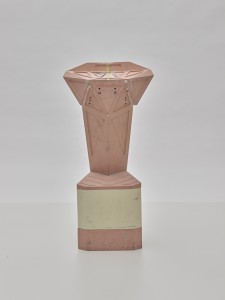
A beautiful evening last Thursday at the Porzellan Manufaktur Numphenburg invited by  my lovely friend Daniel Wingate,  to enjoy the new creations ‘Tortoise’ of the award winning designer Ted Muehling.

IMG_8185

IMG_8187 2

photo@VK

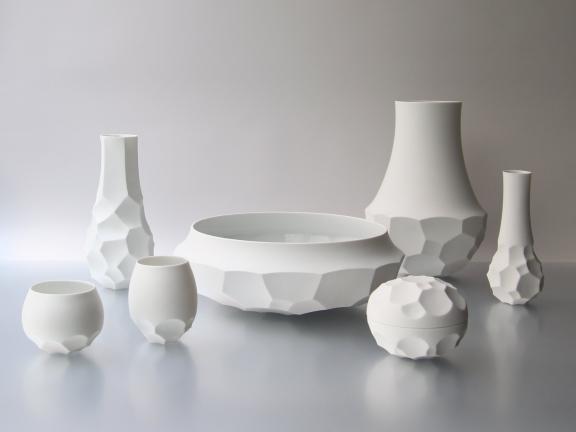
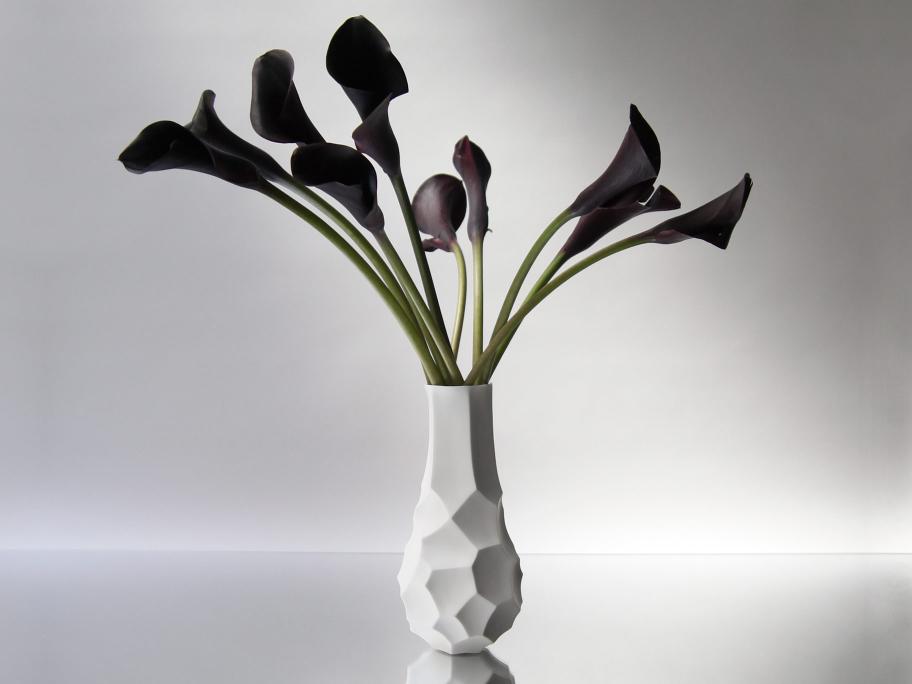
With ‘Tortoise’ the New York artist has returned to the workshop of the Porzellan Manufaktur Nymphenburg a good decade after his successful start in 1999. As with his earlier designs the artistic demands stand in the foreground: Muehling reduces, abstracts and translates the natural form of the faceted armour to the matt white porcelain. In this way, the renowned once again successfully captures the play on light and shadow in the unique transparency of the Numphenburg porcelain, which is hand-crafted step by step.  (Porzellan Manufaktur Nymphenburg press) 

IMG_8196

photo@VK

‘Tortoises are survivors from past times’, says Ted Muehling.  He has been fascinated by these majestic creatures since his childhood. So much so, that he has now devoted an entire collection to them.  ‘Tortoise’ – a series of vases of different sizes, a bowl, a bonbonniere and two different drinking vessels made of razor-thin biscuit porcelain from the master workshop of Numphenburg; matte on the outside, glazed on the inside. Together with the experts in products development, he realised the new objects for Tortoise in just one and a half years – handmade artefacts, shaped with passion, perfection and poetry. (Porzellan Manufaktur press ) 

IMG_8203Daniel Wingate (left), artistic director of Escada, and Ted Muehling at the lovely reception. @photoVK

Nymphenburg is the porcelain manufactory of the Bavarian crown. The noble art of porcelain-,making has been cultivated here in Munich since its founding in 1747.

tortoisemoodbild_gesamtekollektion

vasemood

‘Tortoise’, photo@Porzellan Manufaktur Nymphenburg


ΑΡΧΑΙΩΝ ΤΟΠΟΣ

ΙΣΤΟΡΙΑ-ΑΡΧΑΙΟΛΟΓΙΑ-ΤΕΧΝΗ- ΕΠΙΣΤΗΜΗ-ΦΙΛΟΣΟΦΙΑ

Keith York City

History made interesting

VK

visits on art, design, architecture and literature

Eclectic Trends

Interior Design and Lifestyle Trends

maria sarri Art projects

#art_projects, #public_art, #site_specific, #post_colonial, #urban_art

Η καλύβα ψηλά στο βουνό

Σε κοίταζα μ' όλο το φως και το σκοτάδι που έχω

tangledjourneys

A personal perspective on human interest stories from an American journalist living abroad

An Englishman in Berlin

Blog about life and culture in Berlin, Germany

nefeliatelier

bits and pieces that interest me

A R T L▼R K

An Alternative Cultural Daybook

Venetian Red Art Blog

Art, the resplendent light that illuminates the world

The School Of Life

visits on art, design, architecture and literature

IGNANT

visits on art, design, architecture and literature

βλέμμα

visits on art, design, architecture and literature

λεξήματα

visits on art, design, architecture and literature

flaneries

This WordPress.com site is the bee's knees

βλέμμα

gaze at Greece

SOUZY TROS

the new T.A.M.A platform