VK

visits on art, design, architecture and literature

Category: – diverse

Hope Atherton’s magical and mysterious “Ash Birds” in Sant’ Andrea de Scaphis

“Ash Birds” 2018, 24k gold plated bronze,June 27 – Sep 15, 2018,Hope Atherton,Sant’Andrea de Scaphis, Rome, courtesy of the artist and Gavin Brown’s enterprise, New York / Rome


My long driving trip from Maremma/Toscana to reach Rome this past July determined to visit some masterpieces at the museums and  Hope Atherton’s exhibition at the deconsecrated church in Travestere, the Oratory of Sant’ Andres de Scaphis on Via dei Vascellari  (presently a Gavin Brown gallery) was more than rewarding. When I reached the door at the church that afternoon in Rome was 40 Celcius; the coolness and darkness of the interior lowered the body heat.

The interior of this  building is small (dating as far back as the 9th century) consists of a single room, already lofted after the deconsecration and covered with a single-sloped wooden beam ceiling… the sacred furnishings are the wooden choir supported by two Tuscan columns and the altarpiece of the altar – without a table – in stucco painted in faux marble. Right in this sacred interior the artist, Hope Atherton had positioned her treasures. 
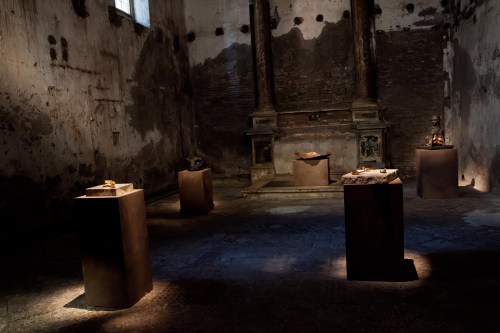
June 27 – Sep 15, 2018, Hope Atherton, Sant’Andrea de Scaphis, Rome, courtesy of the artist and Gavin Brown’s enterprise, New York / Rome


June 27 – Sep 15, 2018, Hope Atherton, Sant’Andrea de Scaphis, Rome, courtesy of the artist and Gavin Brown’s enterprise, New York / Rome


While viewing these amazing sculptures  in the dark interior of the church in Travestere,  I am searching  for the story, the narrative;  there is a complexity and yet there is an artistic gesture built in those luminous creatures ; there is a tremendous fragility just to imagine those pieces floating in the darkness; there is no gallery press release accompanied  (which I find it appropriate) so upon my return in New York, I sought to meet Hope and possible meeting at her studio.
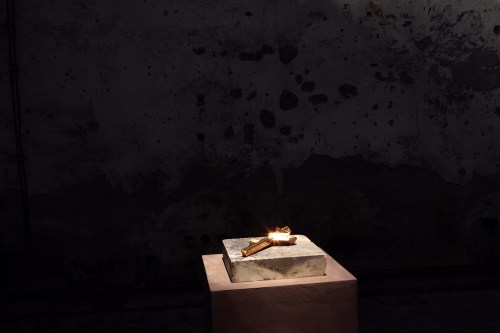
courtesy of the artist and Gavin Brown’s enterprise, New York / Rome


Hope’s aim is to make art “as mysterious and magical”

“Ash Birds” 2018, 24k gold plated bronze, Jun 27 – Sep 15, 2018,Hope Atherton,Sant’Andrea de Scaphis, Rome, courtesy of the artist and Gavin Brown’s enterprise, New York / Rome
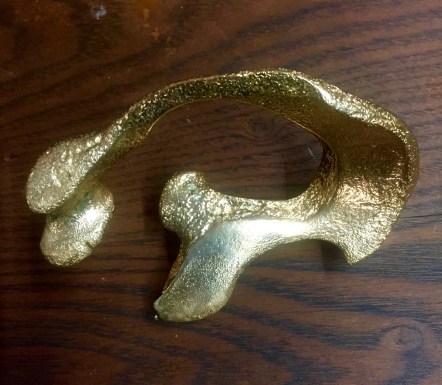
 

Hope Atherton’s  studio,photo: VK, october 2018


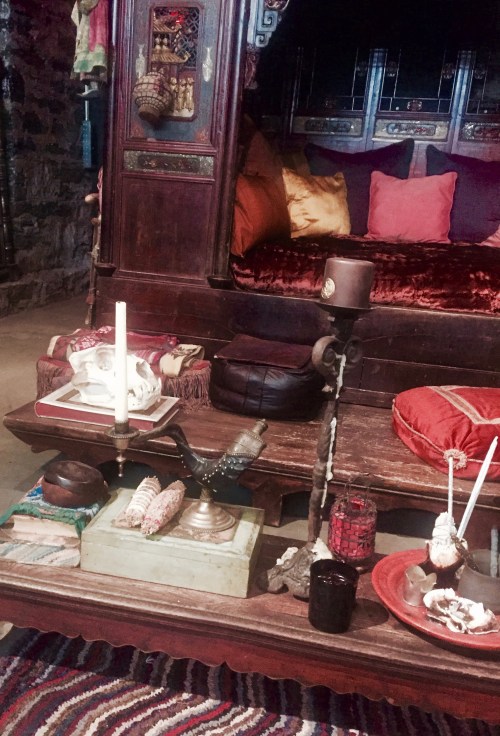
A stormy rainy morning while back in New York,  I visited  Hope Atherton at her studio in Harlem.  A magical and well orchestrated interior, numerous and eclectic finds from flea markets, souvenirs from travel, art objects,  molds for new works displayed and waiting  to be finalized,  sketches, oriental rugs, old armchairs with exotic textile fabrics, fur covers,  choreographed and stretched out in the long red brick wall studio leading to a small inside patio/garden while  a 19 century Chinese wedding bed takes a central role of a ‘theatrical set play’.
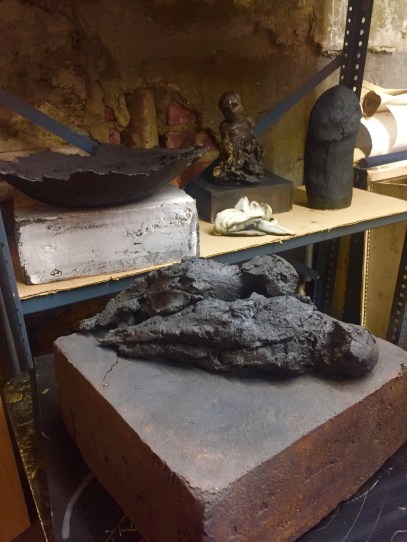
Hope Atherton’ s studio,New York. photo: VK.,Oct.2018
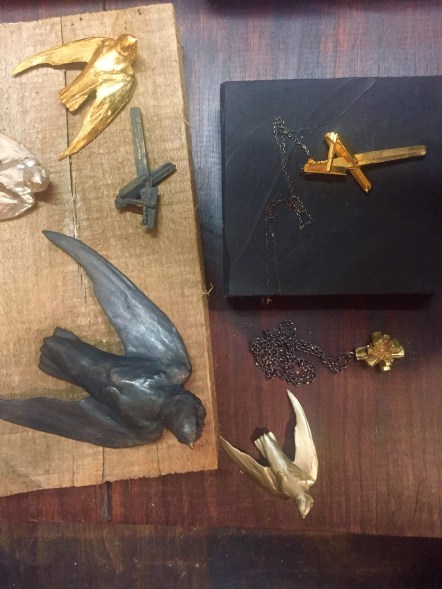
 

Hope Atherton’s  studio,NY, photo:VK,,Oct 2018


The gold -plated bronze birds are  ‘chimney swifts’ that her father has found in their farm home chimney.  How the story develops…” bird identified by silhouette, the smudge-gray Chimney Swift nimbly maneuvers over rooftops, fields, and rivers to catch insects. Its tiny body, curving wings, and stiff, shallow wingbeats give it a flight style as distinctive as its fluid, chattering call. This enigmatic little bird spends almost its entire life airborne. When it lands, it can’t perch—it clings to vertical walls inside chimneys or in hollow trees’.

Hope has captured the fragility and vulnerability of “chimney swifts” in a glorious way;  the ash birds are admired in their own stagnated stage and yet at that moment they are capturing life in their golden/bronze ‘robes’.  Hope creates smooth, beautiful illusions of those forgotten birds, and designates them into new life.
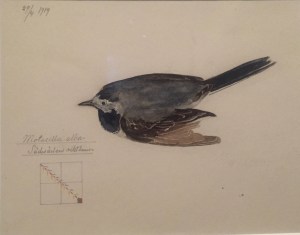
 

Hilma af Klint, watercolor on paper, 1917 (at the current exhibition at Guggenheim museum/New York)
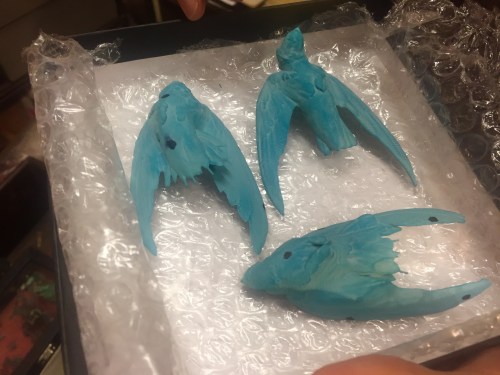
Hope Atherton’s studio,her molds, New York,  photo: VK., Oct. 2018
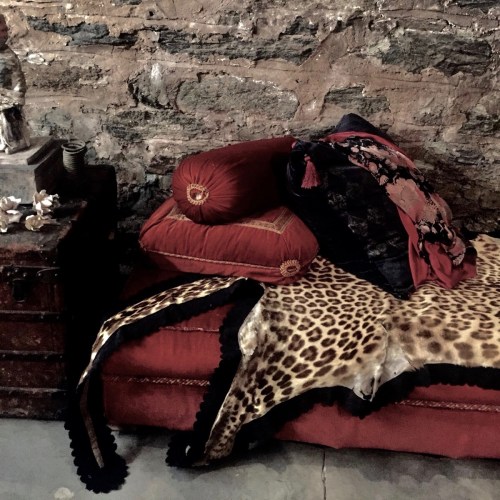
 

Hope Atherton’s  studio,New York, photo:VK.,Oct2018
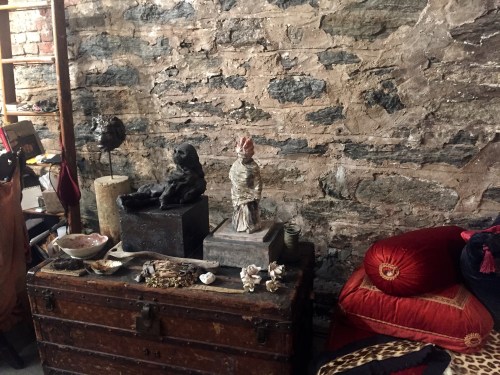
 

Hope Atherton’s  studio,New York, photo:VK., October 2018

much of her work seems more likely to have been discovered – fossilized in rock or buried in mud and leaves -than fabricated”. (Holly Brubach, at Family Matters article on W magazine, published oct.2018)
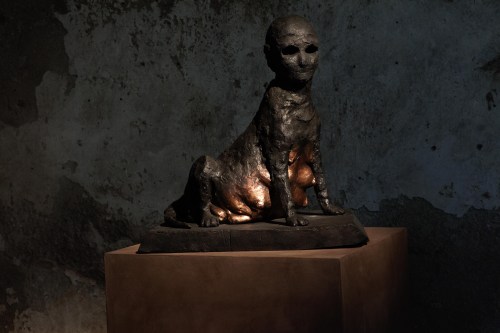
Jun 27 – Sep 15, 2018,Hope Atherton,Sant’Andrea de Scaphis, Rome, courtesy of the artist and Gavin Brown’s enterprise, New York / Rome


Hope Atherton loves artifacts of other eras and civilizations; she is not interested to adore the old things in a way of nostalgia but.. in her own words, ” it has to do with the fact that old things have undergone ‘more transformations. It’s about a sense of the larger, more expansive arc of time and our place in it, rather than dismissing the past in favor of the new. Not to say that I’ am not fascinated by what is oncoming, but my sense of the future is informed by what is already been.” (W magazine, Family Matters, October 2018, to Holly Brubach)

Hope Atherton was raised on a farm in Virginia, where she frequently returns with her five old lovely daughter.   Hope’s love and respect to nature and animals is indeed present in every place or work piece she is about to start.

Hope Atherton at her studio,New York, photo:VK., October 2018


Hope is a graduate of Rhode Island School of Design in Providence. Her first solo exhibition was in the “White Room” at White Columns, New York in 2001; Hope Atherton made a notable appearance and impression in the art community and salons in New York and London few years ago as Vanity Fair writes,

” New York City artist and fashion wild child Hope Atherton is known for her avant-garde layered looks, bold accessories, and multicolored hair. This 2010 international best-dressed list nominee isn’t scared to take risks, often pairing ethnic-inspired prints with leather pants and gobs of jewelry. She doesn’s overthink what she is wearing, and her style can easily be described as when bohemian and rock star collide “

That stormy rainy  morning that I visited Hope at her New York studio  she was dressed simple and comfortable in jeans and warm cashmere brown sweater and she calmly talked to me about her work; she had her own jewlery which was illuminating in this magical environment.  Her fascination with the natural world, global traditions and her aim to honor timeless craft techniques and to learn more for her own production art pieces are endless.

September 2002,  Hope Atherton had an exhibition “Shrine” at Sperone Westwater, New York,  she was quoted :

“Is it inherent in the human psyche to want to believe in superstition, ritual, and myth?” (Hope Atherton)
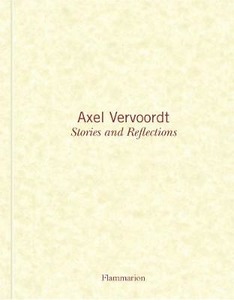


“Stories and Reflections” Axel Vervoordt and Michael James Gardner


Last spring during a beautiful dinner given by Fergus McCaffrey gallery, New York, as of the historic exhibition Gutai (1953-1959)  I met the writer Michael  James Gardner.  Our evening conversation was on his new publication, a memoir co-written with Axel Vervoordt,  “Stories and Reflections”, published by Flammarion (p hardback, 312 pages).  Axel Vervoordt, Belgian designer and famous curator whose taste and knowledge for rare and beautiful antiques, in modern art, furnishings, and pottery is astonishing.  Michael James Gardner is an American writer and Axel’s son in law.   I was delighted when I received the following afternoon my own copy signed by both authors.

To make this book. we began with a list that Axel made that included one hundred moments from his fascinating life. During a period of time that lasted many weeks, we met as often as we could, Axel started to tell me his stories and I learned many things that I never knew.  In the months that followed, as I listened to the recordings of the time we spent together, it became clear that many of the one hundred moments were connected…One thing leads to another. One story contains many…(Acknowledgements, Stories, and Reflections)


Needless to say that ‘Stories and Reflections”  was my companion through the summer during quiet hot afternoons in the Mediterranean and busy travel time as  the stories  unveiled and weaved in an extraordinary way, from discovering Japanese Gutai art, the decades-long series of exhibitions at Palazzo Fortuny in Venice; the  wonderful insights gained from artists, such as Cy Twombly, Anish Capoor..   By permission from Michael James Gardner, I chose three stories and photos to share here.

Cy Twombly and a Change of Heart 

photo©Jan Liegeois, published in “Stories and Reflections”


One of the last times I saw Cy was at TEFAF. He was interested in an ancient artifact, a Mesopotamian duck weight, circa 1500 BCE. Made of marble, such weights were used for measuring commodities traded in local villages.  He wanted to buy it, and I wanted to deliver it to his house in Italy personally. It was always difficult to reach him to make the travel arrangements. He rarely used the phone. His home in Gaeta was in a remote, hillside village on the coast between Roma and Naples. The best way to contact him was to call a local café, which he went to at the same time every day. …..in 2011, the news arrived: he had died in a hospital in Rome. In remembrance of him, I didn’t want anyone else to have the marbled duck. Today, it has a special place in the library of the castle and I think of Cy wherever I see it. (Stories and Reflections,pp. 194)


Stones and Silence 

photo©Jan Liegeois, published in  “Stories and Reflections”


“I believe stones are created by time and carry the power of the earth. Stones are like silence, slow-living animals-they have a spirit that resonates for thousand and even millions of years. 
…I believe there is a distinctive spirit in different types of stones – my practice is a reminder of that.  It’s a way of giving nobility to an earthy object that looks humble but actually has weight and meaning.”
In our workshop, I have designed floating stone tables using black Belgian slate. The creative process includes simply running my hand over the stone, not to give it the shape that I want, but to respect the shape the stone has already – like its hidden soul – and to use this as a guide in the design. Creating a patina by rubbing our hands over stone objects can be a healing process.  (Stories and Reflections, pp. 202) 


The Story of the Parquet

photo©Jan Liegeois, published in “Stories and Reflections”
While renovating the castle in the mid-1980s. I dreamed of creating a study with a beautiful floor. .. Through a referral, I heard there was something special in the north of Paris 
…A few weeks late, the parquet was delivered to the castle. It was much more beautiful than I could have expected. The designs used a mixture of walnut, rosewood, and maple to make intricate and unique shapes inspired by geometry, with expert precision……
…During that time, the craftsmen in our workshop worked hard for man months to recreate each square. On the day that the parquet was removed from the castle, we replaced the entire floor with our version, The process of producing it was the excellent technical training of our craftsmen. I consider their work to be a masterpiece. (Stories and Reflections, pp145) 


Author’s note: In the process of creating this book. I relied upon my memory of many different experiences in my life. I recounted the stories to my son-in-law in English, which is not my native language. We consulted family members and others who appear in these stories to read drafts, provide edits, or offer their own accounts of the events as we lived them. We researched facts and details when we could. I have changed the names in some cases or omitted them altogether. I occasionally left out certain details, but only when that didn’t change the purpose or emotional truth of the story and why I wanted to share these memories with you. (Axel Vervoordt)

….. you learn also from the ugliness because you either want to make it better or try to accept it. There is no beauty without ugliness. Art made me look at things differently. It opened my mind. I went on my own to England when I was 14 to buy antiques, and then I sold to my parents’ friends. I went to big, beautiful houses, and they had the most amazing art and furniture with Wellington boots out front. They lived in a casual way with beautiful things. In France and other countries, people had expensive things, but you couldn’t touch them. It was only to show riches, and I never liked that. I like things that are close to you that give you spirit. (Axel Vervoordt ” the design is here’, conversation  with Kanye West, by Chris Gardner, April 13, 2018)


“I want to give a different dimension to what I do. I don’t like that word, decorating…Rick Owens speaks with Axel Vervoordt about living in the light and what it takes to make a village.” Interview magazine, July 16, 2014)

Author’s note: The first half of the book tells more of a chronological story of Axel’s life, and the second half he really wanted to add more “reflections” and little lessons that he learned. It is more about mentorship that he received as a child and trying to pay that forward. (Michael James Gardner, May 28th, private note/email to me)

all photos©Jan Liegeois published  by permission directly by the author Michael James Gardner


New York_ Francesca DiMattio_ ‘Boucherouite’stitching histories & traditions with porcelain and stoneware & color

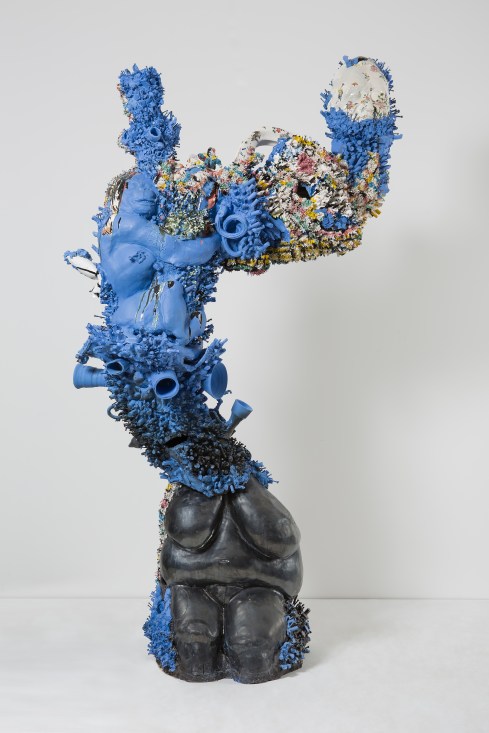
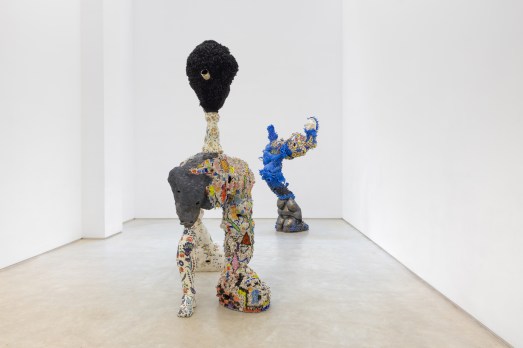
Francesca diMattio, “Boucherouite”, Venus II, 2018 (detail), glaze on porcelain and stoneware, resin, enamel, acrylic paint, steel, courtesy salon 94, New York  & artist


Upon my return from Europe, from Maremma/Toscana mid-March,  I left a beautiful and lovely springtime landscape.  New York has not smiled to spring; one of those rainy and cold days, I walked one of those mornings into a very special garden at 243 Bowery (salon 94), Francesca DiMattio’s ‘Boucherouite”.

DiMattio returns to the aesthetics of craft for inspiration, metamorphosing traditional techniques and imagery into mad-cap mise en scenes. Boucherouite, the exhibition title, refers to the rag rugs traditionally made from torn and reused clothing by Berber women in North Africa.  In a nod to their improvisational and idiosyncratic style, DiMattio shreds and weaves together images from many centuries and cultures, turning them into a new hybrid form. (Boucherouite exhibition, salon 94, NY, gallery press release)

The Boucherouite rug  is a magical colorful work of art, made by the  Berbers in Morocco, Boucherouite or Boucherwit, from Moroccan Arabic ‘bu Sherwin’ ( a piece torn from pre-used vintage clothing scrap )


What is the contract of a copy?  How does a reproduction shift meaning?  Monet’s waterlilies are at once associated with a Kleenex box and to MoMA. I love how a reproduction can reroute the value system, pointing out an image’s inherent instability.  That’s in part why I was drawn to porcelain.  Its development can be mapped through the copying from one culture to another- a history of hybrids: a Dutch version of an Asian scene, the white glazed clay cup faking porcelain, etc. I am most attracted to such dueling combinations. (Francesca DiMattio, February 2018)

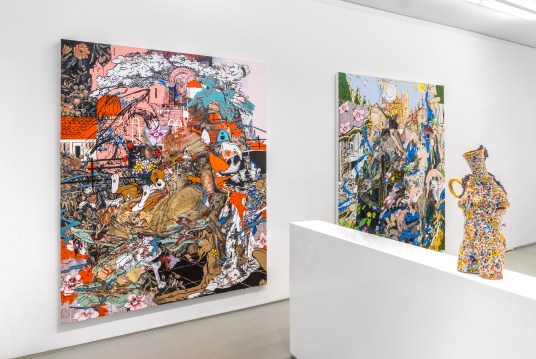
Francesca DiMattio, “Boucherouite”, 2018 at Salon 94, Bowery, New York,  exhibition view

Francesca DiMattio, “Boucherouite”,2018 at Salon 94, Bowery, New York, exhibition view


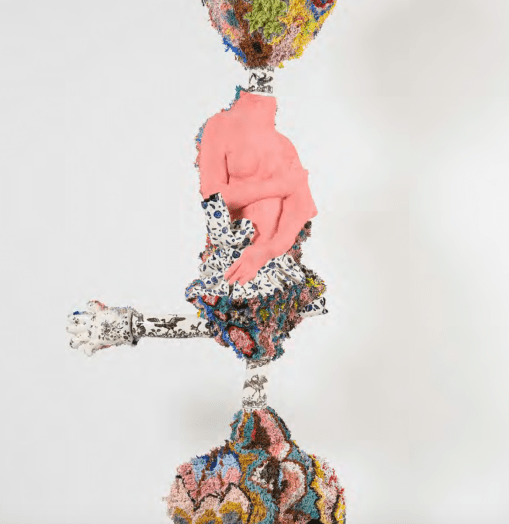
Francesca DiMattio, “Boucherouite” ‘Venus II’, 2018, glaze on porcelain and stoneware, resin, enamel, acrylic paint and steel,96x60x38 inches, 2438×152.4×96.5 cm), courtesy of salon 94, NY  & artist


Francesca DiMattio, “Boucherouite”,’Venus I’, 2018, glaze on porcelain and stoneware, resin, enamel, acrylic paint and steel, 105 x 44 x 33 inches (266.7 x 111.8 x 83.9 cm), courtesy of salon 94, NY  & artist

As in her painting, in her ceramic work, DiMattio follows the principles of stitching together pieces of fragments of histories and traditions to create multivalent forms and images that connect diverse sculptural and decorative languages around ideas of value, function, gender, and class.  References to decorative wares such as Anatolian Iznik, Chinese Ming Dynasty porcelain, and Dutch Delftware abound alongside allusions to the output of the German factories Meissen and Augarten, the French Du Paquier and Sèvres, and the English Derby, Minton, and Wedgwood. (Claudia Schmuckli “Digital Becoming”, published in DiMattio book, Blaffer Art Museum, University of Houston)
Francesca DiMattio,”Boucherouite” ‘Venus I’, (detail )  2018, glaze on porcelain and stoneware, resin, enamel, acrylic paint and steel, 105 x 44 x 33 inches (266.7 x 111.8 x 83.9 cm), courtesy of salon 94 & artist

Roberta Smith writes at the New York Times (April 2015) on  DiMattio ‘s  ‘Domestic Sculpture’ at Salon 94 “Combining porcelain and stoneware, these bravura bricolages owe something to the ceramics of Nicole Cherubini and Arlene Shechet, while merging the improvisation energy of Peter Voulkos with the neo-Expressionist swagger of Julian Schnabel’s broken-crockery paintings. But they mainly reflect Ms. DiMattio’s voracious reconsiderations of the history of ceramics, seemingly deforming, shattering and piecing (or jamming) together appropriated vessels in contrasting styles, glazes and decorative patterns.”

Cindi Strauss finds a challenging similarity of Ms. DiMattio’s work in “Pattern Recognition”* with Katsuyo Aoki‘s

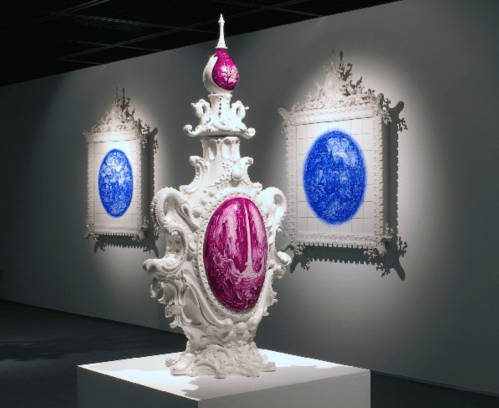
..perhaps one of the most intriguing comparisons to DiMattio’s ceramic sculpture comes in the work of Katsuyo Aoki (see figure below), a Japanese ceramist who has emerged in the past few years as an exponent of a ‘neo-ornamentalist’ style in Japan. Like DiMattio, Aoki favors the baroque and rococo styles of eighteenth-century Western European porcelain, examples of which she has seen only in books. Through her absorption, dilution, and translation of the ‘pieces’ form and ornament, she questions historical porcelain as a symbol of wealth and power. Aoki’s concern is with how these symbols of beauty from the West have filtrated and affected Japanese culture. ….DiMattio’s concern differs, lying in porcelain’s association with the feminine and the easy dismissal of the medium by society. (*Francesca DiMattio, published book by Blaffert Art Museum, University of Houston)

Katsuyo Aoki, view of the solo exhibition, May 2005, INAX gallery2, Tokyo, 2006

Francesca DiMattio working on her studio finalizing her sculptures for “Boucherouite. photo@Mathew Novak, published at New York Times (permission by Salon 94)


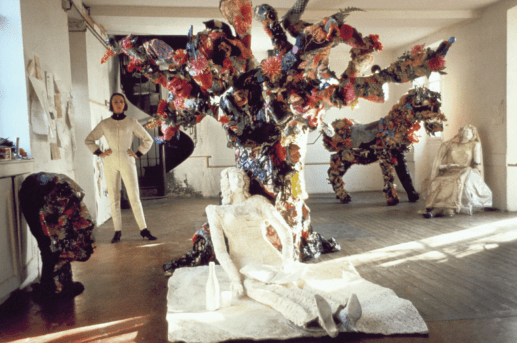
While walking  around the exhibition large space of Salon 94, at Bowery,  I could not stop thinking the similarity of the intensity of the work with Niki de Saint Phalle ‘s  just a few days before I was at the Tarot Garden by Niki de Saint Phalle in Maremma, a fourteen-acre sculpture park build atop Etruscan ruins, close by the picturesque village of Capalbio,  which happens to be close to my summer home. (see here “Beautiful Monsters” at New Yorker, April 18, 2016, by Ariel Levy)

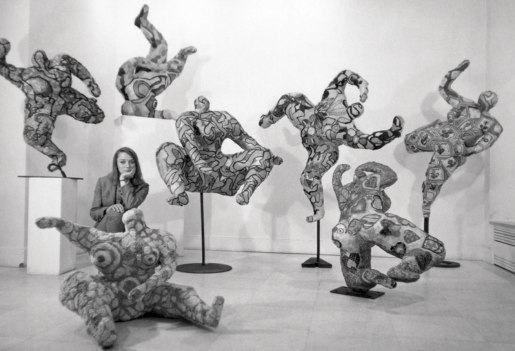
Niki de Saint Phalle among her Nanas at the Galerie Alexandre Iolas, Paris, Autumn 1965. Photo: © André Morain, Copyright © 2007-2018 Niki Charitable Art Foundation

Niki de Saint Phalle in her studio at Soisy, surrounded by Le Mangeur d’Enfants, La Mariée sous l’Arbre, and Le Cheval et la Mariée. Photo: © Monique Jacot Copyright © 2007-2018 Niki Charitable Art Foundation

To Saint Phalle, the Tarot Garden was to be an Eden of art and magic. To the local gentry, the garden was an act of vandalism. But there was little they could do besides carp about the “madwoman and her monsters,” because Saint Phalle was under the protection of Italian nobility. (Ariel Levy, “Beautiful Monsters” at New Yorker, April 18, 2016)

Francesca DiMattio, “Boucherouite”,2018 at Salon 94, Bowery, exhibition view, courtesy of salon 94 & artist

On Q & A at Interview Magazine, by Emily McDermott, “Francesca DiMattio’s Unstable Stability, November 5, 2015, Ms. DiMattio says,

….I don’t think I took a sculpture class the whole time I was at Cooper. The sculptures really developed out of the paintings, out of the thinking I had already developed. I definitely had to figure out how to make stuff, and I still do. When I was at school nobody could teach me ceramics. I was lucky enough to have that in my family. 

DiMattios’ answer to Anne Thompson’s question “..is there any modernist critique or engagement in your use of ceramics”  … FD: I choose to work with ceramics for feminist reasons rather than as a modernist critique. I was interested in ceramics for its connection to craft because I think a lot about the structures of craft in general. The up and down of sewing, the stark juxtapositions of colors and patterns in guilts, and how knitting and crocheting can turn the disparate material into something altogether new. (*Francesca DiMattio, published book by Blaffert Art Museum, University of Houston)
Munich “IL TRITTICO”, Giacomo Puccini at Bayerische Staatsoper_ a brilliant performance

IL TRITTICO: Il tabarro / Suor Angelica / Gianni Schicchi

Three operas in one act each: Composer: Giacomo Puccini ; Libretti by Giuseppe Adami and Giovacchino Forzano  (In Italian with German and English surtitles)
 IL TRITTICO (Suor Angelica): Ermonela Jaho (Suor Angelica), Ensemble und Chor der Bayerischen Staatsoper photo©Wilfried Hösl


musical direction: Kirill Petrenko  production: Lotte de Beer
Conceptual advice: Peter te Nuyl 
stage: Bernhard Hammer 
Costumes: Jorine van Beek 
light: Alex Brok 
dramaturgy: Malte Krasting 
choirs: Sören Eckhoff 

Last December, few days before Christmas, I had a lovely invitation for “Il Triticco, one of the most underrated opera by Giacomo Puccini, for the Bayerische Staatsoper_Munich,   one of the most triumphant opera houses of our contemporary time.

Three radically different sets being demanded for this 3-act opera and a balanced ‘marriage’ of Ms Lotte de Beer ( production /stage design), the music direction by Kirill Petrenko and the performers, principally Ermonela Jaho on the role of Suor Angelica emanated  to an astonishingly outstanding performance.

Simply stunning, simply gorgeous….And then something very rare happens: De Beer takes the stage, and instead of the usual boos the applause gets even louder. The spinning spaceship has done it to the audience. “(Sueddeutsche Zeitung”)

These three self-contained operas whose stories have nothing to do with each other  act as strange neighbors; First,  ‘Il Tabarro’ (The Cloak), a melodramatic slice of life and marital sleaze, a chill drama on the Seine; then follows the delicate tragedy of Suor Angelica, a religious tale set in a convent, (location:near Siena), featuring an entirely female cast; and the third act comes a devilish comedy of Gianni Schicchi (location; Florence) in which a family of hypocrites are duped out  of their inheritance by a perfect villain.

 Giacomo Puccini has summarized under the art historical term “triptych” – Il tabarro, Suor Angelica and Gianni Schicchi  three one-act operas,  scenes of reality. Puccini ventures to narrate the world as a whole in a grand opera as in a great novel.  Puccini sets three historical highlights, bundled by a music that understands the human impulses of relentless coldness to glowing passion.

Ms. de Beer doesn’t think operas should abandon the audiences they already have in favor of new audiences, but “I think they should get a second brand, like a younger version run by young artists who get a chance to try and communicate with their contemporaries.(NY Times, 2014, Breaking the Rules of Opera for a New Generation)

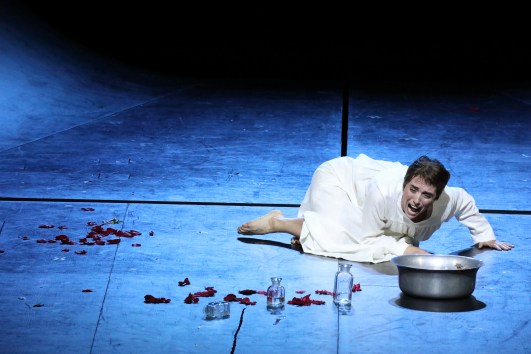
Il trittico (Sour Angelica): Michaela Schuster (Die Fürstin), Ermonela Jaho (Suor Angelica) photo ©Wilfried Hösl

Around 1904, Puccini first began planning a set of one-act operas, largely because of the success of  Cavalleria Rusticana.  Originally, he planned to write each opera to reflect one of the parts of Dante’s Divine Comedy However, he eventually based only Gianni Schicchi on Dante’s epic poem; the link in the final work is that each opera deals with the concealment of a death. 

Il trittico (Sour Angelica): Ermonela Jaho (Suor Angelica) photo©Wilfried Hösl

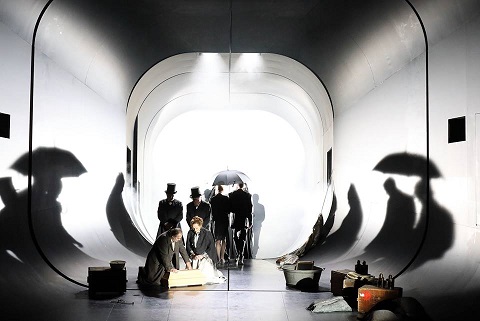
“Il Trittico is not only a showcase of some of Puccini’s best writing, but it can also be a showcase for a director who is unable to resist the temptation to try to link them at least thematically, since there is little common convergence of tone, period or character between the three short works. Lotte de Beer connects the three pieces in only the most abstract of ways for the new production in Munich. Each of the one-act operas remains in the period of its original setting, and plays out closely to the libretto, but each take place within the wide opening of what looks like a large tunnel. The concept behind this is something to do with time, connecting the past with the future, but it’s not something that makes a great impression or present the works in any new or revelatory way.” (Opera Journal, Puccini, Il Trittico, Munich 2017) 

Il trittico (Sour Angelica): Ermonela Jaho (Suor Angelica) photo©Wilfried Hösl

After the extensive music dramas of Richard Wagner and Giuseppe Verdi, the music world occupied itself with the question of what can follow those form-perfect opera dramas with leitmotif technique and a duration of many hours of performance; an increase no longer seemed possible. In Italy, therefore, people around the year 1880 recollected the short form of one-act play, which was not completely unknown. As early as the 16th century, it was customary to insert smaller and stand-alone “mini-comedies” as intermedia between the acts of tragedies, in order to make the evening evenings more varied. Over time, the comic intermezzi between soprano and bass buffo developed out of these, while in France they created variety through ballet inserts between the tragedy files. (Amelie Langermantel, Il Trittico-Die Kunst Des Einakters, 12.20.2017)

 IL TRITTICO (Il tabarro): Eva-Maria Westbroek (Giorgetta), Wolfgang Koch (Michele), Yonghoon Lee (Luigi); photo©Wilfried Hösl

 IL TRITTICO (Il tabarro): Eva-Maria Westbroek (Giorgetta), Wolfgang Koch (Michele), Yonghoon Lee (Luigi); photo©Wilfried Hösl

The idea of the one-acter Puccini did not seem to have let go since then. At the turn of the century, he focused more intensively on the idea of three co-ordinated short operas dedicated to various episodes of the Divine Comedy Dante, each depicting the areas of Inferno, Purgatorio and Paradiso (Hell, Purification Mountain and Paradise). Both the unsatisfactory libretto search for three matching stories, and in crucial instance Puccini’s publisher Giulio Ricordi spoke against the implementation of this fabric idea. However, Puccini thus laid the foundation for his Trittico, which should unite as well as the Divine Comedy in three initially independent parts under a theme. Over the years, the composer tried repeatedly  to implement the idea of the three separate acts and thought, for example, in 1907 to set to music by Maxim Gorki. Again publisher Ricordi expressed his concerns that those topics would not be suitable for an opera and would never sell to the public.

 IL TRITTICO (Suor Angelica): Ermonela Jaho (Suor Angelica), Ensemble und Chor der Bayerischen Staatsoper photo©Wilfried Hösl


Many thanks to Christoph Koch (Head of Press & Editorial Content /STAATSOPER) for his invitation and  support  and patience to finalize this post.


New York: Karin Waisman’s new piece “Stem 3” silence speaks

“Space is not merely given, it too  is produced; by analogy, we can evoke the space created by a musical chord, its wave-like expansion producing a tapestry of sound.”
                                                         (Olivier Berggruen on Karen Waisman’s work)


A short ride with the subway from Manhattan to Queens last week,  before the temperatures dropped dramatically in New York City on my way to visit my dear friend’s studio, Karin Waisman to see her new piece,  “Stem 3#”  a jewelry piece.  While reading a great book, Pascal Mercier ‘ s ‘Night Train to Lisboa” I was traveling through time since I met Karin and arrived early a sunny afternoon at Karin’s lovely small studio; our conversation unfolded slowly with green tea revealing the essential nature of her work.

Karin Waisman  studied architecture as an undergraduate in her native Buenos Aires and later earned an MFA in sculpture from Cornell.  She lives in New York with her family and goes uninterrupted to her studio every day. She is an accomplished artist with many exhibitions and site- specific installations to her credit.   Despite being trained as an architect, she prefers to work on her art full time.  A great writer, my dear friend, Olivier Berggruen, notes on  Karin’s work:

El Dorado, 2008-2014. Installation view;photo ©Karin Waisman

Karin Waisman creates haunting, ethereal works in which ornamentation acts as a founding principle.  Formal elements alternate between refined vegetal motifs and a proliferation of geometric patterns. These unfold effortlessly across a flat surface that is primarily dynamic rather than static. The expansion of geometric forms occurs in a spontaneous, organic fashion that undermines the Pythagorean ideal on which they seem to be based.

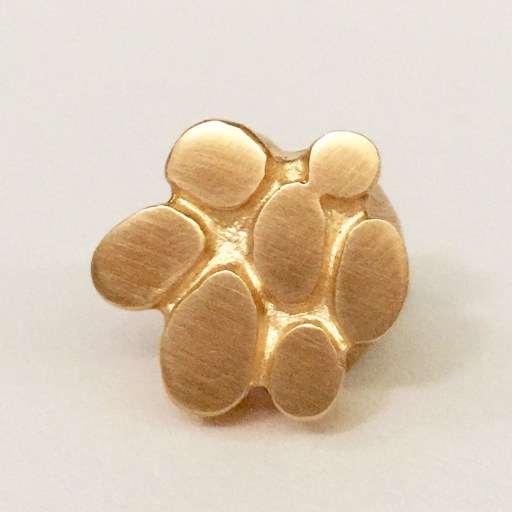
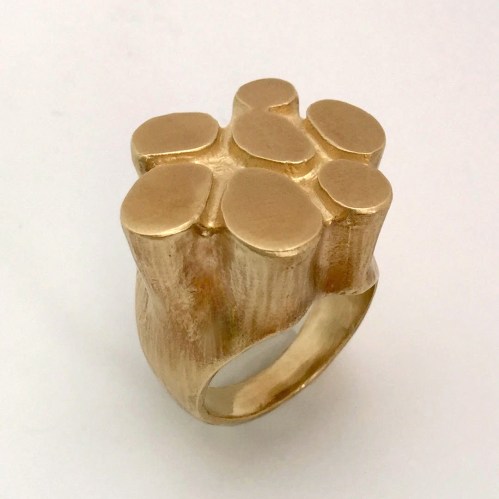
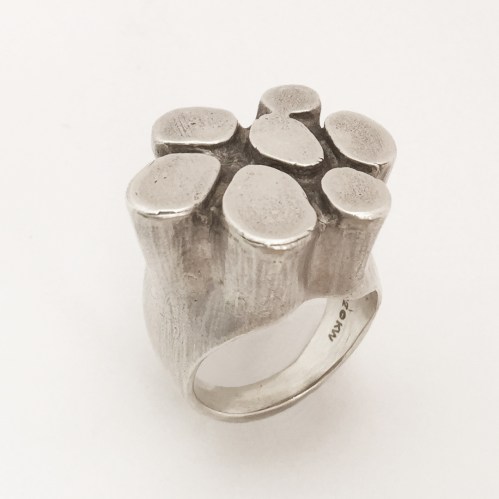
        Karin Waisman  Stem #3, 2017    Carved in wax and cast in  gold 1”D x 7/8”W x1-1/8”H; photo ©Karin Waisman


Karin Waisman, El Dorado, installation view, 2008-14. Wall 2, dimension variable;photo ©Karin Waisman


….the interlacing of lines is the foundation of the structure of the arabesque and its geometric complexity (much cultivated in late Antiquity) reveals repeated patterns, thus allowing the beholder to imagine the design extending beyond its actual limits. It also introduces the idea of infinite connection of correspondence. In one-way or another, everything is deduced and linked together.  The arabesque was not just exclusive to Islamic art. Rococo ornament, for example, introduced a fluid and whimsical style that has applied to a variety of media, from boiseries and mirrors to porcelain and silver. 

Karin Waisman’ work refers to 17th Century needlepoint, the craft involving lace making by embracing potentially infinite growth forms, ornamentation generated through a painstaking process.  (Olivier Berggruen essay  ‘Efflorescence & Evanescence’ at the book/ cataloge ‘Karin Waisman – The Garden of Eden’, New York, 2004)

( boiserie: finely-sculptured wood paneling or wainscoating, particularly  in 18th-century French architecture, source; Collins dictionary)

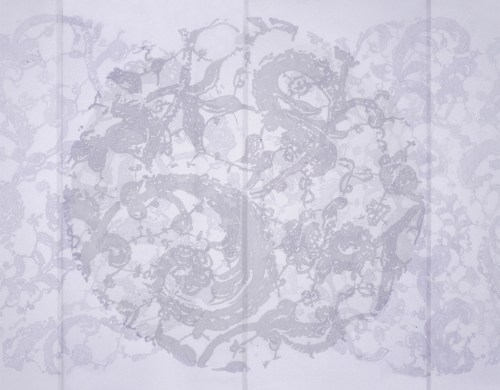
Karin Waisman, Evanescence I, 1998-1999. Pencil on velum, 68″h x 96″w;photo ©Karin Waisman


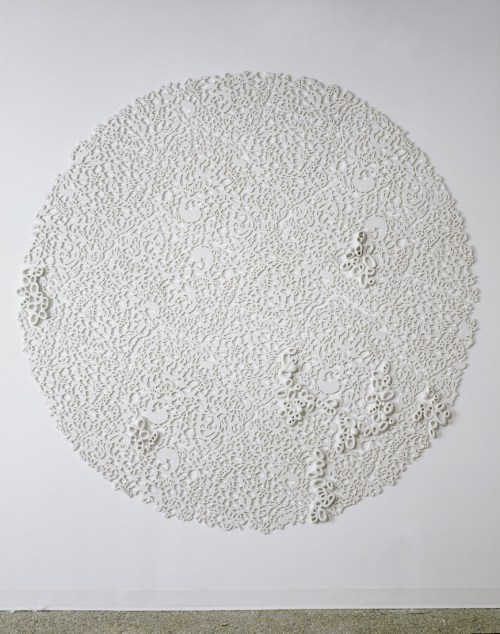
Karin Waisman, Tondo II, 2006. Cast Resin, 84″ diameter; photo ©Karin Waisman  

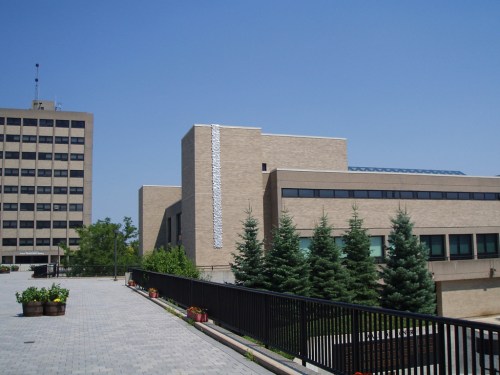
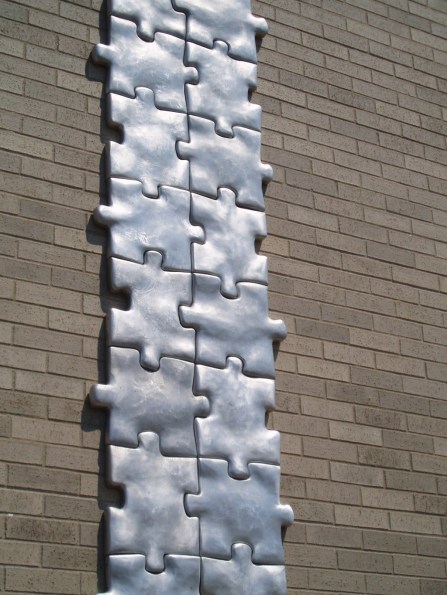
Karin Waisman -Puzzled, 1998-1999. Cast Aluminum 432″h X 24″w x 2″d. Permanent Collection Plattsburgh Sculpture Park. Myers Fine Arts Building;photo ©Karin Waisman

Karin Waisman -Puzzled, 1998-1999 (detail) Cast Aluminum 432″h X 24″w x 2″d. Permanent Collection Plattsburgh Sculpture Park. Myers Fine Arts Building;photo ©Karin Waisman

    Karin Waisman  Stem #3, 2017    Carved in wax and cast in  gold 1”D x 7/8”W x1-1/8”H;
photo ©Karin Waisman

Stem #3 is part of a new series of pieces that are to be worn on the hand. This new tactile element of the work explores how one perceives weight, temperature and different surfaces on our own body. My previous pieces for public places, explored the relationship of our body moving in front of the work or in an enclosed space, perceiving it as a field of vision. In these sculptures the relationship is changed; we hold, move and transport the piece with our own body. (Karin Waisman, 2017) 

In her work, ‘Evanescence I‘, Olivier Berggruen continues, ‘… The vegetal-inspired motifs that appear in this inner sanctum evoke growth and movement without falling into representation. In other words, the motif that pervades this work is inspired by vegetal forms but nowhere is there a fully formed, self-contained plant to be seen. The principle of vegetal, organic growth is used as a formal and metaphorical device to structure the work. Plants have the infinite potential for growth. Vegetal forms here are an evocation of life, of that very form that appears in movement.’ 

Karin Waisman, Evanescence I, 1998-1999. Pencil on velum, 68″h x 96″w, detail;photo ©Karin Waisman

see Karin Waisman   and more about her work  see here 

  Karin Waisman,  Stem #3, 2017  Carved in wax and cast in recycled silver  1”D x 7/8”W x1-1/8”H;photo ©Karin Waisman

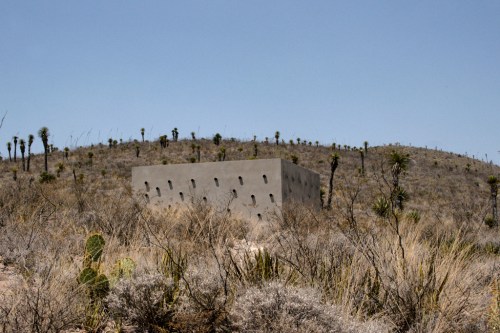
Karin loves to be surrounded by nature; her second studio is two hours away from the city in Eastern Long Island where she escapes to work, a sanctuary, a place to work on her large pieces and preparation sketches on site-specific site-specific work that often incorporates architectural elements.  One of them is at Chihuahua Desert at the foothill of the 18th century silver mining town Real Catorce, the ‘Blue Oasis’, finalized in 2013.

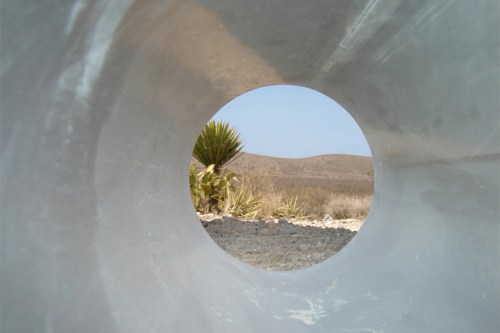
Blue Oasis is a partially buried concrete structure, fifteen feet square and twelve feet high on the inside. We enter by descending a narrow and dark stair, a transitional space that leads to a large tiled cubic room. All the walls, floor, and ceiling are covered with a square encaustic tile that is patterned with concentric circles in blues and greens. A stainless steel tube penetrates some of these circles to the outside, allowing for natural light and ventilation as well as serving as a small oculus that allows the viewer to see the desert landscape beyond. Working within this extreme site, Blue Oasis exists for the viewer to establish a temporary dialog with Nature through the lens of the vibrant blue light that pulsates within. It transforms the landscape from within. On the outside it blends with the desert landscape, half- buried in the land. (Karin Waisman, April 2013)

‘Blue Oasis’, San Luis Potosi, Mexico, 2011. Permanent collection Sculpture Park San Luis Potosi.  Exterior view, reinforce concrete;photo ©Karin Waisman

‘Blue Oasis’, San Luis Potosi, Mexico, 2011. Permanent collection Sculpture Park San Luis Potosi. (Detail tiled main space with wall and ceiling perforations);photo ©Karin Waisman

‘Blue Oasis’, San Luis Potosi, Mexico, 2011. Permanent collection Sculpture Park San Luis Potosi. (Detail wall perforation looking to the desert from inside main space;photo ©Karin Waisman

This optic effect reinforces the idea of movement and transformation. The sound of our own bodies reflects on the tiled walls, floor and ceiling creating a continuous echo. Outside is the desert, harsh and sublime, tamed by this new oasis, a shelter, a second skin. The possibility of perceiving the walls as a limit that separates the inside space from the outside world and as an element that grants that space its symbolic quality is only possible because I, myself, inhabit my body within the limits of my own skin. (Karin Waisman, April 2013) 


New York: Carey Young “Palais de Justice” and Franz Kafka ‘Before the Law’ 1915 parable at Paula Cooper gallery

SEPTEMBER 7 – OCTOBER 14, 2017 at Paula Cooper gallery, 21st street, Chelsea
published:(VK)  October 8th, 2017, Berlin

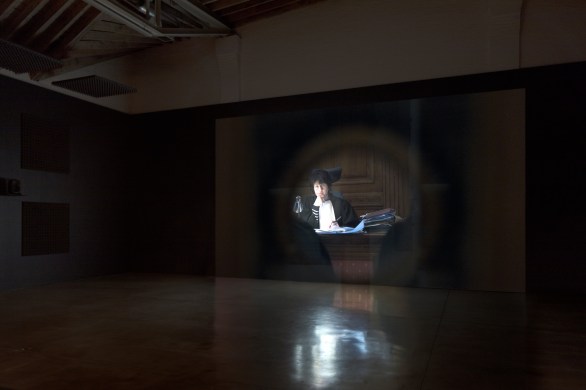
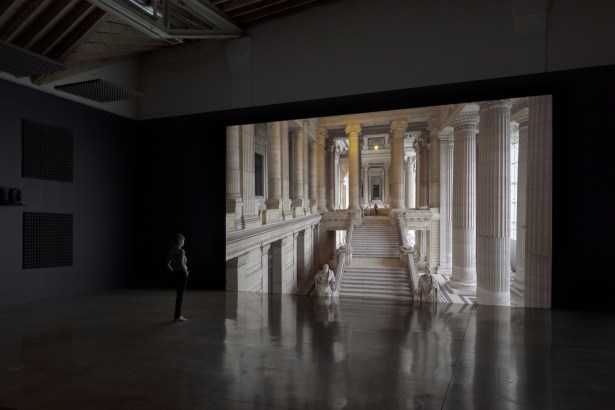
Installation view, Carey Young, Palais de Justice,2017,single-channel HD video (from 4K); 16:9, color, quadrophonic sound;17 mins 58 sec,Photo: Steven Probert  © Carey Young. Courtesy Paula Cooper Gallery, New York


Carey Young presents a  challenging,  quitely stunning 18 minute video, and  poetic exhibition at Paula Cooper’s space on 21st street.  The piece, a new video  ‘Palais de Justice’ develops Young’s interest in law, gender and performance, and considers the complex relations between lenses, surveillance and ideas of framing or being framed.

Carey Young (London-based British -American visual artist,b.1970, Lusaka, Zambia) takes her inspiration in part  from “Before the Law” by Franz Kafka (1915) parable Focusing on “gateways” to the law, both architectural and human, Young’s work here—a quietly stunning 18-minute video shot in the Brussels court building in which the protagonist is continuously denied access to ‘the law,’ the series depicts these doorways as metaphors for the legal system itself.

Before the law sits a gatekeeper. To this gatekeeper comes a man from the country who asks to gain entry into the law. But the gatekeeper says that he cannot grant him entry at the moment.  The man thinks about it and then asks if he will be allowed to come in later on.  “It is possible,” says the gatekeeper, “but not now.” At the moment the gater to the law stands open, as always, and the gatekeeper walks to the side, so the man bends over in order to see through the gater into the inside. When the gatekeeper notices that, he laughs and says: “If it tempts you so much, try it in spite of my prohibition. But take note: I am  powerful.  And I am only the most lowly gatekeeper. But from room to room stand gatekeepers, each  more powerful than the other. I can’t endure even one glimpse of the third.” (exerpt “Before the Law” (1915) by Franz Kafka, transl.by Ian Johnston)


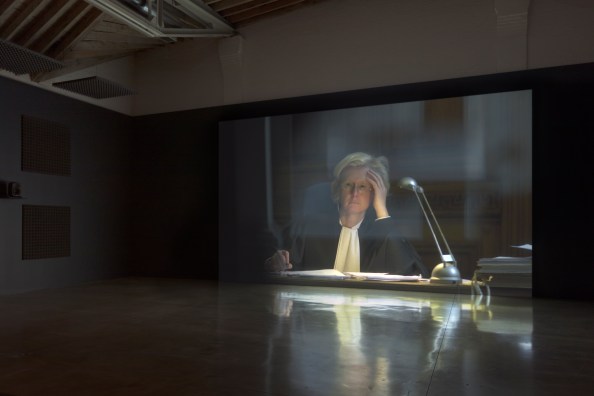
Installation view, Carey Young, Palais de Justice, 2017,single-channel HD video (from 4K); 16:9, color, quadrophonic sound;
17 mins 58 secs,Paula Cooper Gallery, New York  © Carey Young. Courtesy Paula Cooper Gallery, New York


Palais de Justice was filmed surreptitiously at the Palais de Justice in Brussels, a vast 19th century courthouse designed in an ornate late Neo-Baroque style. Contradicting the familiar patriarchal culture of law, Young’s concealed camera depicts female judges and lawyers at court. Sitting at trial, directing proceedings or delivering judgments, female judges are spied through a series of circular windows in courtroom doors.(gallery’s press release).

Installation view, Carey Young, Palais de Justice, 2017,single-channel HD video (from 4K); 16:9, color, quadrophonic sound;
17 mins 58 secs, Paula Cooper Gallery  © Carey Young. Courtesy Paula Cooper Gallery, New York


“…..Examined through the lens of contemporary politics, both within the United States and abroad, the film acts as a critical counterpoint to regressive trends towards autocratic government and limited civil rights, particularly those belonging to women….”

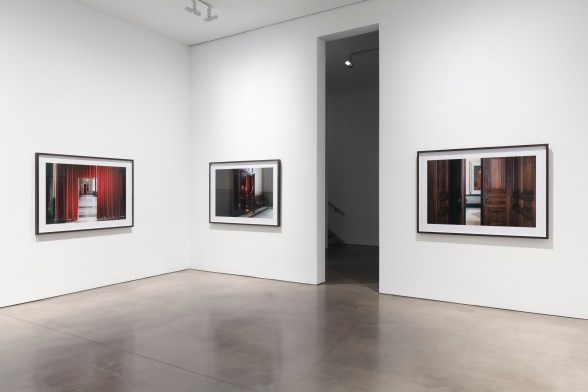
Installation view, Carey Young, Palais de Justice, Paula Cooper Gallery, New York (9/7 – 10/14/17) © Carey Young. Courtesy Paula Cooper Gallery, New York


The exhibition includes a series of photographs, images  of courthouse doorways….Carey Young in continuous analysis based on Before the Law, after Franz Kafka’s 1915 parable, which the protagonist is continuously denied access to ‘the law,’ depicts these doorways as metaphors for the legal system itself.

As Carey Young  told Elephant in an interview earlier this year, the law “beckoned as an institution that had been little explored by artists, and one which had such a relevant philosophical literature in terms of art—Derrida, Agamben, Deleuze, Foucault, Butler etc. … In so many ways, mainly to do with its lack of visuality and lack of understanding of creativity, law is an “other” to art, and yet when one takes an artistic subject—ideas of site, space or landscape, for example—law offers me a way to reframe it in a playful and unfamiliar way, in which I can also conflate it with ideas of control, rhetoric, power and neoliberalism.”(Jeffrey Kastner, on Vice, sept 28th, 2017) 
“…. Courtrooms are glimpsed in various ways – a red glow emanating from one entices us with its surprising warmth and seductiveness; a red velvet curtain in another calls to mind law’s reliance on aspects of theatre; in a third, a courtroom visible through a frosted glass window glows like an abstract painting, as if law’s abstractions may connect with artistic thinking in ways which have not yet been fully considered…..”

Installation view, Carey Young, Palais de Justice, 2017  single-channel HD video (from 4K); 16:9, color, quadrophonic sound;
17 mins 58 secs,Paula Cooper Gallery, New York  © Carey Young. Courtesy Paula Cooper Gallery, New York


Few days after the opening of the exhibition, September 8th, Anthony Allen,  director of Paula Cooper gallery organized a challenging and intellectual  panel discussion with Carey Young, Colby Chamberlain and Joan Kee , where many questions were raised on law, patriarchal society and barriers…

Carey Young (b. 1970) is a British-American artist based in London, England. Her work has been exhibited in prominent national and international exhibitions and has been the subject of numerous one-person exhibitions including at the Dallas Museum of Art, curated by Gavin Delahunty (2017); the Migros Museum of Contemporary Art, curated by Raphael Gygax (2013); Eastside Projects, Birmingham, England (2010), which traveled to Cornerhouse, Manchester and MiMA, Middlesborough; Le Quartier, Quimper, France (2013); The Power Plant, Toronto (2009); and the Contemporary Art Museum St. Louis (2009). Young’s work has also been presented at the Taipei Biennial (2010), Tate Britain (2009), Moscow Biennale (2007), Modern Art Oxford (2007), Performa 05 and the Venice Biennale (2003).
Colby Chamberlain is Lecturer in Discipline in Modern Art and Theory at Columbia University and is a founding editor of Triple Canopy. His scholarship and criticism focuses on intersections of art and other fields of professional practice, in particular the law.
Joan Kee is Associate Professor in the History of Art at the University of Michigan. A contributing editor for Artforum, she received a J.D. from Harvard Law School and has recently completed a book on the relationship between contemporary art and law in post-sixties America. In 2016, she guest edited a section of the Brooklyn Rail on art and the law whose contributors included Carey Young.


ΑΡΧΑΙΩΝ ΤΟΠΟΣ

ΙΣΤΟΡΙΑ-ΑΡΧΑΙΟΛΟΓΙΑ-ΤΕΧΝΗ- ΕΠΙΣΤΗΜΗ-ΦΙΛΟΣΟΦΙΑ

Keith York City

History made interesting

VK

visits on art, design, architecture and literature

Eclectic Trends

Interior Design and Lifestyle Trends

maria sarri Art projects

#art_projects, #public_art, #site_specific, #post_colonial, #urban_art

Η καλύβα ψηλά στο βουνό

Σε κοίταζα μ' όλο το φως και το σκοτάδι που έχω

tangledjourneys

A personal perspective on human interest stories from an American journalist living abroad

An Englishman in Berlin

Blog about life and culture in Berlin, Germany

nefeliatelier

bits and pieces that interest me

A R T L▼R K

An Alternative Cultural Daybook

Venetian Red Art Blog

Art, the resplendent light that illuminates the world

The School Of Life

visits on art, design, architecture and literature

IGNANT

visits on art, design, architecture and literature

βλέμμα

visits on art, design, architecture and literature

λεξήματα

visits on art, design, architecture and literature

flaneries

This WordPress.com site is the bee's knees

βλέμμα

gaze at Greece

SOUZY TROS

the new T.A.M.A platform