VK

visits on art, design, architecture and literature

Athens_at Acropolis Museum_’Samothrace. The Mysteries of the Great Gods’

exhibition: Saturday, 20 June – Wednesday, 30 September, 2015

IMG_5697

IMG_5767

During my short visit  in Athens amidst of the severe crisis of my lovely country with closed banks, people in agony and anxiety on the political and economical situation, it was  indeed a small breath  to visit the Acropolis museum for  the  exhibition ‘Samothrace. The mysteries of the Great Gods , organized in cooperation with the Ephorates of Rodopi and Evros and the expert on Samothracian antiquities, Mr. Dimitrios Matsas.

IMG_5699

IMG_5735

IMG_5736

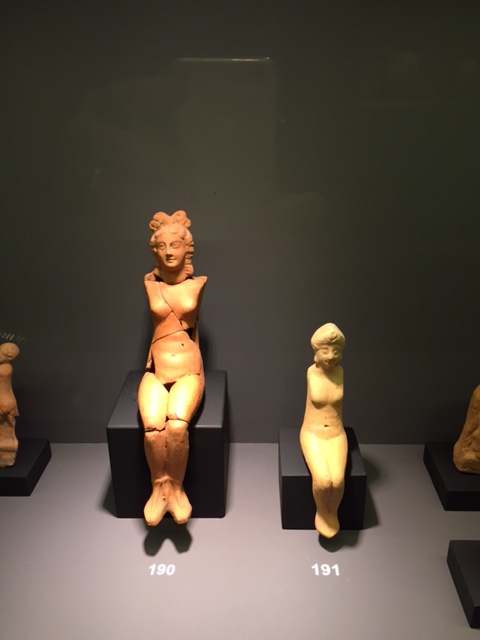
Nude seated woman, late 2nd-early 1st cent BC

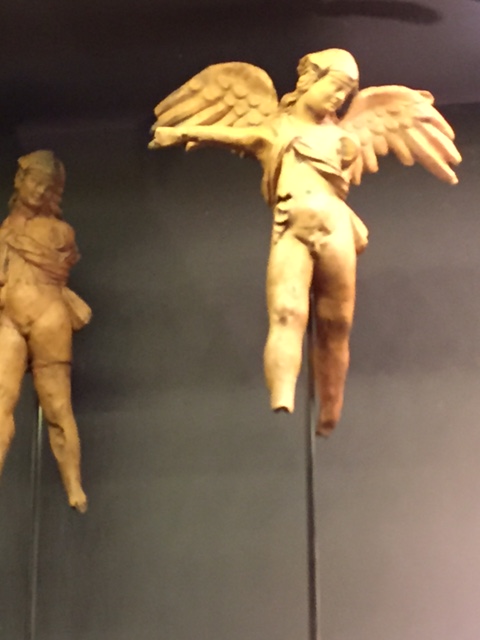
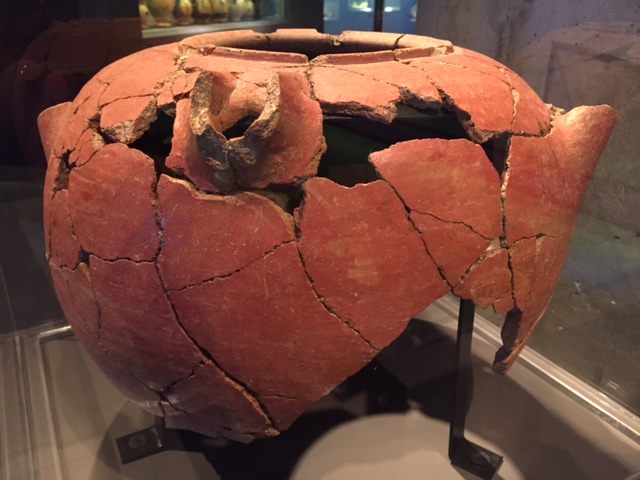
The relationship between the ancient Greeks and their gods was well known and existed publicly in daily life. However, from very early times, mystery cults began to emerge that were accessible only to those who had been accepted into the rites following certain trials. The most famous ‘Mysteries’ in antiquity were those of Eleusis and Samothrace. The strict prohibition against insiders ever divulging the contents of the sacraments has not allowed much information to be gleaned about the ancient mysteries.

IMG_5773                                                                                                        Amphoriskos, around 25 BC

IMG_5749

Archaeological excavations in the Sanctuary at Samothrace, however, have brought to light buildings and paraphernalia belonging to the cult that allow us to form an impression of events. Insiders believed that by invoking the Great Gods they would be saved from any serious dangers at sea and, as members of the Mysteries, they would become more just and pious people.

IMG_5763

IMG_5757

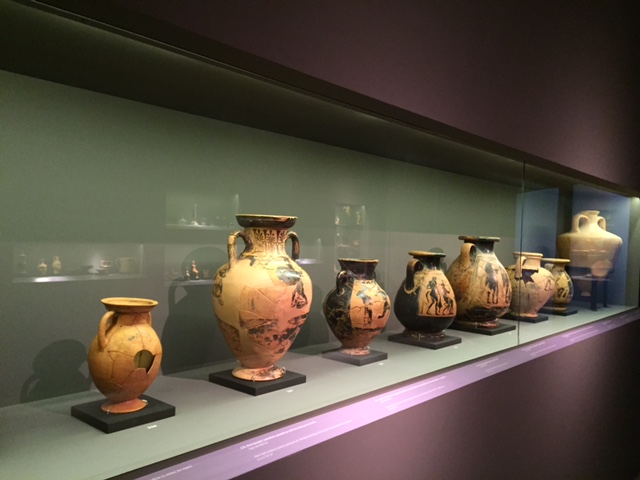
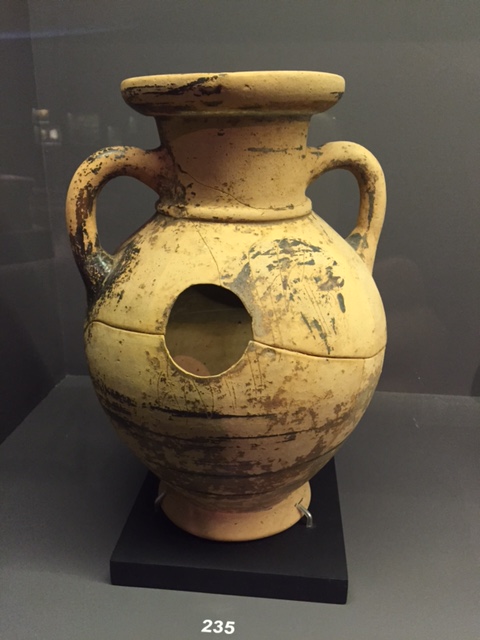
        Black- figure amphora with a horse’s head, used as urn. The hole on the vessel is intentionally made, around 560 BC

IMG_5755

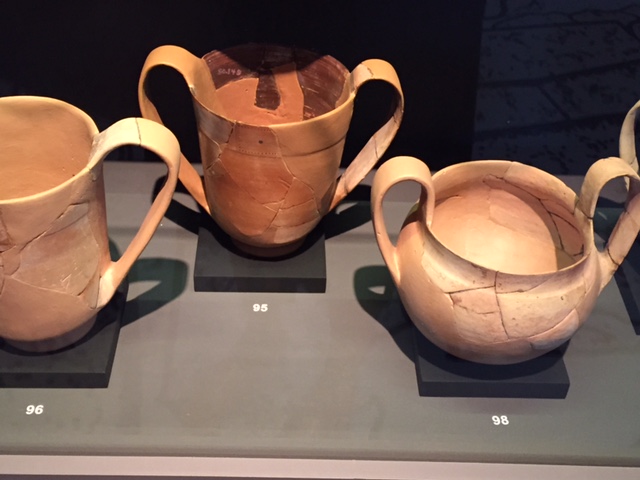
                                                            Karchesion, a type of Kantharos (drinking cup), 550-500 BC

IMG_5753

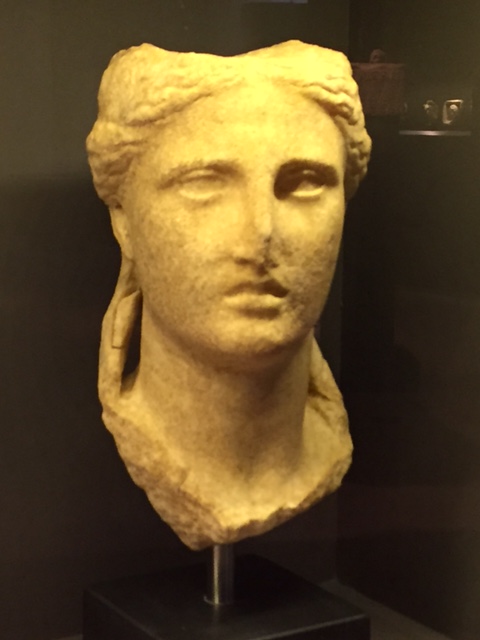
                                                       Female head, which probably depicts  the Great Mother, 3rd-1st cent.BC

The rituals were held at night, the Sanctuary illuminated with torches, during which initiates had to participate in a purification ceremony, to confess their greatest sins, to attend the sacred narrative speech that included mythological stories, to wear the wide, purple sash around their waists and to witness the unveiling of sacred symbols.

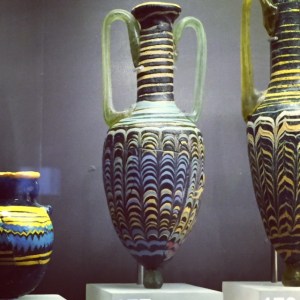
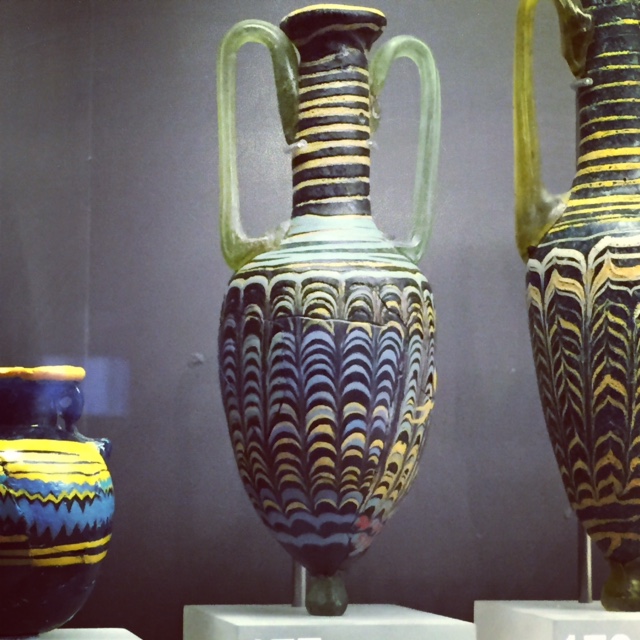
IMG_5742                                                                   Bottles, last quarter of the 1st cent.BC

IMG_5771 copy

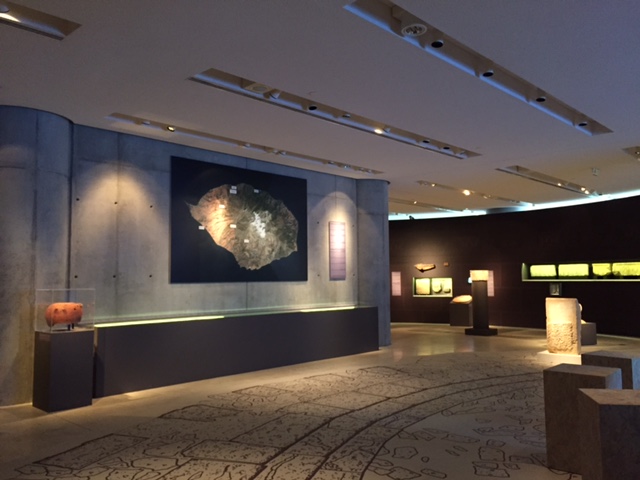
…the assortments of finds has been selected from the site of Mikro Vouni, located a few kilometers southwest of the sanctuary, where excavations have revealed a settlement with an organized social structure of the 2nd millennium BC. Of particular importance are the Minoan stamp seals and seal impressions with representations of a double ax and fish, which have counterparts at Knossos. Perhaps the ancient tradition that calls for the Mysteries to have originated in Crete and from there to have spread to other places has some historical basis.  (section from  press release)

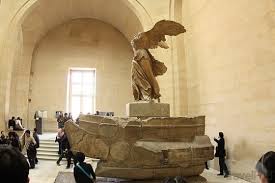
The Nike (Victory) of Samothrace (2nd century BC) is at Louvre, Paris ,(an early classical greek sculpture, an original of Parian marble and about six feet eight inches high, was set up on the prow of a ship carved in an inferior stone and projecting obliquely into an artificial pool among carefully disposed rocks).

images

photos@VK by permission of the acropolis museum
Proudly  here  I share with you amazing photos of the real visit at Samothrace by Maria Alipranti  and Christos Drazos (excellent photographer) at the wonderful Aegean Pan.com
watch a video here (Σαμοθράκη. Τα μυστήρια των Μεγάλων Θεών, Acropolis Museum)

Munich; ARKADENDINNER​ at Kunstverein München

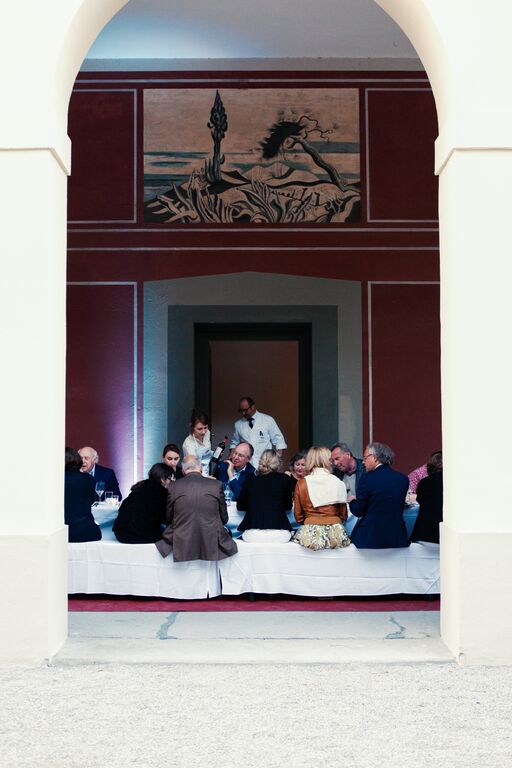
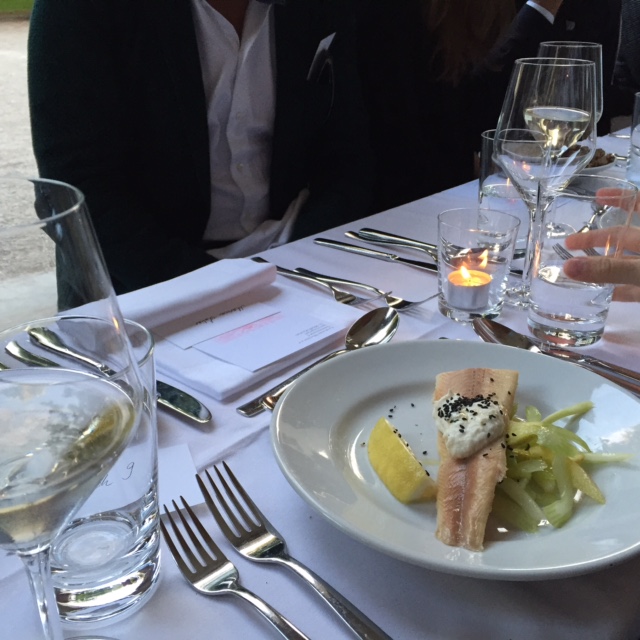
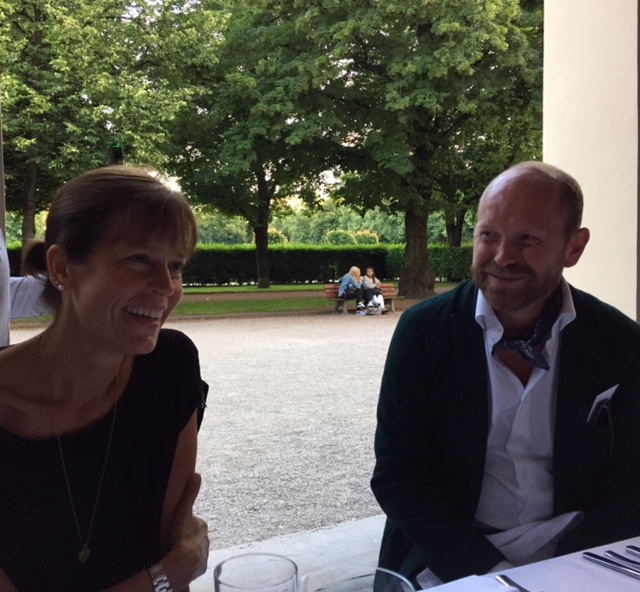
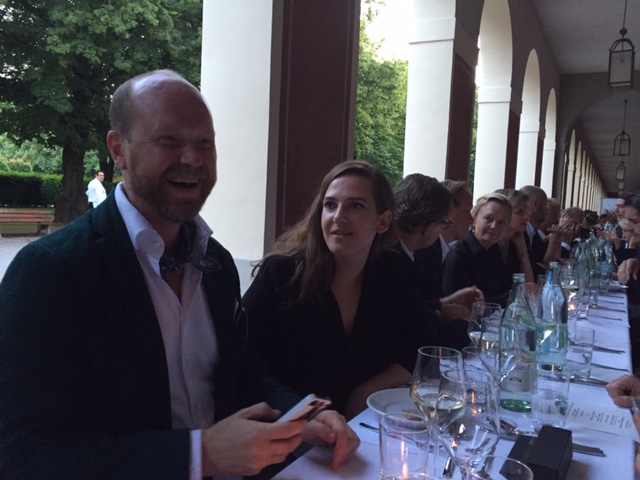
A lovely annual gala dinner ‘Arkadendinner’ for support the Kunsteverein of Munich last Wednesday evening. A lovely summer evening helped so the dinner took place under the Arcade.

IMG_5428

Unknown

Unknown-3

2JodhQhHjKdLMYA1yKqP-yPPglT5242Gai5FYSMZIGo

Unknown-4

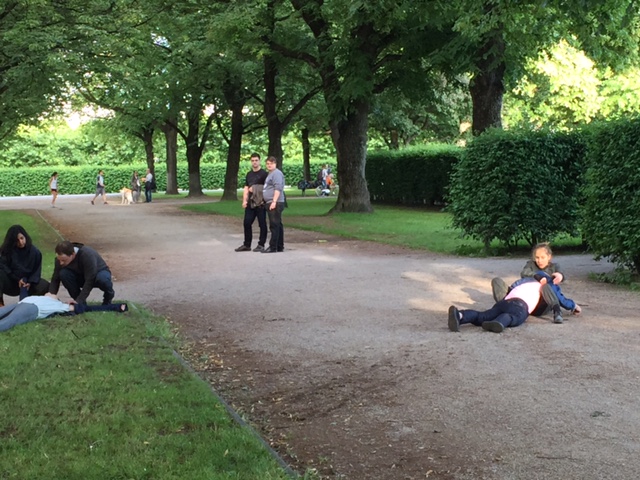
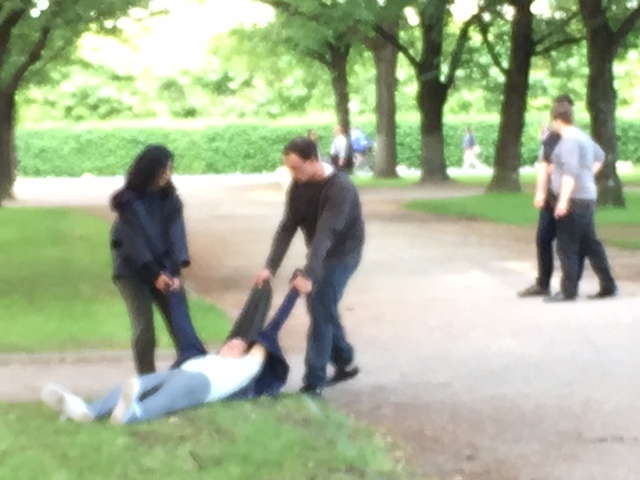
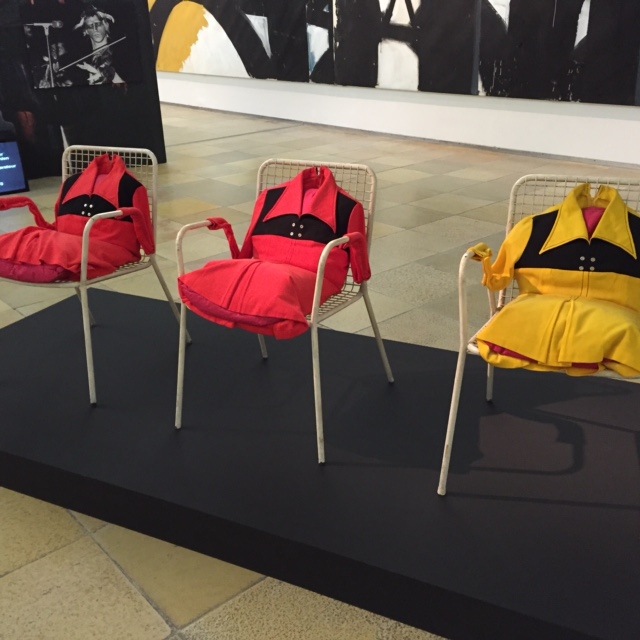
a performance by the artist Eglė Budvytytė took place in the garden. The performers/players worn ‘Mongolian Dragging Hoodies’. Produced together with fashion designer Andrea Kränzlin, the hoodies are inspired by attire worn by Mongolian fighters. Originally designed for practicality, the artist had these Hoodies specially-made to protect the heads, necks and shoulders of the performers in her piece Some were carried, some – dragged behind for Kunstverein München’s Akardendinner. Budvytytė has had each of the Hoodies – one of each of the performers – remade as a unique edition of 5.

IMG_5437

IMG_5438

IMG_5436


IMG_5482

FullSizeRender copy 7

lovely to sit with my friends,  Esther Donatz, gallerist/MU and Daniel Wingate (Escada’s artistic director)

IMG_5481


Munich;preview opening at Haus der Kunst “Geniale Dilletanten”, “Random Sampling”, and “The Cold Libido”

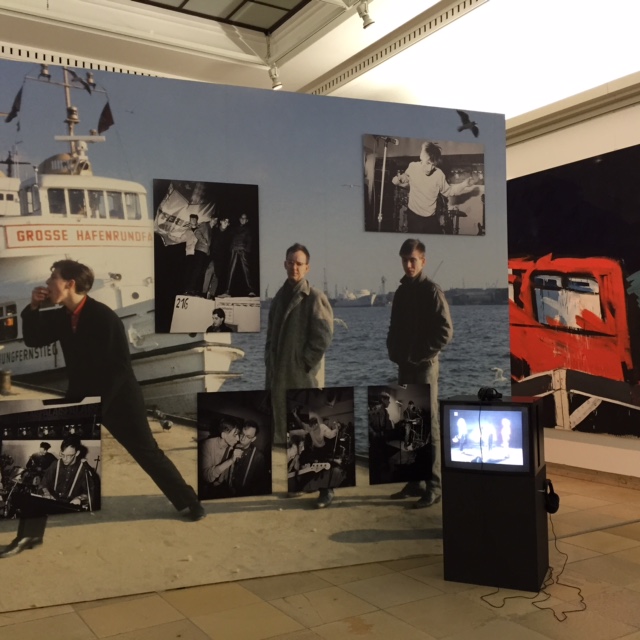
Last night the Freunde preview at Haus der Kunst opened the exhibitions “‘Geniale Dilletanten’ [Genial Dilletantes]: Subculture in Germany in the 1980s”, “Random Sampling – Paintings from Sammlung Goetz”, and “The Cold Libido – Sammlung Goetz in Haus der Kunst”.

26.6-11.10.15

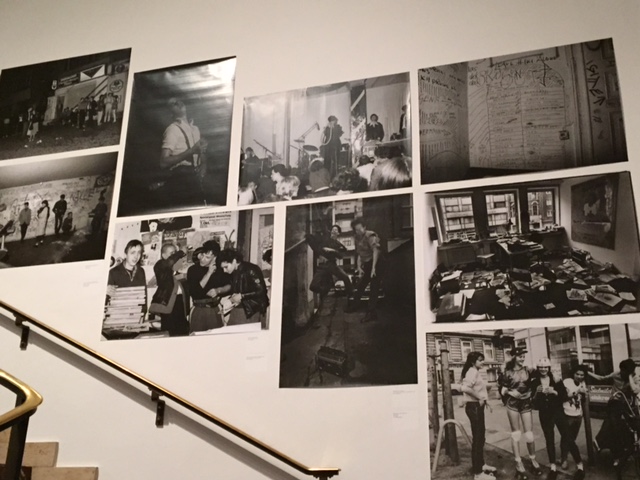
Geniale Dilletanten” is the intentionally misspelled title of a 1981 music festival in Berlin that became synonymous with a brief period of artistic upheaval in Germany. The movement’s protagonists were dedicated to the independent production of records, concerts, and exhibitions and the establishment of magazines, galleries, and clubs; as well as the vociferous protest against the cultural mainstream. The exhibition presents the entire breadth of 80s subculture based on the example of seven bands, as well as works by artists, filmmakers, and designers.

IMG_5390

IMG_5405


Geniale Dilletanten” was the term used to announce a concert held in West Berlin’s Tempodrom in 1981. The deliberately misspelled title later became synonymous with a brief era of artistic upheaval in the 1980s. Strong subculture scenes formed in many German cities opposed the prevailing zeitgeist – with brute noise, provocative Super 8 films, cheap photocopied fanzines, design that challenged “good taste”, and a new, wild language for figurative painting. Emphasis was placed on expression rather than perfection, artistic impact rather than skill.

IMG_5407

IMG_5394

curated by Mathilde Weh and Urlich Wilmes; Idea and concept; Leonard Emmerling and Mathilde Weh.

26.06.15-17.01.16

During the same period, visual artists also experienced a breakthrough to a new figurative expressionism; the so-called “New Wild Ones”, with their quickly executed works, ushered in painting’s successful return, the apex of which was the documenta 7 (1982). Based on works from the past 50 years, the exhibition “Random Sampling – Paintings from Sammlung Goetz” explores the definition of the contemporary, based on a broad understanding of the term painting.

The broad spectrum of painting concepts reflects the collector’s (Ingvild Goetz)  interest in the medium.  The exhibition includes a diverse landscape of contemporary positions. which ranges from Chris Ofili and Mike Kelley to Paulina Olowska.

26.06.15-28.02.16

With “The Cold Libido“, Haus der Kunst continues its cooperation with Sammlung Goetz. The exhibition series was launched in 2011 and is devoted to film and media art.

Its eighth installment here, curated by Cürsoy Dogtas, presents works that delve deep into the affective reservoir of narrative cinema and call upon fundamental issues such as love, longing, loss, fear, violence, and death. There are 12 videos presented here, carefully selected by the curator, thru a number of about 400 from the collection.  Works by Keren Cytter, Jeanne Faust, Annika Larsson, Shahryar Nashat and Aida Ruilova.

IMG_5376

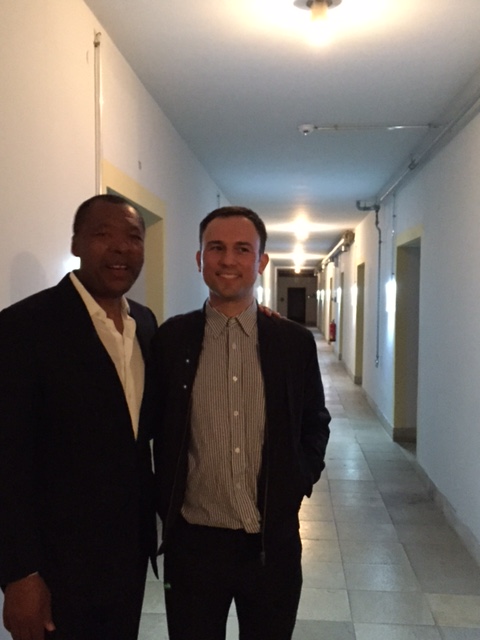
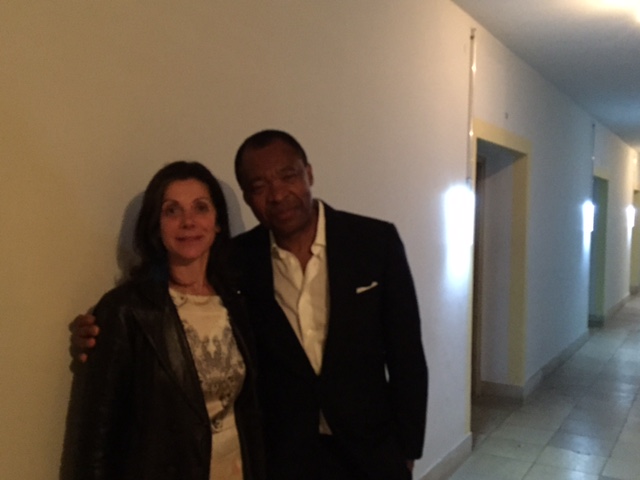
Okwui Enwezor, director of Haus der Kunst and Gürsoy Dogtas, curator of ‘Gold Libido’.

IMG_5408

followed by  a lovely reception at legendary Golden Bar

IMG_5406

IMG_5410 copy

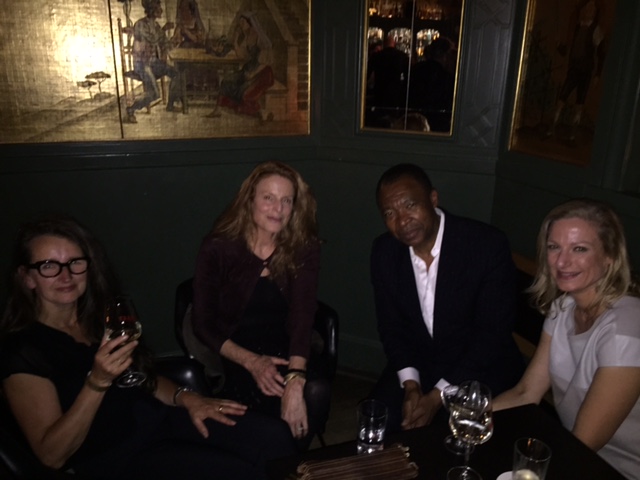
 (left to right)Jitka Hanzlova, Dr Petra Gilroy-Hirtz, Okwui Enwezor,Konstanze Wiedemann IMG_5400

IMG_5412

(left to right) Jitka Hanzlova, Dr Petra Gilroy-Hirtz, Okwui Enwezor,Konstanze Wiedemann, Venetia Kapernekas

IMG_5377 copy

Okwui Enwezor & Venetia Kapernekas
many events, lectures, concerts, et more accompany the exhibitions,  see here for details…
all photos@vk

Basel- at Fondation Beyeler, Marlene Dumas “The Image as Burden”

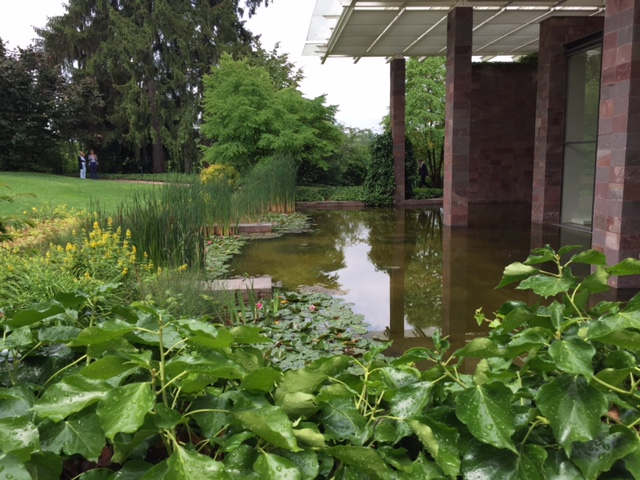
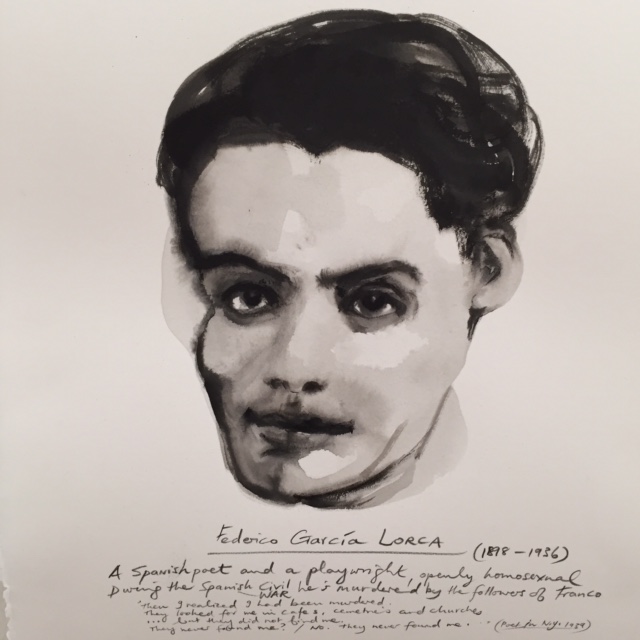
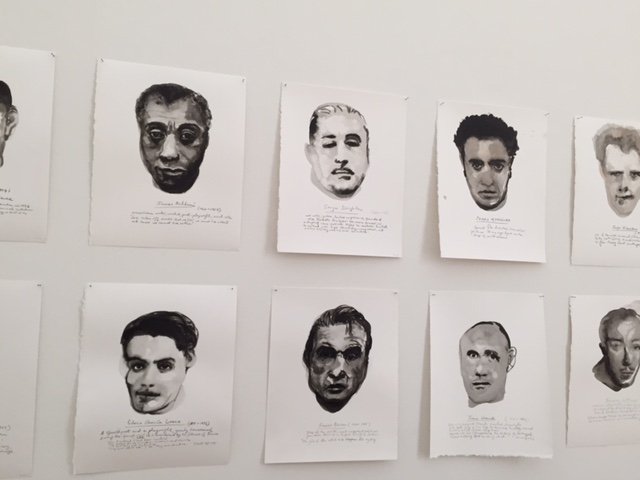
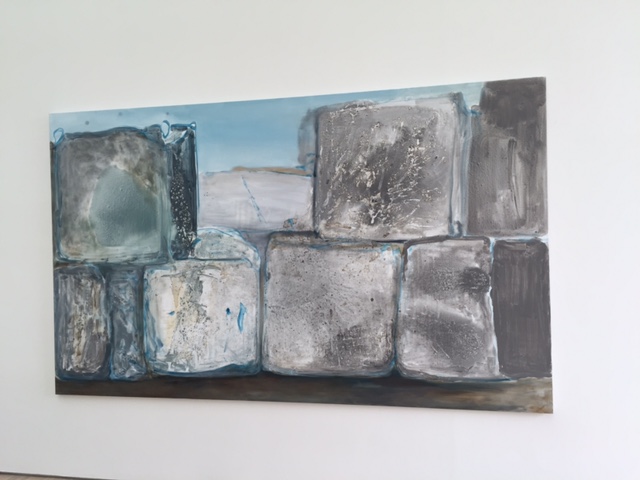
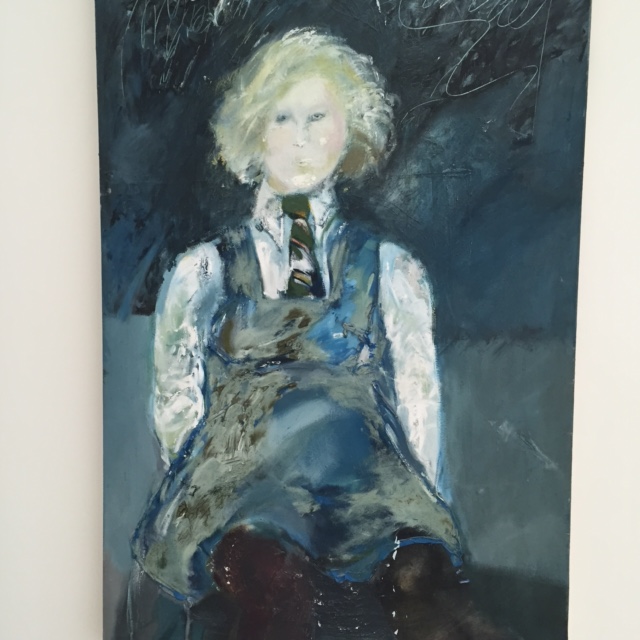
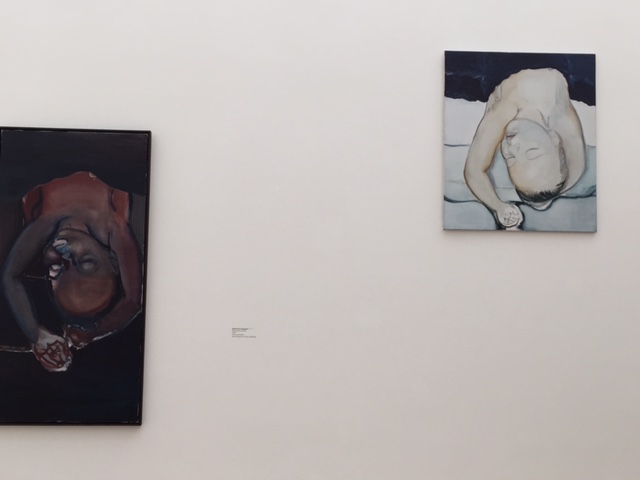
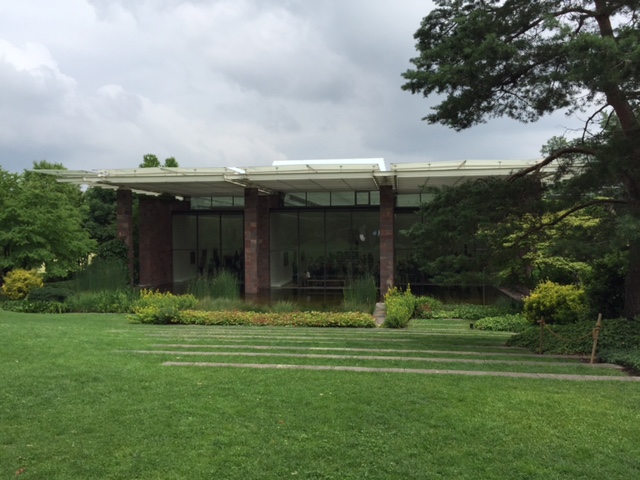
Few days in Basel, my highlight visit; the extraordinary exhibition of Marlene Dumas ‘The Image as Burden’, the artist’s oeuvre from the mid-1970s to the present at Fondation Beyeler.

exhibition: May 31-September 6, 2015

‘The exhibition «The Image as Burden» at Fondation Beyeler was planned and designed in close collaboration with Marlene Dumas and realized together with the Stedelijk Museum Amsterdam and the Tate Modern London. Sticking to a basic chronological order, the show traces her development as an artist. On display is a selection of over a hundred paintings and drawings, including several rarely shown collages from her early work and a few very recent paintings. Thus the show provides a comprehensive overview of the artist’s oeuvre from the mid-1970s to the present.’ (museum release)

IMG_4950


IMG_5289


IMG_4915

IMG_4911

IMG_4929

IMG_4900

IMG_4958

IMG_4908

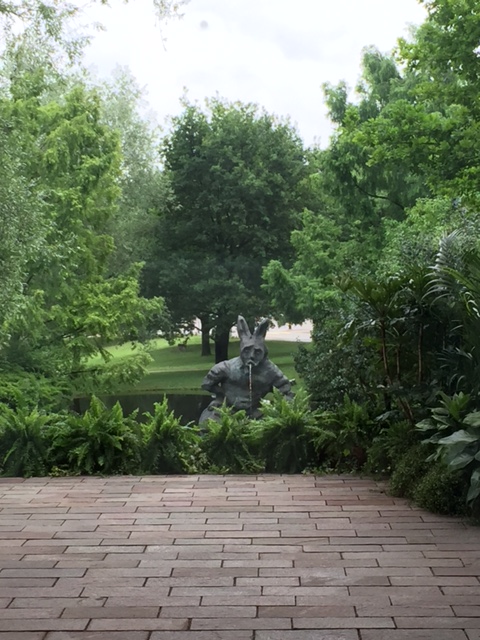
                                                 Thomas Schütte, “Hase” (Hare), 2013 in the garden

photos@VK

Toscana; Teverina mountains_Cortona: Deanna Maganias and Francesco Nevola’s house and studio

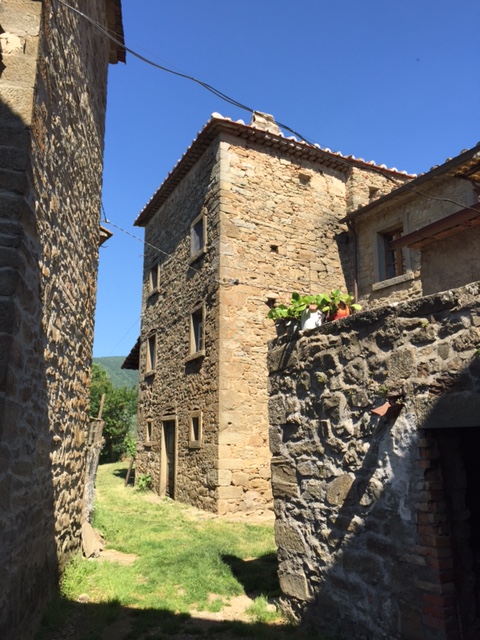
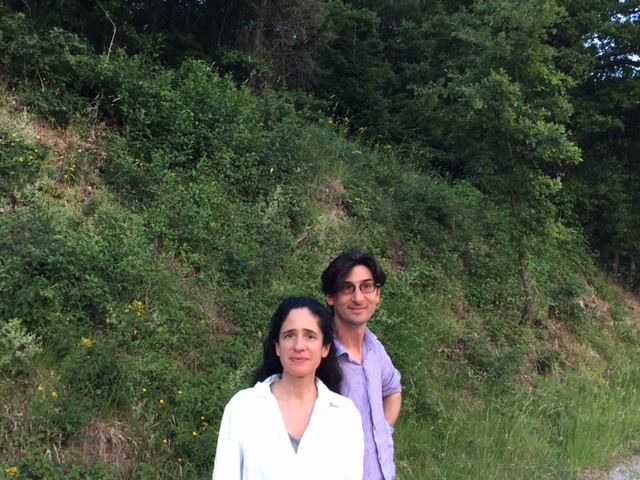
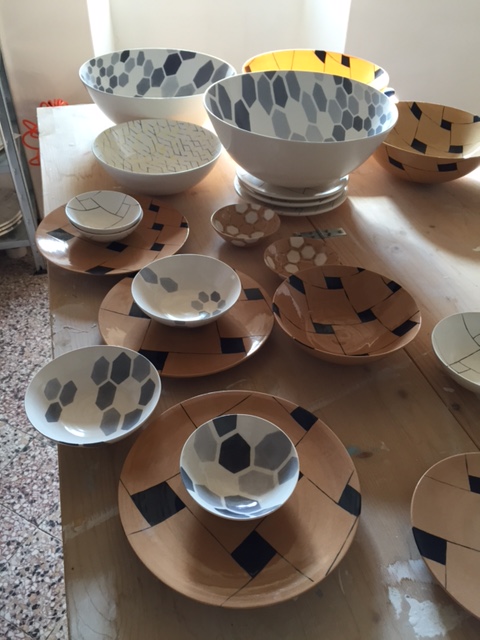
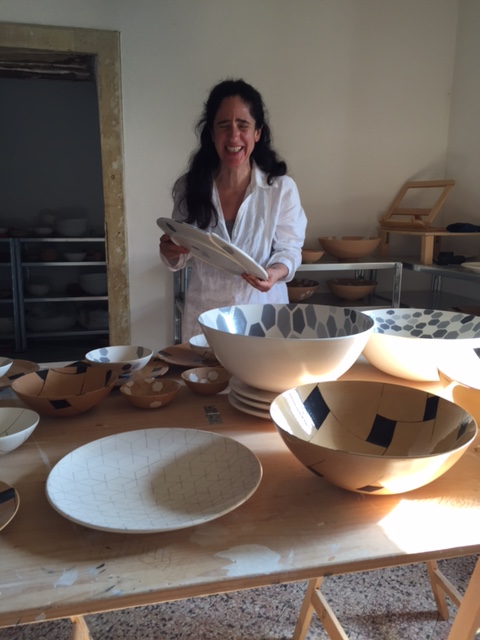
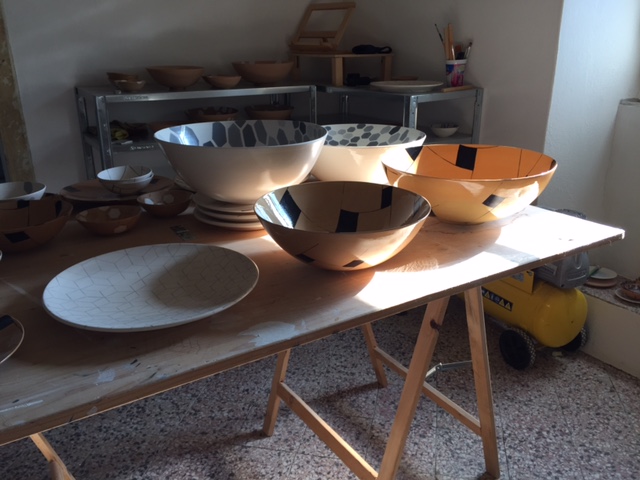
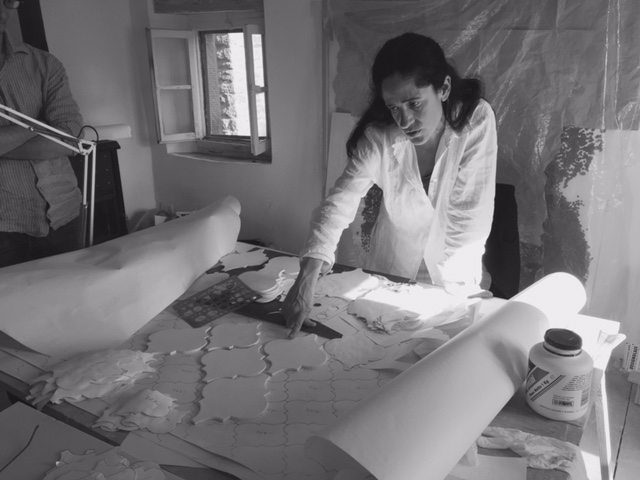
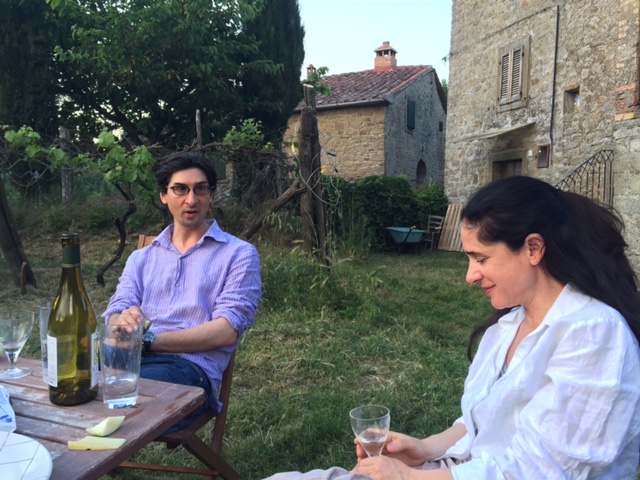
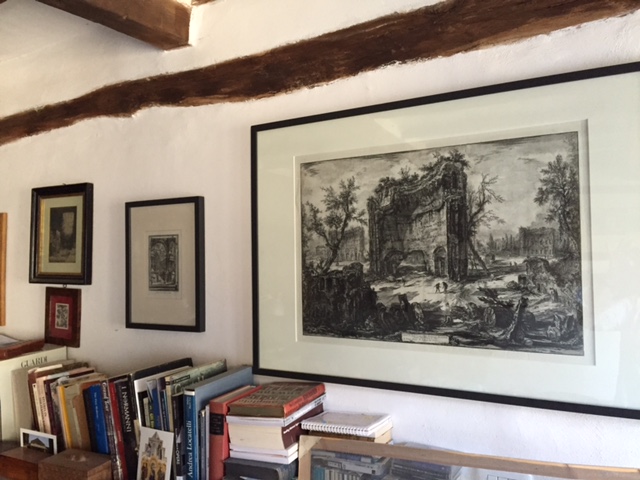
An inspiring and enjoyable driving day from Maremma to Teverina mountains to visit my my lovely friends, Deanna Maganias, a great sculptor, painter and pottery porcelain maker and her partner Francesco Nevola, a fabulous scholar of Piranesi.

IMG_4750

IMG_4718

IMG_4668

IMG_4672

IMG_4674

IMG_4678

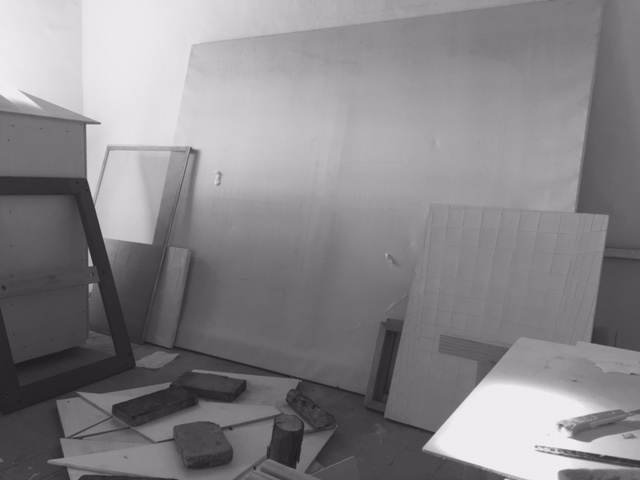
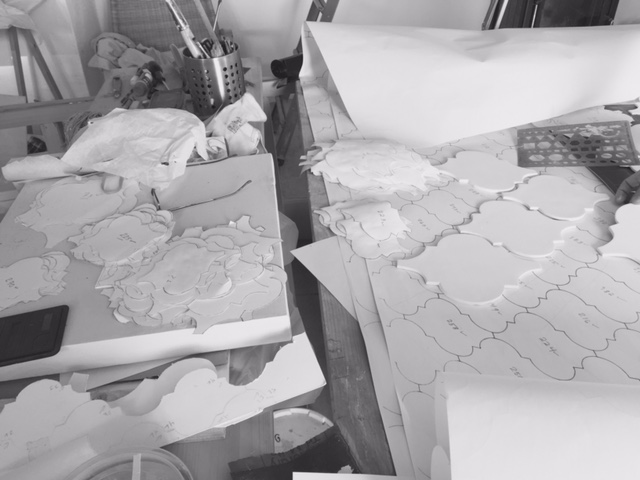
Deanna’s studio is under hot steam preparation for her next art exhibition, October 2015 at the Rebecca Camhi gallery in Athens.

FullSizeRender copy 2

FullSizeRender copy 3

FullSizeRender copy 4

FullSizeRender copy 5

IMG_4698

My days were full with great challenging conversations over pottery, architecture and philosophy and food and fabulous italian wine; their  fabulous old house is located in a small community of a village of 4 houses ;  while many rooms and additions still remain to finish by the own hands of Francesco; hard working lovely  Francesco and Deanna; few years ago both were running an  art gallery center in Cortona, with wonderful young  artists the  Cortona, Teverina Fine Arts. where their intellect and energy contributed largely to  the regional  art community.

IMG_4710

IMG_4730

FullSizeRender copy 7


slide_piranesi_eng-1

Giovanni Battista Piranesi. The Grotteschi” the early years 1720 to 1750 , Ugo Bozzi Editore, Roma 2009

“The suite of etchings called by Piranesi the Grotteschi, published in 1750 in the compilation volume Opere Varie, have for more than two-hundred and fifty years eluded interpretation. Long recognised by scholars as being ‘touched by the artist’s tragic imagination’, more recent ‘attempts to reduce the Grotteschi collectively or individually, to a specific, hermetic philosophical system have met with little success…’ In this volume these four magnificent prints are viewed as pivotal works in Piranesi’s early output and a comprehensive narrative interpretation of their meaning is proposed adopting an approach, analogous to that applied by Wilton- Ely to explain the iconography of the Piazza dei Cavalieri di Malta, or that used by Gavuzzo-Stewart in her clear penetration of the Carceri. This study which follows step-by-step Piranesi’s youthful artistic and intellectual endeavours between the Venice of Scalfarotto and Tiepolo and the Rome of Gian Battista Nolli, Giovanni Gaetano Bottari and the enlightened Corsini court proposes the Grotteschi as both testament and culmination of his first decade’s experiences. For Piranesi the years upto1750 were particularly fecund: they are marked by apprenticeships in Venice and Rome, by economic difficulties, by successes and failures, and incessant travels in search of vocational fulfilment. In following these important years we are able to trace how they contribute to Piranesi’s rapid intellectual development and to his evolution of an original, vital, graphic idiom that finds its first mature expression in the Grotteschi universally recognised as the artist’s most ‘venetian’ works. Considered through the viewing filter of the paragone the Grotteschi are presented as Piranesi’s expression of direct rivalry with the great etching masters of the past: from Mantegna, Durer and Rembrandt to Salvator Rosa, Castiglione, della Bella and Tiepolo, as well as his bid to establish his own place among their revered ranks. These works also represent the culmination and conclusion of a series of experiments, protracted over the course of a decade, in which Piranesi appears to have attempted to develop the picturesque capriccio of ruins into a type of image capable of bearing specific meaning, thereby giving visual form to his idea of ‘ruine parlanti’. In conclusion, following a close reading of the visual and textual sources that inform Piranesi’s Grotteschi, the impact of these etchings is assessed on the artist’s work of the 1760s, in particular on his only built edifice, the church of the Knights of Malta, Santa Maria del Priorato, which is the culmination of a second phase of intense creativity in the artist’s career”.  text @Francesco Nevola

IMG_4699

all photos@VK

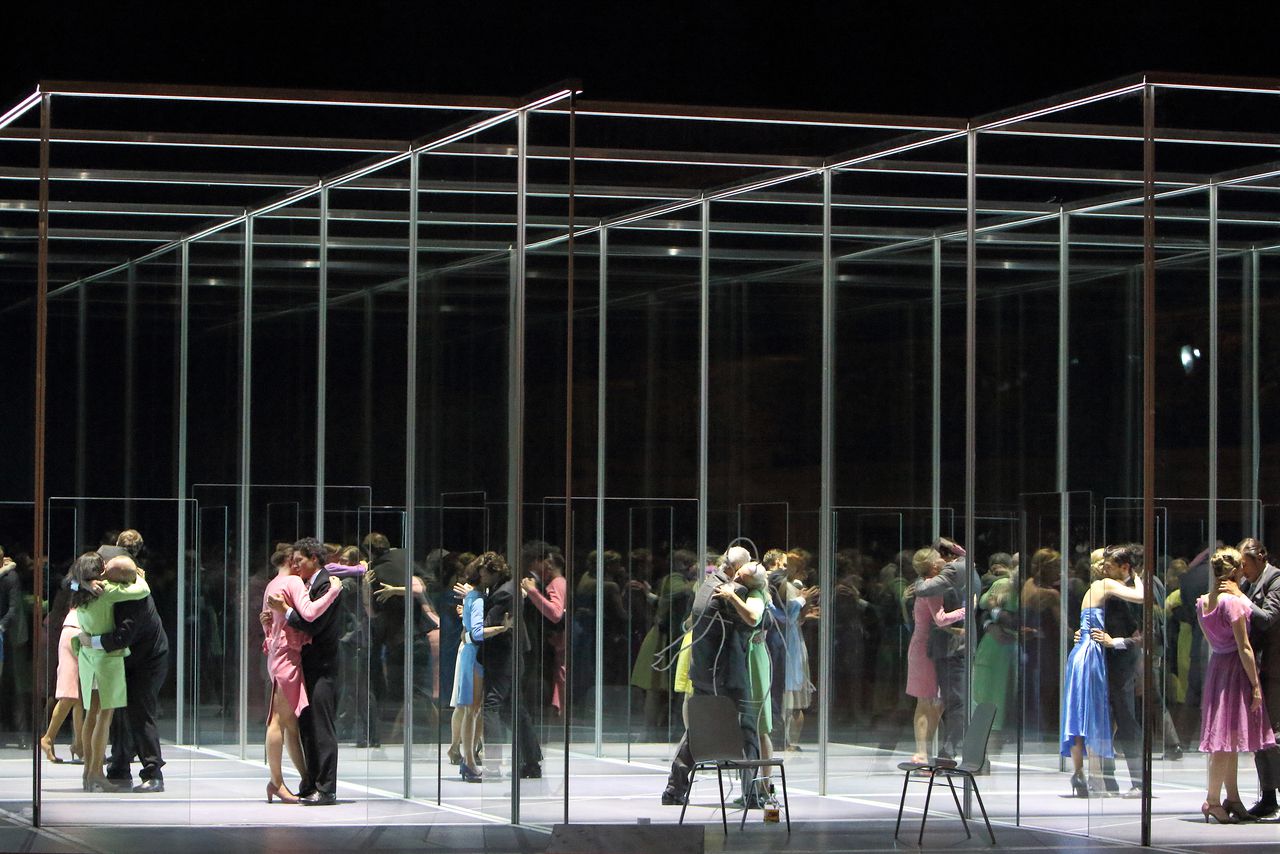
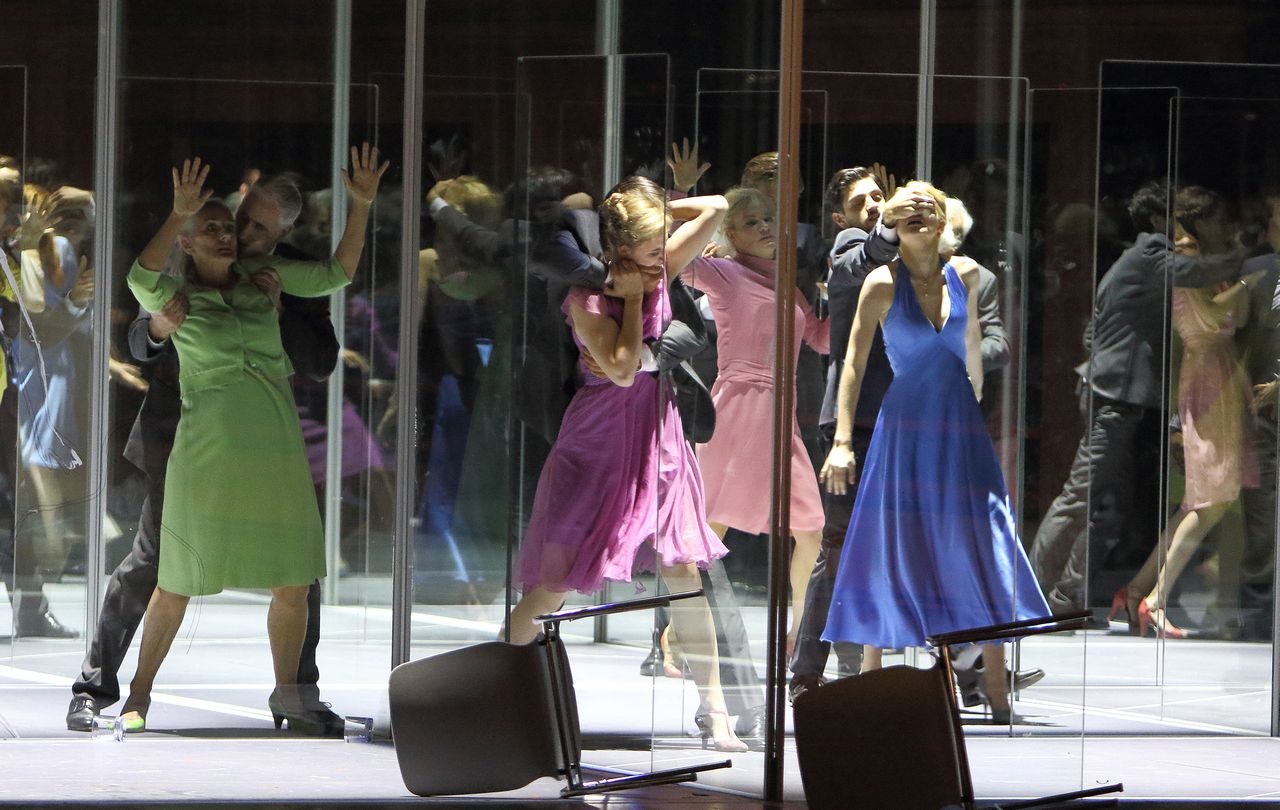
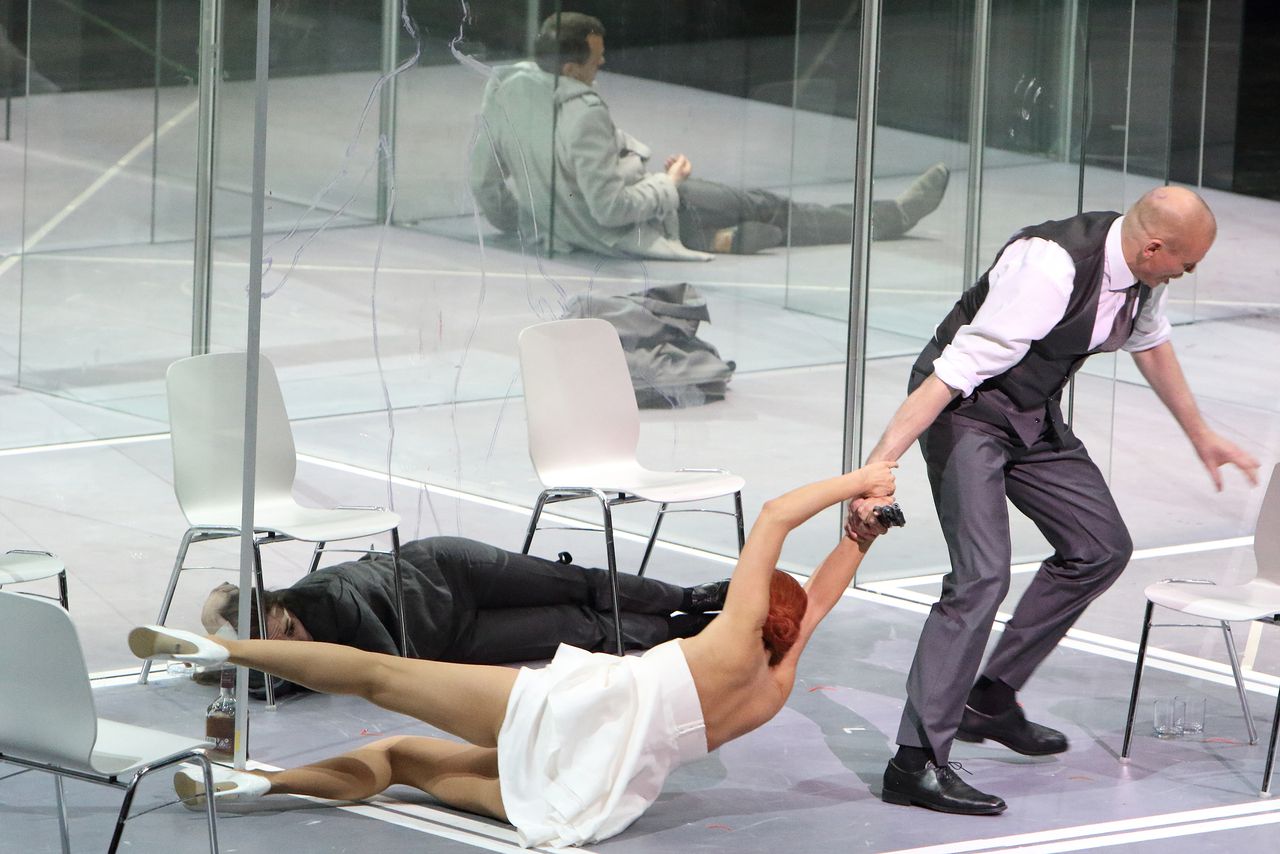
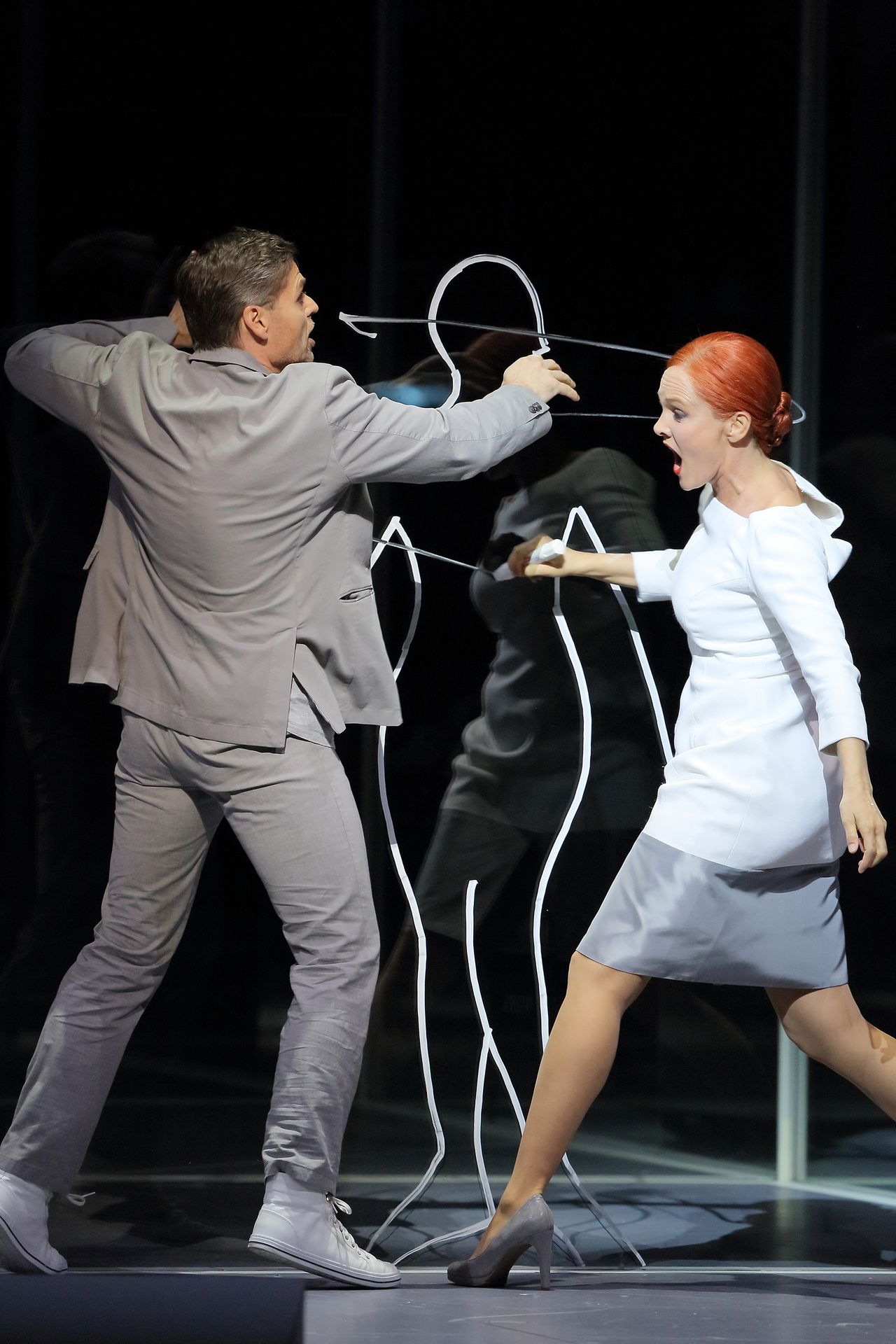
Munich; Bayerische Staatsoper, Alban Berg : ‘LULU’ with Marlis Petersen

Premiere; Monday, May 25, 6 pm 

Lulu:Marlis Petersen

11259727_10153263209288794_2435155250330328724_n
Composer: Alban Berg · Libretto after the tragedies “Erdgeist” and “Die Büchse der Pandora” by Frank Wedekind
In German with German surtitles | New Production-Duration est. 3 hours 55 minutes
Musikalische Leitung: Kirill Petrenko; Inszenierung und Bühne:Dmitri Tcherniakov;Kostüme:Elena Zaytseva; Licht:Gleb Filshtinsky; Produktions-dramaturgie:Malte Krasting; Choreographische Assistenz:Tatiana Baganova.


csm_01_69d3c27de0

csm_5M1A9440_646630ee6a

synopsis: Anyone who sees her is already lost and anyone who wants to kiss her will, sooner or later, get bitten. In droves, men are dashed to pieces on the apparently so cuddly Lulu as if she were the rock of the Loreley. Corpses pave her way, she is a femme fragile and a femme fatale all at the same time, the “prototype of a woman”, the most lethal female figure in the history of opera. But it is only the glance of men that makes her into the personae in which we meet her: She creates the image of a woman he craves and on this constraining perspective the object of his lusts must again be destroyed. Alban Berg has described Lulu’s path in subtle symmetry, with a score that bears within it the entire wealth of the history of music’s form and colour.

csm_5M1A8675_1d01081a30

csm_02_78859f1715

a great production with excellent stage setting and amazing performance by Marlis Petersen. A performance charged with intensity and great voices.

Kirill Petrenko was born in Omsk in 1972 and studied piano there at the Music Academy. At the age of eleven, he made his first public appearance as a pianist with the city’s symphony orchestra……Kirill Petrenko took up his appointment as General Music Director of the Bayerische Staatsoper on 1 September 2013, and during the 2013/14 season he conducted the premieres of Die Frau ohne Schatten, La clemenza di Tito and Die Soldaten. His second season will include the new productions of Lucia di Lammermoor and Lulu and, among others, the revival of Der Ring des Nibelungen. In 2015/16, Petrenko will be the musical director for the first performance of Miroslav Srnka’s South Pole and will conduct the premiere of Wagner’s Die Meistersinger von Nürnberg. In addition, the General Music Director will be directing the Bayerisches Staatsorchester in revivals of Ariadne auf Naxos, Die Walküre, Götterdämmerung, Die Fledermaus, Tosca and Der Rosenkavalier plus three Academy Concerts.
more here Lulu

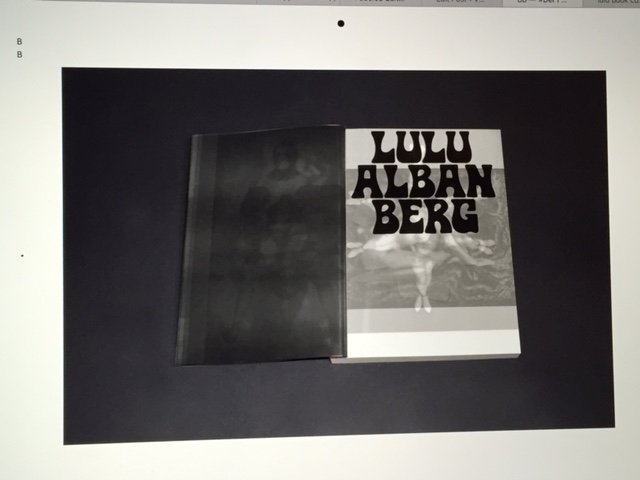
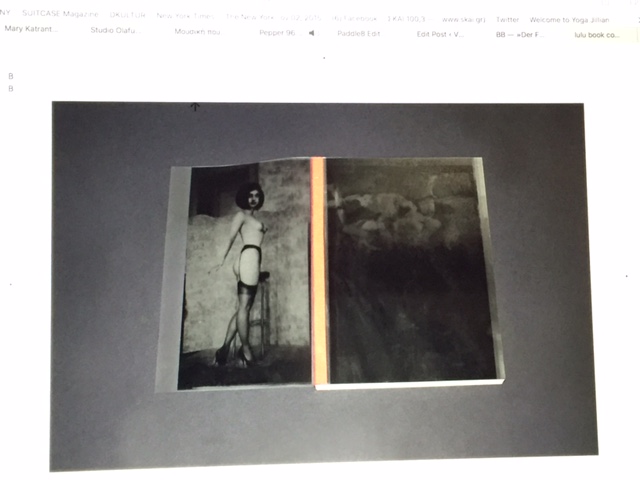
and a radical publication of the “Lulu” with first pages old negatives of Pierre Molinier  by  the surprising and  amazing always art director Mirko Borsche (Mirko Borsche Bureau)

IMG_9286

IMG_9285


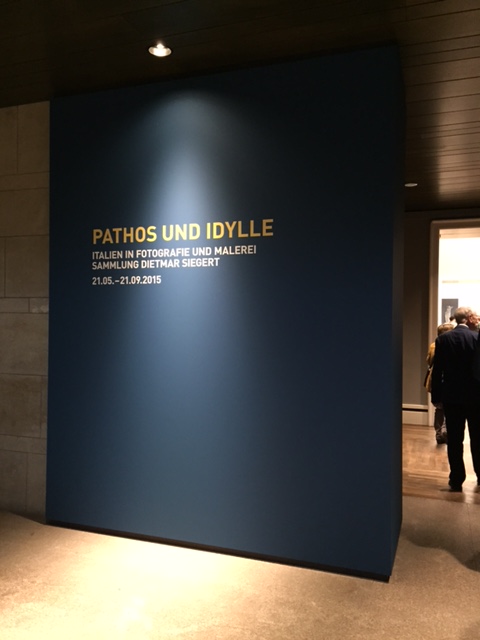
Munich; Neue Pinakothek “Pathos und Idylle” Italy in Photography and painting; The Dietmar Siegert Collection

Exhibition duration: 21.05– 21.09.2015

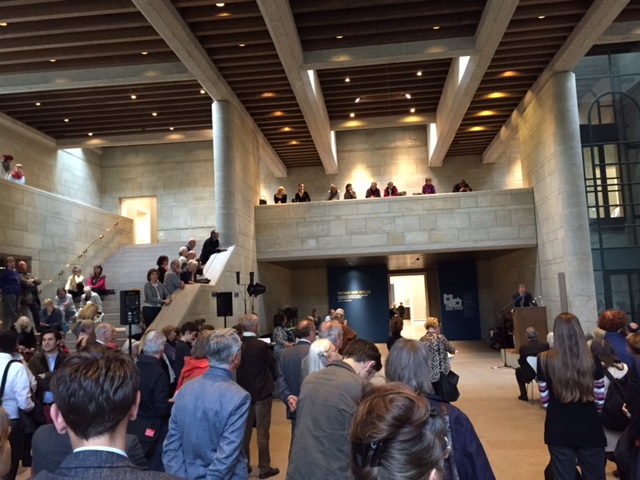
A constant rain all day in Munich yesterday, was a beautiful delight to enter Neue Pinakothek for the “Heroic and Idyllic”. This exhibition offers an insight into the wealth of a  newly acquired collection, with a display of around 100 selected images by the most famous photographers.        With a presentation by Dr Bernhard Maaz (general Director of Bavarian Museums) and Dr Herbert W.Rotto (curator of Neue Pinakotek).

IMG_4187

IMG_4186

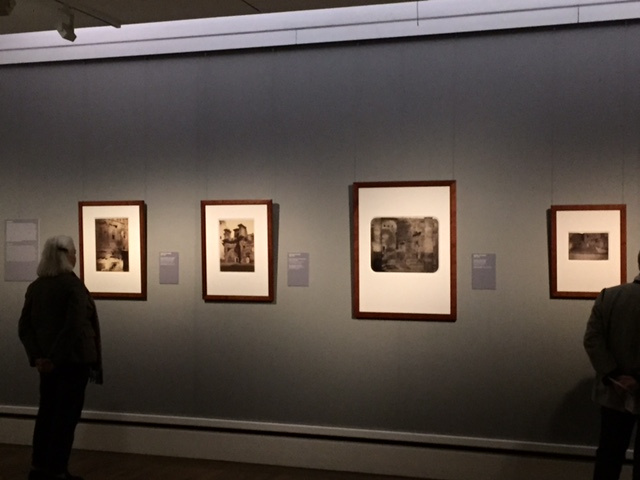
The Neue Pinakothek has an outstanding collection of paintings evoking Italy’s legendary status as a focus of romantic yearning. Many of the paintings were acquired for the collection by its founder, King Ludwig I.  Last year, the Neue Pinakothek has also held an important collection of early photographs of Italian scenes;  some 9700 images in all, dating from the period between 1846 and 1900, which were purchased from Dietmar Siegert by the Pinakotheks-Verein, with the support from the Ernst von Siemens Kunststiftung and the Sparkassen-Finanzgruppe, and presented to the museum on permanent loan.(Neue Pinakothek press release)

IMG_4189

The exhibition gives visitors an idea of the richness of this collection and offers them an opportunity to compare images of Italy in painting and photography. The presentation of the photographs continues in the galleries of the Neue Pinakothek.

FullSizeRender copy

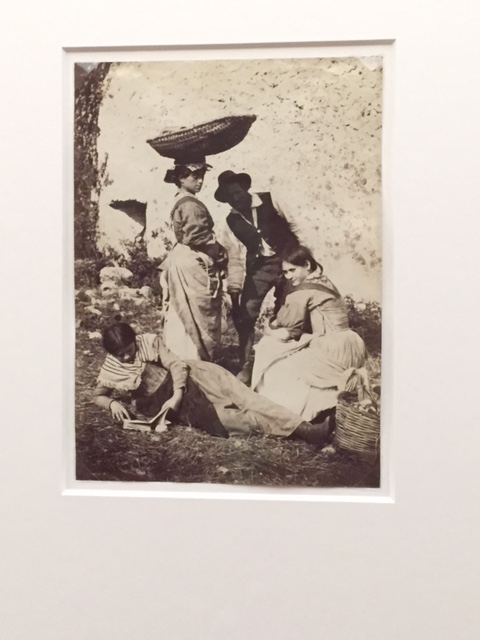
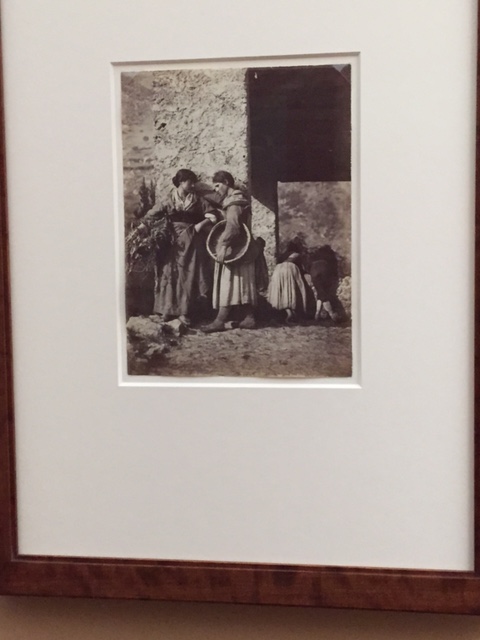
In five of main galleries, the photographs are displayed in close proximity to paintings by the Nazarenes and other german artists in Rome and Italy. i.e.  Robert McPherson with Ludwig Richter, Fillippo Belli and Giuseppe Bruno with Theodor Leopold Weller.

IMG_4206

Giuseppe Bruno “Moorish fountain near Taormina’, c.1880, albumen print

IMG_4204

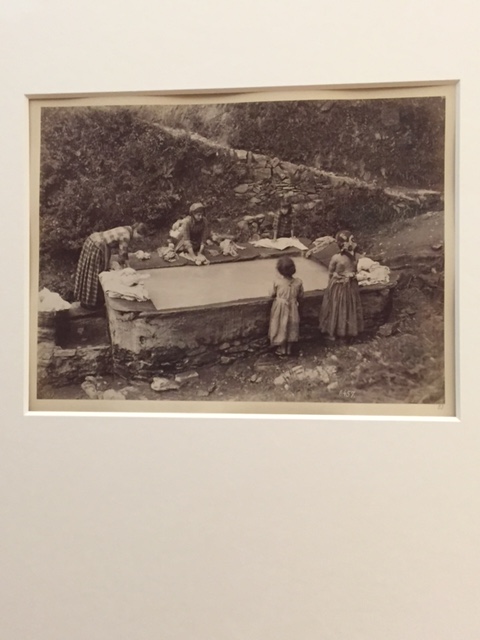
Filippo Belli (1836-1927), ‘Girl with Baskets’, c.1875, albumen print

IMG_4202

Filippo Belli, (1836-1927),’Women drying beans’, c.1875, albumen print

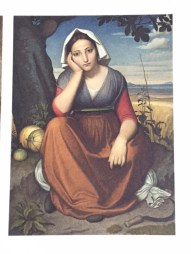
In the area of genre scenes, the paintings of Friedrich Overbeck and Wilhelm von Schadow are paired up with early photographs by Giacomo Caneva and Enrico Béguin, whose female models exude the same aura of innocence and naturalness as the female figures of the Nazarenes.

IMG_4212 copy

IMG_4211 copy

Friedrich Overbeck (1789-1869), Vittoria Caldoni, 1821, oil on canvas

IMG_4209


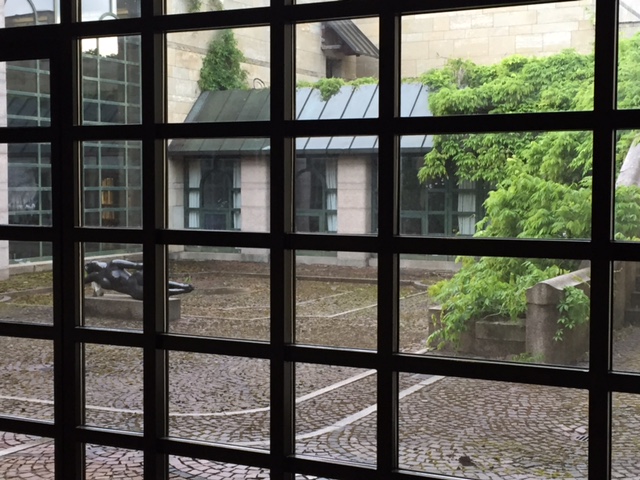
IMG_4208 copy 2The Neue Pinakothek is one of my favorite museums in Munich and on rainy days I love to  have a glass of wine and have those beautiful views to the outside as well. The Neue soon  will close for renovation.

more on the exhibition here “Heroic and Idyllic” 

Bavaria: a day visiting Schloss Elmau

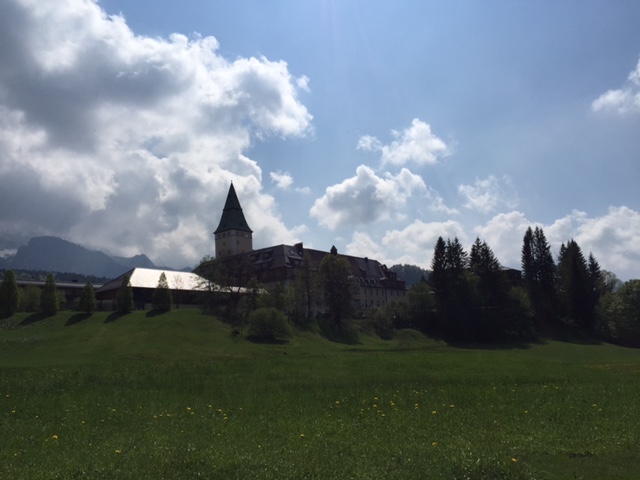
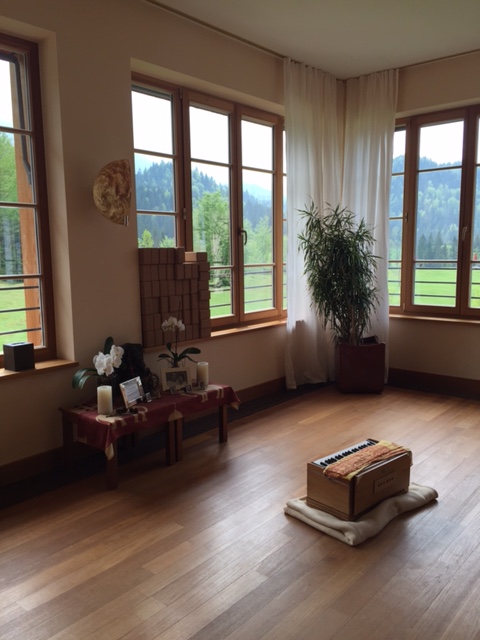
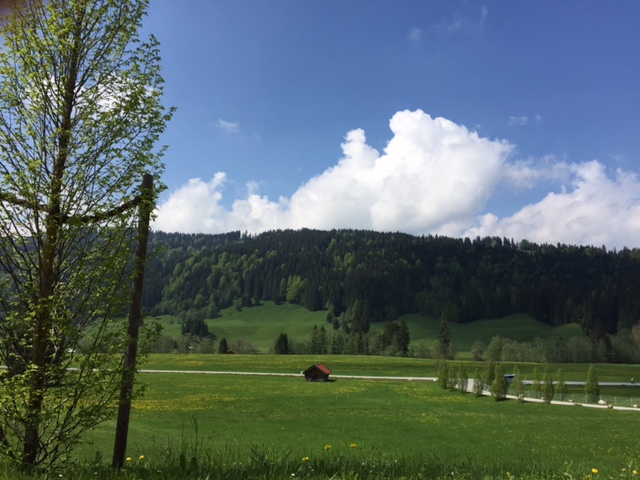
A beautiful day with my daughter visiting the ultimate Wellness Retreat, a sanctuary at Schloss Elmau.   A magical  trip  to see our jivamukti yoga teacher and friend Ekaterini Lambropoulou.   Spectacular views and tranquility in a mystique foggy day until  the sun started warming up in the afternoon.   Driving to Schloss Elmau one can have spectacular views of Wetterstein Mountain and the crystal clear Ferchenbach Creek.

IMG_4056

IMG_4046 copy

IMG_4098 copy

IMG_4059

IMG_4062

IMG_4087

IMG_4091


IMG_4085


IMG_4095photos@VK

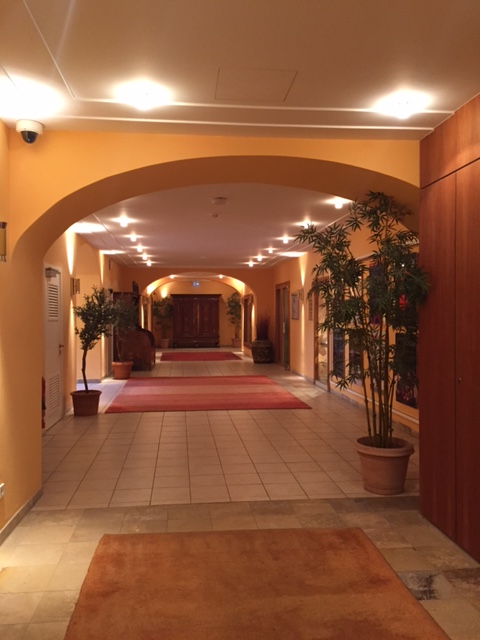
Schloss Elmau is a luxury hotel at the foot of the Wetterstein mountains, in a nature reserve belonging to the municipality Krün, lying between Garmisch-Partenkirchen and Mittenwald in Bavaria, Germany.

The building was completed in 1916 as a place for artists, rather than as a schloss (palace), as the name implies. The five-star hotel today offers 123 rooms and suites, as well as a concert hall and several restaurants. It is a forum for renowned international conferences and meetings.[1] It is among The Leading Hotels of the World.

Schloss Elmau will be the site of the 41st G7 summit June 7-8 2015,


Venice Biennale: Glass Tea House ‘Mondrian’ by Hiroshi Sugimoto at Fondazione Giorgio Cini and Bischofberger Collection “Glass from Finland” at Le Stanze del Vetro at island of San Giorgio Maggiore

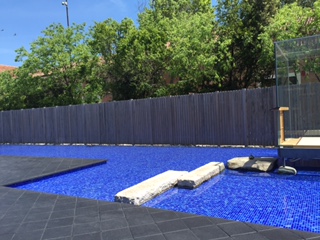
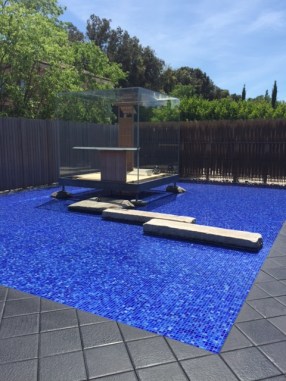
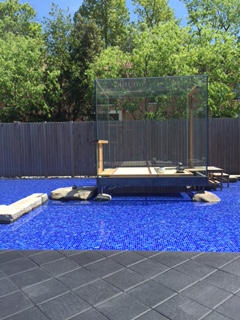
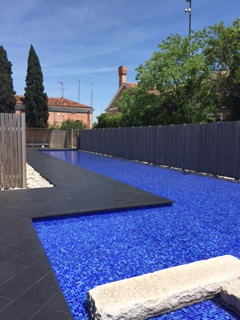
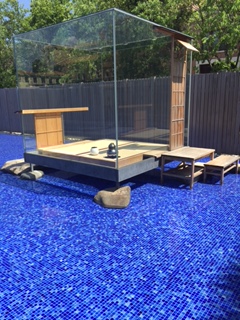
My last day in Venezia Biennale, May 10th,(2015) was a beautiful Sunday morning visiting the island of San Giorgio Maggiore.   Hiroshi Sugimoto’ exquisite glass tea house ‘Mondrian’ was a pure delight.  The project seems complex but the purity and simplicity of the form kept me silent and was enjoying the serenity of the space during that very warm morning.

Glass Tea House Mondrian is Sugimoto’s first architectural work in Europe. He has built a pavilion of extraordinary beauty in a formerly unused space on San Giorgio, located between Andrea Palladio’s famous 16th-century church and monastery and Le Stanze del Vetro museum, and adjacent to the Borges Labyrinth, which architect Randoll Coate designed as a tribute to the Argentine writer.
IMG_3989

photos©Venetia Kapernekas, 2015

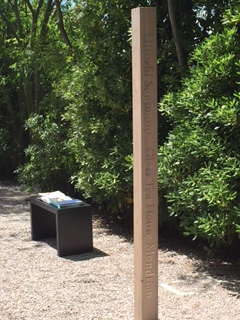
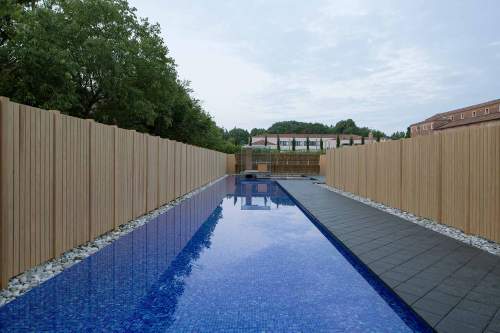
Visitors approach the pavilion by a way of a small Japanese garden leading to a bamboo gate that sets the atmosphere for the main pavilion. The pavilion itself consists of two main elements: an open-air landscaped courtyard with a reflecting water pool and a glass structure. The courtyard is surrounded by an exterior fence made entirely of Japanese cedar and inspired by the Ise Grand Shrine in Ise, Japan.  Along one side of the reflecting pool of deep blue glass mosaic, a black tiled path guides visitors to concrete benches from which the tea ceremony can be observed.

Like Sugimoto’s photographs, this work conveys a meditative, almost religious atmosphere: it is an oasis of calmness that invokes time, memory, and a heightened sense of self-awareness.
IMG_3997

photo@Venetia Kapernekas, 2015

‘In the sixteenth century, it became the custom for cultivated Japanese people of a certain social status to enjoy the rituals of the tea ceremony. The quotidian act of preparing a cup of tea for a visitor was raised to the level of art, with meticulous care of lavished upon the unique goal of entertaining one’s guests. ‘ ……

‘Traditionally, the name of a tea house has to be a poetic evocation of space. I was startled to discover something redolent of Mondrian in the Glass Tea House when it was completed. The quest for abstraction, I realized, had been underway in the context of the tea ceremony for three hundred years before Mondrian was born. Sen no Rikyu, the man credited with perfecting the tea ceremony esthetic, essayed Mondrianesque abstraction in the way he placed stones in the garden or composed flat wall surface at Taian, a sixteenth-century tea room which still stands near Kyoto. Inevitably, Sen no Rikyu had a powerful influence on my design for the Glass Tea House.’  (Sugimoto, on the preface of his book Glass Tea House Mondrian, Le Stanze del Vetro)
IMG_3986

IMG_3999

photos©Venetia Kapernekas

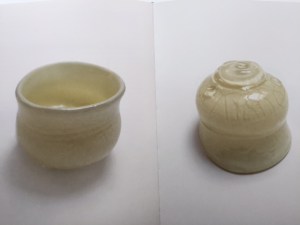
‘An intrinsic property of glass is its transparency. I owe my career as an artist to transparent glass lenses. Making a space from the glass was more about indicating a space than actually creating one. Glass Tea House Mondrian measures just 2.5 x 2.5 meters. As a living space, it is only about as big as a jail cell. However, because of its transparency, this cell-like space enjoys an infinite connection to the world outside. ‘ ( “Glass Tea Bowls by Hiroshi Sugimoto)

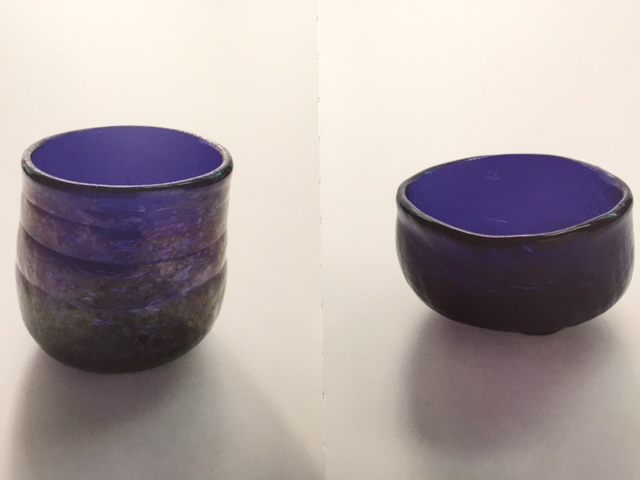
Hiroshi Sugimoto’s Glass Tea Bowls
FullSizeRender copy 3

FullSizeRender copy 4

photos©Venetia Kapernekas

“While the tea house was being built, I visited the site every afternoon, but in the mornings I went to a glass factory in Murano, where a master glassblower made the tea bowls after my own designs.  Rather like Le Corbusier, who painted pictures in the morning and designed buildings in the afternoon, I was a glassmaker in the morning, a site foreman in the afternoon, and a roaming photographer capturing the deserted streets of Venice in the evening.” (Sugimoto, Glass Tea Bowls)

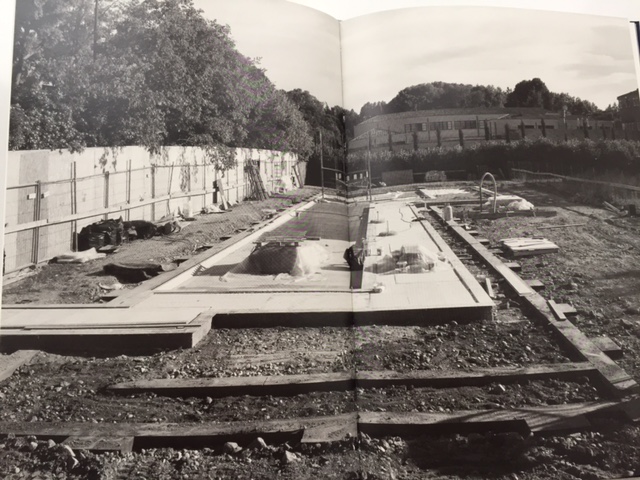
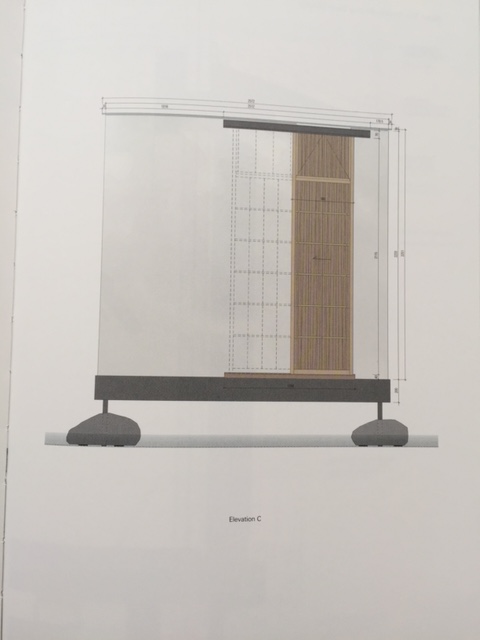
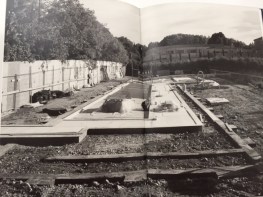
a beautiful blue linen book accompanies the Tea House Mondrian with detailed photos of the construction site and architectural drawings.
FullSizeRender

IMG_4177

“Sugimoto’s pavilion is effectively a space for performance. He has provided delineated space for the audience to observe the theater with the tea house situated in a pool within a larger landscape…….. No single element can be altered without irrevocably damaging the whole. The linear and focused arrival sequence prepares the visitor for the perspective views, as one contemplates the contemporary glass tiles and old, authentic stepping-stones. It is carefully wrought balance of new and old materials and forms, a dance where each element corresponds to a specific movement in the sequence.” (Annabelle Selldorf, architect, Glass Tea House Mondrian)
photo©Le Stanze del Vetro

more here on the exhibition (Le Stanze del Vetro)

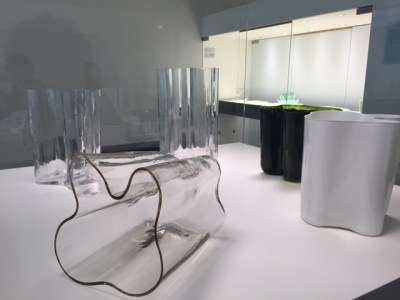
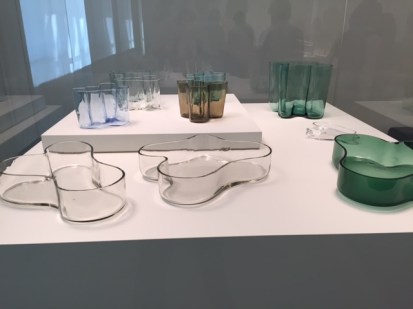
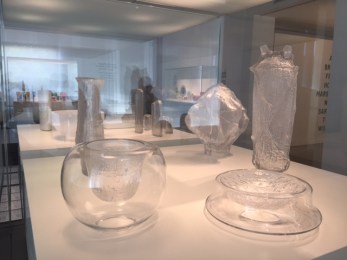
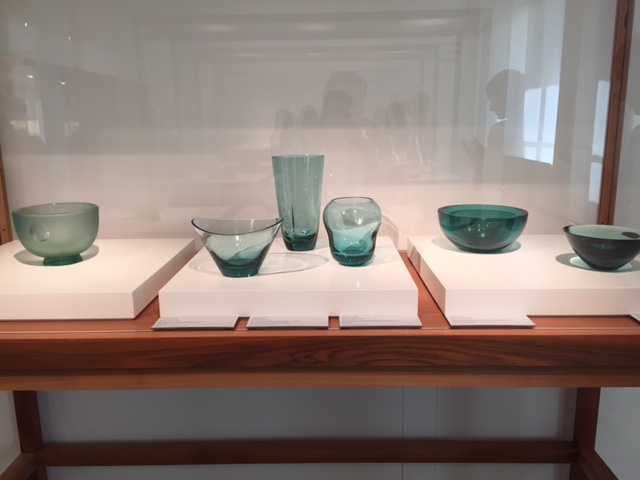
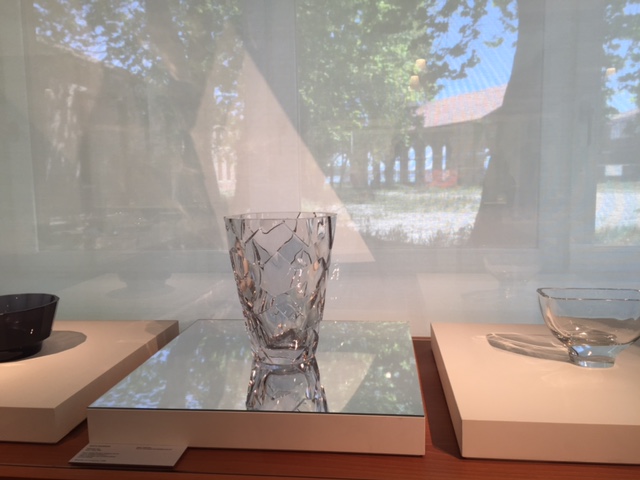
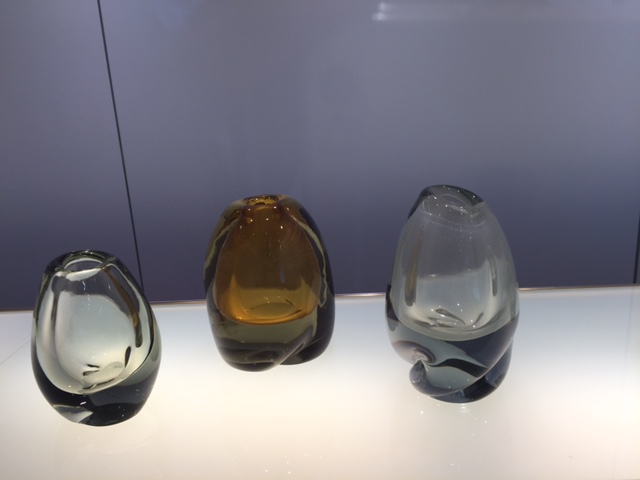
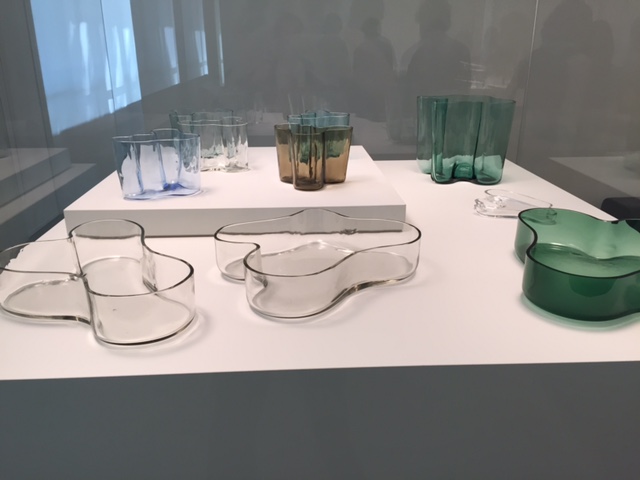
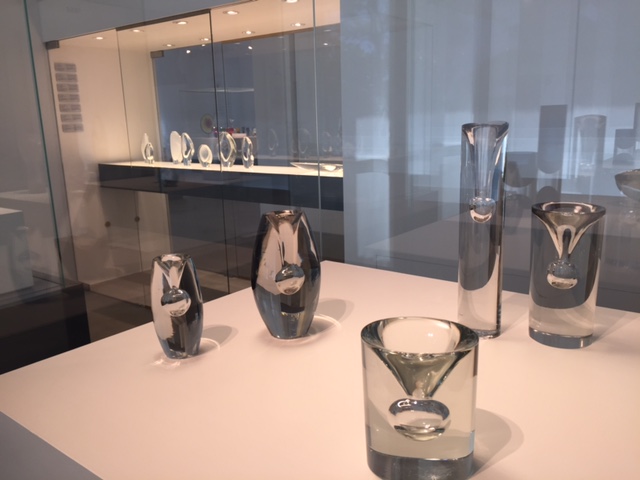
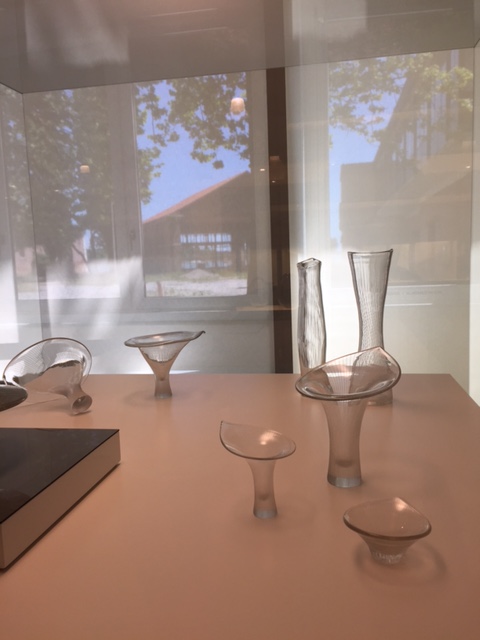
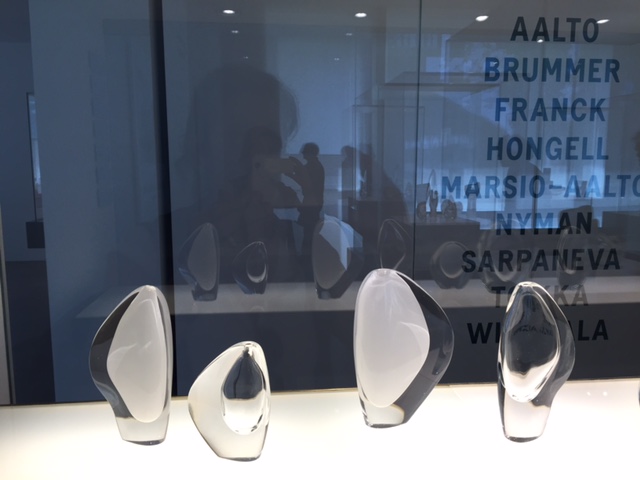
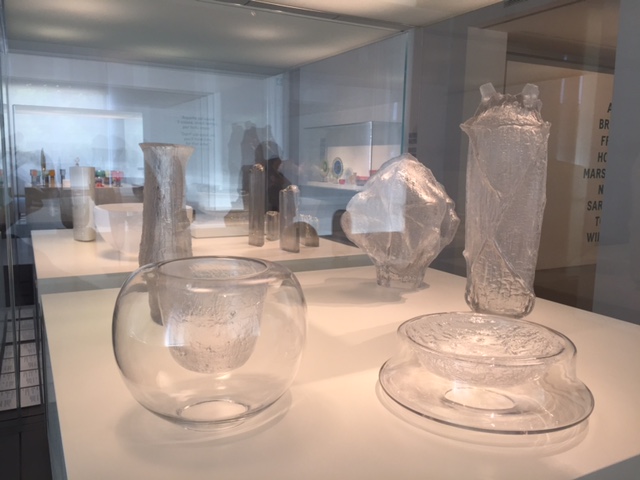
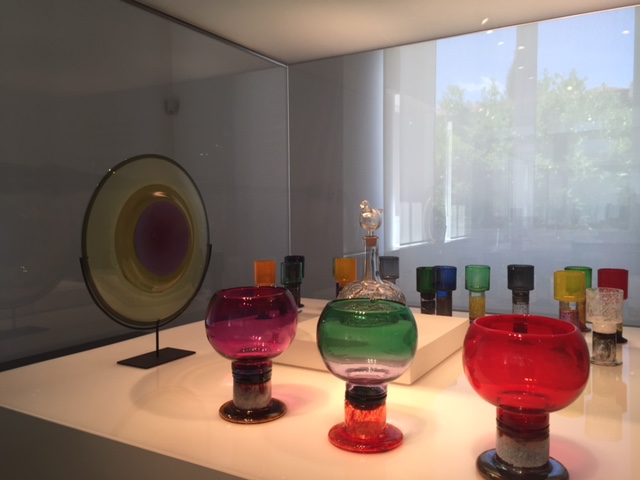
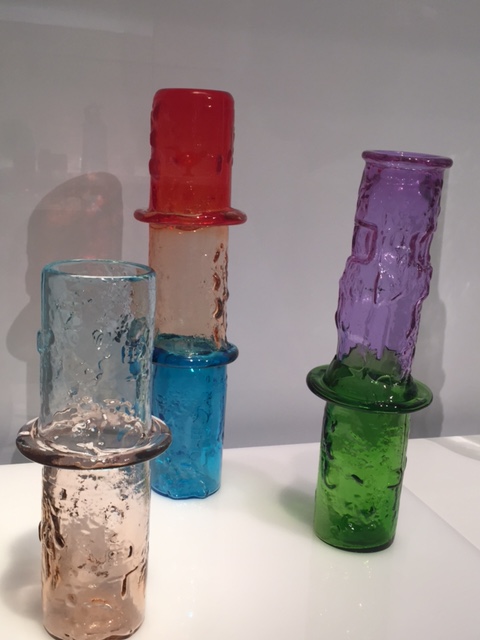
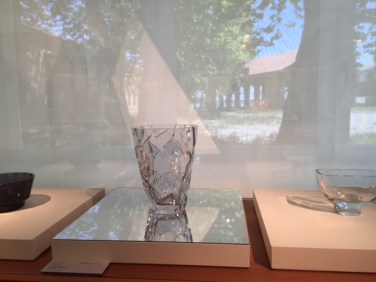
Also at Le Stanze del Vetro, there is an amazing exhibition “Glass from Finland”. Over 300 works from the Bischofberger Collection celebrate the beauty of art glass in an exhibition featuring masterpieces by the most important Finnish designers of the 20th century.

The exhibition “Glass from Finland in the Bischofberger Collection”, curated by Kaisa Koivisto, curator at The Finnish Glass Museum, Riihimäki, and Pekka Korvenmaa, a professor at Aalto University School of Arts, Design and Architecture (Finland)

IMG_3887

IMG_3892

photos@Venetia Kapernekas, 2015

In the early Twenties, Finland used design as its manifesto, in an attempt to establish its autonomy and its cultural sovereignty. Some of the country’s greatest designers began to use glass to create works of art that blended tradition and experimentation.
IMG_3901

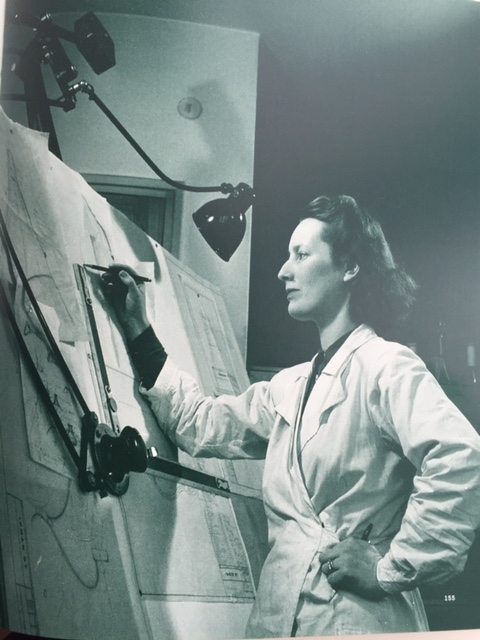
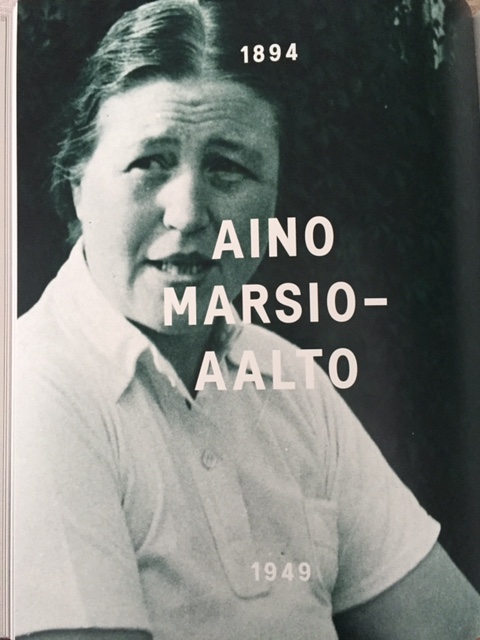
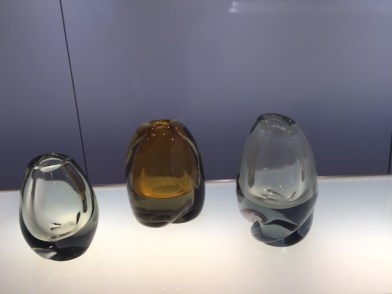
After 1932 Finnish glass became known worldwide and served to reveal the skills and creative talent of those who would soon be regarded as the visionary geniuses of Scandinavian design – i.e. Arttu Brummer, Gunnel Nyman, Göran Hongell and  Alvar Aalto. Numerous women have been active as artists and designers throughout the history of glass design in Finland. The collection covers the oeuvre of Gunnel Nyman and Aino Marsio Aalto.


FullSizeRender copy 6

FullSizeRender copy 7

IMG_3915


IMG_3916

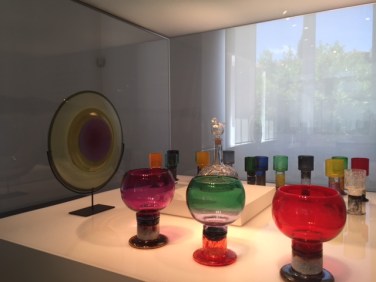
In the early Fifties, through the new spirit of optimism and the international influence, designers and artists built up the foundations of what will become known as “the golden age” of Finnish glass.
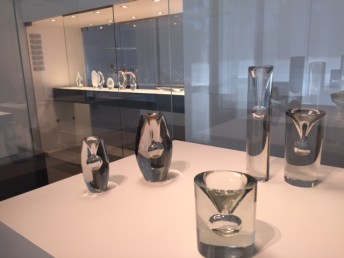
In order to meet the functional and psychological demands of its users, designers started producing objects and works of art that were both aesthetically sophisticated and mainly referred to nature by the free use of organic shapes and curves.
Along with internationally acclaimed designers such as Alvar Aalto, other artists became the new stars of Scandinavian design, such as Kaj Franck, Timo Sarpaneva, and Tapio Wirkkala, who is considered to be the symbol of the international success of post-war Finnish design.
IMG_3936


IMG_3929


IMG_3938


IMG_3951


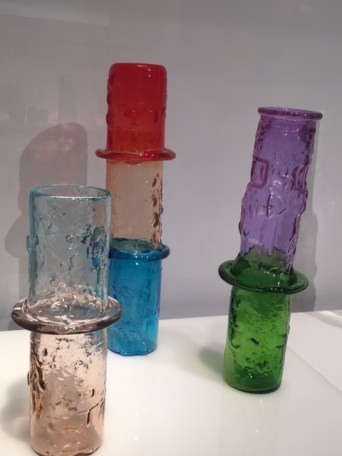
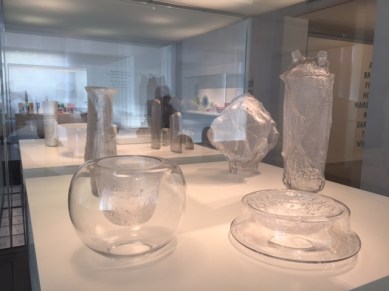
During the Sixties and Seventies, color and energy became the main focus of Finnish design; the glassworks became colorful and were given elaborate shapes. Oiva Toikka designed glass birds, which became Iittala’s iconic brand. Through his irreverent approach to the glass medium and tradition, Toikka represents the connection between “the golden era” of the fabulous Fifties and a more contemporary design.
IMG_3951

IMG_3956

IMG_3967

photos@Venetia Kaperekas, 2015  by permission “Le Stanze del Vetro”

here you may read more on the exhibition Fondazione Cini-Le Stanze del Vetro


Venice: Venice Biennale; Cy Twombly at Ca’Pesaro (Galleria Internazionale d’Arte Moderna)

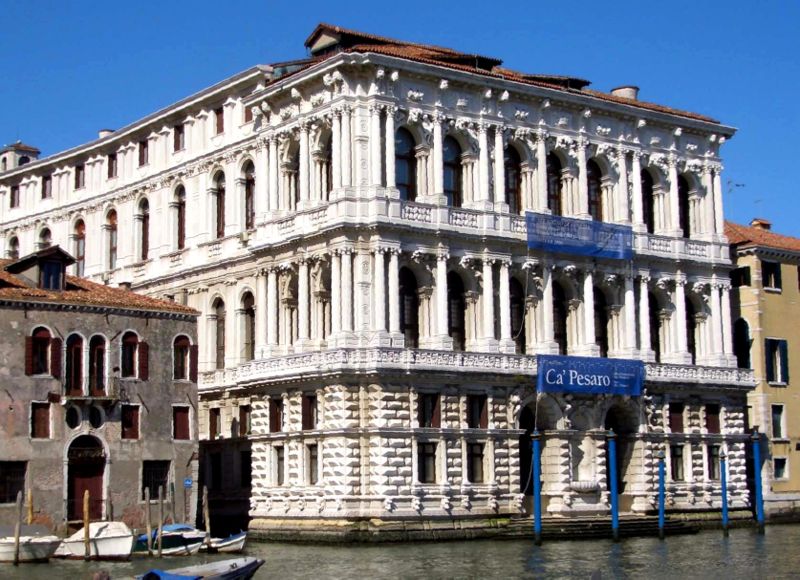
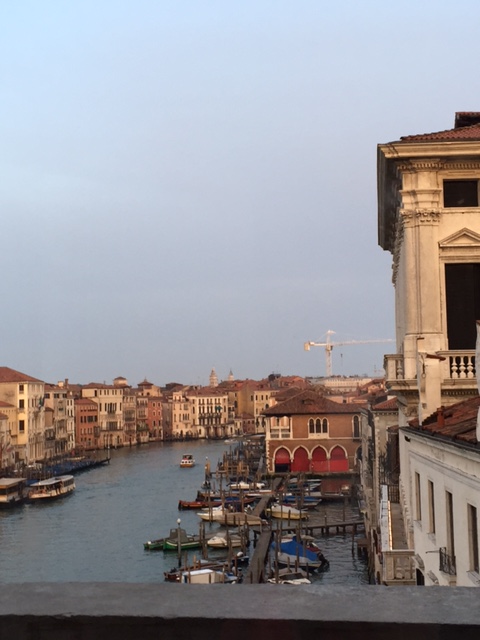
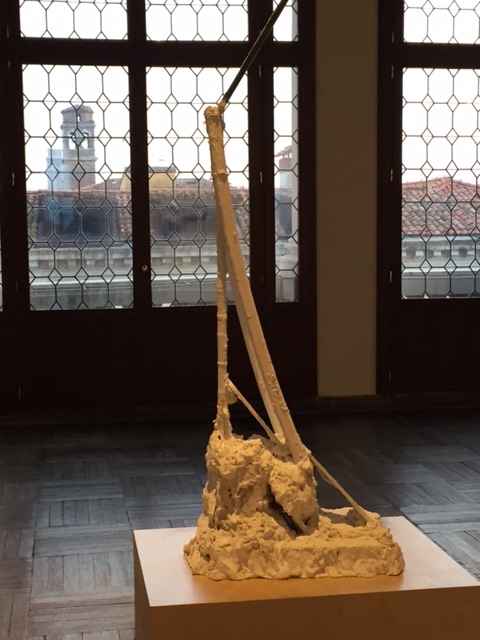
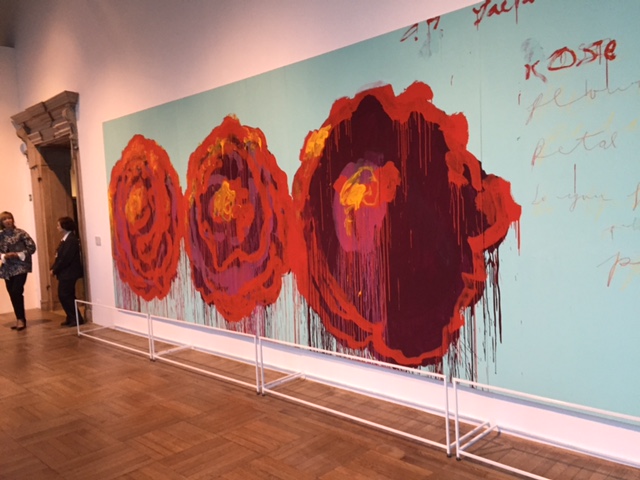
Upon arrival  in Venice on May 5th, a magical evening;to attend the exhibition Cy Twombly “Paradise” at “Ca’ Pesaro”; invited by elegant   Nicola del Roschio and Gagosian

Ca’ Pesaro (Galleria Internazionale d’Art Moderna) is a Baroque marble palace facing the Grand Canal, originally designed by Baldassarre Longhena in mid-17th century, the construction was completed by Gian Antonio Gaspari in 1710.

Ca'_Pesaro

IMG_3287

IMG_3292

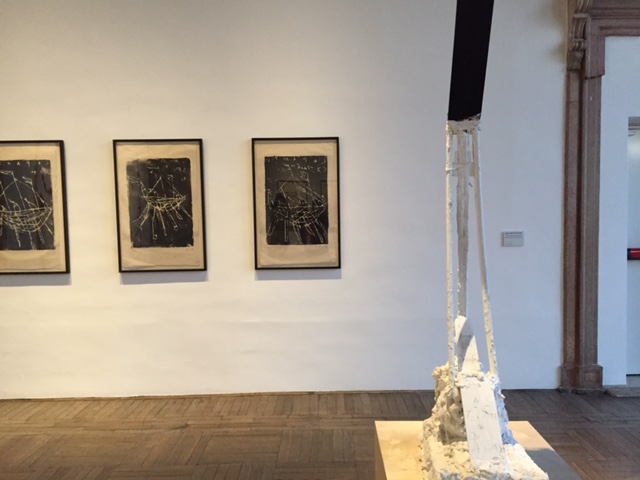
In the exhibition, the early wall painting on wood dated 1951 leads, via an itinerary full of visions and references, to a selection of Twombly’s last works, produced 2011, when the artist was at the physical limit of his old age: eight paintings of gestural baroque circles in yellow, red and orange on a bright green background (half margarita, half key lime); eccentric circular strokes – among the key motifs of the artist – narrow in some places and broader, freer in others, to generate “a sensation of radiant energy and controlled frenzy”. (Galleria’s press) 

IMG_3289

IMG_3285

IMG_3281

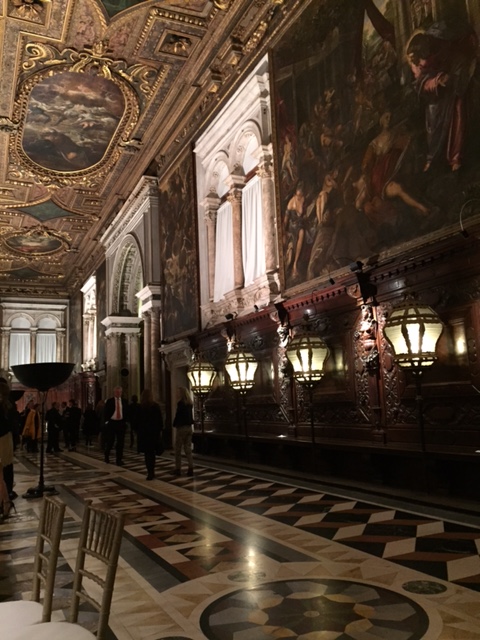
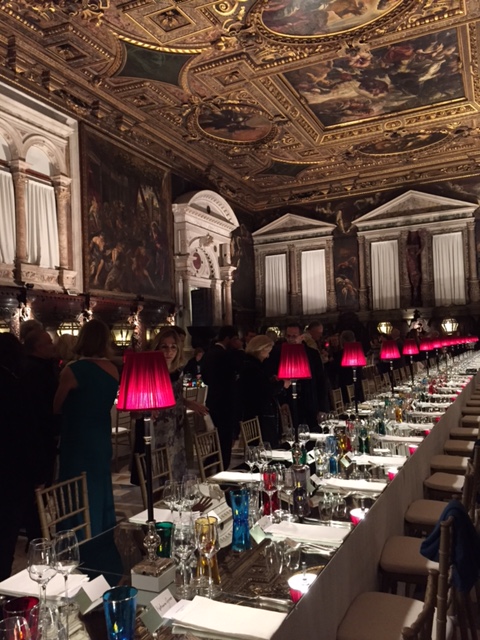
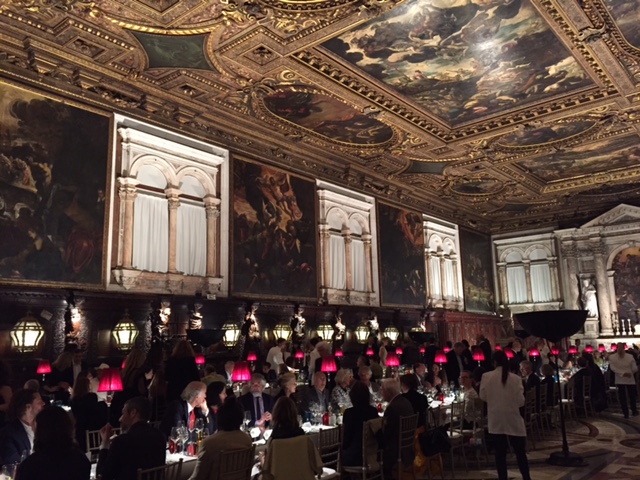
fabulous reception and dinner given by Gagosian, followed at Scuola Grande di San Rocco.

The Scuola di San Rocco, protector against plague, which had struck Venice in that century) was established in 1478 by a group of wealthy Venetian citizens, next to the church of San Rocco, from which it takes its name.

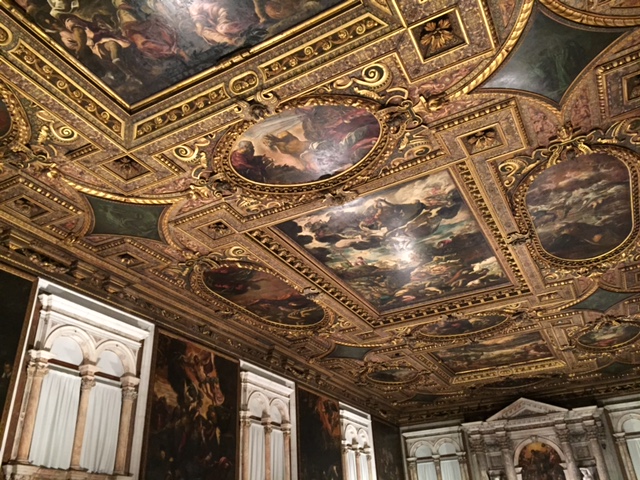
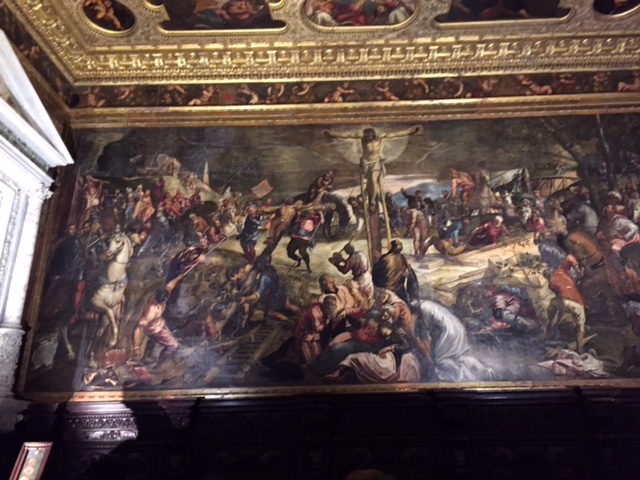
In 1564 the painter Tintoretto was commissioned to provide paintings for the Scuola, and his most renowned works are to be found in the Sala dell’Albergo and the Sala Superiore. All the works in the building are by him, or his assistants, including his son Domenico: they were executed between 1564 and 1587

IMG_3340

IMG_3313

IMG_3323


IMG_3321

IMG_3326


IMG_3319


IMG_3322

photos@VK

The pictorial decorations of the rooms took Tintoretto until 1588 and constitutes one of the most fascinating pictorial undertakings ever known: from 1564 to 1567 the 27 canvases on the ceiling and walls of the Hall of the Hostel, where members of the Banca and Zonta who governed the brotherhood used to meet; from 1576 to 1581 the 25 canvases on the ceiling and walls of the Upper Hall; from 1582 to 1587 the eight large canvases in the Ground Floor Hall.

images

take a virtual tour here: galleries at Scuola di San Rocco 

Keith York City

History made interesting

VK

visits on art, design, architecture and literature

Eclectic Trends

Interior Design and Lifestyle Trends

maria sarri Art projects

#art_projects, #public_art, #site_specific, #post_colonial, #urban_art

Η καλύβα ψηλά στο βουνό

Σε κοίταζα μ' όλο το φως και το σκοτάδι που έχω

tangledjourneys

A personal perspective on human interest stories from an American journalist living abroad

An Englishman in Berlin

Blog about life and culture in Berlin, Germany

nefeliatelier

bits and pieces that interest me

A R T L▼R K

An Alternative Cultural Daybook

Venetian Red Art Blog

Art, the resplendent light that illuminates the world

The School Of Life

visits on art, design, architecture and literature

IGNANT

visits on art, design, architecture and literature

βλέμμα

visits on art, design, architecture and literature

λεξήματα

visits on art, design, architecture and literature

flaneries

This WordPress.com site is the bee's knees

βλέμμα

gaze at Greece

SOUZY TROS

the new T.A.M.A platform