VK

visits on art, design, architecture and literature

Category: ARCHITECTURE & DESIGN

Munich; Sheila Hicks at Espace Louis Vuitton

‘Predestined Colour Waves’, Sheila Hicks
8 October 2015 – 23 January 2016

A beautiful and elegant opening last evening at The Espace Louis Vuitton München “Predestined Color Waves”, the first monographic exhibition in Germany since 1970 of the unique oeuvre of the Paris-based American artist Sheila Hicks.

IMG_7822

Atterrissage, 2014, pigments, fibres acryliques, 480 x 430 x 260 cm (dimensions variables).  Courtesy galerie frank elbaz, Paris


Sheila Hicks has long had a passion for architecture, and many of her works respond directly to the built environment: braided bas-reliefs, hanging soft sculpture, abstract tapestries.

Anja Kaehny

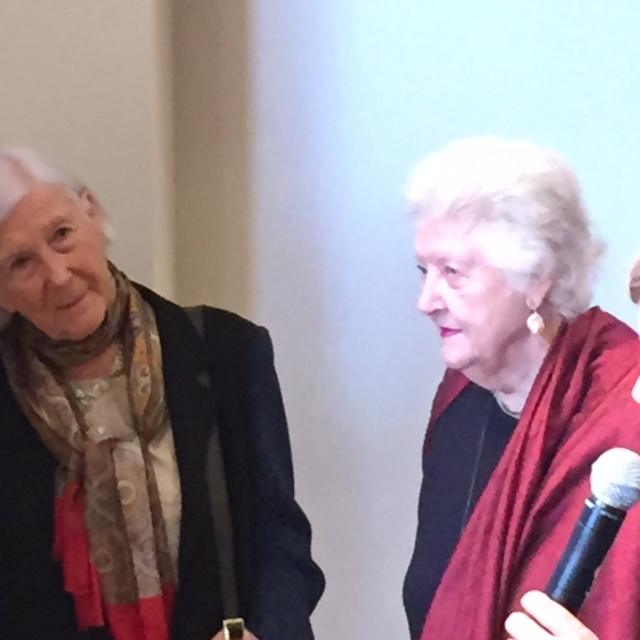
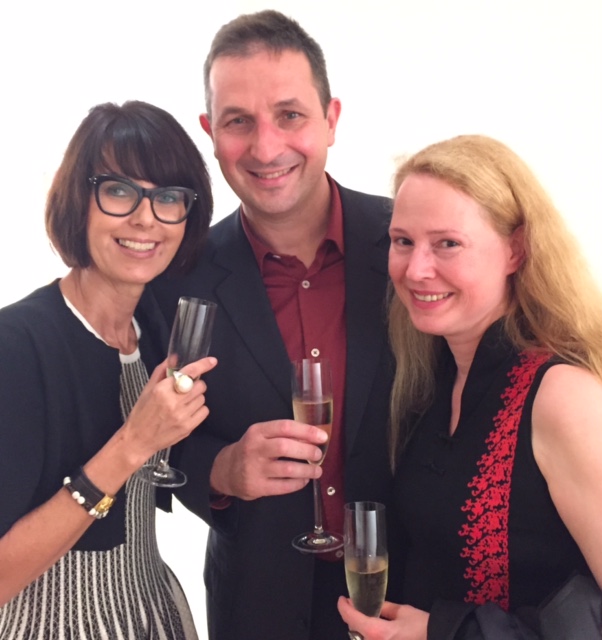
Anja Kaehny , director of Espace München(left), Sheila Hicks and Monique Lévi-Strauss, photo@VK

Creating new interpretations of age-old textile techniques, the artist has developed her own experimental and idiosyncratic style incorporating natural fibres, synthetic blends, and at times found objects, organic matter, and industrial materials. Colour, texture, and structure are her central concerns. Hicks’s art is informed by her academic training in Modernism, her encyclopaedic knowledge of historical textiles, her tireless exploration of new technologies, and a lifelong love of investigating different cultures. Painting, photography and archaeology were important early influences during her extended travels and stays in Latin America. (gallery press, Alison Jacques gallery, London) 

IMG_7830

Monique Lévi-Strauss (left) and Sheila Hicks, photo@VK

An interest in architecture, sparked during her student years at Yale University where Louis Kahn and Vincent Scully taught and intensified during her residence in Mexico when she met Felix Candela, Luis Barragán, and Ricardo Legorreta, became a cornerstone of her practice.

Sheila Hicks was born in Nebraska in 1934, and as teenager she used to explore the galleries of the Art Institute of Chicago, where she became so impassioned by Peruvian textiles that she talked her way into the storerooms.  After two years at college she transferred to Yale  Art School, where she was one of the female students and where she encountered tow formative professors.  One was Josef Albers, who had brought the principles of the Bauhaus with him to the United States.  Albers was a renewed pedagogue, and his courses included a heavy dose of colour theory. Hicks also undertook independent studies with Alber’s wife, Anni, who shared her interest in textiles.

FullSizeRender 3

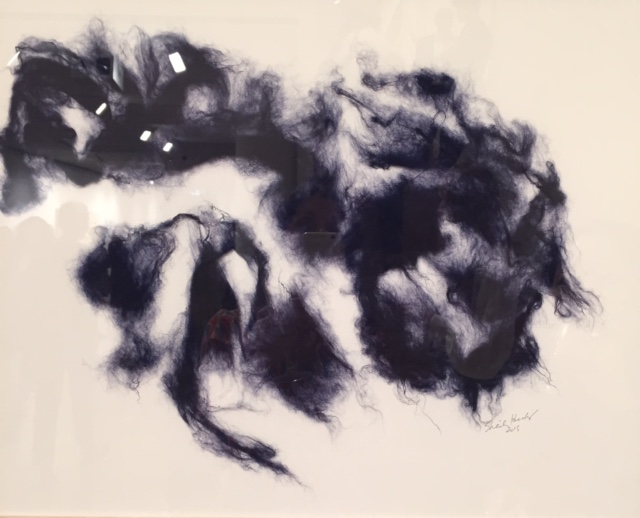
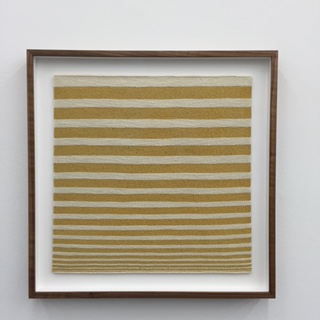
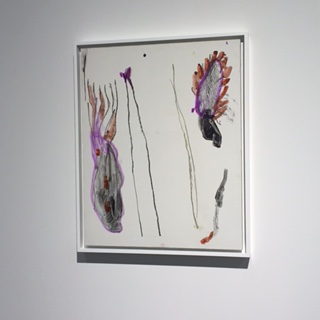
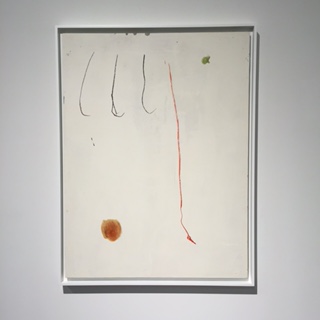
Dessin III, 2014, fibre, 61 x 46 cm,  Drawing III, 2014, fiber, 24 x 18 in.
Courtesy galerie frank elbaz, Paris

FullSizeRender

(left to right)Dr Kirsten Gabrielle Schrick, Dr Ralph Senft & Sabine Senft, photo@VK

FullSizeRender 2

Ferdinand Huwendiek & Alexandra Eley, photo@VK


FullSizeRender 4

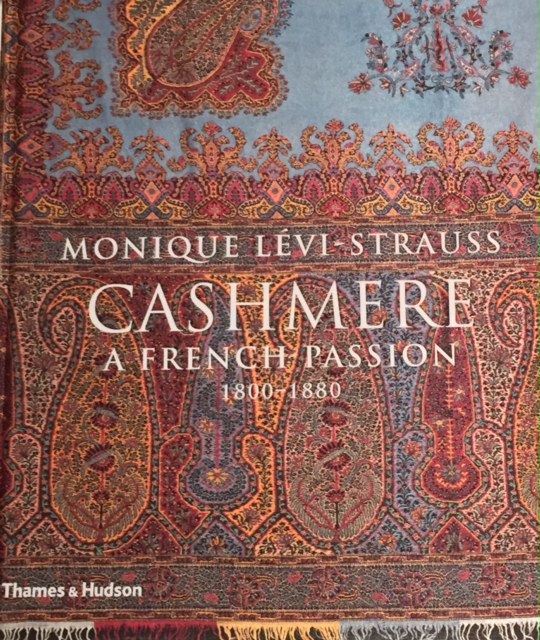
The exhibition is made possible by the loan of Atterrissage (2014) from the Fondation Louis Vuitton in Paris. It is accompanied by a catalogue featuring an essay by the art critic Jason Farago and contributions by the writer and textile scholar Monique Lévi-Strauss and Stephanie Rosenthal, artistic director of the 2016 Biennale of Sydney.

IMG_7821

photos@VK

Munich; OPEN ARTIST STUDIO FOUNDATION: under construction by Georgia Kotretsos for MaximiliansForum in Transformation curated by C9

IMG_7698

The Athens-based visual artist and researcher Georgia Kotretsos  has initiated a very promising and quite challenging  project for the city of Munich,  a visionary 10-year project proposal and exhibition “Open Artists Studio Foundation-OASF” which under construction aims to assemble at MaximiliansForum, the Munich art community, the Department of Arts and Culture of the city, and representatives of the Maximilianstrasse flagship brand stores to present and propose an organically-born creative evolution of the space – into a public art studio. The project was presented in the public on September 8, 2015.

1.GK_OASF_PHOTOCREDIT|Max Geuter_IMG_0738

IMG_7886

Georgia Kotretsos, OPEN ARTISTS STUDIO FOUNDATION: under construction, detail of public video, C9 MaximiliansForum, the Dept. Arts & Culture, City of Munich, organized and curated by C9, Munich, Germany, 2015. Supported by C9, City of Munich, NEON, and Mataroa. Photo credit: Max Greuter | Courtesy of OASF

The OPEN ARTISTS STUDIO FOUNDATION (OASF) is an innovative artist studio model. where upon the physical rehabilitation of MaximiliansForum will offer diverse and interdisciplinary fabrication spaces and technical support at its premises, and access to a network of specialized professionals and services vis its online platform to contemporary artists.

GK_OASF to printfinal_Page_51

Georgia Kotretsos, OPEN ARTISTS STUDIO FOUNDATION: under construction, OASF public video, C9 MaximiliansForum, the Dept. Arts & Culture, City of Munich, curated by C9, Munich, Germany, 2015. Supported by C9, City of Munich, NEON, and Mataroa. Courtesy of OASF.

OASF hopes to serve both as a creative crossroad and a hub in the heart of Munich, right to Maximilianstrasse as well as globally through its engaging manifold network.

GK_OASF to printfinal_Page_45

Georgia Kotretsos, OPEN ARTISTS STUDIO FOUNDATION: under construction, OASF public video, C9 MaximiliansForum, the Dept. Arts & Culture, City of Munich, curated by C9, Munich, Germany, 2015. Supported by C9, City of Munich, NEON, and Mataroa. Courtesy of OASF.

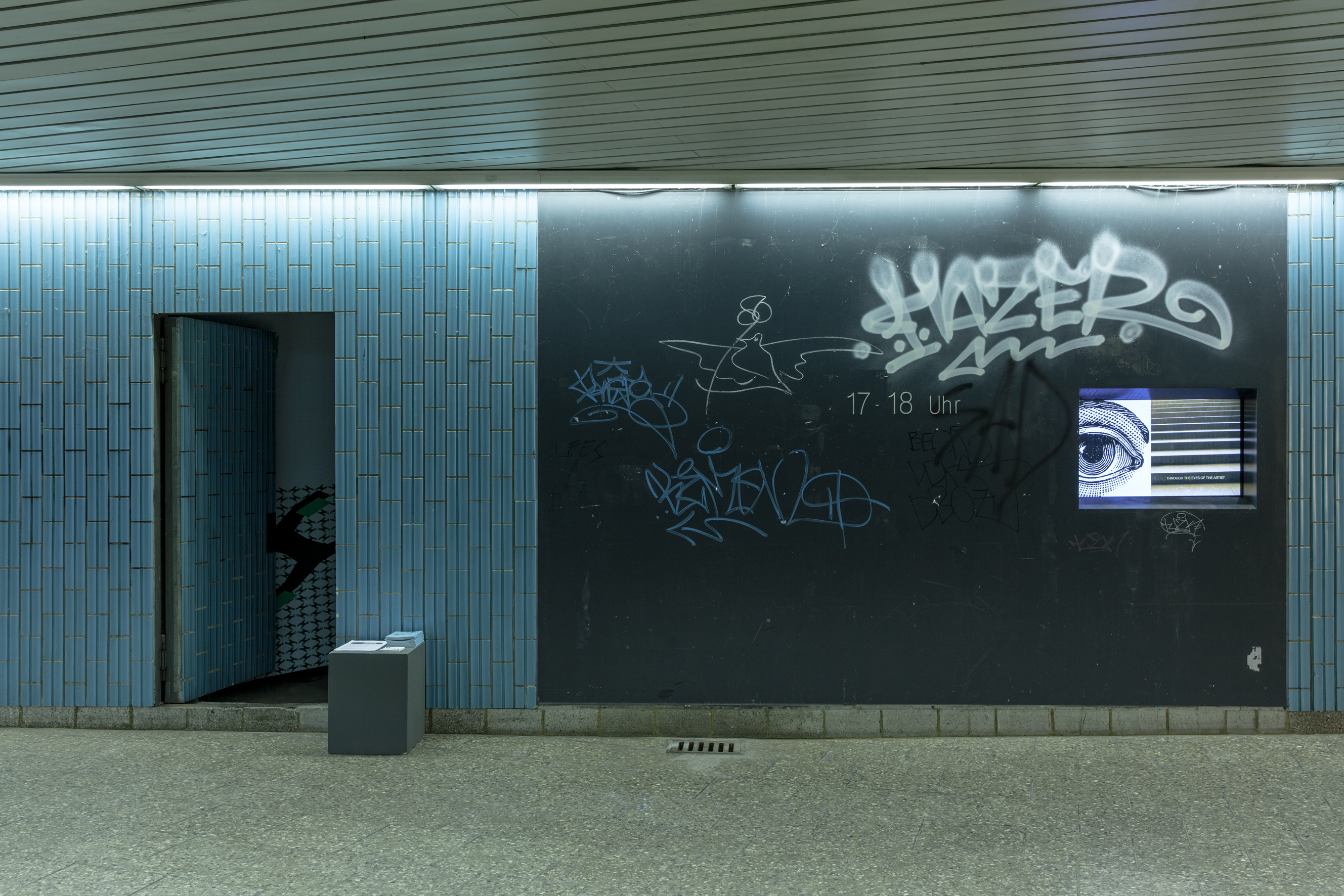
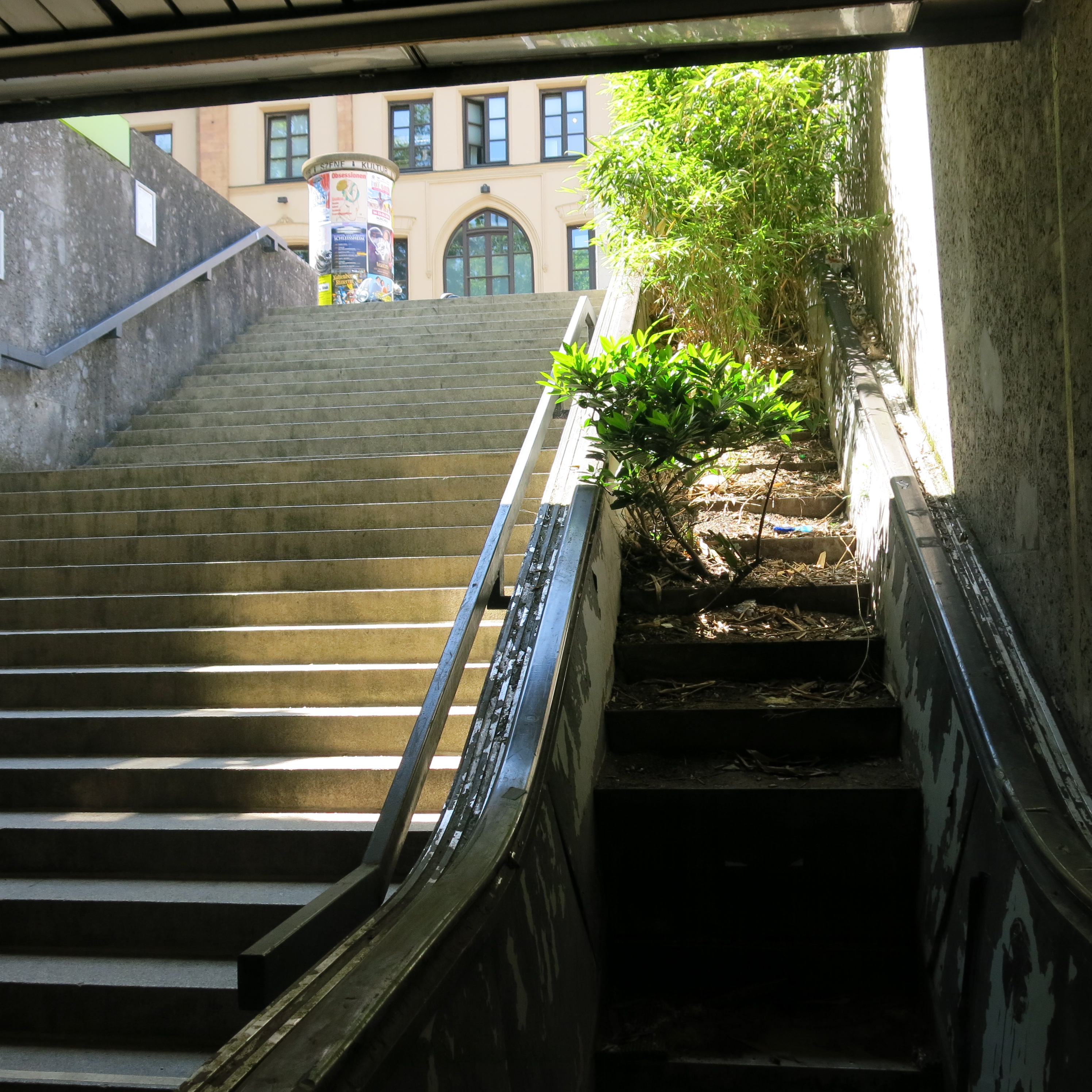
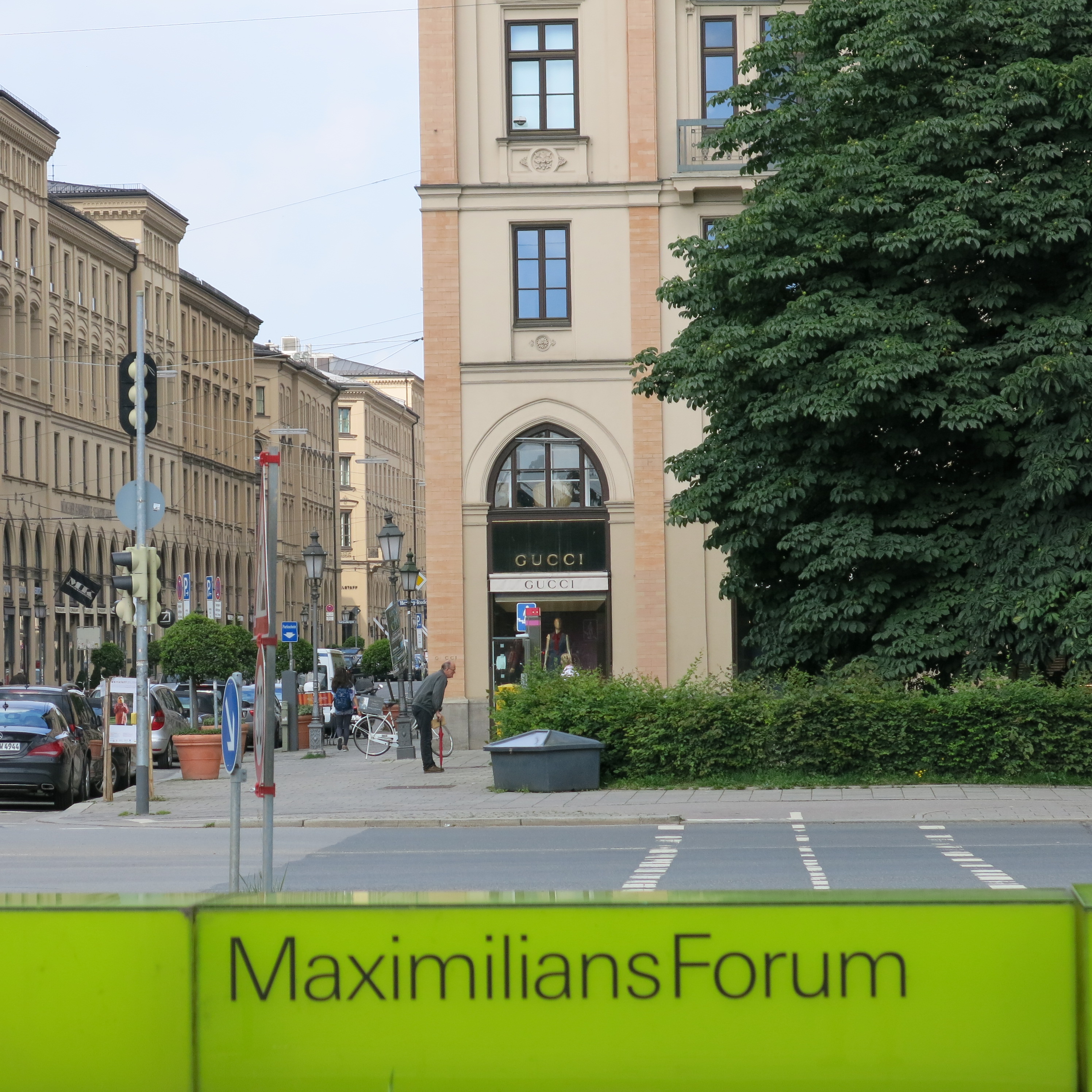
Maximiliansforum is a 1600 square meters public exhibition space in Munich. It is located at the underpass of the intersection on Maximilianstrasse and Altstrading. It is situated right under one of the main thoroughfares and most expensive streets of Munich-Maximilianstrasse, after which, the exhibition space is named. the underpass was build from 1968 to 1969 as part of the Munich transport master plan.

GK_OASF_INSTALLATION SHOT
Georgia Kotretsos, OPEN ARTISTS STUDIO FOUNDATION: under construction, C9 MaximiliansForum, the Dept. Arts & Culture, City of Munich, organized and curated by C9, Munich, Germany, 2015. Supported by C9, City of Munich, NEON, and Mataroa. Photo credit: Georgia Kotretsos | Courtesy of OASF.

Meeting over the presentation, Sept 8th ,Georgia Koretsos, being  amazed how enthusiastic she is about this project and the amount of work, hours, travelling and more she has dedicated to this challenge.  Over coffee next day, in some of my questions, here are some of  her answers.

GK: OASF is a studio run by artists for artists. It is not an exhibition space or an art-residency but a studio space where priority is given to artists who do not run a full-time studio, to women artists, to parent artists, to European artists and to artist in urgent creative support from around the work – in return of an artwork and five peer-recommendations. Upon the culmination of the project on its 10th year, 50% of the collection would be passed on to the Dept. of Arts & Culture for hosting at MaximiliansForum the OPEN ARTISTS STUDIO FOUNDATION.

OASF is structured in a way, which will build a community and network of artists. The peer-recommendation aspect of the project will act as the adhesive agent of that building process. Will there be a committee, online sign up timeslots, or an application process… there are all possibilities that are discussed. The online sign-up timeslot for usage of the space seems to be on top of the list right now.

IMG_7162

No.1

GK: …Quite briefly at its premises OASF will offer research labs; photo labs; sound and video labs; 3D printing labs; book-making and publishing lab; large scale fabrication lab; and services such as grant writing; network match-making; offer specialized and cross-sector creative solutions and partners; web design; programming; legal advice; social sustainability advice; studio visit facilities and much more. OASF is a site-specific 10 year project, offered to artists for free on 24/7 bases, and it’s open to the public.

GK:It only took a day of walking up and down on Maximilianstrasse early in May and in and out the space to identify the areas of interest. Physically being there changed everything. I was not only interested in the space itself but its immediate surroundings too. I needed to familiarize myself with the routes people take to get to the space. The following day a certain degree of criticality towards the current state and use of the site kicked in and it sent me straight to the C9 couch for the next two days, I was literally on my back, flat, eyes-closed thinking about the creative conundrum at hand… dreaming, imagining of what this place could become that it’s not already. That is what got to me, seeing an opportunity being missed, a present being settled for less that it was worth. It is easy to distinct when one comes from less privileged societies, I understand limitations very well, all sorts but what I find hard to accept is the settling notion when confronted with such decisions in advanced societies. What’s the reason behind an institutions being barricaded into and shield from the creative change that’s in process already, when all tools needed to take steps forward are available.

IMG_7691

IMG_7790

IMG_7774

IMG_7872 copyphotos@Georgia Kotretsos

GK: Early in 2015, C9 introduced me to the concept of “MaximiliansForum in Transformation”. Later in the spring, an invitation came form C9 supported by the Dept. of the Arts & Culture, City of Munich to visit the space in order to begin my research and then deliver a visionary proposal and exhibition by early September 2015. The truth is that I instantaneously welcomed the challenge for three reasons, firstly because of C9; secondly because of the privilege, challenge and opportunity to dream on a 1600 sq. meter; scale and last the possibility of generating creative capital and traffic into the heart of the commercial district of Munich.

Georgia Kotretsos is a visual artist and researcher based in Athens, Greece. She moved to South Africa in her early teens while the abolition of apartheid was underway. Kotretsos holds a BFA from the Durban Institute of Technology, in KwaZulu Natal, (2000) and an MFA Degree from the School of the Art Insitute of Chicago on a Full Merit Scholarshiop (2004).
With her work, she critiques the conformity of seeing by studying, proposing and practicing liberating and anarchic approaches of looking at art in an effort to support that seeing is site-specific and spectatorial emancipation the source of our art knowledge. Through her research-bases practice, she encourages speculative approaches on how knowledge is and/or could be produced.
Ms Kotretsos has invited Bernd Fasel, to work together  on  this promising project.  Bernd Fasel, is an independent promoter, researcher and senior advisor in the Cultural Creative Industries in Europe. In 2011 Bernd Fesel was elected chairman of the European Creative Business Network (ECBN) foundation in Rotterdam.

No.3low

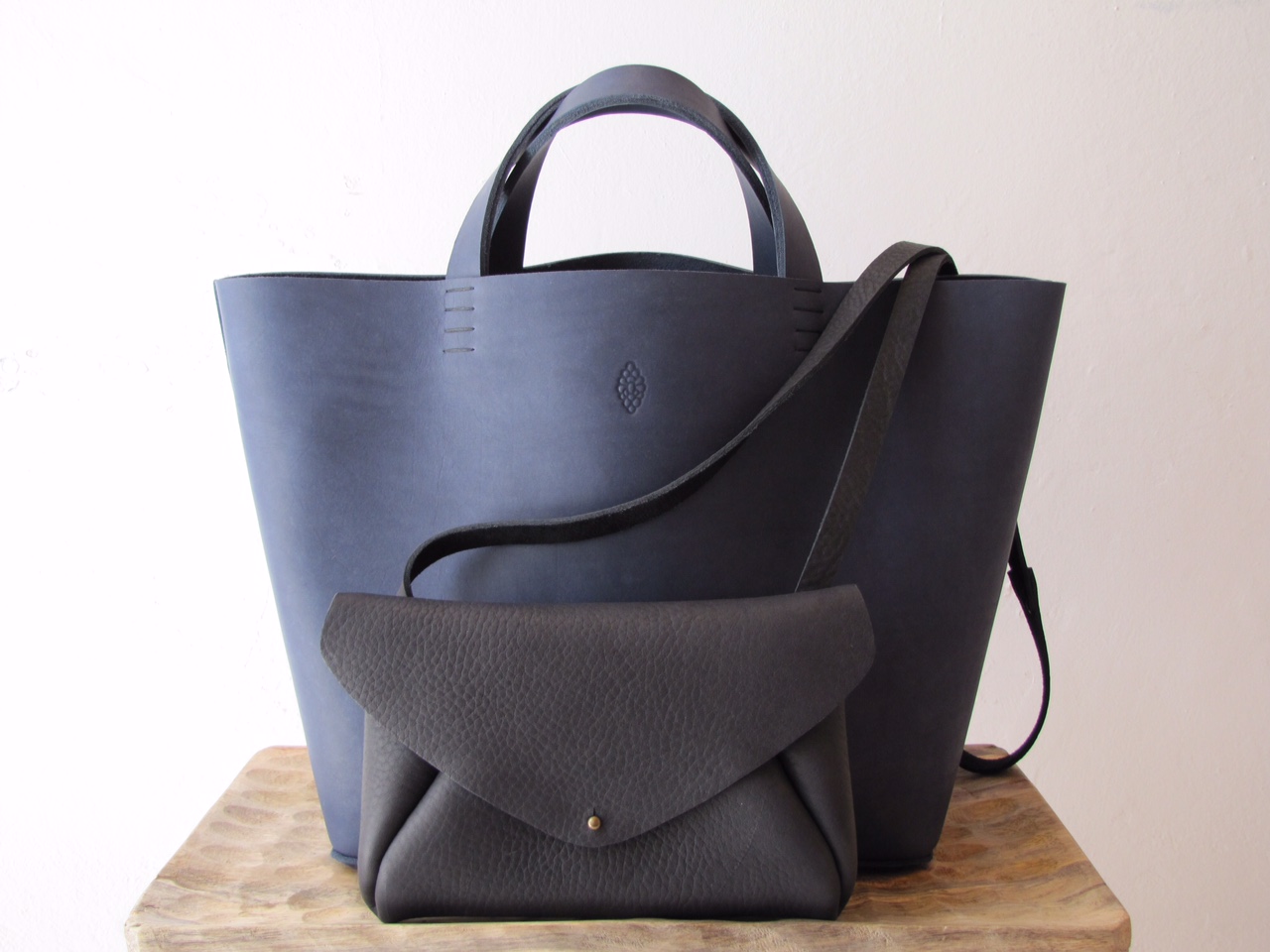
Paros, Cyclades: a true craftsmanship designer; Christiane Smit

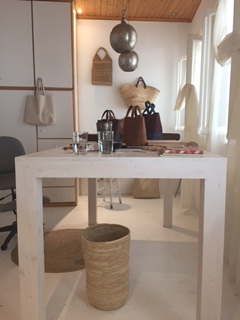
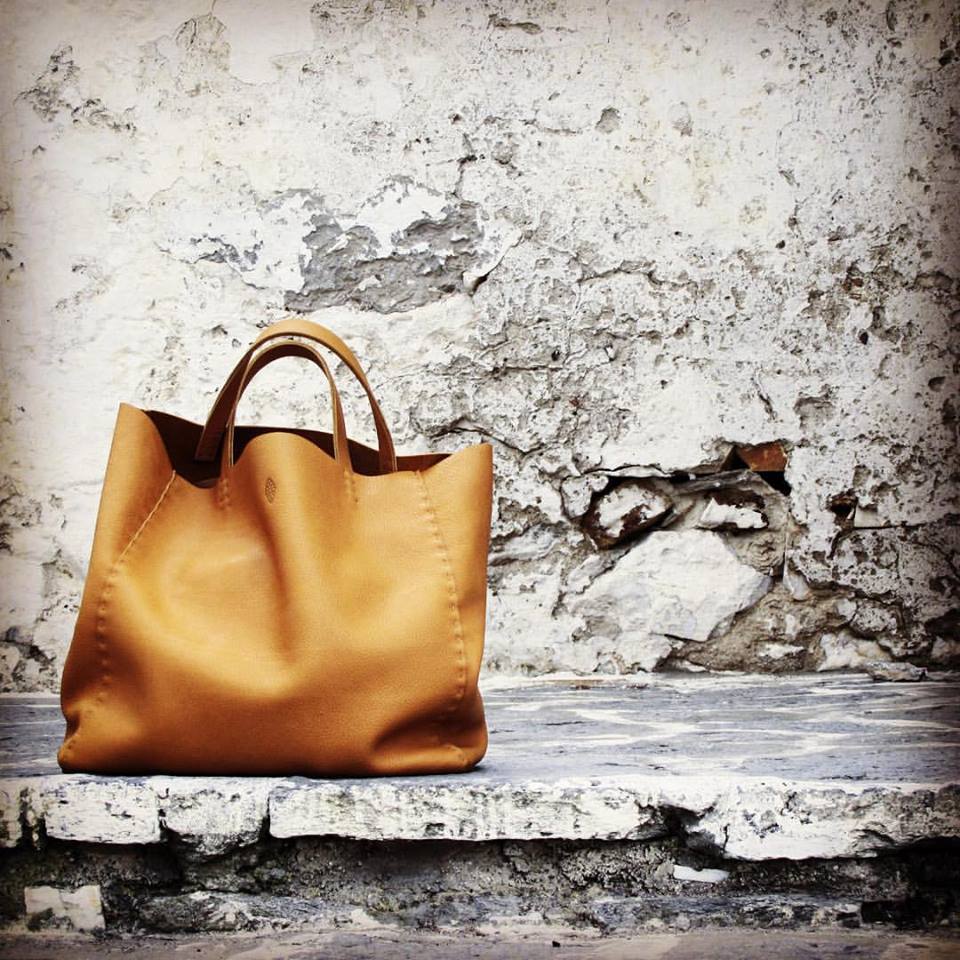
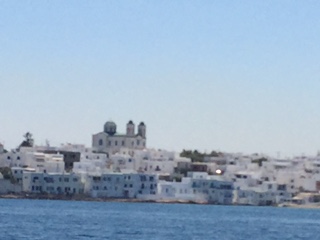
While sailing in the Cyclades islands in August, enjoying the blue water,  during a beautiful hot morning a visit  at  Christiane Smit’s studio in the island of Paros;  a pure craftsmanship  of refined simplicity of  hand stitching marvelous bags.

IMG_1179

IMG_6403

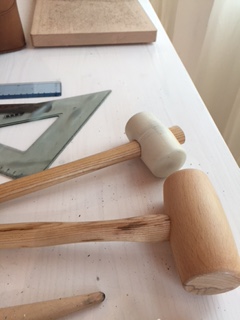
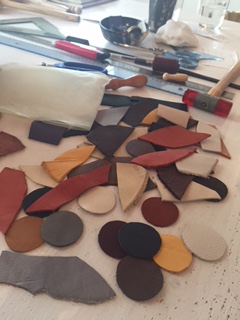
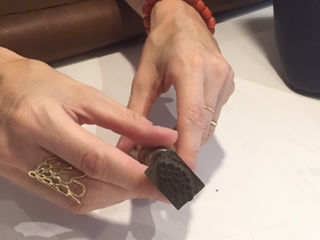
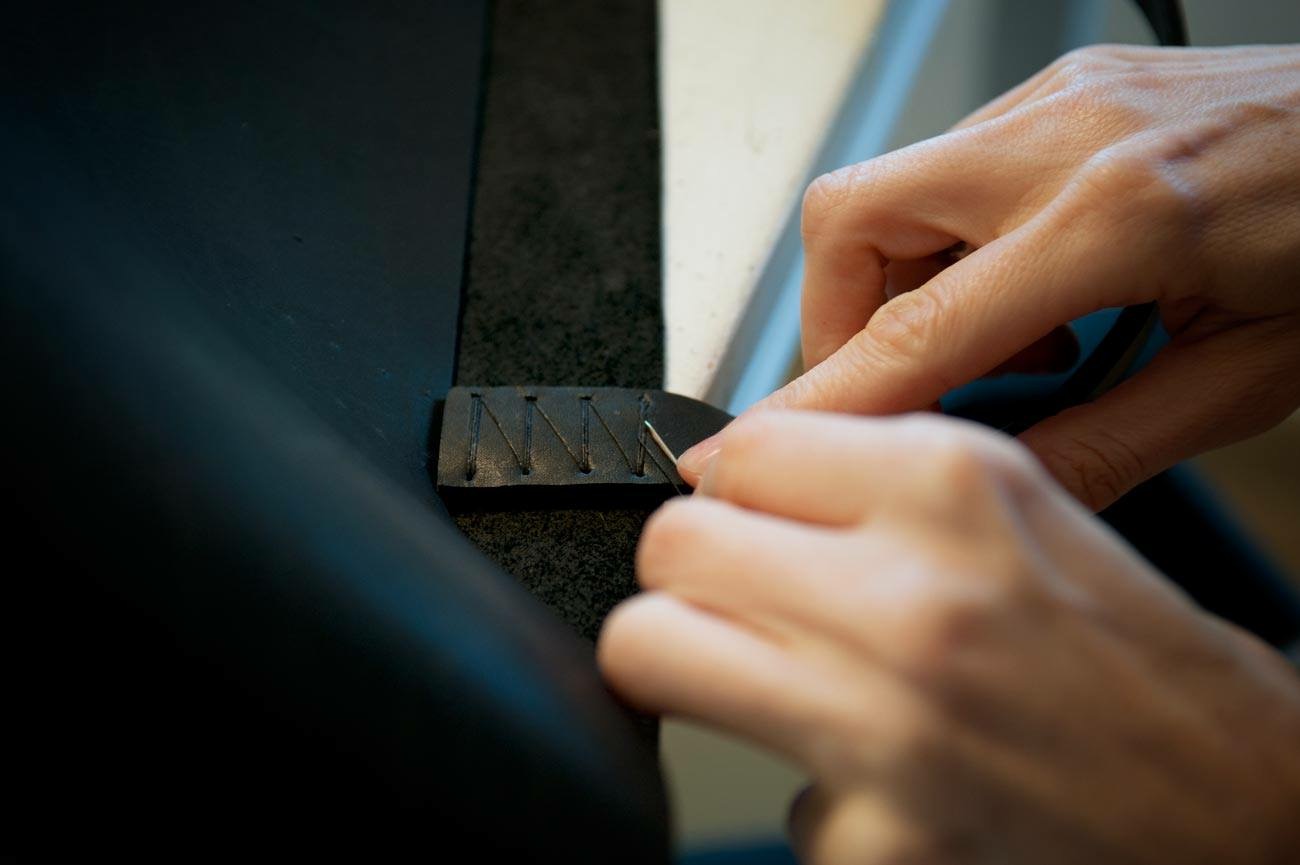
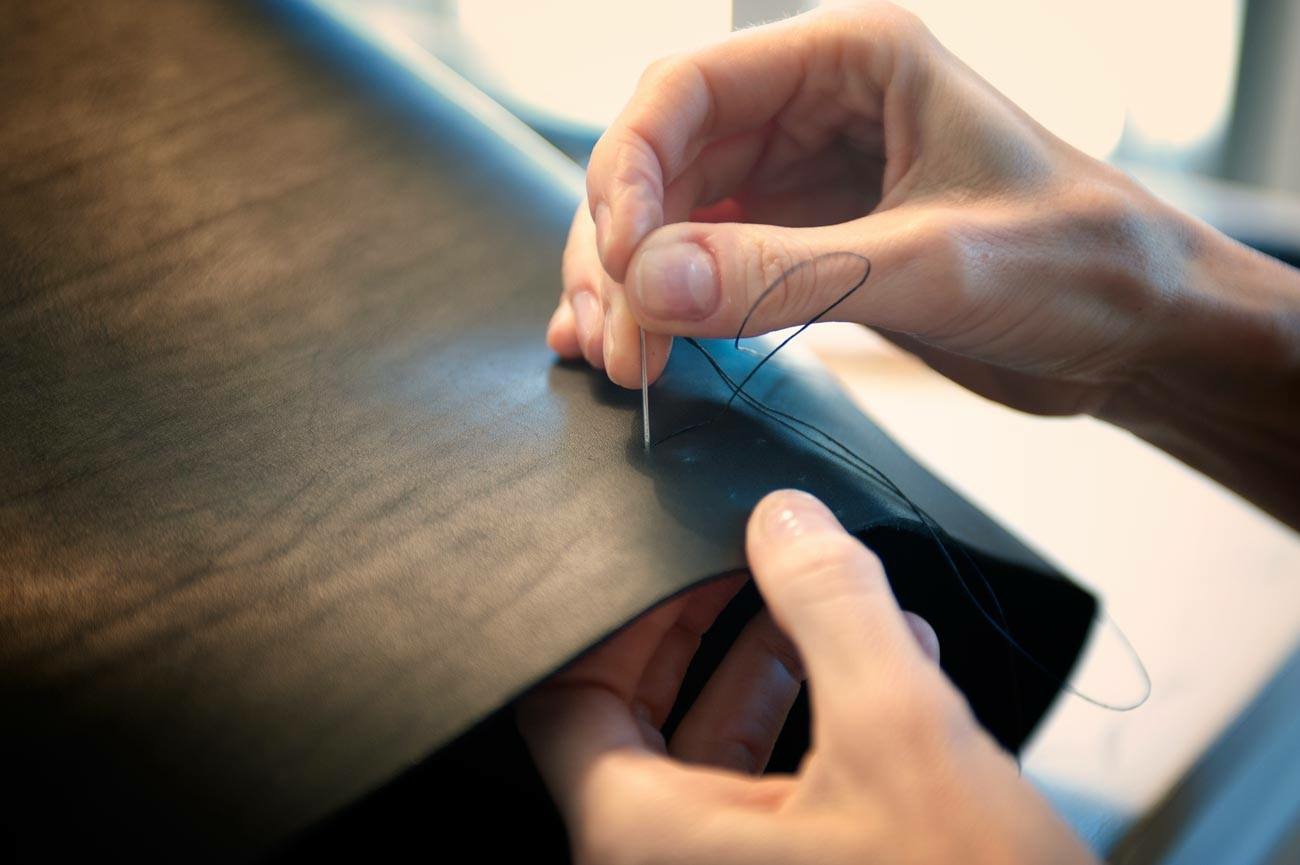
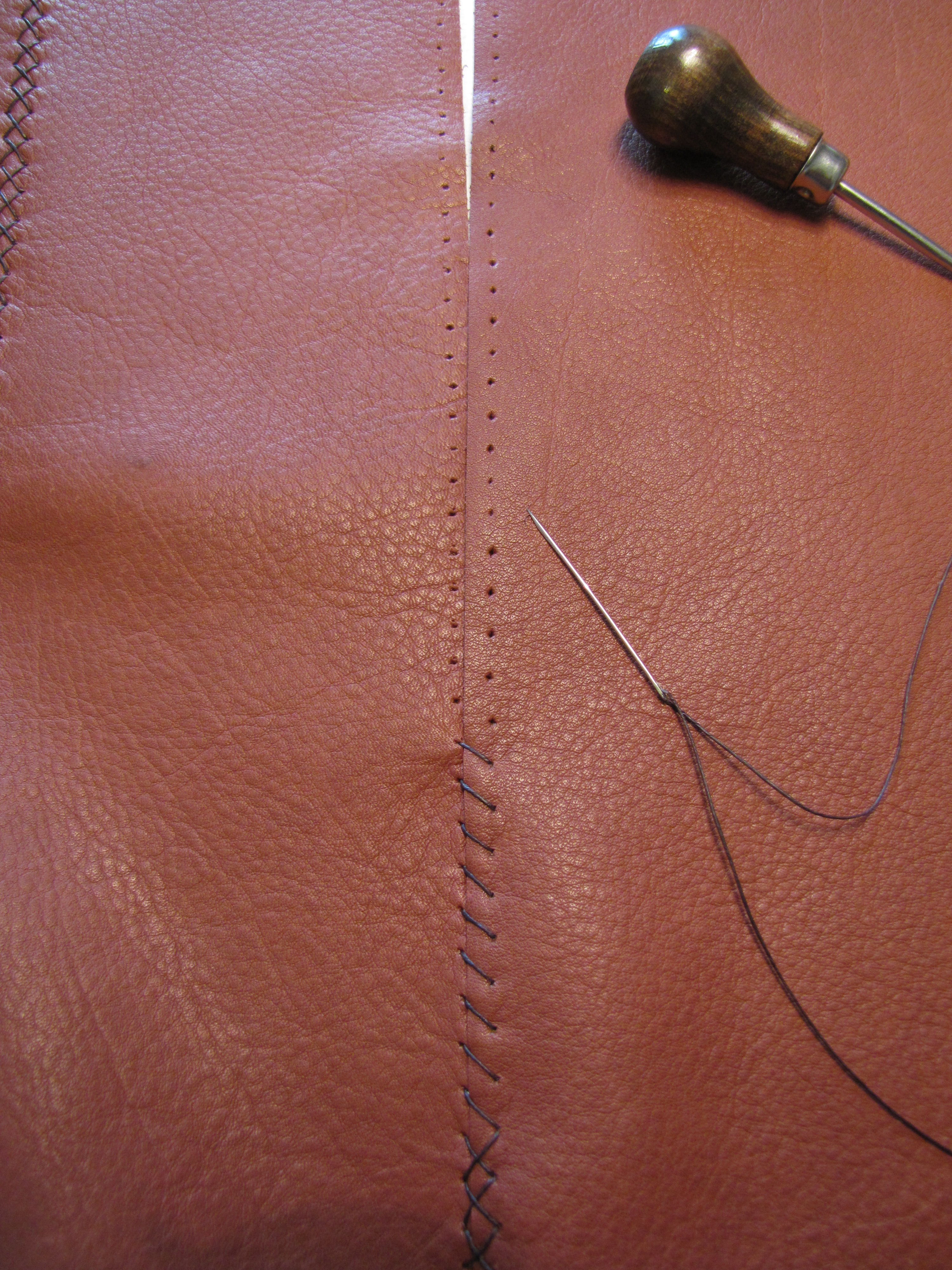
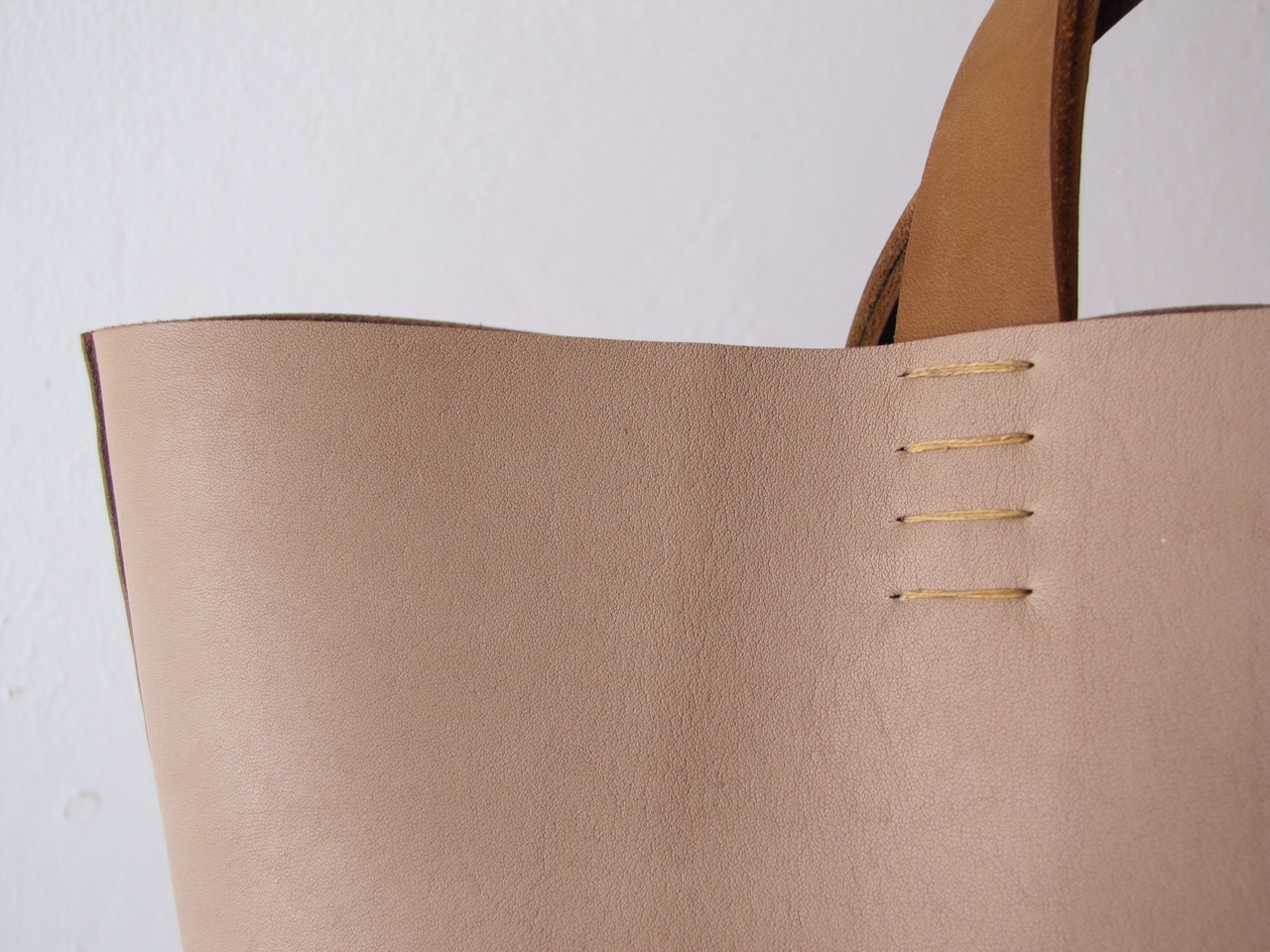
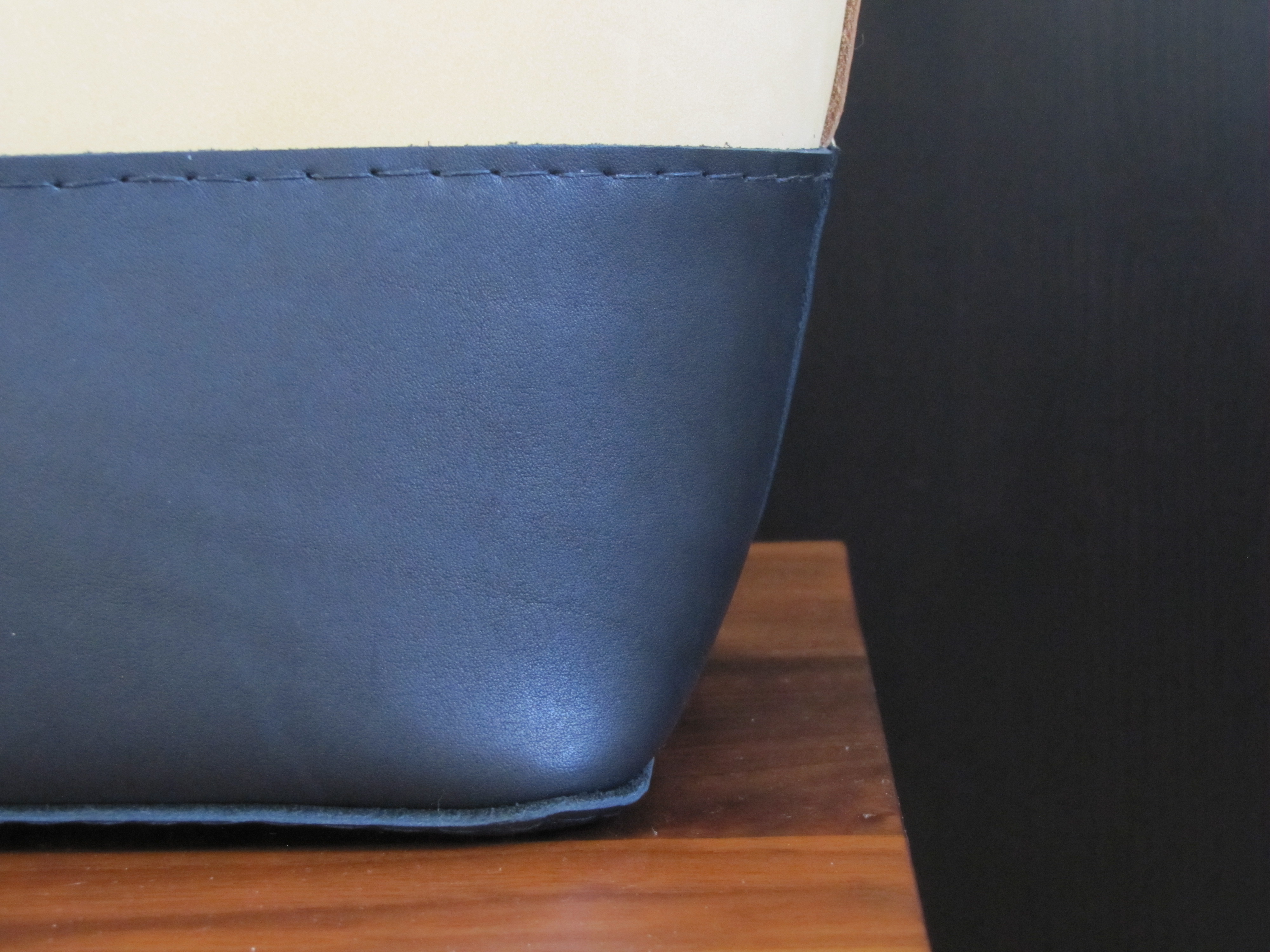
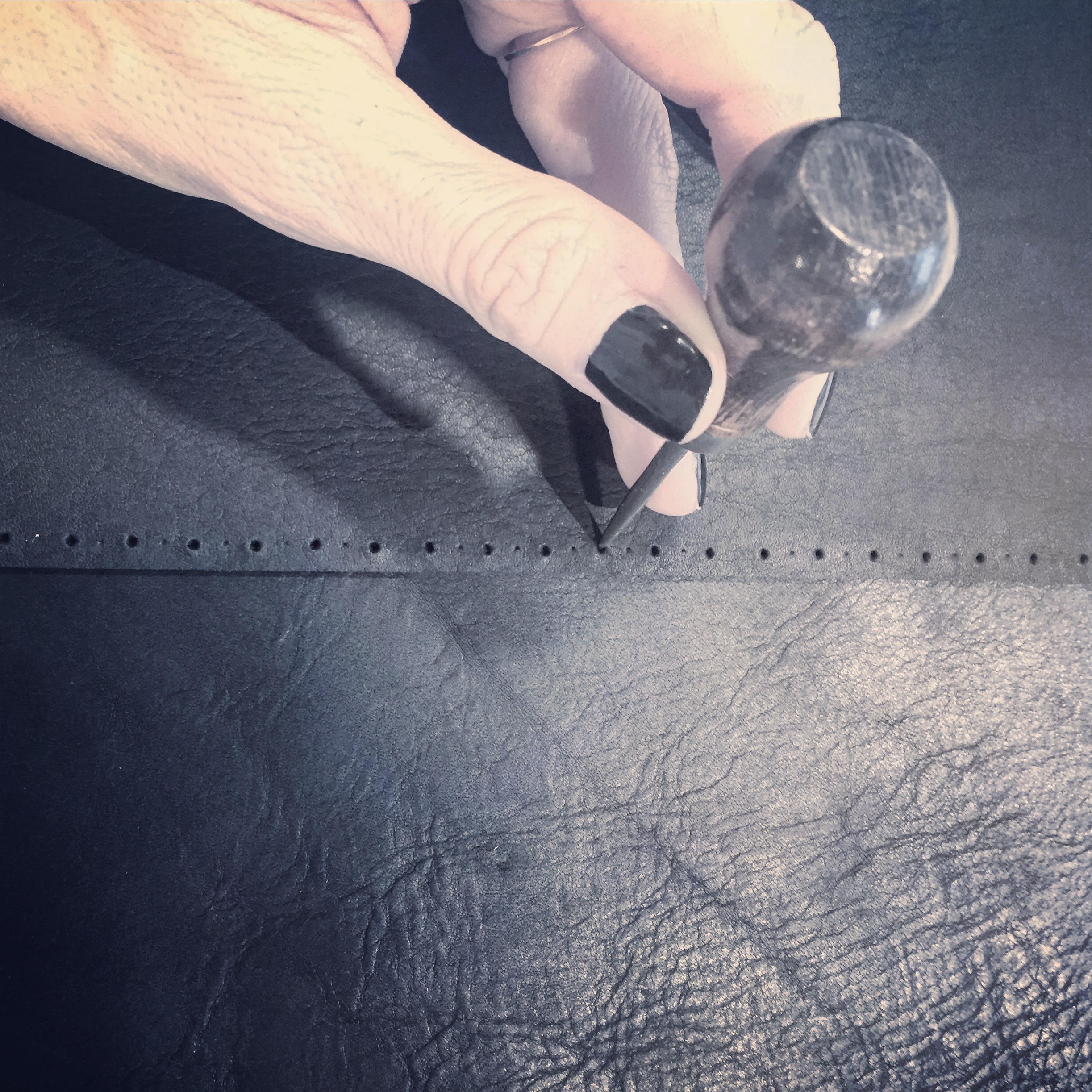
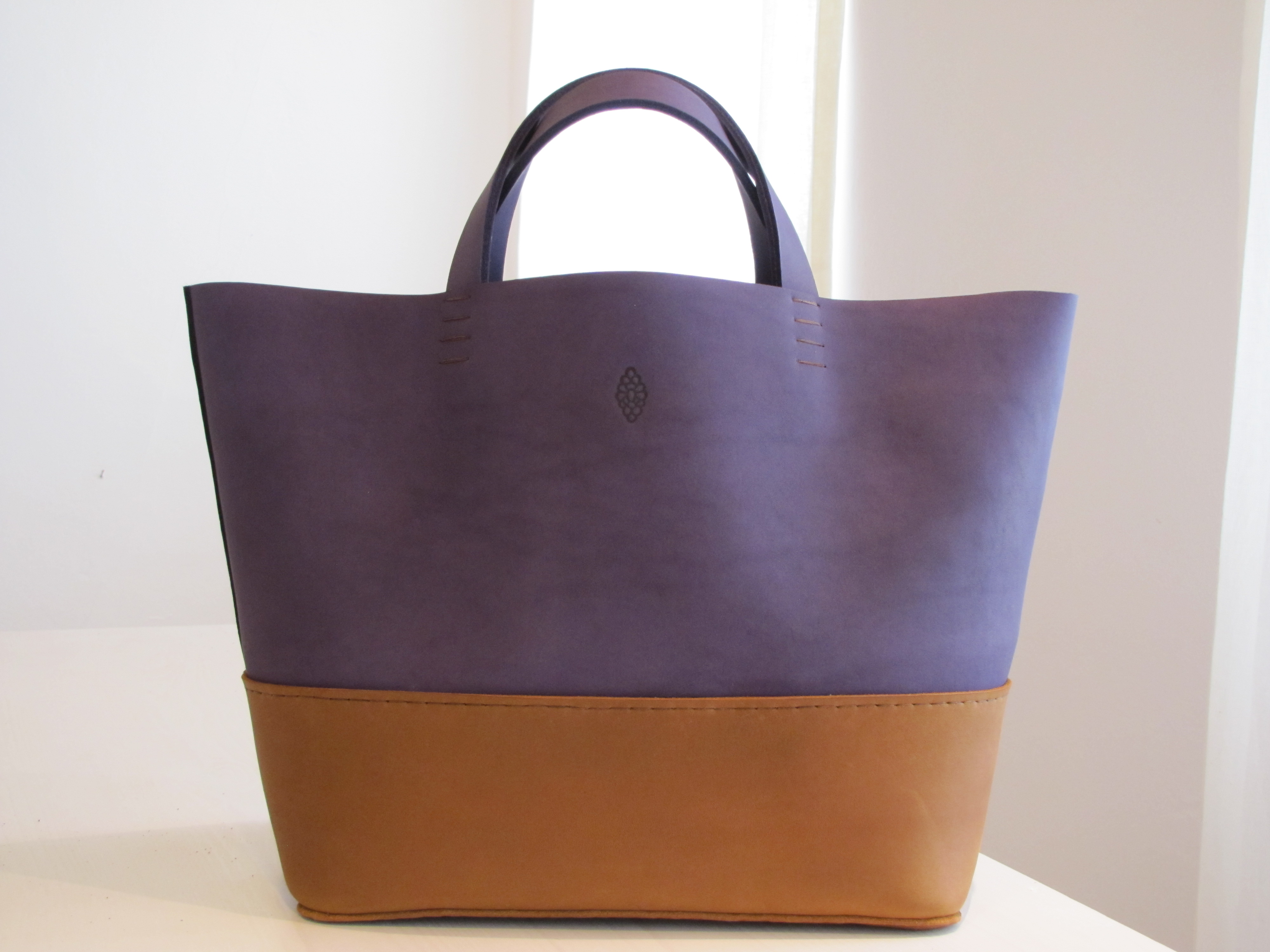
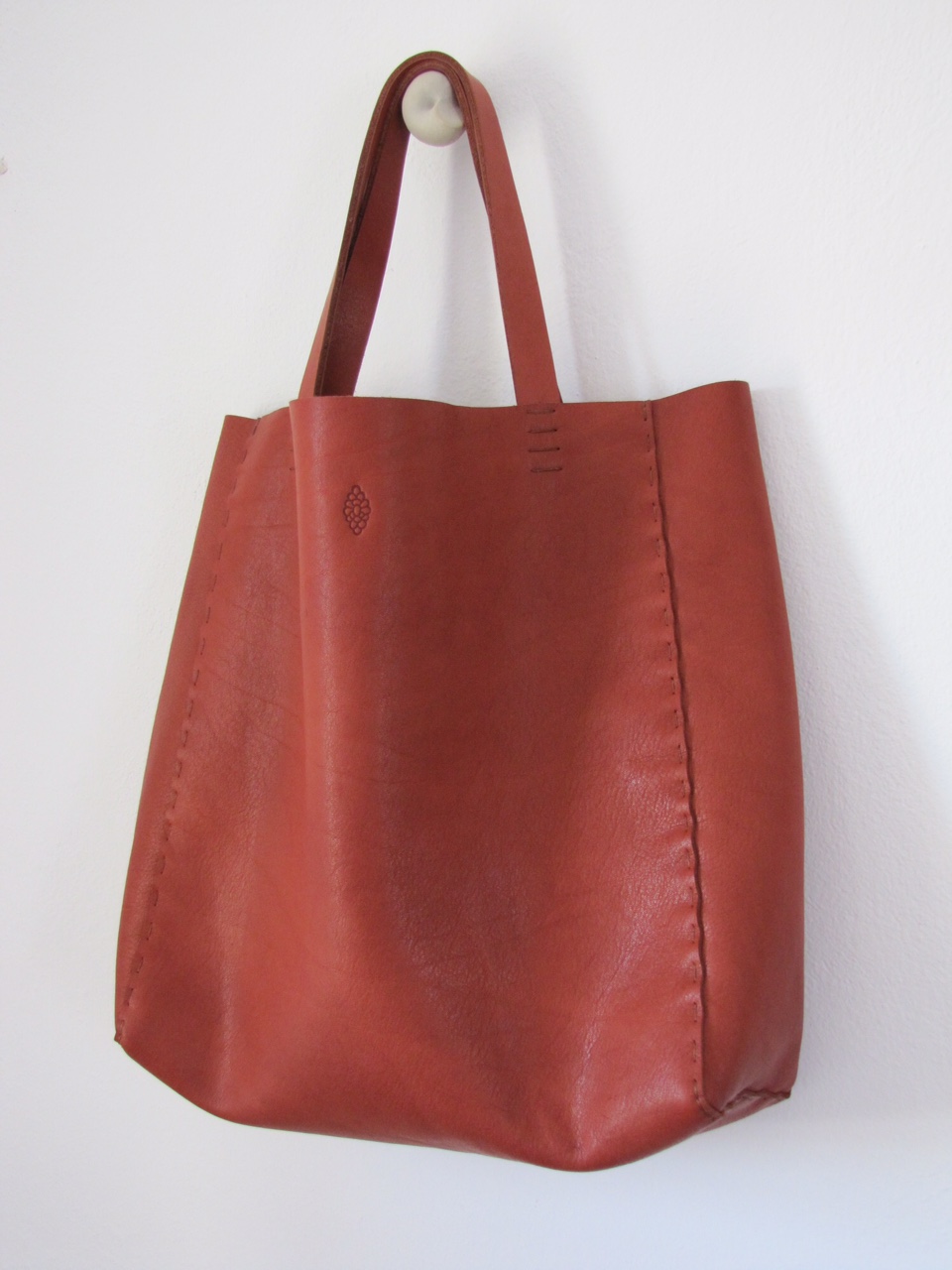
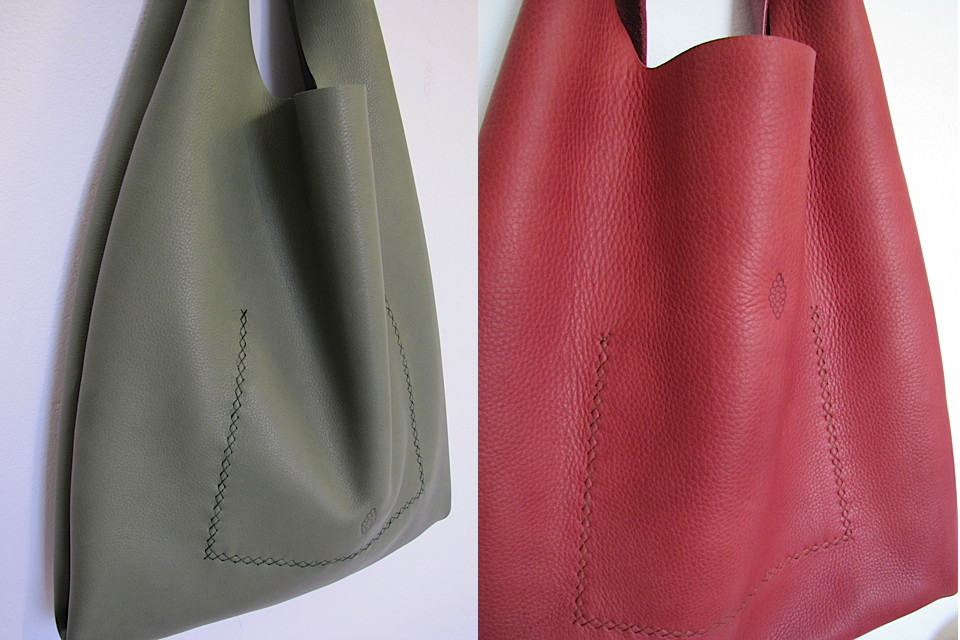
Christiane Smit, born in Netherlands, lives and works in Papos island, one of the most beautiful island in the Cyclades, Greece.  She creates leather bags the old fashioned traditional way, using her hands. Each stitch is formed by hand with nothing more than an awl, one needle and a length of waxed linen. Having a passion for natural and organic materials it came natural to her choosing to work with natural dyed hole grain leather form the finest quality showing all original structures and the linen wax wire, which is used in book binding and baskets weaving…

IMG_6407IMG_6402

IMG_6390

photos @VK, Christiane Smit’ s studio, Paros, Cyclades

IMG_0175

IMG_0179

MIX_0740

working

photos@Mike Salis

IMG_0199

basket bag

“It all started all when I fell in love with a piece of skin when I was travelling in Turkey, the most butter soft,  blood red, piece of goat suede just felt as silk in my hands and I started to design a small evening bag, using a vintage Japanese silk cloth as lining and grey sweet water pearls as handles…and the story takes it from there…”

IMG_1742 copy

IMG_0201

photos@Christiane Smit

As Christiane says, very few companies can invest the time necessary to hand stitch their items, but the strength and resilience of hand stitching far exceeds the machine made equivalent.

basket bag 2 colours

we women, carry our life in our bags, they should be something more than a product, they should be a  extension of our own soul and personal style. Unique as every woman is.. versatile and honest good…refined simplicity:uncomplicated and pure.. 

Christiane’s “Petite Maison Christiane”, was born in 2011.  Christiane’s women are effortless chic: sophisticated but relaxed and simple.
IMG_0207

IMG_0257

Christiane Smit’s inspirations came from living in the Caribbean and travelling through countries as Mexico, Guatemala, Suriname, America and Asia always having a soft spot for all things hand made.

IMG_0212

IMG_0200

IMG_0199

Christiane is  working only by order and customized so she cannot come out with a collection every season. The designs stay in the collection and she might make a change during time, for example The Basket Bag she did it in two colours, combined and every year or half year she  comes out with a new design. The Basket Bag that has two colours has a lot more stitching than the one colored bag. This bag goes with the summer breeze, bohemian chic, easy to wear from morning till the evening.

“I am passionate about all that’s real, clean and pure things, colour combinations because they created atmosphere. About love and my love for my work, people and working with my clients… enjoying always my passion for hand stitching… craftsmanship and creating”

Christiane Smit studied at University of The Arts London and Amsterdam. She worked  in Amsterdam in High End Jewellery, Bvlgari, Pomellato and Pasquale Bruni and High End fashion, Yohji Yamamoto, Comme des Garcon and Giorgio Armani. Travelling to Paris and Milan selecting collections for the different seasons… Life and her dream brought her to Paros island,  to create and live by the blue sea where she is inspired.

12046980_10153588288628397_4682216425110372594_n

IMG_6201

IMG_6409

11209364_10153562484208397_4465406281611280888_n

some  photos were taken that beautiful morning at Christiane’s studio, on August 10th, 2015 in  Paros.

here a great shot by Christos Drazos and words by Maria Alipranti, Christiane Smit in Paros, “The Tide”


Zürich; art gallery weekend:Löwenbrau Art Complex bldg galleries; Hauser & Wirth; Eva Presenhuber ;Grieder Contemporary ; Maag Areal galleries:Peter Kilchmann et more and the furniture designers INCH

A 24 hour trip to Zürich with my wonderful friend, art advisor /Munich, Martina Tauber to attend the gallery weekend fall opening  art scene.

We started with a wonderful exhibition at Bolte Lang gallery with the exhibition “Dirt Club” with  Henning Strassburger. A wonderful walk thru with  Chaja Lang.

IMG_6916

Bolte Lang gallery, Henning Straussburger, exhibition view, photo@VK

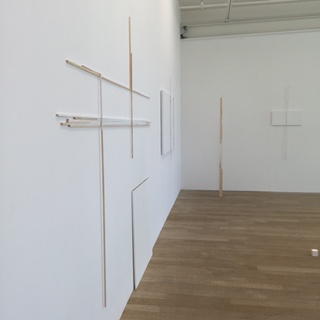
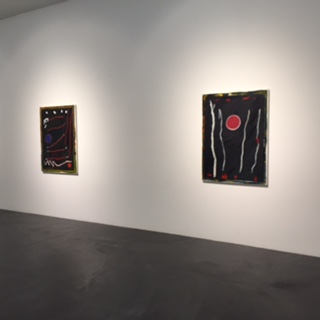
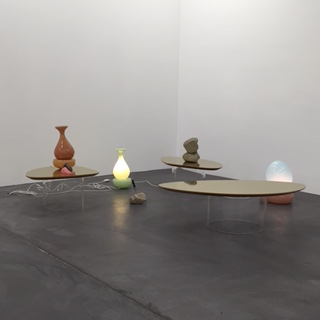
Moving to Maag Areal to Peter Kilchmann for Fernanda Gomes; first solo show at the gallery; a beautiful and poetic exhibition. On display, there are new works made out of basic materials, such as wood, plexiglass, paper, threads and metal. Gomes transformed these objects in a subtle way, to create unusual, suggestive connections between the various materials.

IMG_6920

IMG_6924

IMG_6925

Fernanda Gomes at Peter Kilchmann, photos by VK by permission

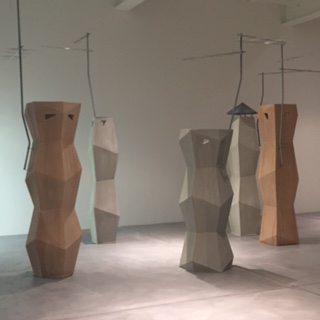
Next stop at Eva Presenhuber Gallery for Martin Boyce exhibition “Inside rooms drift in and out of sleep While on the roof An Alphabet of aerials Search for a language”

The works of Martin Boyce speak of other spaces.

Of spaces that seem near to us yet remain strange. Of spaces in which the familiarity of the objects collides with the abstractness of their forms, and an echo of history reverberates in the presence of their physicality. Of spaces in which the organic appears in architectural form, the outworn in the untouched, and the everyday in the exemplary. And of spaces that open and shut, that fold the inner outward and the outer inward, of spaces that become passageways in which the expanse of landscape continues to breathe in the seclusion of the interior. (gallery press)

IMG_6936

Martin Boyce, “While on the Roof”, 2015, jesmonite,steel and aluminum

IMG_6939

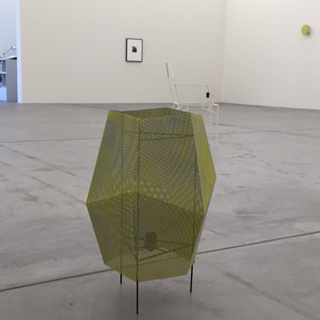
Martin Boyce, “Dead Star”(yellow), 2015, painted & blackened steel, photo@VK

IMG_6947

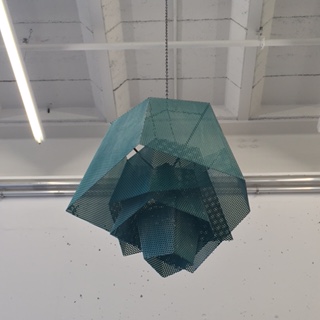
Martin Boyce “Dead Star (metal palms0”, 2015, painted steel, brass, cast and painted bronze, 2-parts chandelier,  photo@VK

Next  stop at Grieder Contemporary “Abstract Horizons” with  Shara Hughes, Rebecca Morris, Caragh Thuring curated by Melli Ink. Lovely talk with Melli Ink also about her own  lovely ceramic work; Thank you Melli for your lovely book gift.

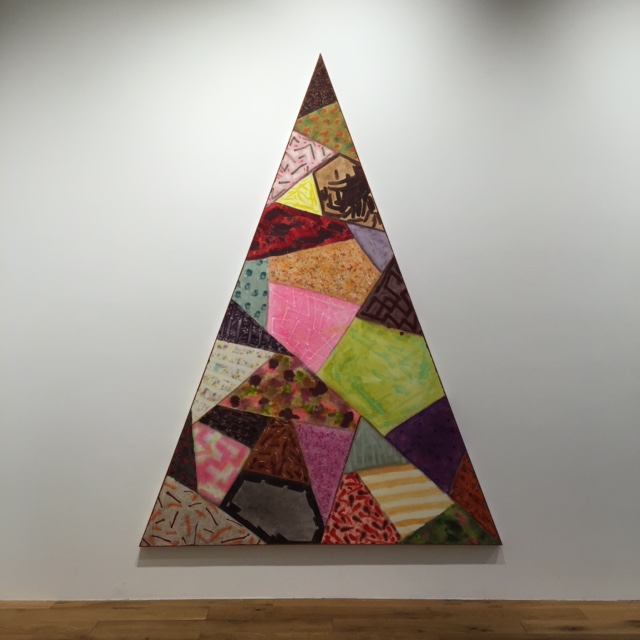
Sarah Hughes, Rebecca Morris and Caragh Thuring represent a new generation of painters who have discovered working methods and forms of expression enabling   each of them to develop a wholly personal and independent visual idiom. All three take great pleasure in the act of painting, in experimenting and in consciously opting for the myriad of possibilities offered by painting as a genre. 

2015_Abstract_Horizons_2

Caragh Thuring at Grieder Contemporary

IMG_6950

Rebecca Morris at Grieder Contemporary

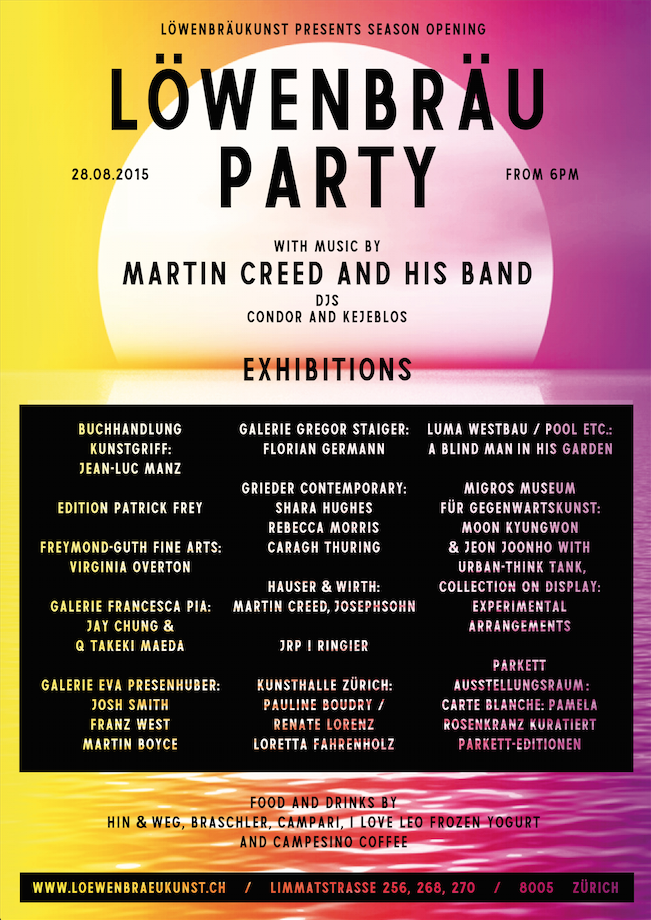
Continue to Löwenbrau Art Complex  galleries bldg at Limmatstrasse ;  Martin Creed and Josephsohn at Hauser & Wirth ; Followed by the Season Opening Summer Party
Performance by Martin Creed and his Band

Words and sound play an essential role in Martin Creed’s work. He considers his work as a musician and composer as inseparable from his work as a visual artist. Indeed, his paintings and sculptures can be thought of very much like pieces of music, in which each interpretation is different and in which rhythm and colour plays an important role…(gallery press) 

IMG_6968

IMG_6966

IMG_6963

IMG_6971

Martin Creed at Hauser & Wirth, photo@VK
We continued to Eva Presenhuber for the Franz West/Möbelskulpturen_Furniture Works  and Josh Smith.  Thank you Christian Schmidt for walking us thru those lovely exhibitions.

IMG_6976

IMG_6978

IMG_6982

 Josh Smith exhibition at Eva Presenhuber gallery, photos@VK
Taking a look at the Pool Project “A Blind Man in His Garden” 
The exhibition is curated by de Appel alumni Kris Dittel (b. 1983, Slovakia) and Emma Panza (b. 1985, Italy) and mentored by Lorenzo Benedetti, Director at de Appel arts center, Amsterdam. (on view till sept 27, 2015)

A Blind Man in His Garden is an exhibition that emphasizes subjective narratives, and puts forward a reading of an artwork, or exhibition, based on personal associations, previous knowledge and encounters. The title of the exhibition also refers to Joel Sternfeld’s photograph, A Blind Man in His Garden, Homer, Alaska, which suggests that there is a potential of artworks to trigger single or multiple narratives. By shifting the attention away from the visual experience of a lush rural landscape towards the imagination of vivid sensations, probably felt by the depicted man, the artwork encompasses numerous possibilities to experience it beyond its visual qualities. (curators’ note)

IMG_6983

Jorge Pardo, Laverriere Janette,Peter Fischli/David Weiss,Mark Bradhford,Monica Bonvicini

IMG_6986

Danai Anesiadou, “L’Adolescente”, 2010

IMG_6984

Seth Price, “Untitled”,1985/1996, silkscreen print on metal,114.3x 57.2 cm

bildschirmfoto_2015-08-26_um_10.39.25

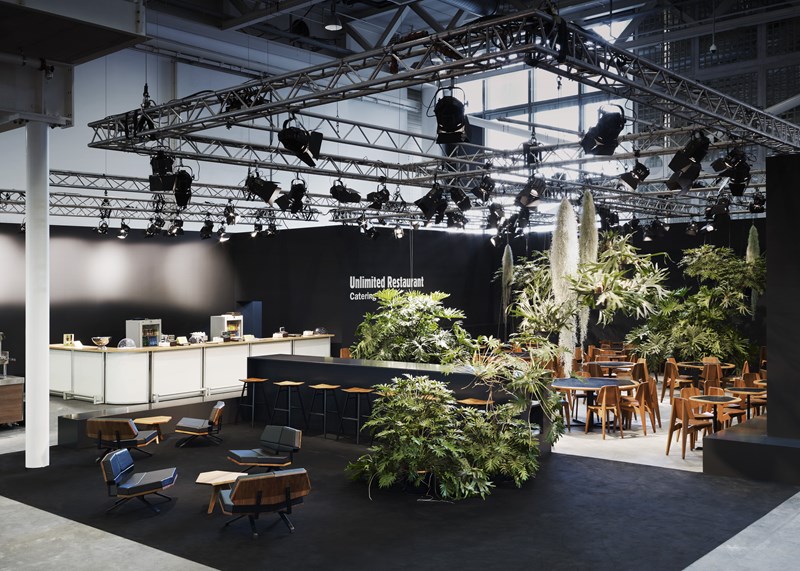
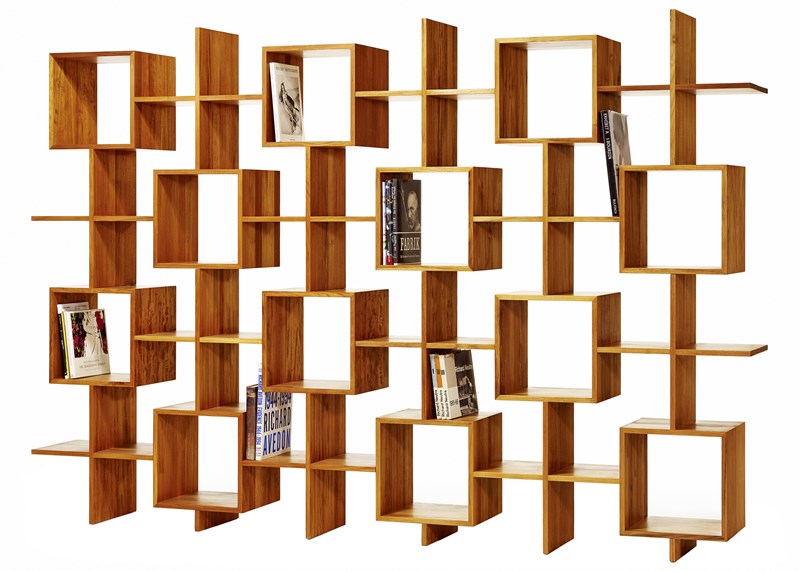
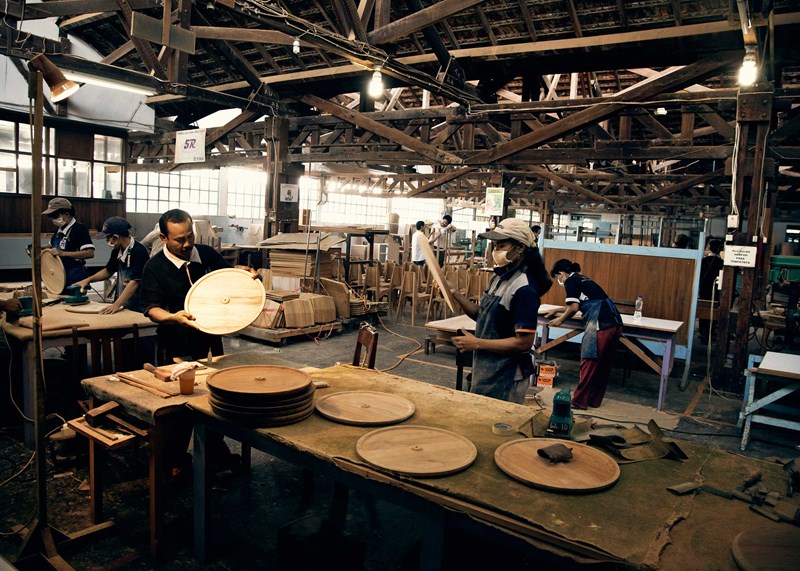
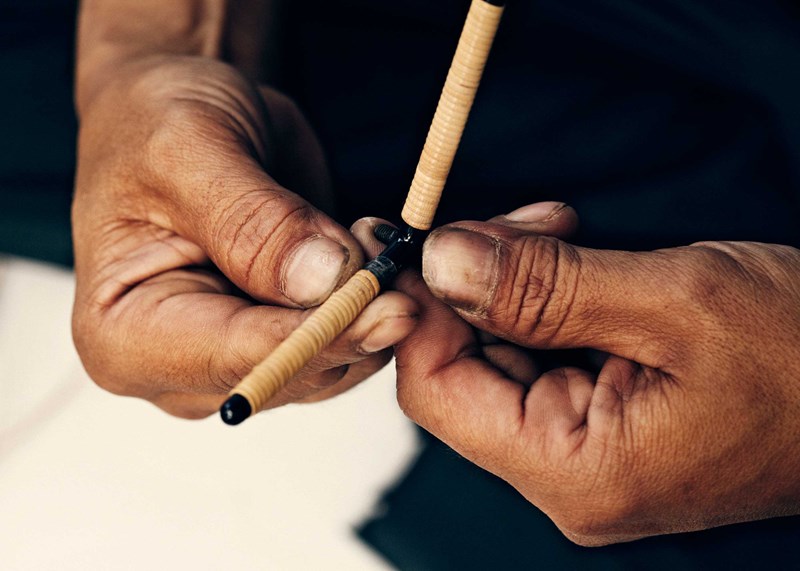
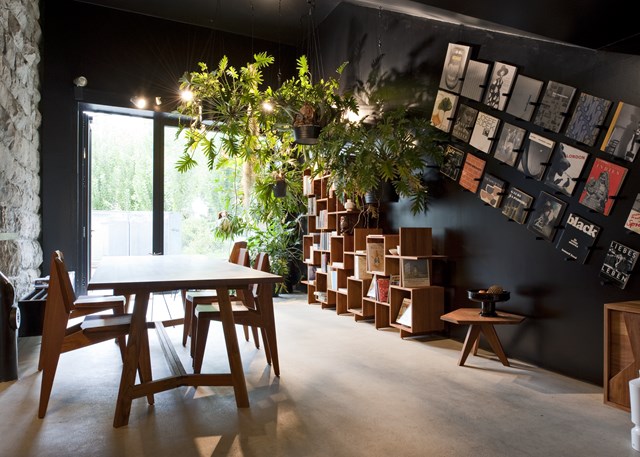
Next day, Martina and myself, upon her insistence,  we visited the studio of the furniture designers INCH, whom we have seen in Basel in 2013, at the Unlimited restaurant. Inch furniture has stood for teak furniture since the founding year 2004. The founders Thomas Wüthrich and Yves Raschle got to know the woodworking school PIKA during a longer non-profit making work stay in Indonesia.  The available knowhow and the exemplary running of the school impressed and inspired the two. The idea for a co-operation with PIKA was born which was a lovely coincidence.

inCH_ART-BASEL-2-35102_1.png

Basel, 2013,  Art Unlimited restaurant, run by HILTL vegetarian catering.

13_08_23_INCH-FURNITURE-ENAM-021-def_bis_1.png

one of my favorites at INCH, “Enam”,  Solid teak, oiled

Produktion-Impression-4.png

Produktion-Impression-3.png

A glimpse into the production site of the woodworking school PIKA. The carpentry enterprise was founded in 1953 and in 1971, complemented with a school. Beside manufacturing high-quality furniture, PIKA has also made a name for themselves countrywide as an exemplary education institution.

west_3450_2.png

In the distinctive bridge arches of Zurich’s “im Viadukt”, the showroom Westflügel.


Athens_at Acropolis Museum_’Samothrace. The Mysteries of the Great Gods’

exhibition: Saturday, 20 June – Wednesday, 30 September, 2015

IMG_5697

IMG_5767

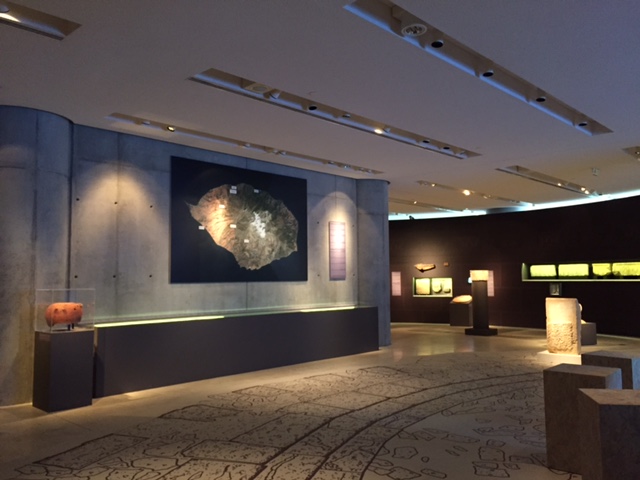
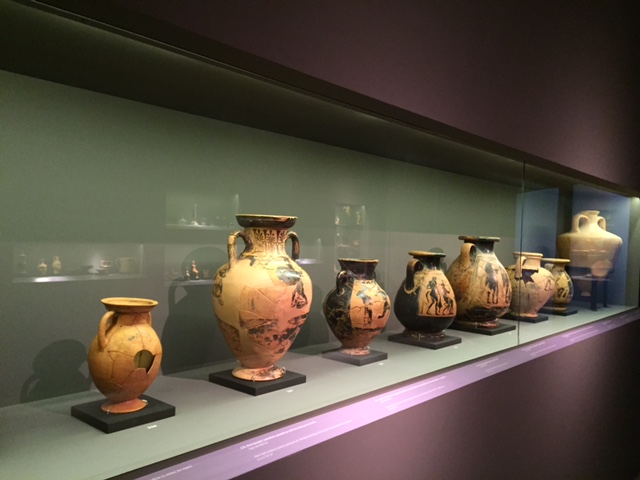
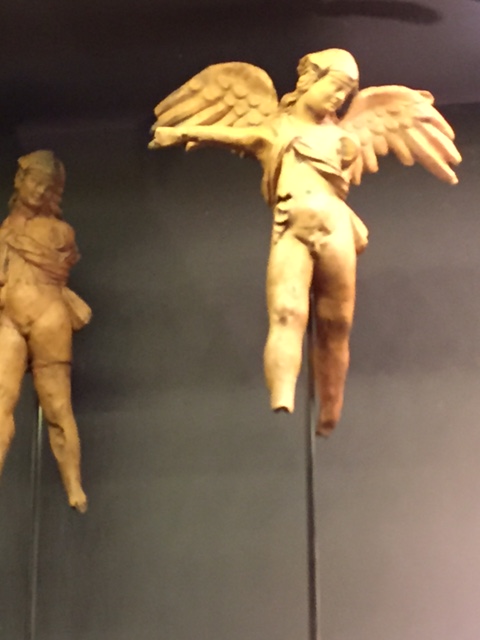
During my short visit  in Athens amidst of the severe crisis of my lovely country with closed banks, people in agony and anxiety on the political and economical situation, it was  indeed a small breath  to visit the Acropolis museum for  the  exhibition ‘Samothrace. The mysteries of the Great Gods , organized in cooperation with the Ephorates of Rodopi and Evros and the expert on Samothracian antiquities, Mr. Dimitrios Matsas.

IMG_5699

IMG_5735

IMG_5736

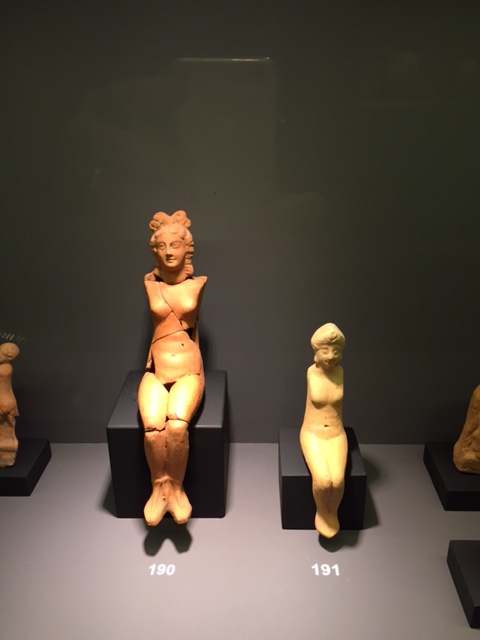
Nude seated woman, late 2nd-early 1st cent BC

The relationship between the ancient Greeks and their gods was well known and existed publicly in daily life. However, from very early times, mystery cults began to emerge that were accessible only to those who had been accepted into the rites following certain trials. The most famous ‘Mysteries’ in antiquity were those of Eleusis and Samothrace. The strict prohibition against insiders ever divulging the contents of the sacraments has not allowed much information to be gleaned about the ancient mysteries.

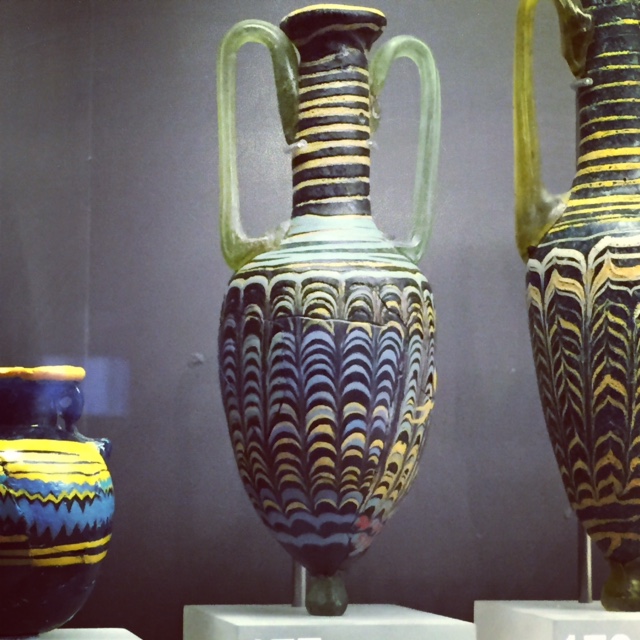
IMG_5773                                                                                                        Amphoriskos, around 25 BC

IMG_5749

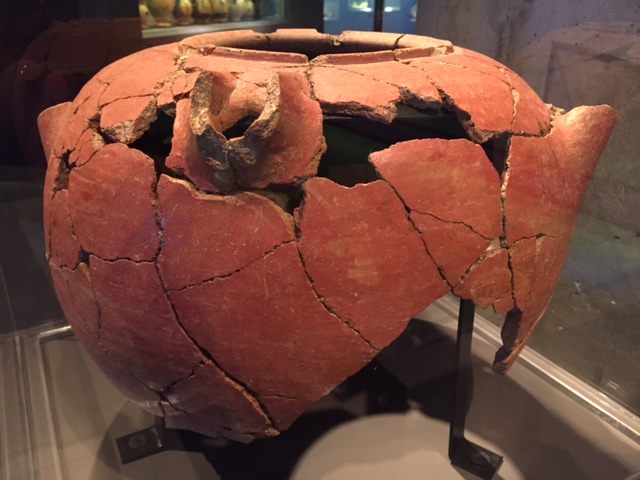
Archaeological excavations in the Sanctuary at Samothrace, however, have brought to light buildings and paraphernalia belonging to the cult that allow us to form an impression of events. Insiders believed that by invoking the Great Gods they would be saved from any serious dangers at sea and, as members of the Mysteries, they would become more just and pious people.

IMG_5763

IMG_5757

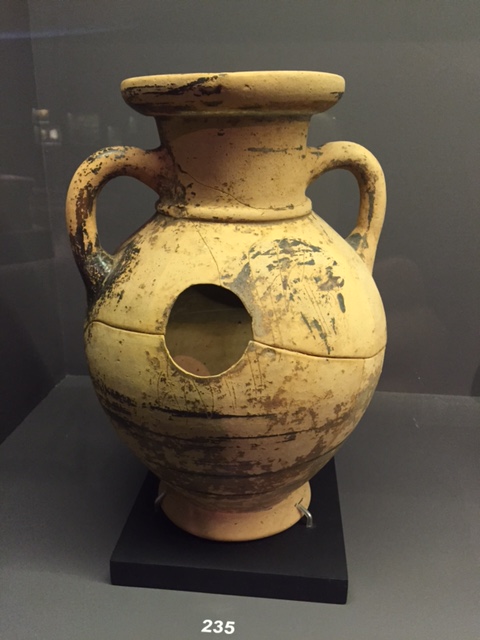
        Black- figure amphora with a horse’s head, used as urn. The hole on the vessel is intentionally made, around 560 BC

IMG_5755

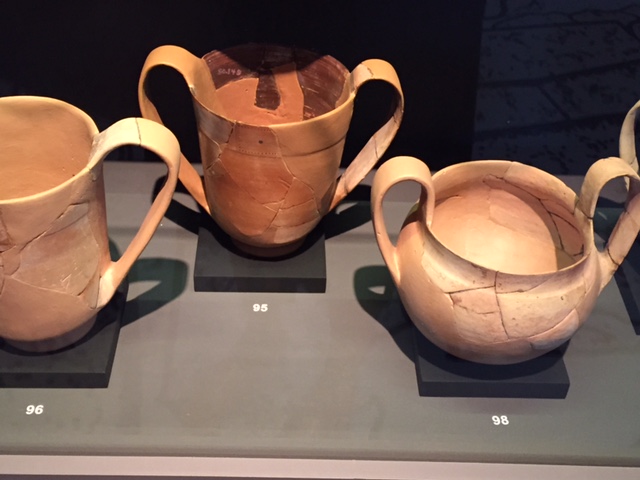
                                                            Karchesion, a type of Kantharos (drinking cup), 550-500 BC

IMG_5753

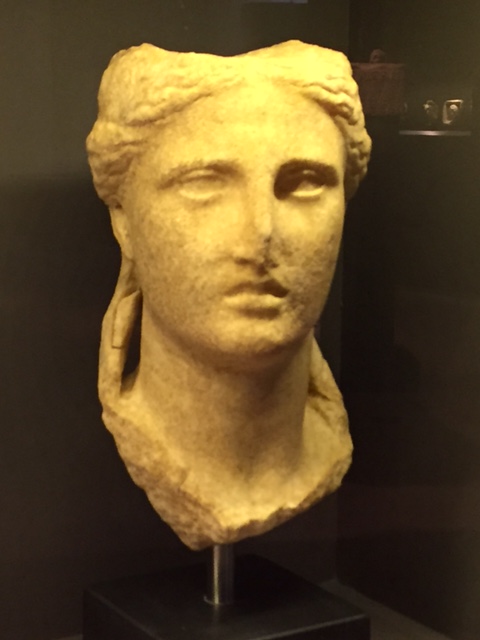
                                                       Female head, which probably depicts  the Great Mother, 3rd-1st cent.BC

The rituals were held at night, the Sanctuary illuminated with torches, during which initiates had to participate in a purification ceremony, to confess their greatest sins, to attend the sacred narrative speech that included mythological stories, to wear the wide, purple sash around their waists and to witness the unveiling of sacred symbols.

IMG_5742                                                                   Bottles, last quarter of the 1st cent.BC

IMG_5771 copy

…the assortments of finds has been selected from the site of Mikro Vouni, located a few kilometers southwest of the sanctuary, where excavations have revealed a settlement with an organized social structure of the 2nd millennium BC. Of particular importance are the Minoan stamp seals and seal impressions with representations of a double ax and fish, which have counterparts at Knossos. Perhaps the ancient tradition that calls for the Mysteries to have originated in Crete and from there to have spread to other places has some historical basis.  (section from  press release)

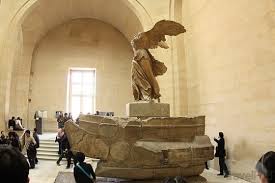
The Nike (Victory) of Samothrace (2nd century BC) is at Louvre, Paris ,(an early classical greek sculpture, an original of Parian marble and about six feet eight inches high, was set up on the prow of a ship carved in an inferior stone and projecting obliquely into an artificial pool among carefully disposed rocks).

images

photos@VK by permission of the acropolis museum
Proudly  here  I share with you amazing photos of the real visit at Samothrace by Maria Alipranti  and Christos Drazos (excellent photographer) at the wonderful Aegean Pan.com
watch a video here (Σαμοθράκη. Τα μυστήρια των Μεγάλων Θεών, Acropolis Museum)

Toscana; Teverina mountains_Cortona: Deanna Maganias and Francesco Nevola’s house and studio

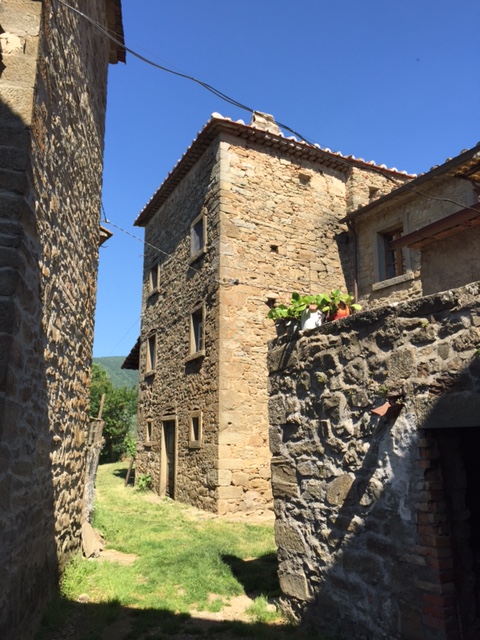
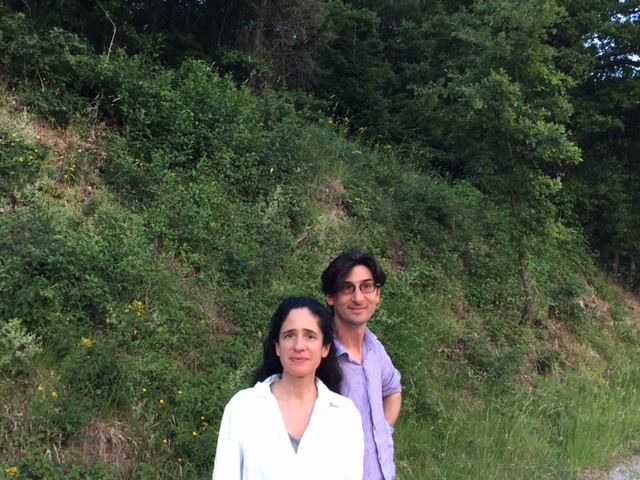
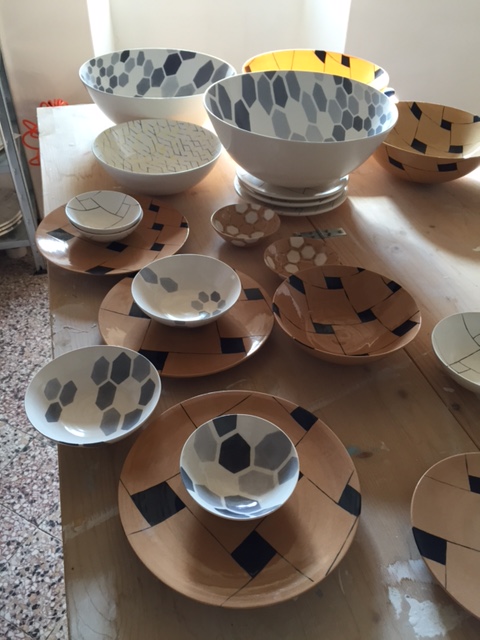
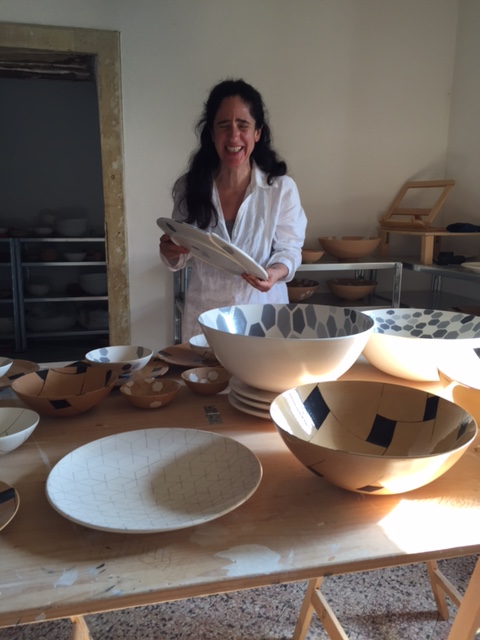
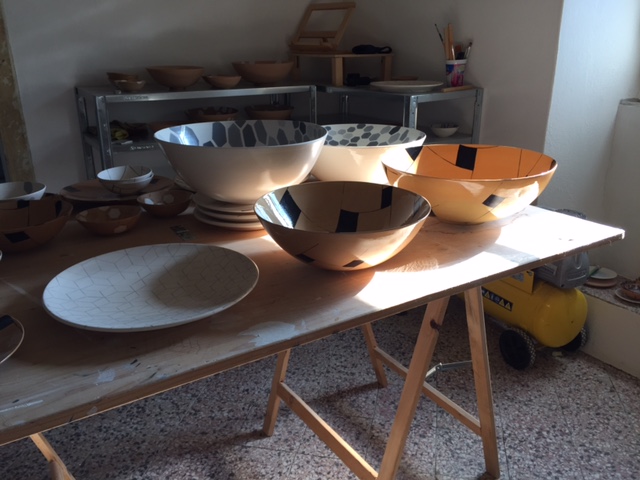
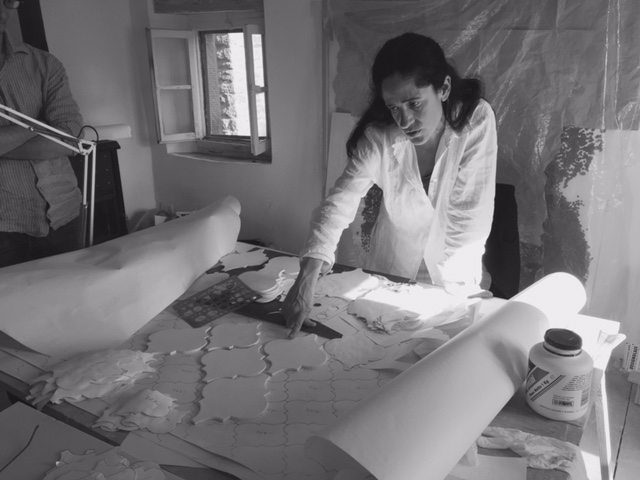
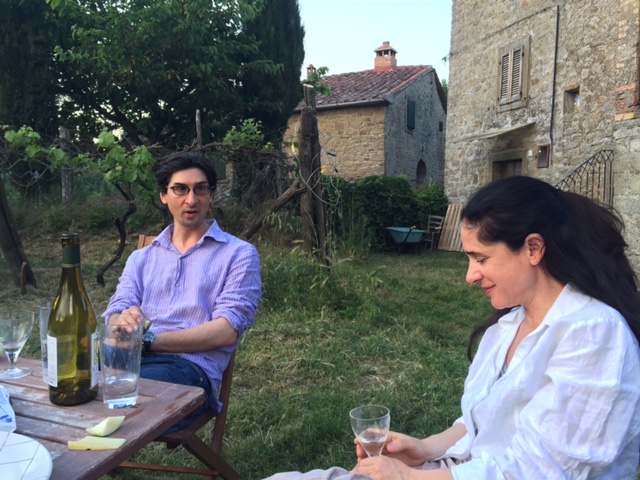
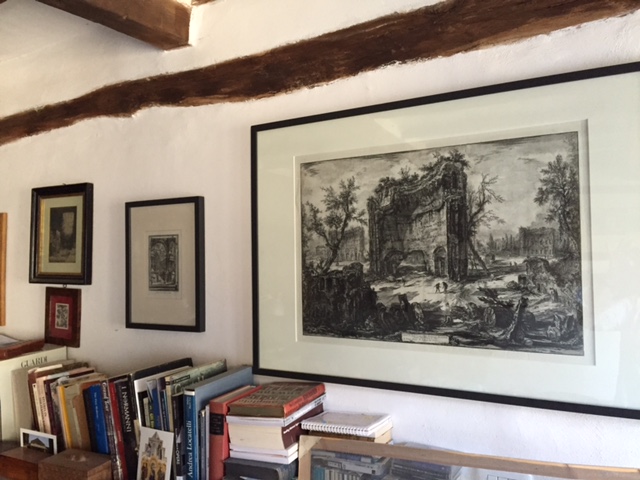
An inspiring and enjoyable driving day from Maremma to Teverina mountains to visit my my lovely friends, Deanna Maganias, a great sculptor, painter and pottery porcelain maker and her partner Francesco Nevola, a fabulous scholar of Piranesi.

IMG_4750

IMG_4718

IMG_4668

IMG_4672

IMG_4674

IMG_4678

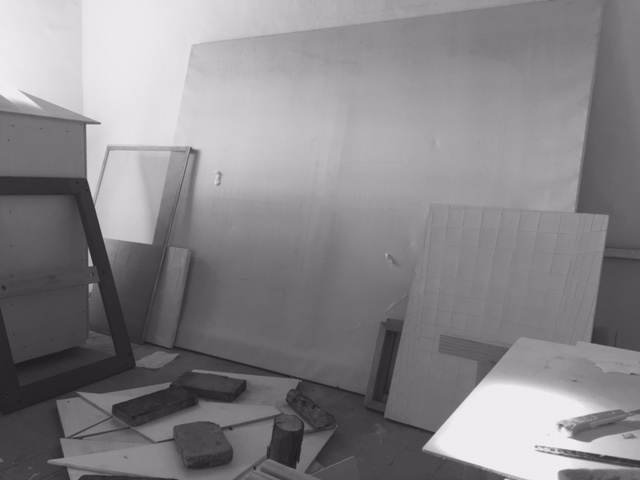
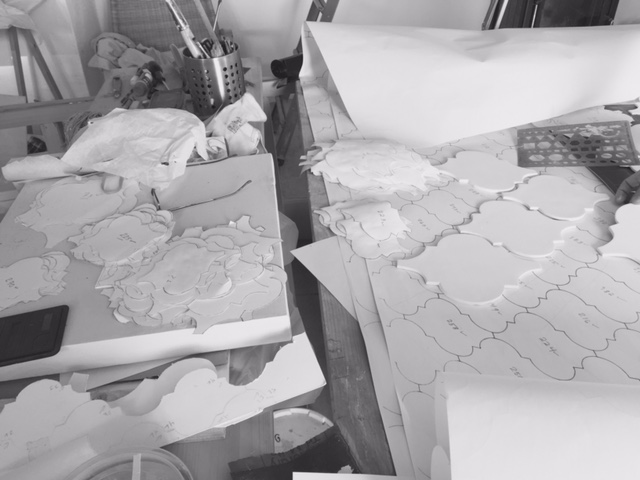
Deanna’s studio is under hot steam preparation for her next art exhibition, October 2015 at the Rebecca Camhi gallery in Athens.

FullSizeRender copy 2

FullSizeRender copy 3

FullSizeRender copy 4

FullSizeRender copy 5

IMG_4698

My days were full with great challenging conversations over pottery, architecture and philosophy and food and fabulous italian wine; their  fabulous old house is located in a small community of a village of 4 houses ;  while many rooms and additions still remain to finish by the own hands of Francesco; hard working lovely  Francesco and Deanna; few years ago both were running an  art gallery center in Cortona, with wonderful young  artists the  Cortona, Teverina Fine Arts. where their intellect and energy contributed largely to  the regional  art community.

IMG_4710

IMG_4730

FullSizeRender copy 7


slide_piranesi_eng-1

Giovanni Battista Piranesi. The Grotteschi” the early years 1720 to 1750 , Ugo Bozzi Editore, Roma 2009

“The suite of etchings called by Piranesi the Grotteschi, published in 1750 in the compilation volume Opere Varie, have for more than two-hundred and fifty years eluded interpretation. Long recognised by scholars as being ‘touched by the artist’s tragic imagination’, more recent ‘attempts to reduce the Grotteschi collectively or individually, to a specific, hermetic philosophical system have met with little success…’ In this volume these four magnificent prints are viewed as pivotal works in Piranesi’s early output and a comprehensive narrative interpretation of their meaning is proposed adopting an approach, analogous to that applied by Wilton- Ely to explain the iconography of the Piazza dei Cavalieri di Malta, or that used by Gavuzzo-Stewart in her clear penetration of the Carceri. This study which follows step-by-step Piranesi’s youthful artistic and intellectual endeavours between the Venice of Scalfarotto and Tiepolo and the Rome of Gian Battista Nolli, Giovanni Gaetano Bottari and the enlightened Corsini court proposes the Grotteschi as both testament and culmination of his first decade’s experiences. For Piranesi the years upto1750 were particularly fecund: they are marked by apprenticeships in Venice and Rome, by economic difficulties, by successes and failures, and incessant travels in search of vocational fulfilment. In following these important years we are able to trace how they contribute to Piranesi’s rapid intellectual development and to his evolution of an original, vital, graphic idiom that finds its first mature expression in the Grotteschi universally recognised as the artist’s most ‘venetian’ works. Considered through the viewing filter of the paragone the Grotteschi are presented as Piranesi’s expression of direct rivalry with the great etching masters of the past: from Mantegna, Durer and Rembrandt to Salvator Rosa, Castiglione, della Bella and Tiepolo, as well as his bid to establish his own place among their revered ranks. These works also represent the culmination and conclusion of a series of experiments, protracted over the course of a decade, in which Piranesi appears to have attempted to develop the picturesque capriccio of ruins into a type of image capable of bearing specific meaning, thereby giving visual form to his idea of ‘ruine parlanti’. In conclusion, following a close reading of the visual and textual sources that inform Piranesi’s Grotteschi, the impact of these etchings is assessed on the artist’s work of the 1760s, in particular on his only built edifice, the church of the Knights of Malta, Santa Maria del Priorato, which is the culmination of a second phase of intense creativity in the artist’s career”.  text @Francesco Nevola

IMG_4699

all photos@VK

Bavaria: a day visiting Schloss Elmau

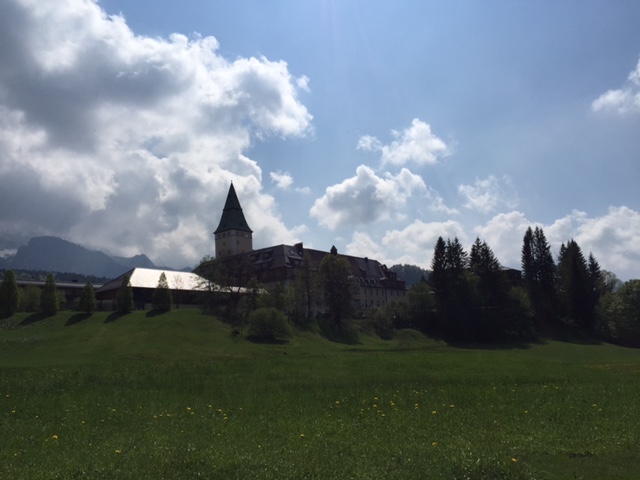
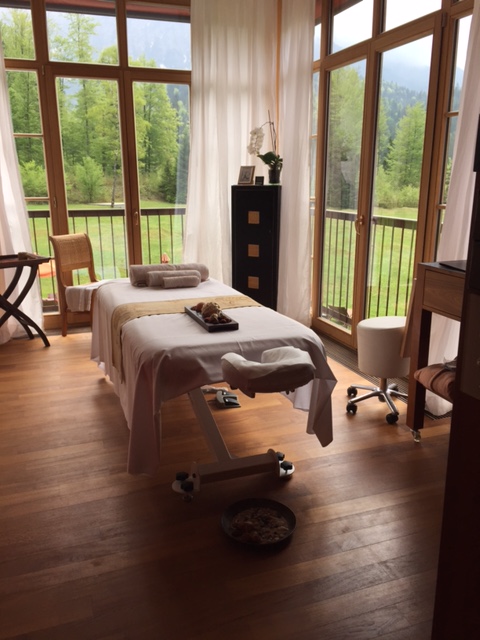
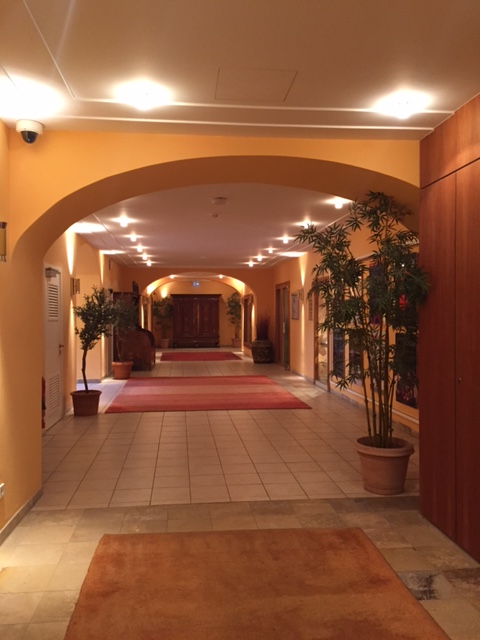
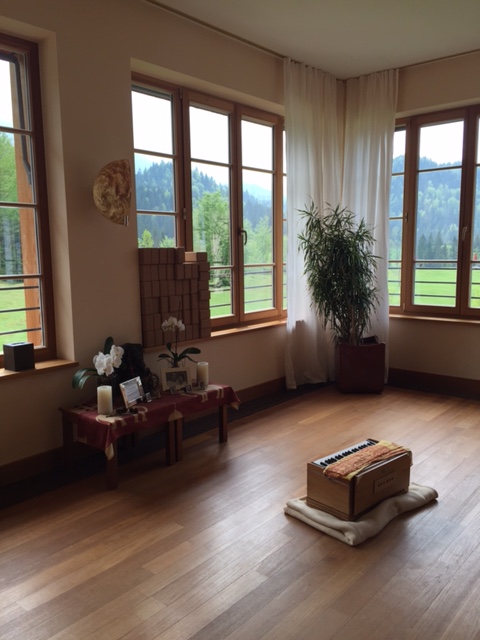
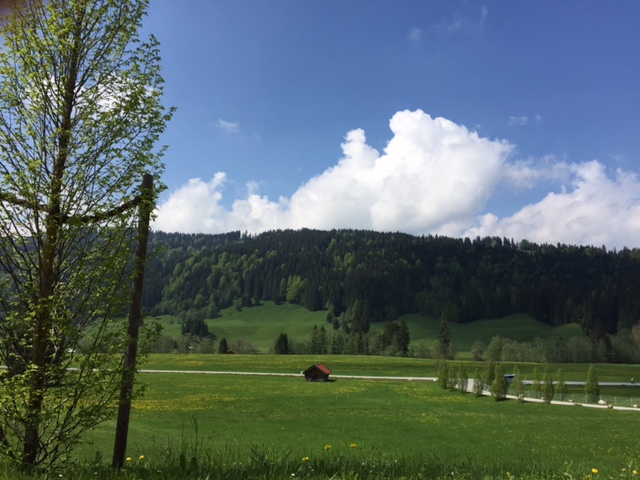
A beautiful day with my daughter visiting the ultimate Wellness Retreat, a sanctuary at Schloss Elmau.   A magical  trip  to see our jivamukti yoga teacher and friend Ekaterini Lambropoulou.   Spectacular views and tranquility in a mystique foggy day until  the sun started warming up in the afternoon.   Driving to Schloss Elmau one can have spectacular views of Wetterstein Mountain and the crystal clear Ferchenbach Creek.

IMG_4056

IMG_4046 copy

IMG_4098 copy

IMG_4059

IMG_4062

IMG_4087

IMG_4091


IMG_4085


IMG_4095photos@VK

Schloss Elmau is a luxury hotel at the foot of the Wetterstein mountains, in a nature reserve belonging to the municipality Krün, lying between Garmisch-Partenkirchen and Mittenwald in Bavaria, Germany.

The building was completed in 1916 as a place for artists, rather than as a schloss (palace), as the name implies. The five-star hotel today offers 123 rooms and suites, as well as a concert hall and several restaurants. It is a forum for renowned international conferences and meetings.[1] It is among The Leading Hotels of the World.

Schloss Elmau will be the site of the 41st G7 summit June 7-8 2015,


Venice Biennale: Glass Tea House ‘Mondrian’ by Hiroshi Sugimoto at Fondazione Giorgio Cini and Bischofberger Collection “Glass from Finland” at Le Stanze del Vetro at island of San Giorgio Maggiore

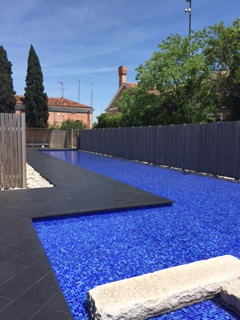
My last day in Venezia Biennale, May 10th,(2015) was a beautiful Sunday morning visiting the island of San Giorgio Maggiore.   Hiroshi Sugimoto’ exquisite glass tea house ‘Mondrian’ was a pure delight.  The project seems complex but the purity and simplicity of the form kept me silent and was enjoying the serenity of the space during that very warm morning.

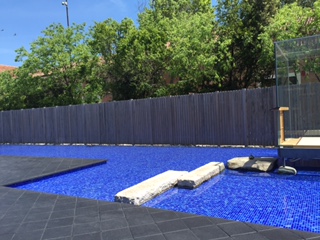
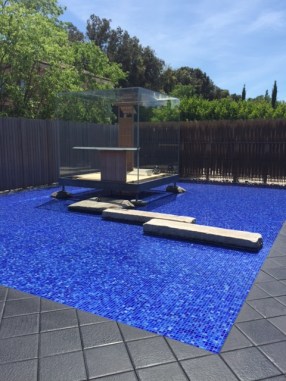
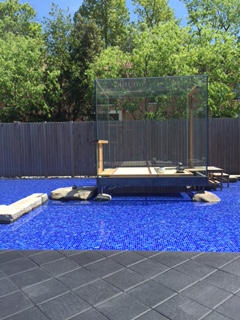
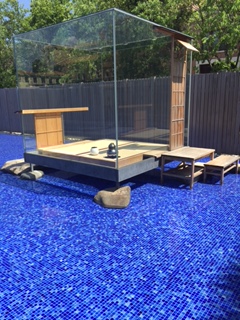
Glass Tea House Mondrian is Sugimoto’s first architectural work in Europe. He has built a pavilion of extraordinary beauty in a formerly unused space on San Giorgio, located between Andrea Palladio’s famous 16th-century church and monastery and Le Stanze del Vetro museum, and adjacent to the Borges Labyrinth, which architect Randoll Coate designed as a tribute to the Argentine writer.
IMG_3989

photos©Venetia Kapernekas, 2015

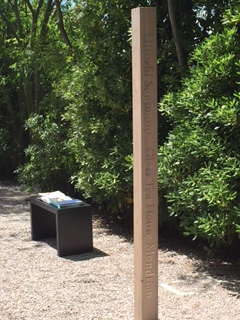
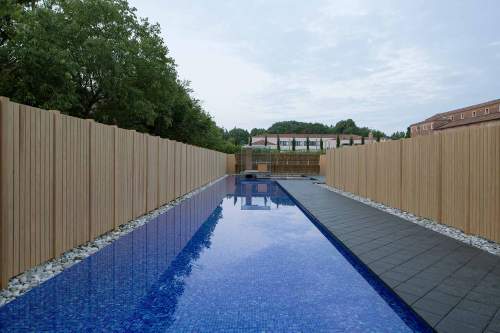
Visitors approach the pavilion by a way of a small Japanese garden leading to a bamboo gate that sets the atmosphere for the main pavilion. The pavilion itself consists of two main elements: an open-air landscaped courtyard with a reflecting water pool and a glass structure. The courtyard is surrounded by an exterior fence made entirely of Japanese cedar and inspired by the Ise Grand Shrine in Ise, Japan.  Along one side of the reflecting pool of deep blue glass mosaic, a black tiled path guides visitors to concrete benches from which the tea ceremony can be observed.

Like Sugimoto’s photographs, this work conveys a meditative, almost religious atmosphere: it is an oasis of calmness that invokes time, memory, and a heightened sense of self-awareness.
IMG_3997

photo@Venetia Kapernekas, 2015

‘In the sixteenth century, it became the custom for cultivated Japanese people of a certain social status to enjoy the rituals of the tea ceremony. The quotidian act of preparing a cup of tea for a visitor was raised to the level of art, with meticulous care of lavished upon the unique goal of entertaining one’s guests. ‘ ……

‘Traditionally, the name of a tea house has to be a poetic evocation of space. I was startled to discover something redolent of Mondrian in the Glass Tea House when it was completed. The quest for abstraction, I realized, had been underway in the context of the tea ceremony for three hundred years before Mondrian was born. Sen no Rikyu, the man credited with perfecting the tea ceremony esthetic, essayed Mondrianesque abstraction in the way he placed stones in the garden or composed flat wall surface at Taian, a sixteenth-century tea room which still stands near Kyoto. Inevitably, Sen no Rikyu had a powerful influence on my design for the Glass Tea House.’  (Sugimoto, on the preface of his book Glass Tea House Mondrian, Le Stanze del Vetro)
IMG_3986

IMG_3999

photos©Venetia Kapernekas

‘An intrinsic property of glass is its transparency. I owe my career as an artist to transparent glass lenses. Making a space from the glass was more about indicating a space than actually creating one. Glass Tea House Mondrian measures just 2.5 x 2.5 meters. As a living space, it is only about as big as a jail cell. However, because of its transparency, this cell-like space enjoys an infinite connection to the world outside. ‘ ( “Glass Tea Bowls by Hiroshi Sugimoto)

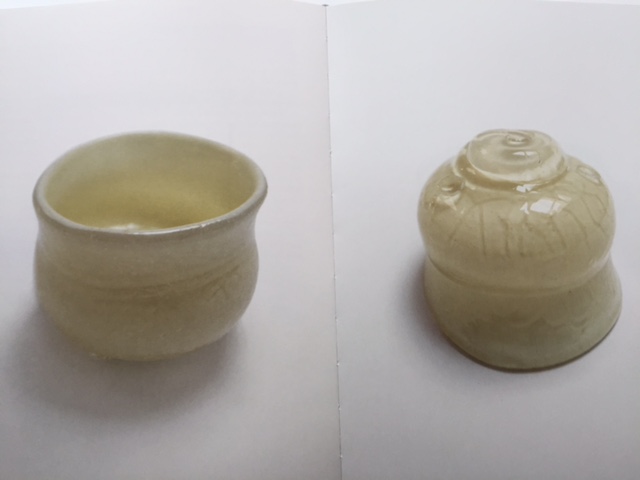
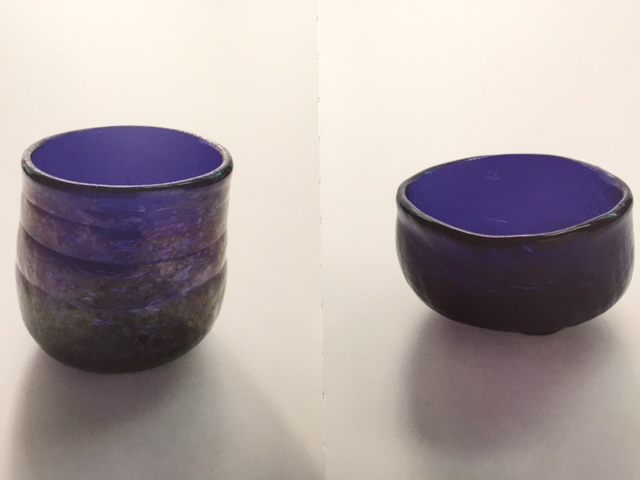
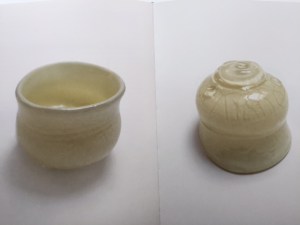
Hiroshi Sugimoto’s Glass Tea Bowls
FullSizeRender copy 3

FullSizeRender copy 4

photos©Venetia Kapernekas

“While the tea house was being built, I visited the site every afternoon, but in the mornings I went to a glass factory in Murano, where a master glassblower made the tea bowls after my own designs.  Rather like Le Corbusier, who painted pictures in the morning and designed buildings in the afternoon, I was a glassmaker in the morning, a site foreman in the afternoon, and a roaming photographer capturing the deserted streets of Venice in the evening.” (Sugimoto, Glass Tea Bowls)

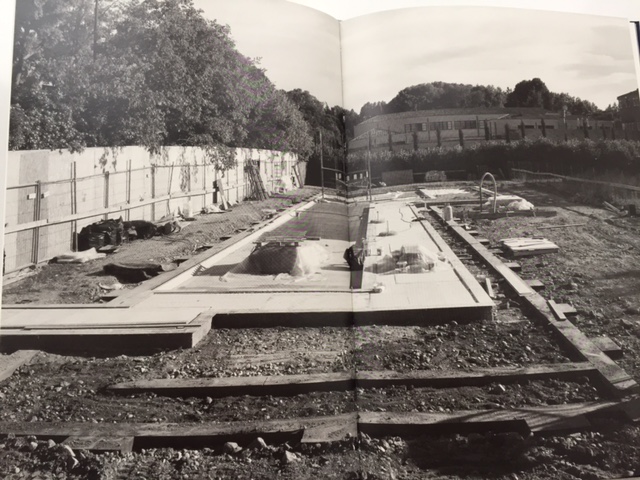
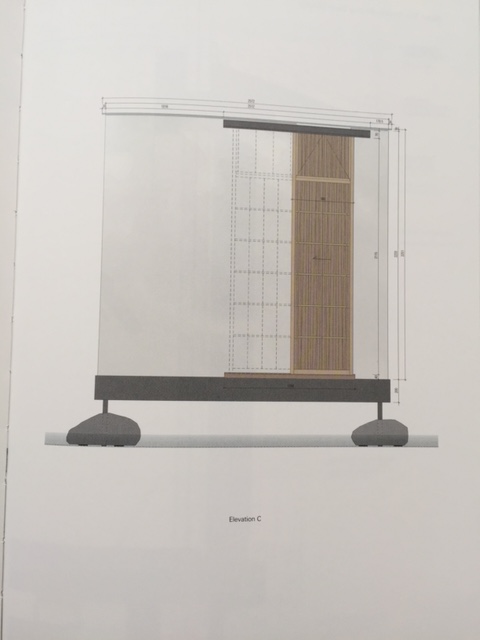
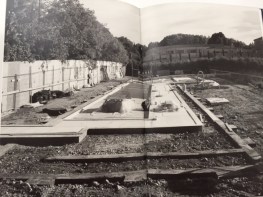
a beautiful blue linen book accompanies the Tea House Mondrian with detailed photos of the construction site and architectural drawings.
FullSizeRender

IMG_4177

“Sugimoto’s pavilion is effectively a space for performance. He has provided delineated space for the audience to observe the theater with the tea house situated in a pool within a larger landscape…….. No single element can be altered without irrevocably damaging the whole. The linear and focused arrival sequence prepares the visitor for the perspective views, as one contemplates the contemporary glass tiles and old, authentic stepping-stones. It is carefully wrought balance of new and old materials and forms, a dance where each element corresponds to a specific movement in the sequence.” (Annabelle Selldorf, architect, Glass Tea House Mondrian)
photo©Le Stanze del Vetro

more here on the exhibition (Le Stanze del Vetro)

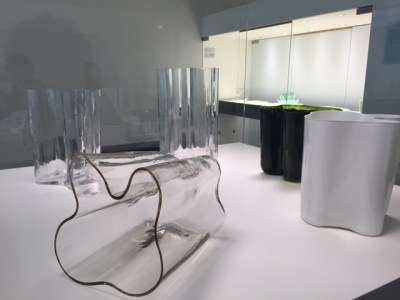
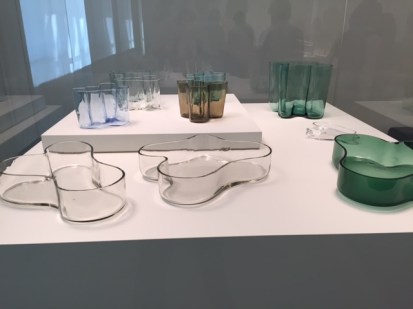
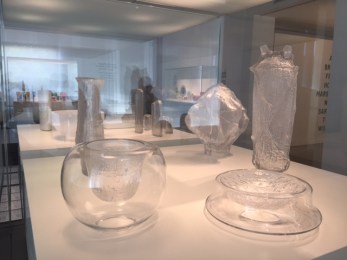
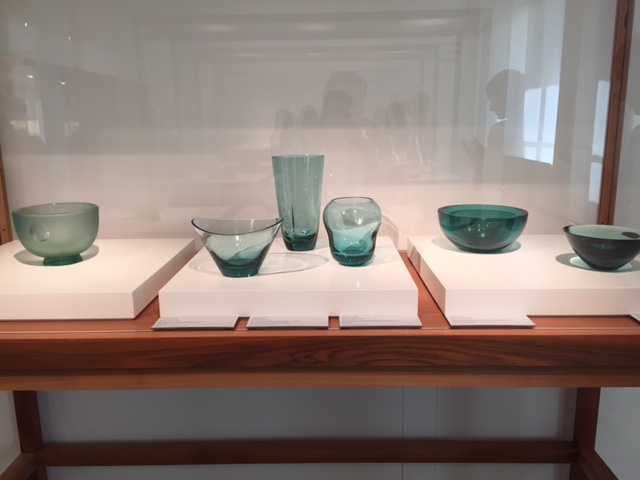
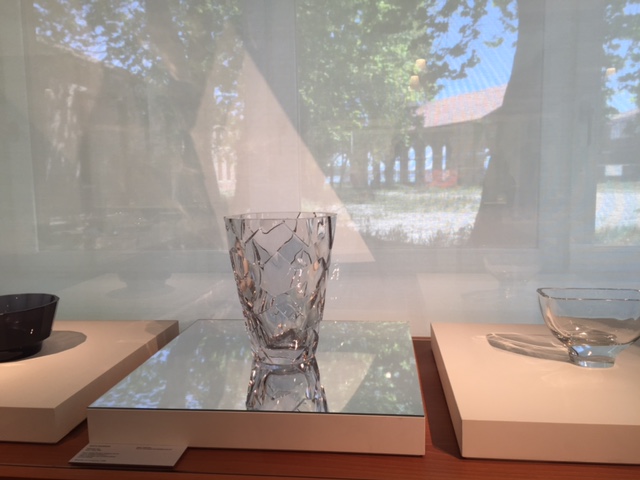
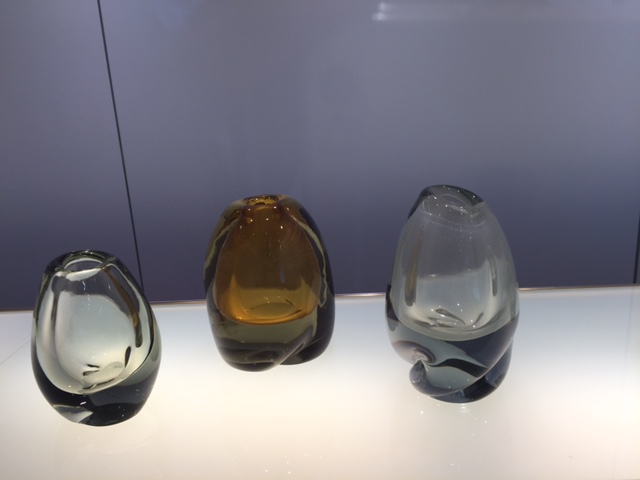
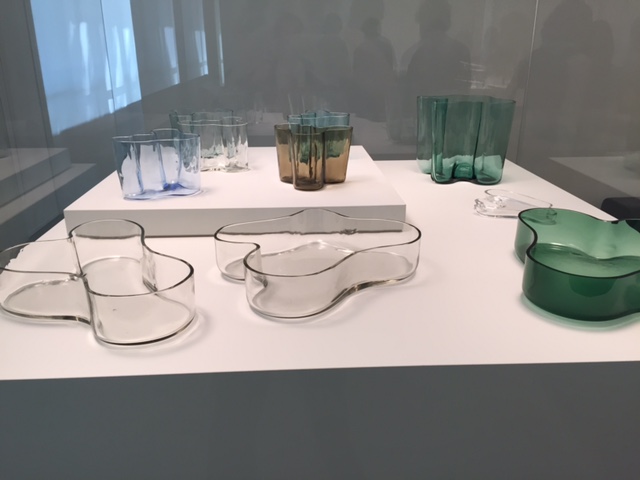
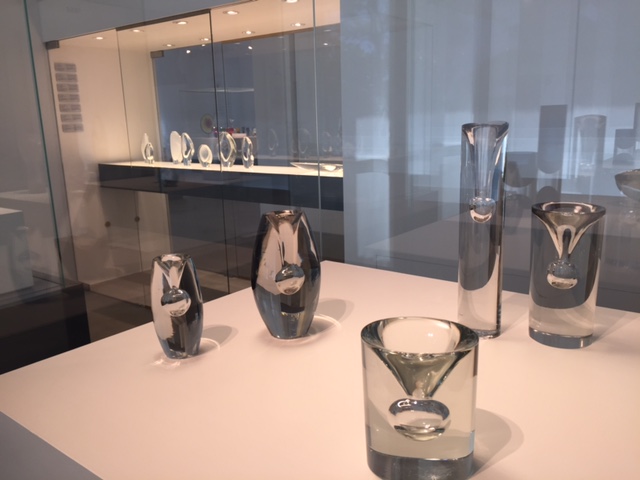
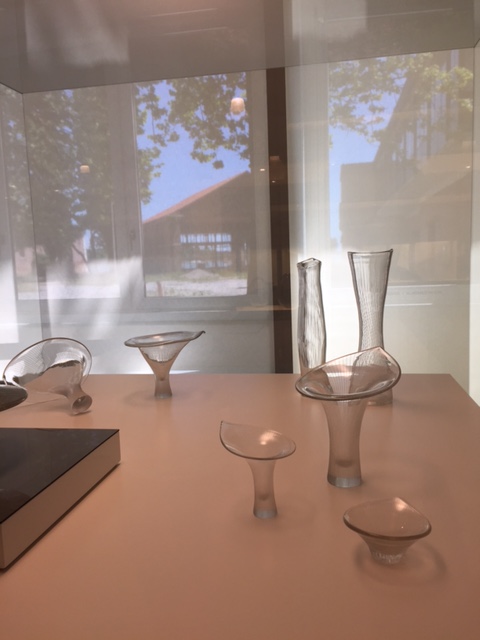
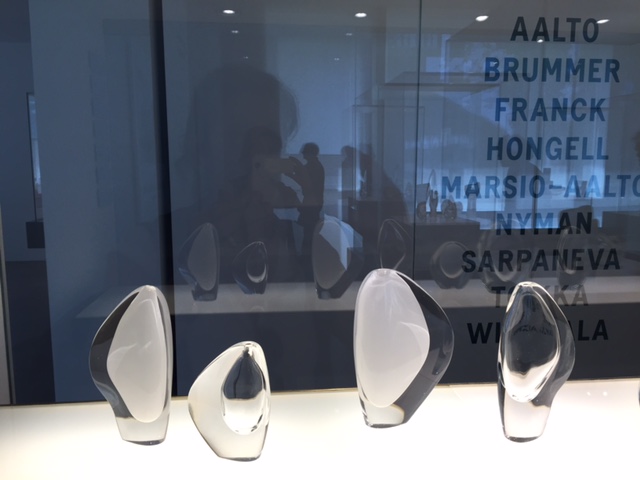
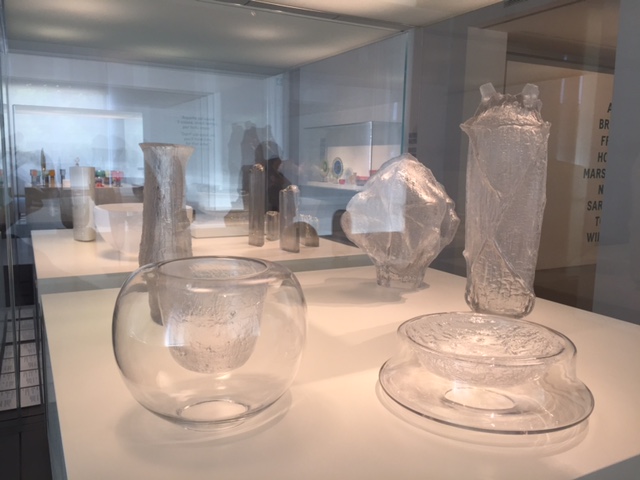
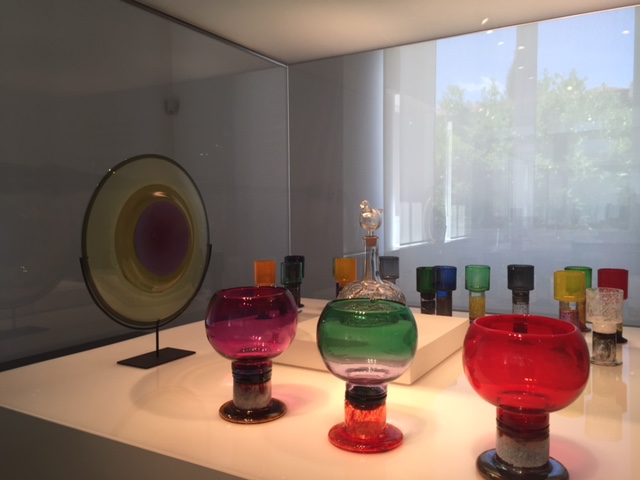
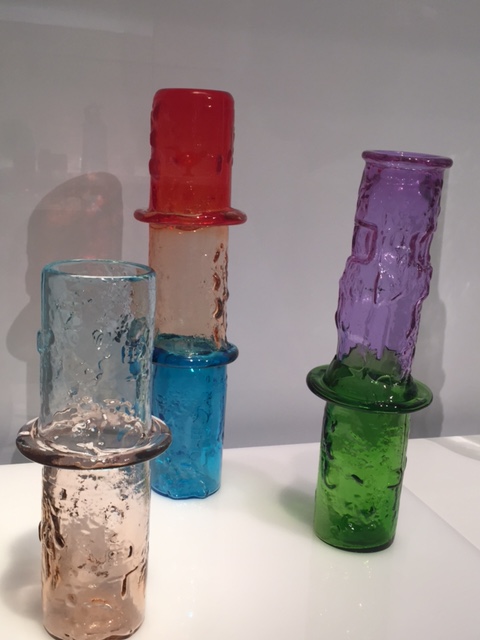
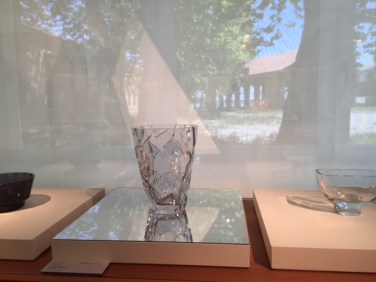
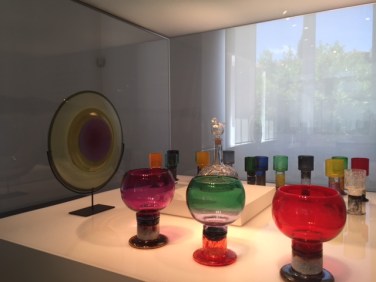
Also at Le Stanze del Vetro, there is an amazing exhibition “Glass from Finland”. Over 300 works from the Bischofberger Collection celebrate the beauty of art glass in an exhibition featuring masterpieces by the most important Finnish designers of the 20th century.

The exhibition “Glass from Finland in the Bischofberger Collection”, curated by Kaisa Koivisto, curator at The Finnish Glass Museum, Riihimäki, and Pekka Korvenmaa, a professor at Aalto University School of Arts, Design and Architecture (Finland)

IMG_3887

IMG_3892

photos@Venetia Kapernekas, 2015

In the early Twenties, Finland used design as its manifesto, in an attempt to establish its autonomy and its cultural sovereignty. Some of the country’s greatest designers began to use glass to create works of art that blended tradition and experimentation.
IMG_3901

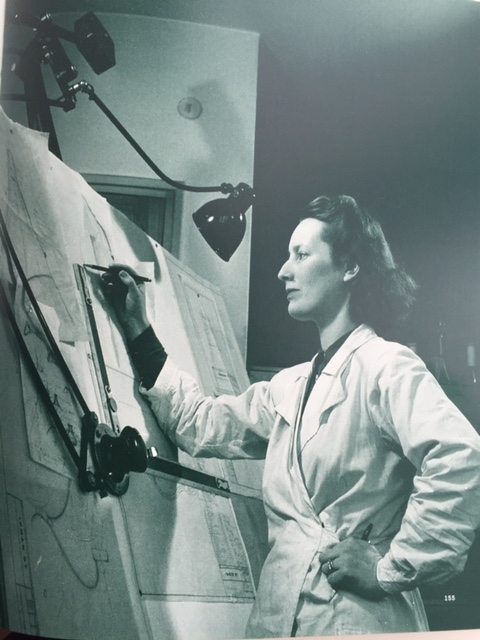
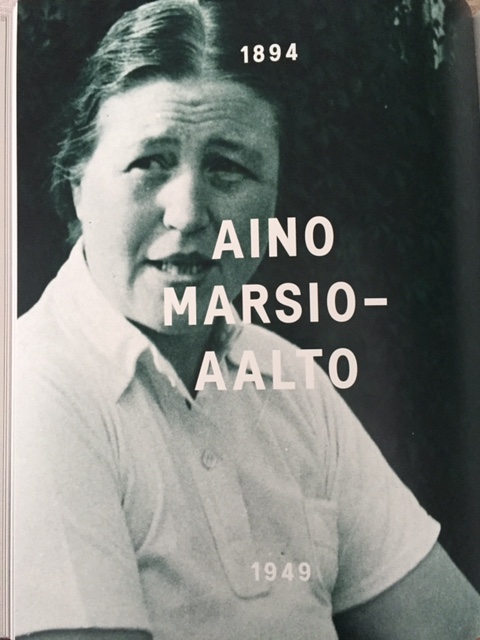
After 1932 Finnish glass became known worldwide and served to reveal the skills and creative talent of those who would soon be regarded as the visionary geniuses of Scandinavian design – i.e. Arttu Brummer, Gunnel Nyman, Göran Hongell and  Alvar Aalto. Numerous women have been active as artists and designers throughout the history of glass design in Finland. The collection covers the oeuvre of Gunnel Nyman and Aino Marsio Aalto.
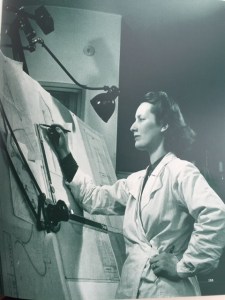
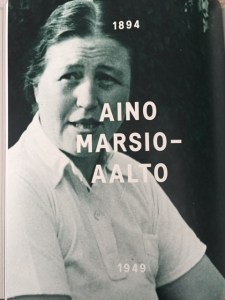
FullSizeRender copy 6

FullSizeRender copy 7

IMG_3915


IMG_3916

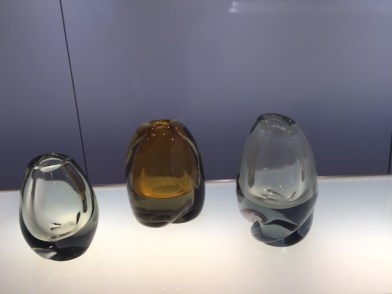
In the early Fifties, through the new spirit of optimism and the international influence, designers and artists built up the foundations of what will become known as “the golden age” of Finnish glass.
In order to meet the functional and psychological demands of its users, designers started producing objects and works of art that were both aesthetically sophisticated and mainly referred to nature by the free use of organic shapes and curves.
Along with internationally acclaimed designers such as Alvar Aalto, other artists became the new stars of Scandinavian design, such as Kaj Franck, Timo Sarpaneva, and Tapio Wirkkala, who is considered to be the symbol of the international success of post-war Finnish design.
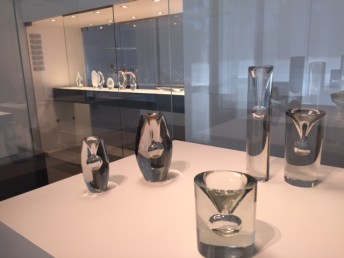
IMG_3936


IMG_3929


IMG_3938


IMG_3951


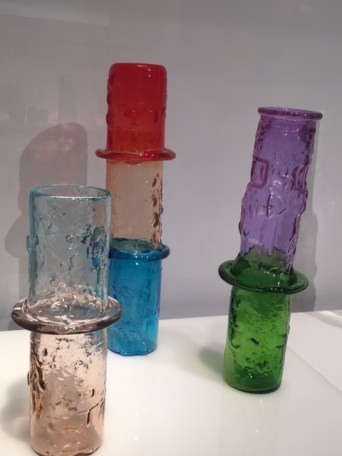
During the Sixties and Seventies, color and energy became the main focus of Finnish design; the glassworks became colorful and were given elaborate shapes. Oiva Toikka designed glass birds, which became Iittala’s iconic brand. Through his irreverent approach to the glass medium and tradition, Toikka represents the connection between “the golden era” of the fabulous Fifties and a more contemporary design.
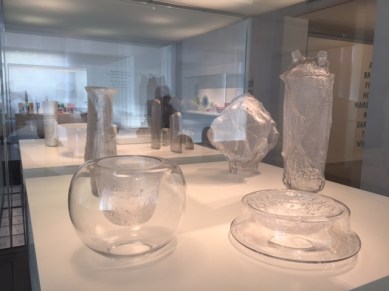
IMG_3951

IMG_3956

IMG_3967

photos@Venetia Kaperekas, 2015  by permission “Le Stanze del Vetro”

here you may read more on the exhibition Fondazione Cini-Le Stanze del Vetro
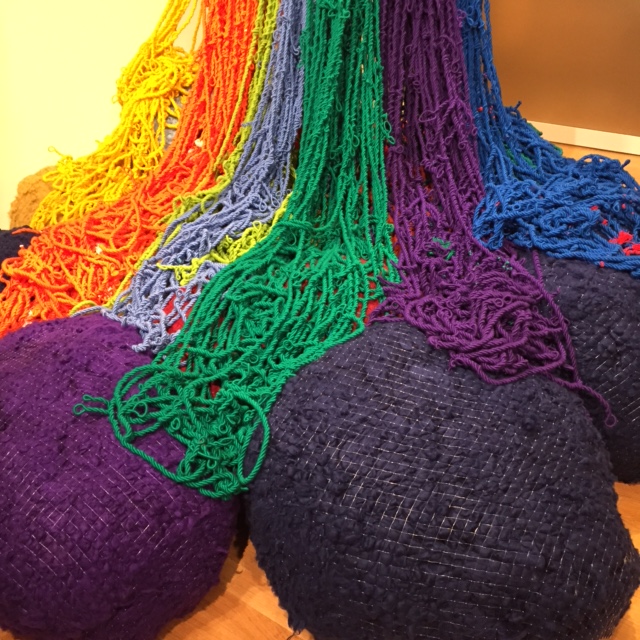


Venice: Venice Biennale; Cy Twombly at Ca’Pesaro (Galleria Internazionale d’Arte Moderna)
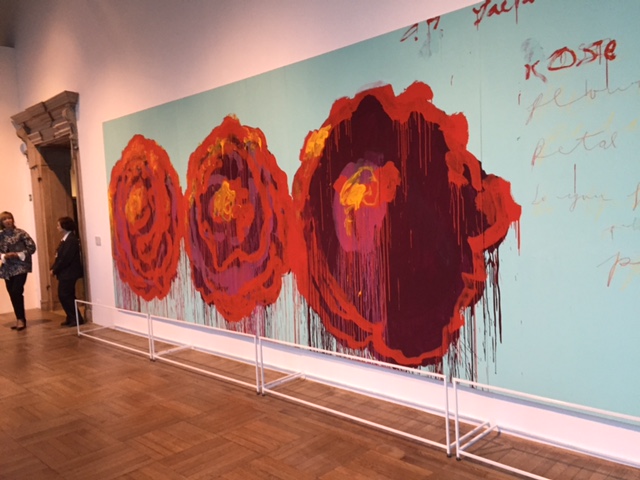
Upon arrival  in Venice on May 5th, a magical evening;to attend the exhibition Cy Twombly “Paradise” at “Ca’ Pesaro”; invited by elegant   Nicola del Roschio and Gagosian
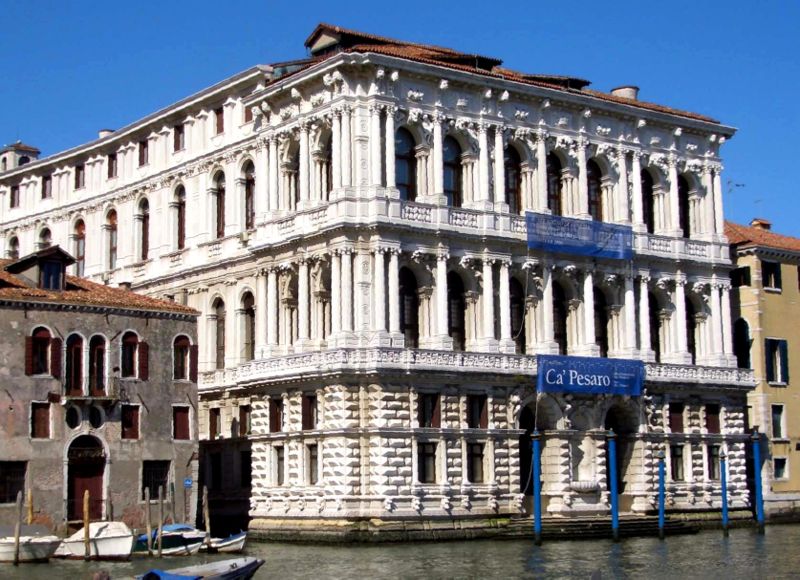
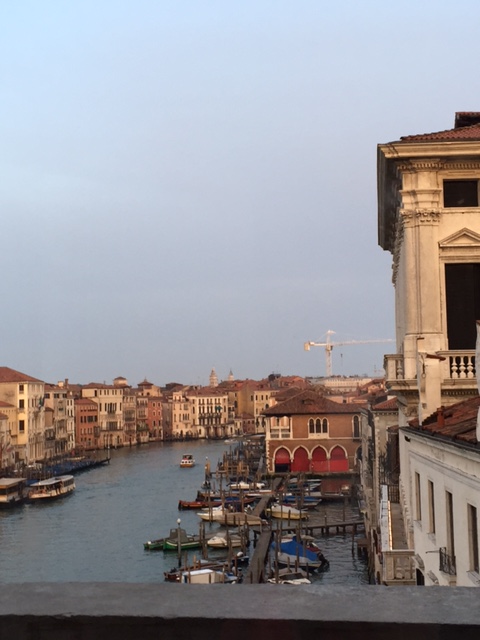
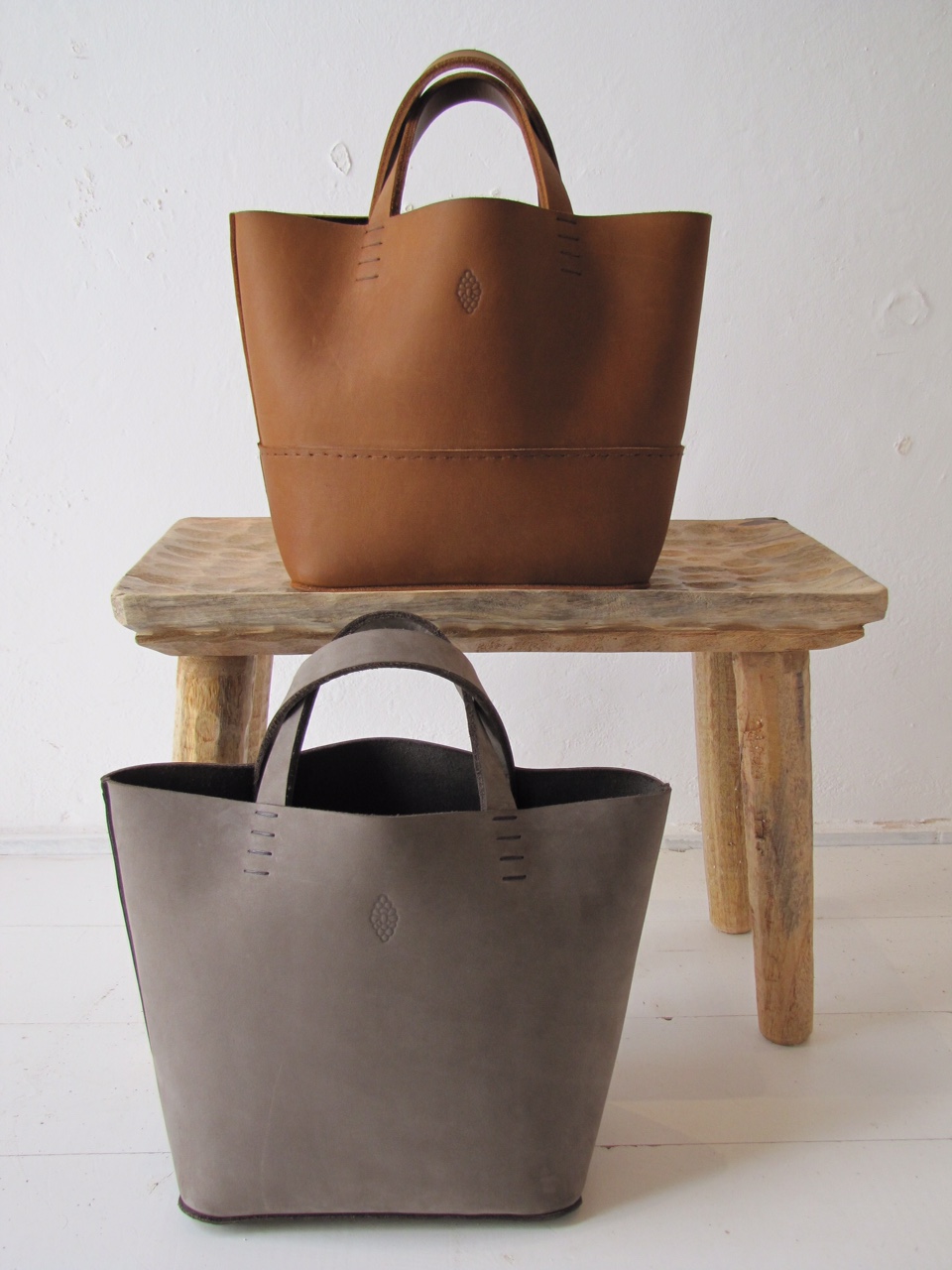
Ca’ Pesaro (Galleria Internazionale d’Art Moderna) is a Baroque marble palace facing the Grand Canal, originally designed by Baldassarre Longhena in mid-17th century, the construction was completed by Gian Antonio Gaspari in 1710.
Ca'_Pesaro

IMG_3287

IMG_3292

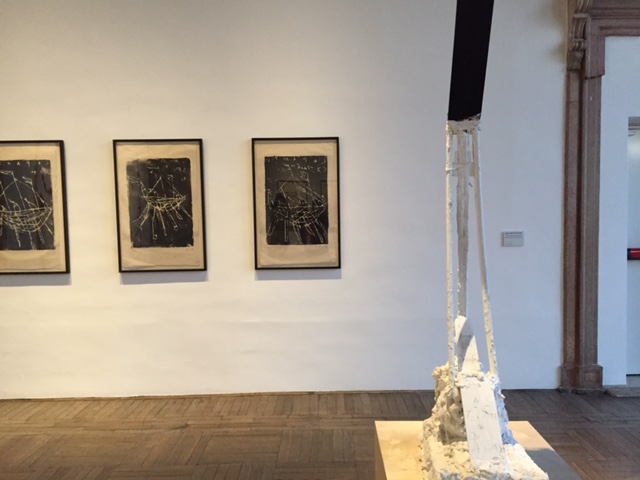
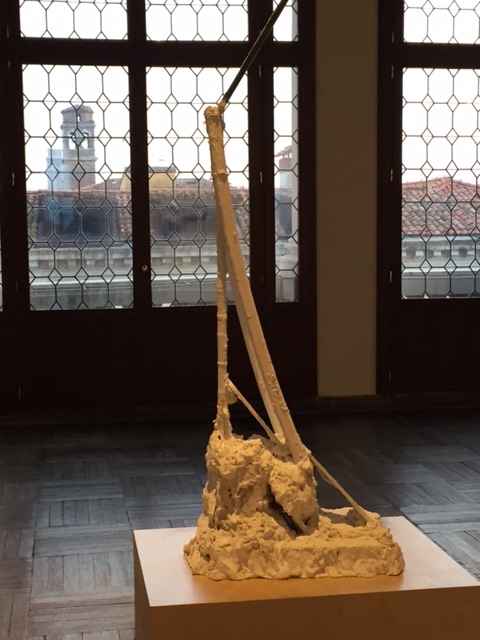
In the exhibition, the early wall painting on wood dated 1951 leads, via an itinerary full of visions and references, to a selection of Twombly’s last works, produced 2011, when the artist was at the physical limit of his old age: eight paintings of gestural baroque circles in yellow, red and orange on a bright green background (half margarita, half key lime); eccentric circular strokes – among the key motifs of the artist – narrow in some places and broader, freer in others, to generate “a sensation of radiant energy and controlled frenzy”. (Galleria’s press) 

IMG_3289

IMG_3285

IMG_3281

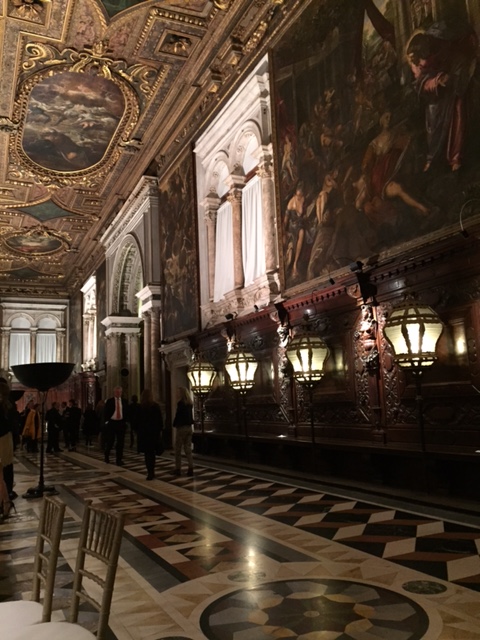
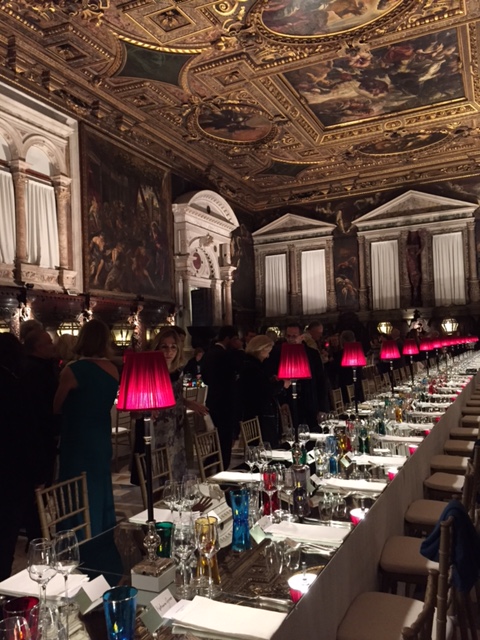
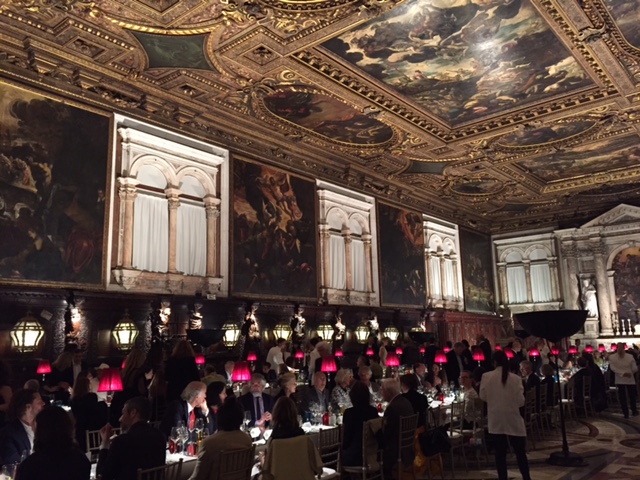
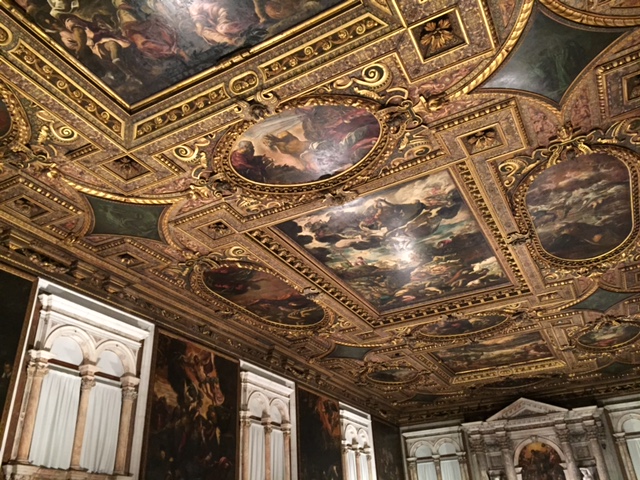
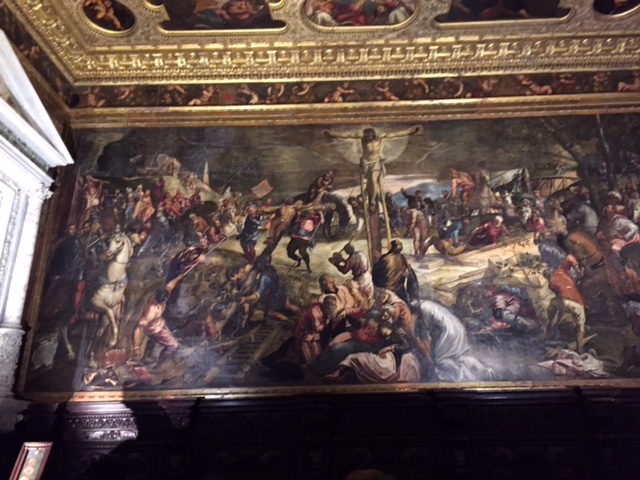
fabulous reception and dinner given by Gagosian, followed at Scuola Grande di San Rocco.

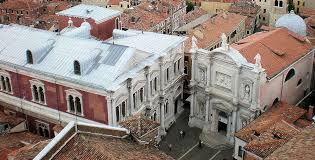
The Scuola di San Rocco, protector against plague, which had struck Venice in that century) was established in 1478 by a group of wealthy Venetian citizens, next to the church of San Rocco, from which it takes its name.

In 1564 the painter Tintoretto was commissioned to provide paintings for the Scuola, and his most renowned works are to be found in the Sala dell’Albergo and the Sala Superiore. All the works in the building are by him, or his assistants, including his son Domenico: they were executed between 1564 and 1587

IMG_3340

IMG_3313

IMG_3323


IMG_3321

IMG_3326


IMG_3319


IMG_3322

photos@VK

The pictorial decorations of the rooms took Tintoretto until 1588 and constitutes one of the most fascinating pictorial undertakings ever known: from 1564 to 1567 the 27 canvases on the ceiling and walls of the Hall of the Hostel, where members of the Banca and Zonta who governed the brotherhood used to meet; from 1576 to 1581 the 25 canvases on the ceiling and walls of the Upper Hall; from 1582 to 1587 the eight large canvases in the Ground Floor Hall.

images

take a virtual tour here: galleries at Scuola di San Rocco 

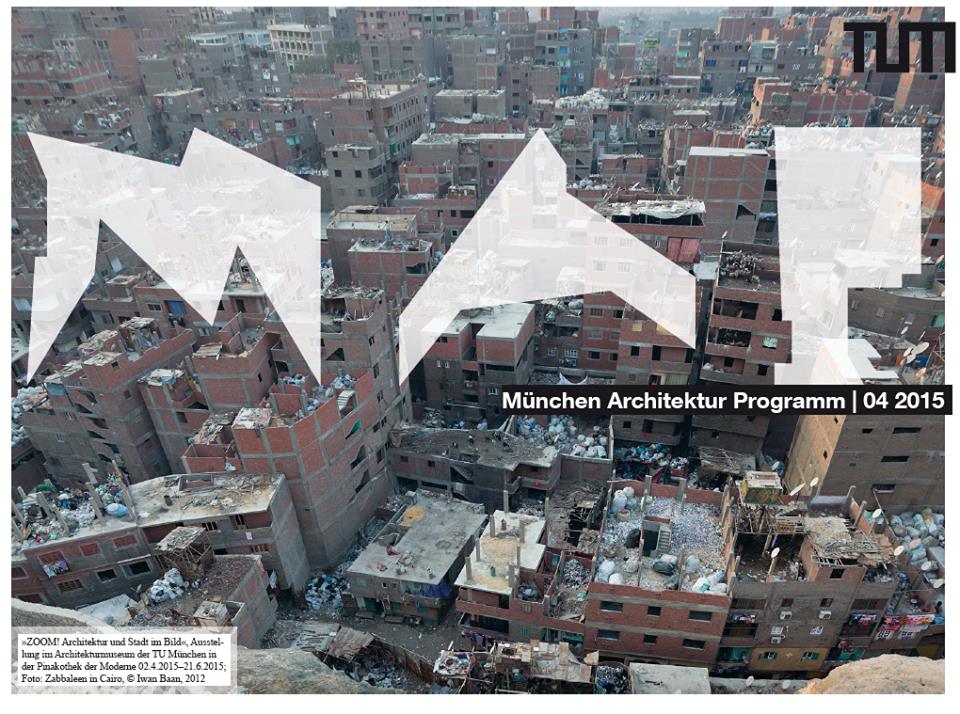
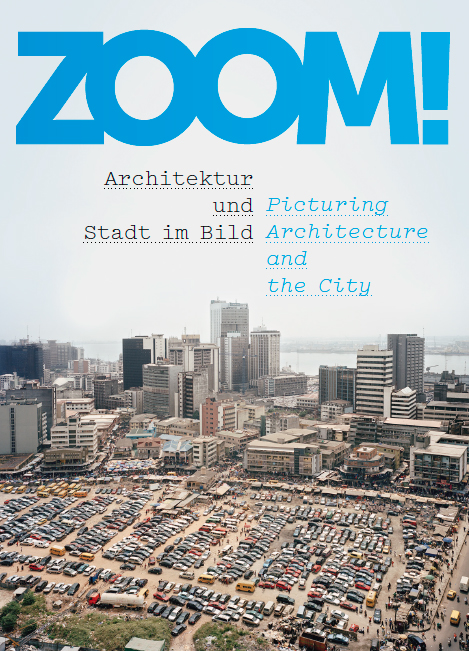
Munich; ‘ZOOM! PICTURING ARCHITECTURE AND THE CITY ‘ Architekturmuseum at Pinakothek der Moderne

2.4.2015-21.6.2015

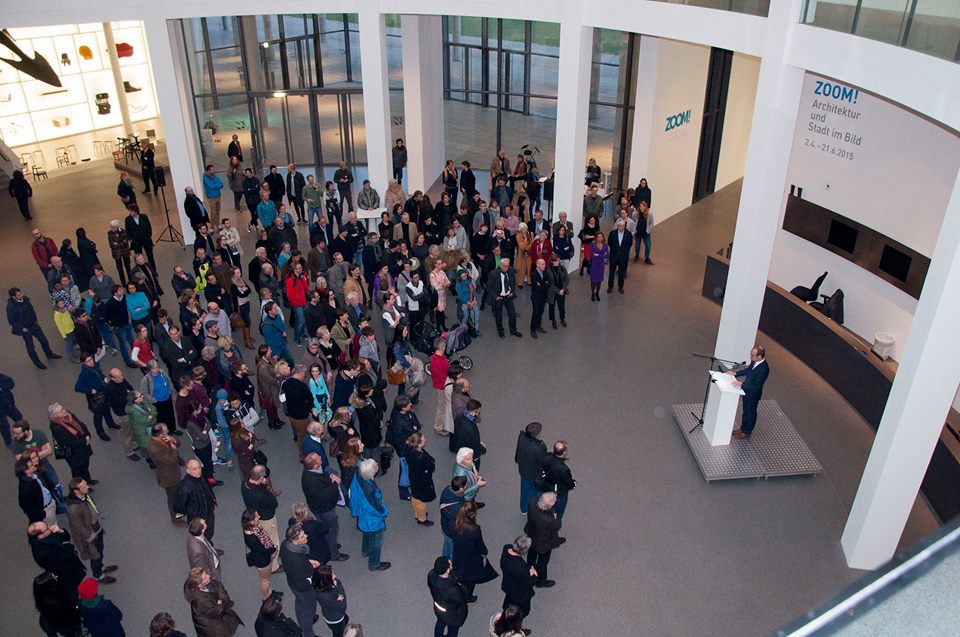
A crowded Pinakothek der Moderne last night preview opening to celebrate a fabulous exhibition “Zoom!Picturing Architecture and the City”  curated by        Dr Andres Lepik and Hilde Strobl.  Amazingly presented.. Congrats to Dr Lepik and his team.

10320593_698445806931588_923410928484700803_n

11084256_699049780204524_6593615451884069516_n

11073849_698607590248743_4323704953602909631_n


photo 1

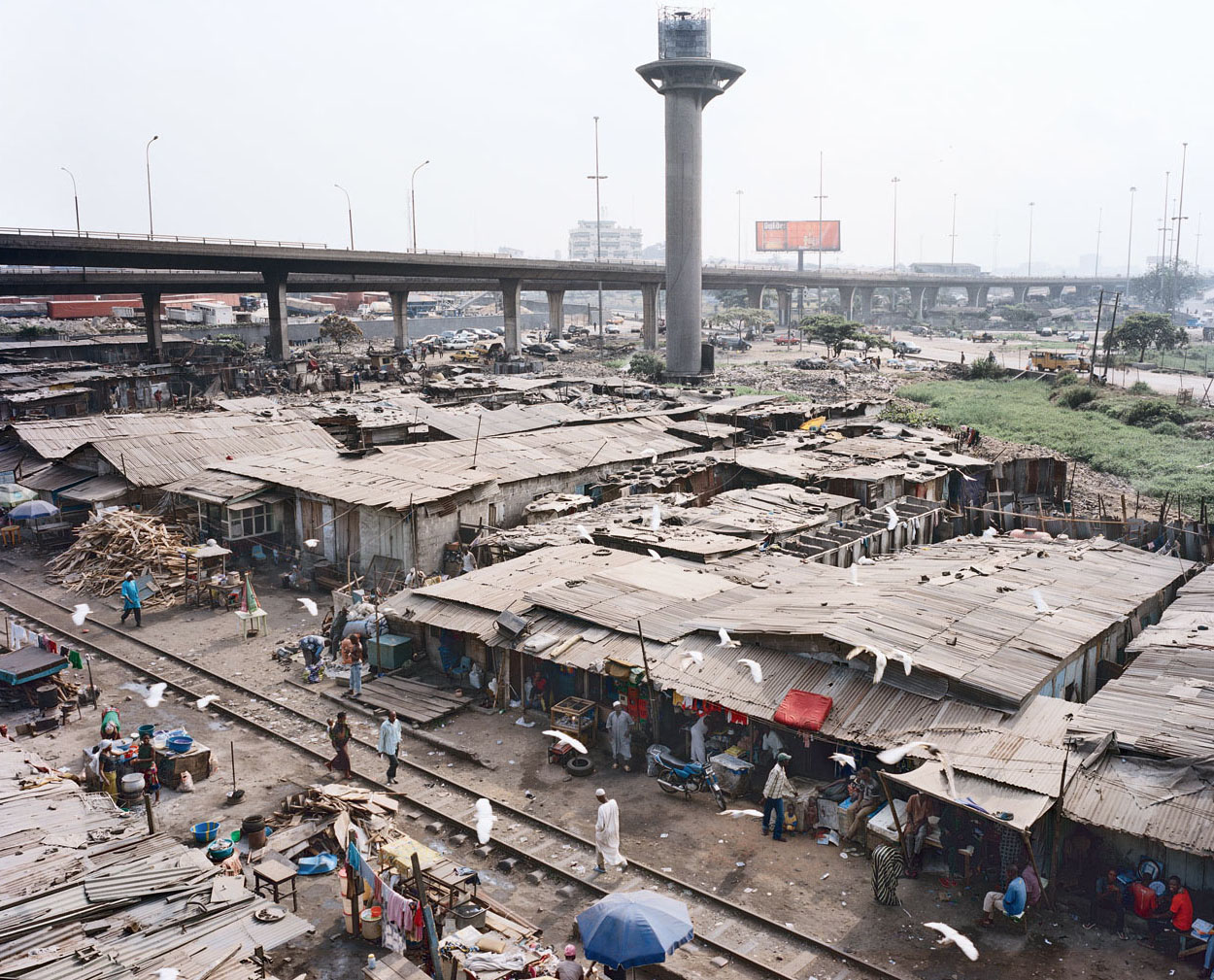
“The exhibition  presents photographs and video works by eighteen contemporary international photographers. Their images focus on the complex interrelations among society, architecture, and urban spaces. They provide insight into how buildings actually operate once the building contractors have left the premises, and how city and town structures are impacted by economic factors, as well as their inhabitants’ social and cultural backgrounds. The evident failures often occurring in the planning or modification of buildings point to specific conclusions about people’s actual needs….”

….Images from Germany’s Oberpfalz region of Bavaria are exhibited next to images from Italy, Nigeria, and China, for instance, and the juxtapositions make similarities and differences quite apparent…..

photo 3


julianroeder_03


On show are photographs and video works by Iwan Baan, Roman Bezjak, Peter Bialobrzeski, Lard Buurman, Stefan Canham and Rufina Wu, Nuno Cera, Livia Corona, Nicoló Degiorgos, Jörg Koopmann, Eva Leitolf, Myrzik und Jarisch, Stefan Olàh, Julian Röder, Simona Rota, Andreas Seibert, Wolfgang Tillmans, Fabian Vogl, and Tobias Zielony.

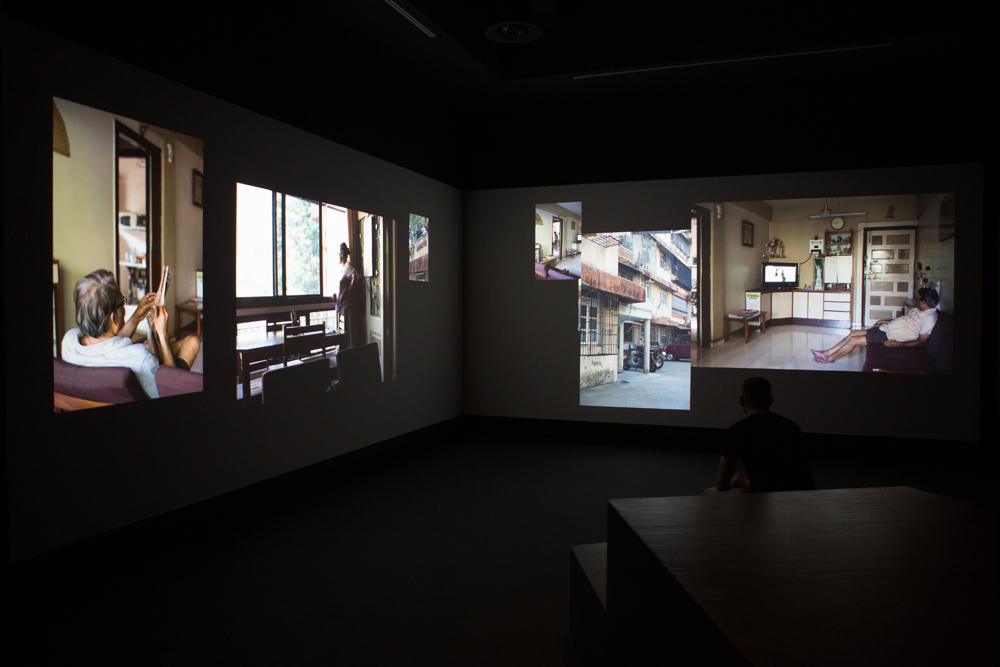
A two channel still video installation by Wolfgang Tillmans “Book of Architects’,2014 is eye catching. “…Book of Architects is not a book design but a video installation, presented as a looped projection of still images on two walls. My interest is not typological approach, but to show a sequence and an arrangement of images that echo what examples of the built environment look and feel like to me.” (Wolfgang Tillmans).

Tillmanns_IMG_6309_A3_kl_03

WOLFGANG TILLMANS, BOOK FOR ARCHITECTS, INSTALLATIONSANSICHT BIENNALE VENEDIG, 2014© Wolfgang Tillmans

Quite impressive the photographs “Instant Village”, 2010-2015 by Simona Rota  …The series ‘Instant Village’ arose out of the personal experiences of the photographer, who lived for several years in the Canary Islands and witnessed the developments there as tourism rose and fell.  These works address a much broader theme,  though – how we handle landscape as a resource. Rota sheds light on the role of the financial market and the disparity between short term market trends and the long terms impact of failed construction projects on their surroundings.”

_c_SR_Instant_Village_06_m


I enjoyed very much Eva Leitlof  “Postcards from Europe”

big_34912765_0_450-552

Eva Leitlof   “Guitgia, Lampedusa. Italy 2012”


a bilingual publication has been published for this exhibition 

ZOOM_Cover

Andres Lepik, Hilde Strobl (Ed.)

Verlag der Buchhandlung Walther König, Cologne 2015
German/English | 208 pages | 180 images | 29,80 EUR
ISBN 978-3-86335-735-1

ΑΡΧΑΙΩΝ ΤΟΠΟΣ

ΙΣΤΟΡΙΑ-ΑΡΧΑΙΟΛΟΓΙΑ-ΤΕΧΝΗ- ΕΠΙΣΤΗΜΗ-ΦΙΛΟΣΟΦΙΑ

Keith York City

History made interesting

VK

visits on art, design, architecture and literature

Eclectic Trends

Interior Design and Lifestyle Trends

maria sarri Art projects

#art_projects, #public_art, #site_specific, #post_colonial, #urban_art

Η καλύβα ψηλά στο βουνό

Σε κοίταζα μ' όλο το φως και το σκοτάδι που έχω

tangledjourneys

A personal perspective on human interest stories from an American journalist living abroad

An Englishman in Berlin

Blog about life and culture in Berlin, Germany

nefeliatelier

bits and pieces that interest me

A R T L▼R K

An Alternative Cultural Daybook

Venetian Red Art Blog

Art, the resplendent light that illuminates the world

The School Of Life

visits on art, design, architecture and literature

IGNANT

visits on art, design, architecture and literature

βλέμμα

visits on art, design, architecture and literature

λεξήματα

visits on art, design, architecture and literature

flaneries

This WordPress.com site is the bee's knees

βλέμμα

gaze at Greece

SOUZY TROS

the new T.A.M.A platform