VK

visits on art, design, architecture and literature

Category: OPERA /THEATER/FILM/LITERATURE

New York; guest writer;Wayne Northcross on “The Most Incredible Thing’ at New York City Ballet

Premiere
February 2, 2016, David H. Koch Theater
Original Cast: Taylor Stanley, Sterling Hyltin, Amar Ramasar Ask la Cour, Russell Janzen, Tiler Peck  ;  Length: 45 Min
Costumes by : Marcel Dzama, supervised by Marc Happel
Set by: Marcel Dzama
Lighting by: Brandon Stirling Baker

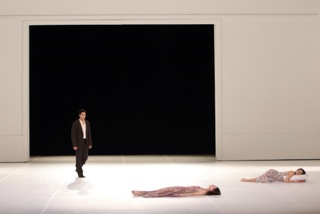
Justin Peck’s  “The Most Incredible Thing “premiered on February 2, 2016, at NYCB’s annual New Combinations Evening.  Peck and composer Bryce Dessner (The National) had invited visual artist Marcel Dzama to collaborate with them on a new work for New York City Ballet; Hans Christian Andersen’s “The Most Incredible Thing”is  a lesser-known fairytale by the Danish author published in 1870.

I had the honour to be invited by my dear friend and wonderful writer Wayne Northcross to enjoy  this fabulous performance.  Wayne Northcross had been commissioned to write for the New York Observer, but few days ago  he  delivered to me a splendid text to be  hosted at VKblog.
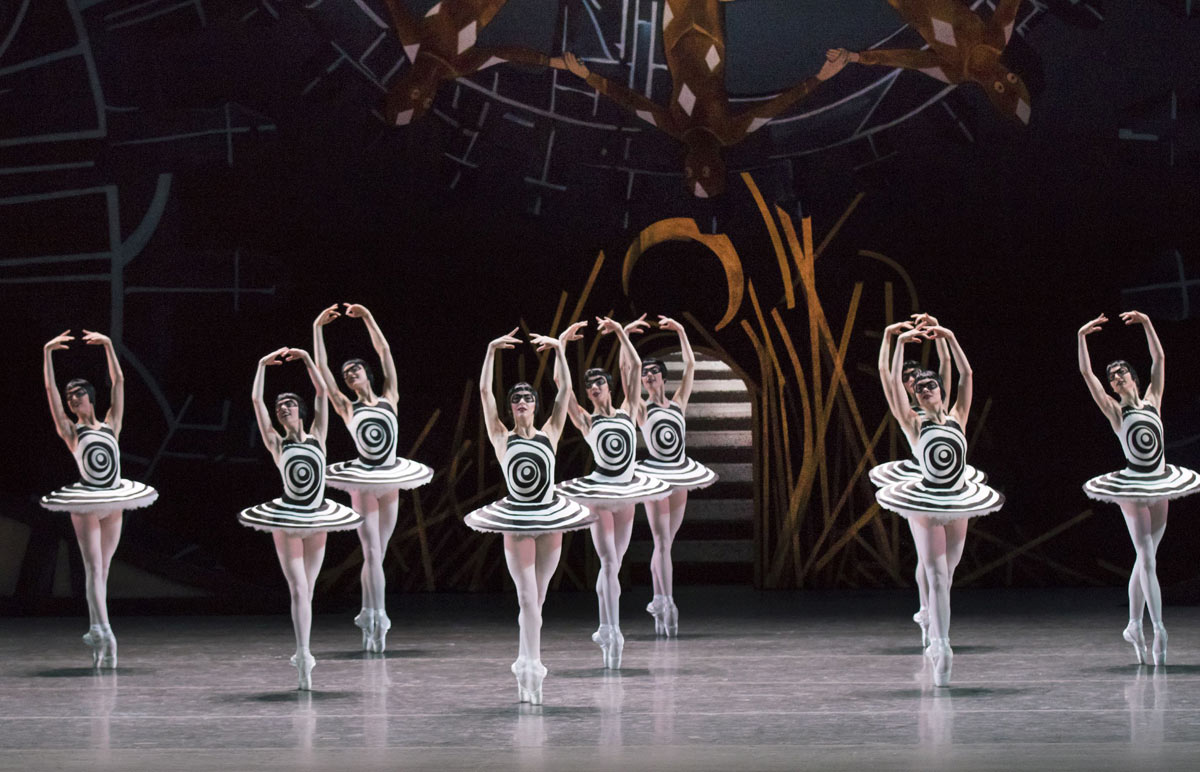
pk-incredible-thing-corps-girls_1000

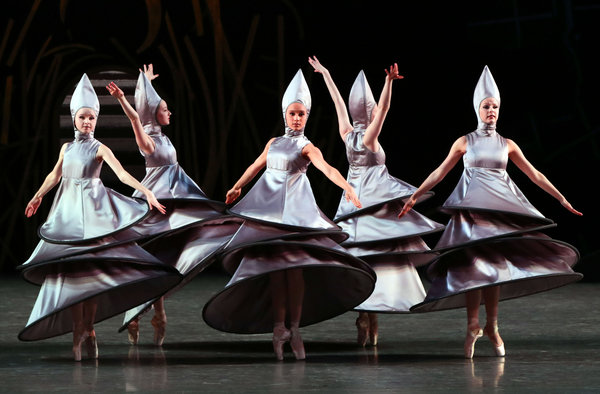
“I have been following visual artist Marcel Drama and ballet choreographer Justin Peck for months leading up to premiere of the New York City Ballet’s The Most Incredible Thing, their collaborative ballet based on the 1870 story by Hans Christian Andersen. I hadn’t been hanging outside the David Koch Theater trying to sneak a peek backstage at the dancers, sets and costumes I’ve heard so much about. No. I have been following Peck and Dzama on Instagram, marveling at how much I could preview of Dzama’s highly detailed and beautiful sketches for the costumes and sets as well as at Peck’s posts of dancers en pointe, executing jetes or arabesques. My favorite image is one Peck posted a few weeks ago of him and Dzama, smiling and sitting cross-legged on stage in front of Dzama’s painted backdrop of a double-headed firebird. This image got me thinking about how collaboration among artists from various disciplines can either ignite or spark a mutually creative enterprise or how competing and highly unique abilities can make partnering go up in flames. Then I attended a dress rehearsal after which I stopped looking so much at Instagram. Seeing the ballet in person or gleaning aspects of it on my phone, two things became quite clear: the production is stunningly beautiful and fully realized, full of visual and technical complexities; Drama and Peck have arrived at a seamless, mutually beneficial collaborative style.
04PECK-TWITTER2-articleLarge

tumblr_o25z1xuCPc1u4hq5fo1_1280-1

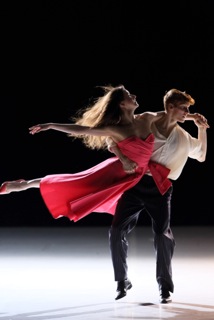
Sterling Hyltin and Taylor Stanley in Justin Peck’s “The Most Incredible Thing” Photo credit @ Barbara Anastacio resource: NYC Ballet Photo blog
tumblr_o25xnpBjc31u4hq5fo1_1280

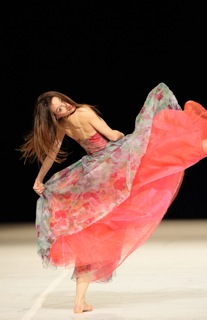
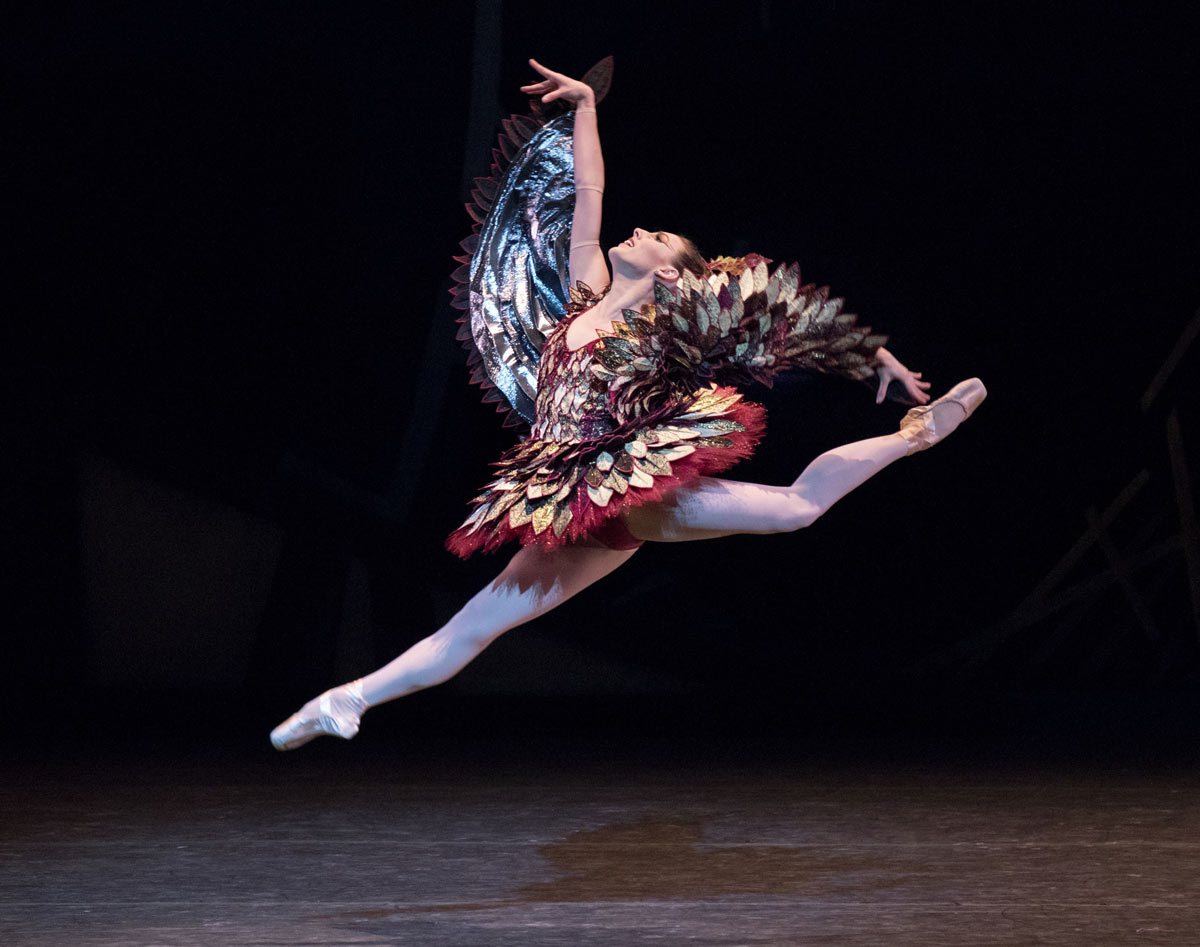
Tiler Peck in Justin Peck’s “The Most Incredible Thing” Photo credit @Barbara Anastacio,                                               resource: NYCBalletPhotoblog

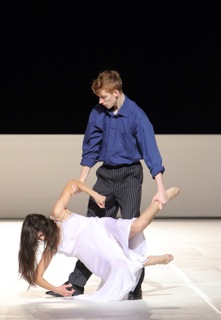
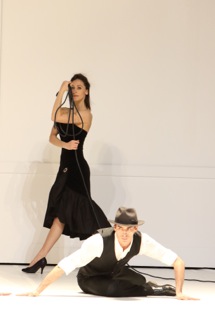
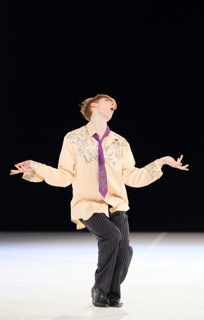
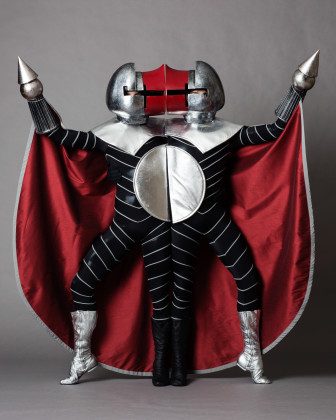
Hans Christian Andersen’s fairy tale of a king who declares that whoever in his kingdom creates the most incredible thing in the world will be awarded the hand of the princess and half the kingdom could be seen as story ballet primer. All the dramatic elements are here. Fantastically costumed characters, a battle between the forces of good and evil, magic, and frustrated romance. In Peck’s adaptation the main characters have been tweaked a little but still include The Creator of the most incredible thing, a large magical clock, The Princess, The King, and The Destroyer of said clock. The cast grows to accommodate 45 dancers and 11 children who make up the allegorical and symbolic figures and who emerge from the clock: Three Kings, Adam & Eve, The Cuckoo Bird, Four Seasons, Five Senses, Nine Muses. A lot of bodies for Peck to choreograph—at one point all the dancers are on stage at the same time. For Dzama this requires a lot of patterned tights, feathers, headdresses, masks, swords, and spears. 37 costumes in all. Not as easy as it looks, but a seamless collaboration between the two makes it seem so.
New York City Ballet The Most Incredible Thing, costumes Photographer: Erin Baiano 646.228.5917

“The Most Incredible Thing”; costumes, photo@ Erian Baiano
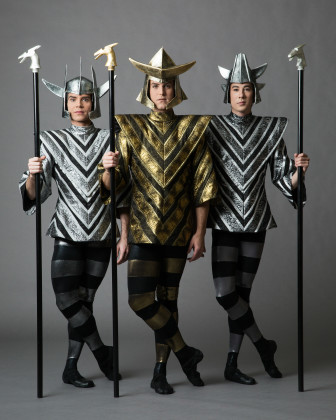
 

Gonzalo Garcia, Jared Angle, and Daniel Applebaum The Most Incredible Thing, costumes New York City Ballet Photographer: Erin Baiano 646.228.5917Three O’Clock: The Three Kings, dancers Gonzalo Garcia, Jared Angle, Daniel Applebaum. Photo @Erin Baiano
You are meant to see the creation and destruction of this most wonderful thing by the Destroyer in the ballet as an allusion to the artist’s struggle to create and express his or her artistic genius in a fickle and easily distracted world. You could also push the story’s symbolism further to include the push-pull dynamic of collaboration that Peck and Dzama had to go through to create and destroy a little piece of their own unique vision, sublimating autonomy in service of the In a collaboration consensus and integrity are key goals. Dzama developed the costumes over time, downscaling his initial ideas to fit Peck’s choreography. For his part Peck had to give more room to accommodate Dzama’s version, which for him was a new way of working. (Wayne Northcross) 
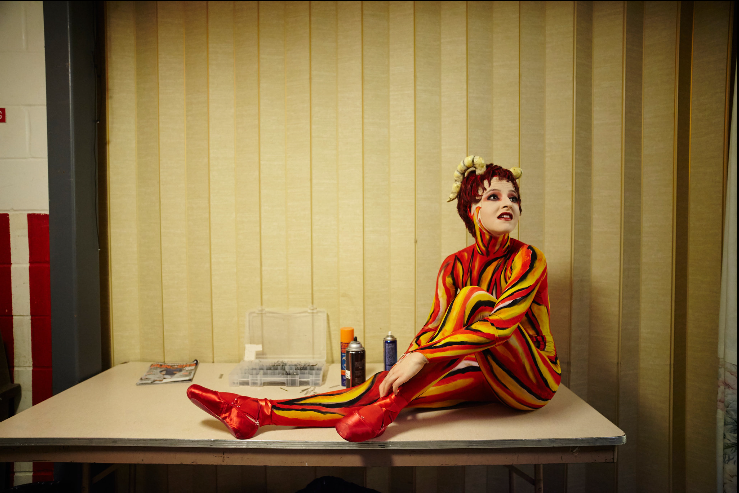
tumblr_o25ymsVUWG1u4hq5fo1_1280

Indiana Woodward backstage wearing a costume from Justin Peck’s “The Most Incredible Thing”,photo credit@Barbara Anastacio; resource: NYCBalletPhotoblog

Marcel Drama, is represented by David Zwirner Gallery, New York/London
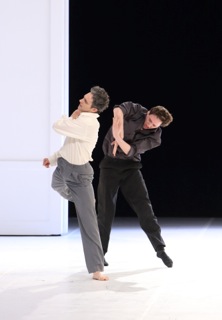
Munich; Bayerisches Staatsballet Premiere ; A piece by Pina Bausch “For the Children of Yesterday, Today and Tomorrow”

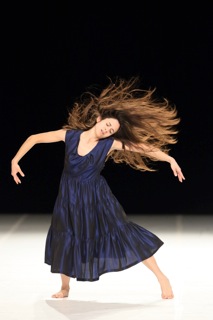
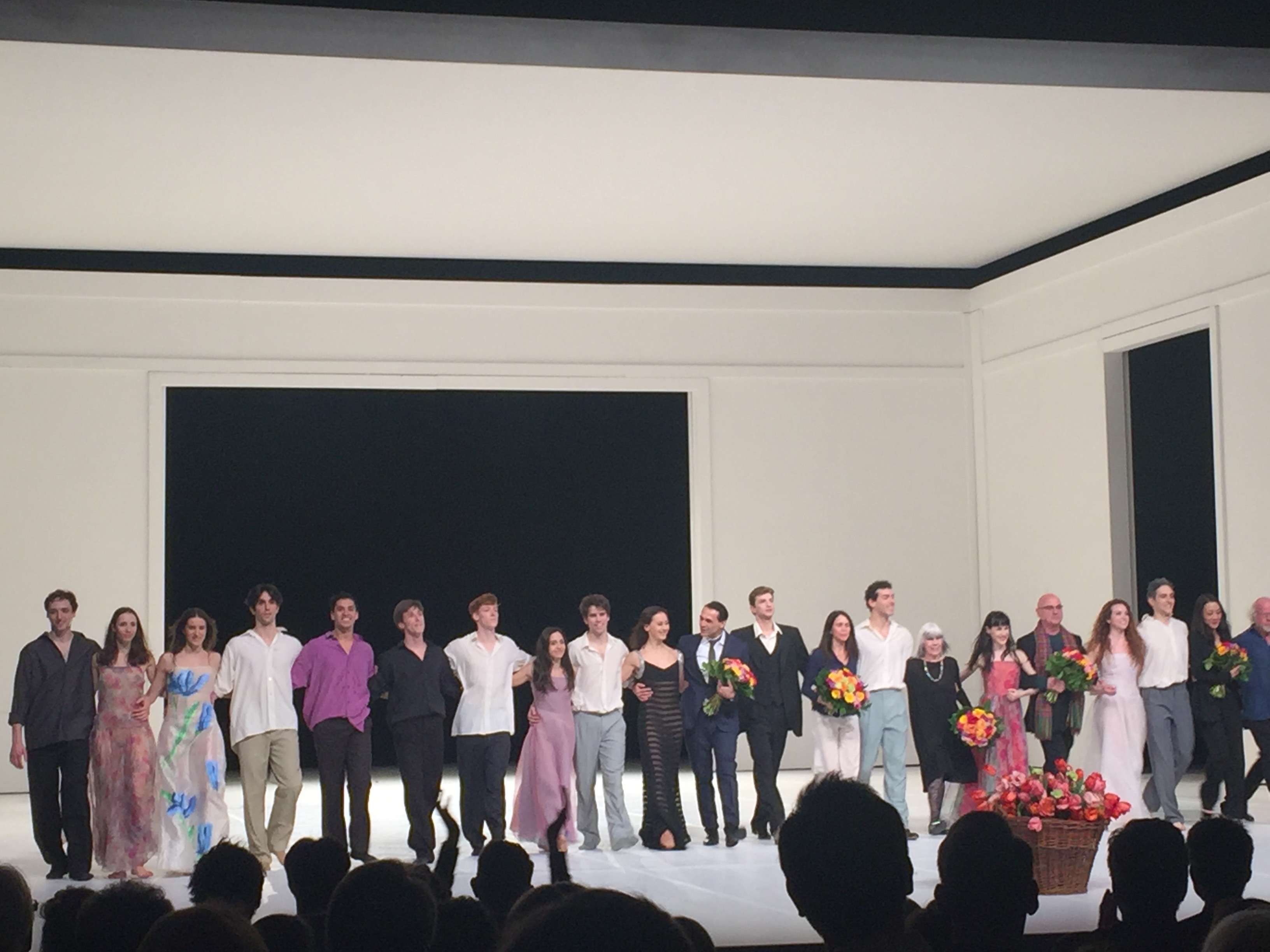
Sunday evening I was honoured to be at the Premiere “Für die Kinder von gestern, heute und morgen ” (For the Children of Yesterday, Today and Tomorrow) a piece by Pina Bausch, one of the most significant choreographers of our time. Indeed  an extraordinary and compelling performance by  Bayerieshes Staatballet which combined  all elements that made up the unparalleled quality of Pina Bausch’s Tanztheater.  This performance is one of the projects of Ivan Liška, artistic director,  for the 2015/2016 season at Bayerisches Staatsballett.
A co-production by the Bavarian State Ballet and the Pina Bausch Foundation in cooperation with the Tanztheater Wuppertal Pina Bausch

photo@Wilfried Hösl
Für die Kinder von gestern, heute und morgen_Zuzana Zahradníková, Jonah Cook_©Wilfried Hösl_9C2A7663photo@Wilfried Hösl
Direction and Choreography:Pina Bausch
Stage:  Peter Papst
Costumes:  Marion Cito
Musical collaboration:  Matthias Burkert, Andreas Eisenschneider
Cooperation:  Marion Cito, Daphnis Kokkinos, Robert Sturm
Musik : Felix Lajko, Nana Vascobncelos, Caetano Veloso, Bugge Wesseltoft, Amon Tobin, Mari Boine, Shirley Horn, Nina Simone, Lisa Edkahl, Gerry Mulligan, Uhuhboo Project, Cinematic Orchestra, Goldfrapp, Gotan Project, Guem, Hughscore, Koop, Labradford, T.O.M., Prince und Marc Ribot
Für die Kinder von gestern, heute und morgen_Joana de Andrade, Jonah Cook_©Wilfried Hösl_5M1A4872photo@Wilfried Hösl

Created in 2002 in Wuppertal during the latest creative period of Bausch – a period where her work became more dance-centric. It is the pinnacle of the series , Tanzland Deutschland, which showcased highlights of the choreographic work happening in Germany: from Schlemmer as representative of the Bauhaus, to Kandinsky’s synaesthetic concepts at the beginning of the 20th century, to Ausdruckstanz, neoclassical finds and the full-length narrative ballet of John Cranko and John Neumeier all the way to contemporary creations from Forsythe and Siegal.

performers: Joana de Andrade, Jonah Cook, Matteo Dilaghi,  Léonard Engel,  Séverine Ferrolier, Nicholas Losada, Marta Navarrete Villalba,  Gianmarco Romano,  Nicola Strada,  Robin Strona,  Daria Sukhordukova,  Shawn Throop, Alexa Tuzil, Matej Urban and  Zuzana Zahradniková

Für die Kinder von gestern, heute und morgen_Mia Rudic_©Wilfried Hösl_9C2A6166

photo@Wilfried Hösl
Für die Kinder_Séverine Ferrolier, Robin Strona_©Wilfried Hösl_5M1A8928photo@Wilfried Hösl

Für die Kinder_Nicholas Losada, Daria Sukhorukova, Séverine Ferrolier_©Wilfried Hösl_5M1A8552

photo@Wilfried Hösl

Pina Bausch was born 1940 in Solingen and died 2009 in Wuppertal. She received her dance training at the Folkwang School in Essen under Kurt Jooss, where she achieved technical excellence. Soon after the director of Wuppertal’s theatres, Arno Wüstenhöfer, engaged her as choreographer, from autumn 1973, she renamed the ensemble the Tanztheater Wuppertal. Under this name, although controversial at the beginning, the company gradually achieved international recognition.

Für die Kinder von gestern, heute und morgen_Jonah Cook_©Wilfried Hösl_9C2A6457

photo@Wilfried Hösl

a fabulous Joana de Andrade

Für die Kinder von gestern, heute und morgen_Joana de Andrade_©Wilfried Hösl_9C2A6670
 photo@Wilfried Hösl

IMG_3599 (1)

photo@Venetia Kapernekas

…….in 1973 Pina Bausch was appointed director of dance for the Wuppertal theatres and the form she developed in those early years, a mixture of dance and theatre, was wholly unfamiliar……

……Dance theatre evolved into a unique genre, inspiring choreographers throughout the world and influencing theatre and classical ballet too. Its global success can be attributed to the fact that Pina Bausch made a universal need the key subject of her work: the need for love, for intimacy and emotional security.

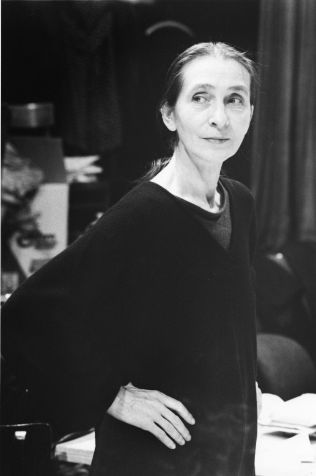
17_2_pina_bausch_kruegerPina Bausch 1940 – 2009
Foto: Wilfried Krüger

….Over the thirty-six years in which Pina Bausch shaped the work of the Tanztheater Wuppertal, till her death in 2009, she created a an oeuvre which casts an unerring gaze at reality, while simultaneously giving us the courage to be true to our own wishes and desires. Her unique ensemble, rich with varied personalities, will continue to maintain these values in the years to come… (Norbert Servos, Tanzeather Wuppertal, translated by Steph Morris) 


Kochel am See; Franz Marc Museum “Das arme Land Tirol” & Annika Kahrs ‘Playing to the Birds’

Franz Marc Jahr 2016 “Das arme Land Tirol”
06. März – 05. Juni 2016

A visit  last Sunday morning at the Franz Marc museum at Kochel lake to a special exhibition as the centenary of Franz Marc’s death falls on 4 March 2016.  A magical day..  This special exhibition is a Trilogy  ‘Franz Marc – Between Utopia and Apocalypse’

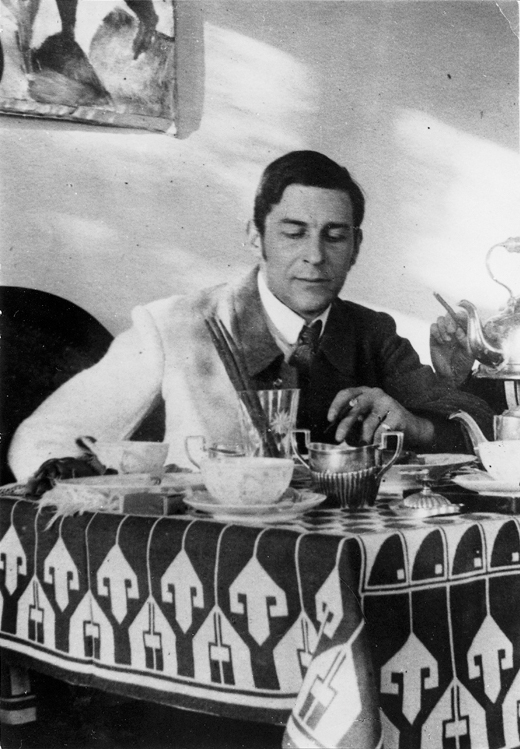
02-marc-in-ried-am-kaffetischFranz Marc am Kaffeetisch in Ried, 1914
Foto: Franz Marc Museum, Kochel a. See, Stiftung Etta und Otto Stangl


The Franz Marc Museum is commemorating the painter, one of the most important German Expressionist artists, with three major exhibitions and a number of different events. Three of his main works will be coming (back) to Kochel, to the museum dedicated to the painter, as loans from prominent collections in Europe and the USA and, as such, to the area Franz Marc loved so deeply and from which he drew inspiration. In dialogue with the museum’s own substantial holdings the special aura of these pictures will once again be felt in the place they were first created.

01-Marc-Das-arme-Land-Tirol-1
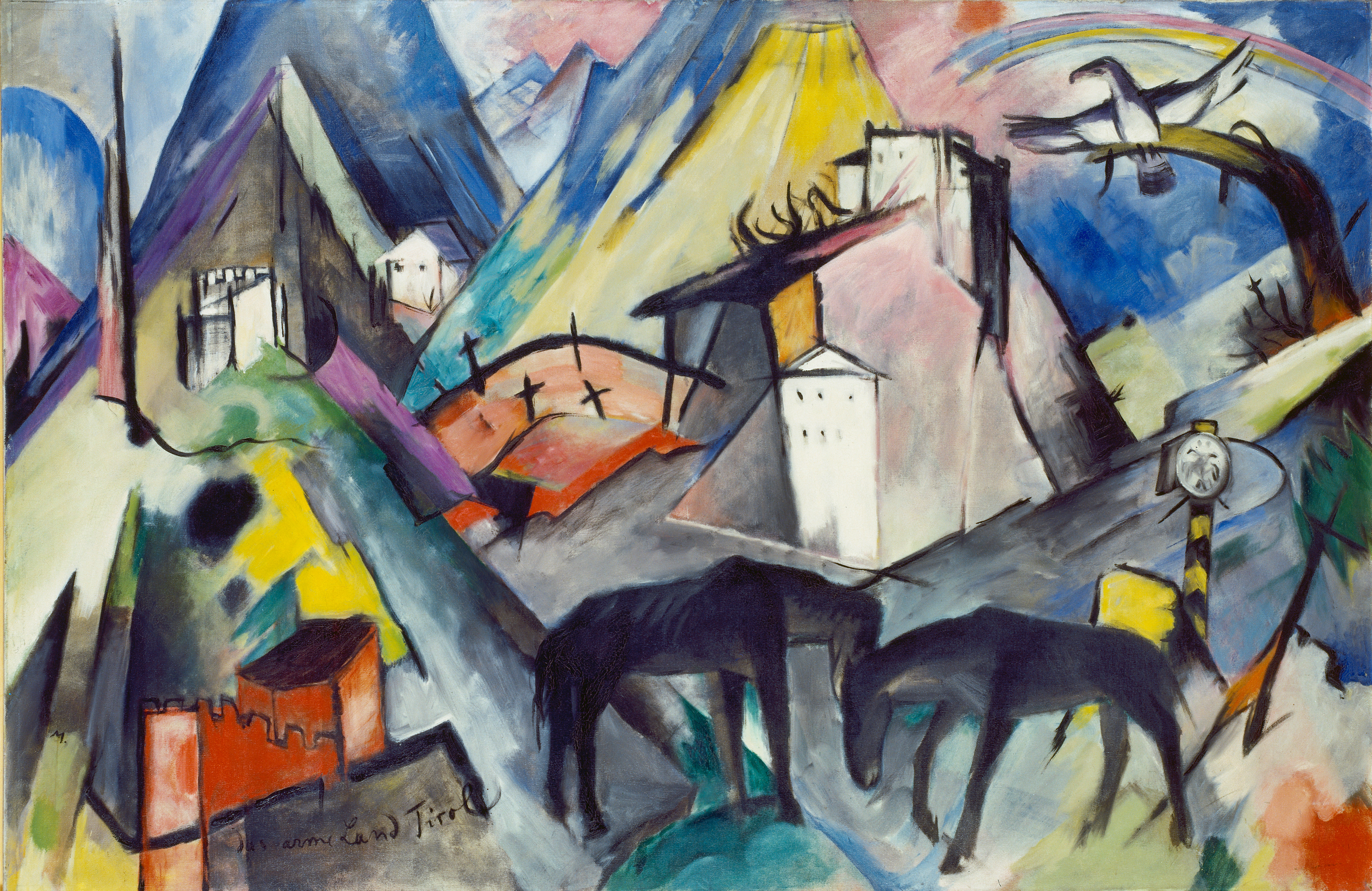
Franz Marc, Das arme Land Tirol, 1913
Öl auf Leinwand, Solomon R. Guggenheim Museum, New York
© Salomon R. Guggenheim Foundation

“Das arme Land Tirol” (The Unfortunate Land of Tyrol)  is one of Marc’s major
works. It was painted in early 1913 at a time when the
artist was optimistically making plans for the future.
 Nevertheless this landscape, inspired by a trip Marc 
made through Tyrol, is imbued with an inexplicable
 melancholy and a remote sense of danger – a mood 
that also found expression in the sketches and
 watercolours he created at the same time and which
 seems like a premonition of the impending World War.

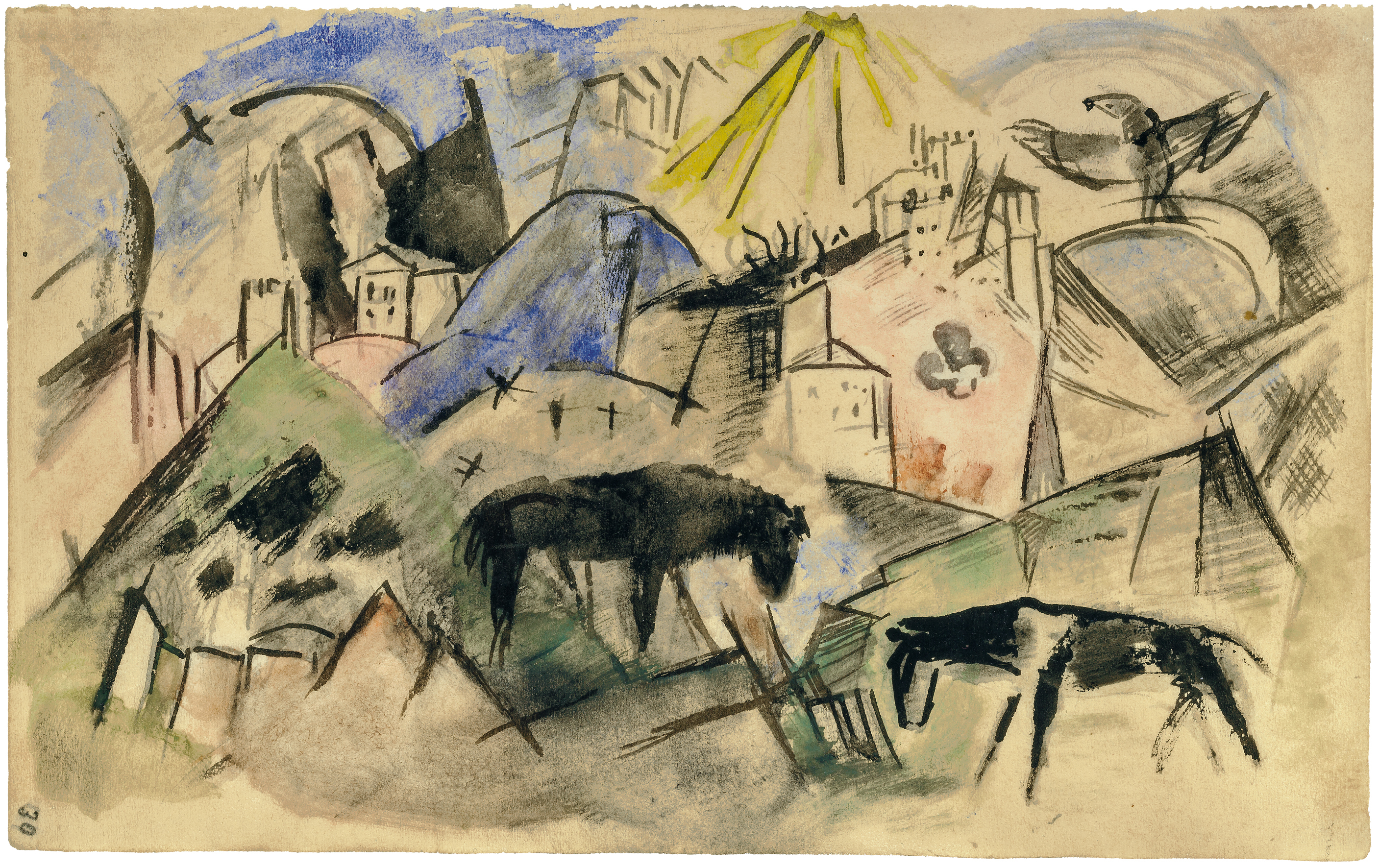
02-marc-armes-land-tirolDas arme Land Tirol, 1913, Aquarell und Tusche
Franz Marc Museum, Kochel am See
Dauerleihgabe der Bayerische Staatsgemäldesammlungen, München
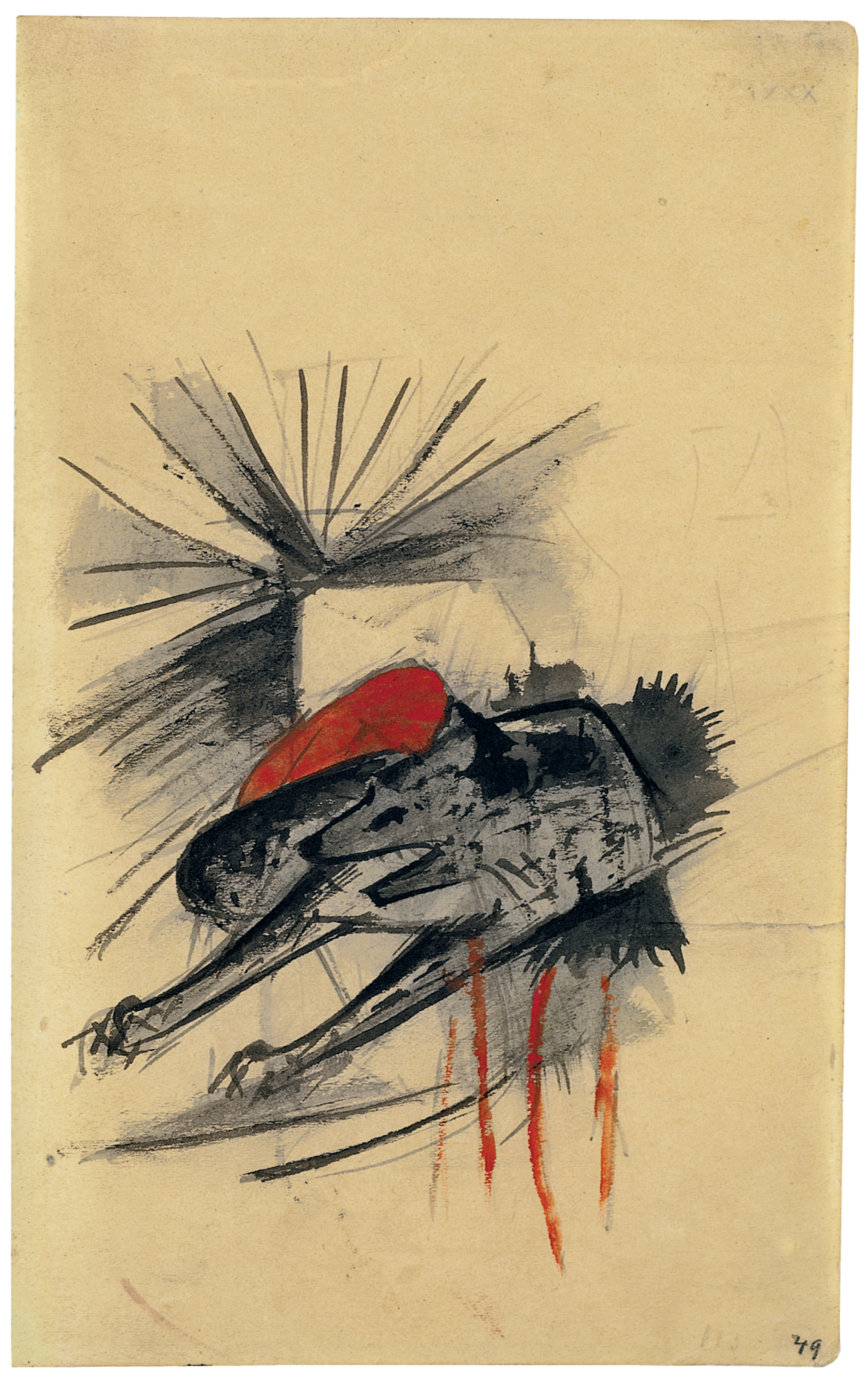
04-marc-liegende-hyaeneFranz Marc, Liegende Hyäne (Liegender Wolf), 1913, Aquarell
Franz Marc Museum, Kochel am See, Stiftung Etta und Otto Stange © Bayer & Mitko, München

the surrounding  landscape; magical place;  Kochel am See.

IMG_1882

IMG_1883

photos@Venetia Kapernekas


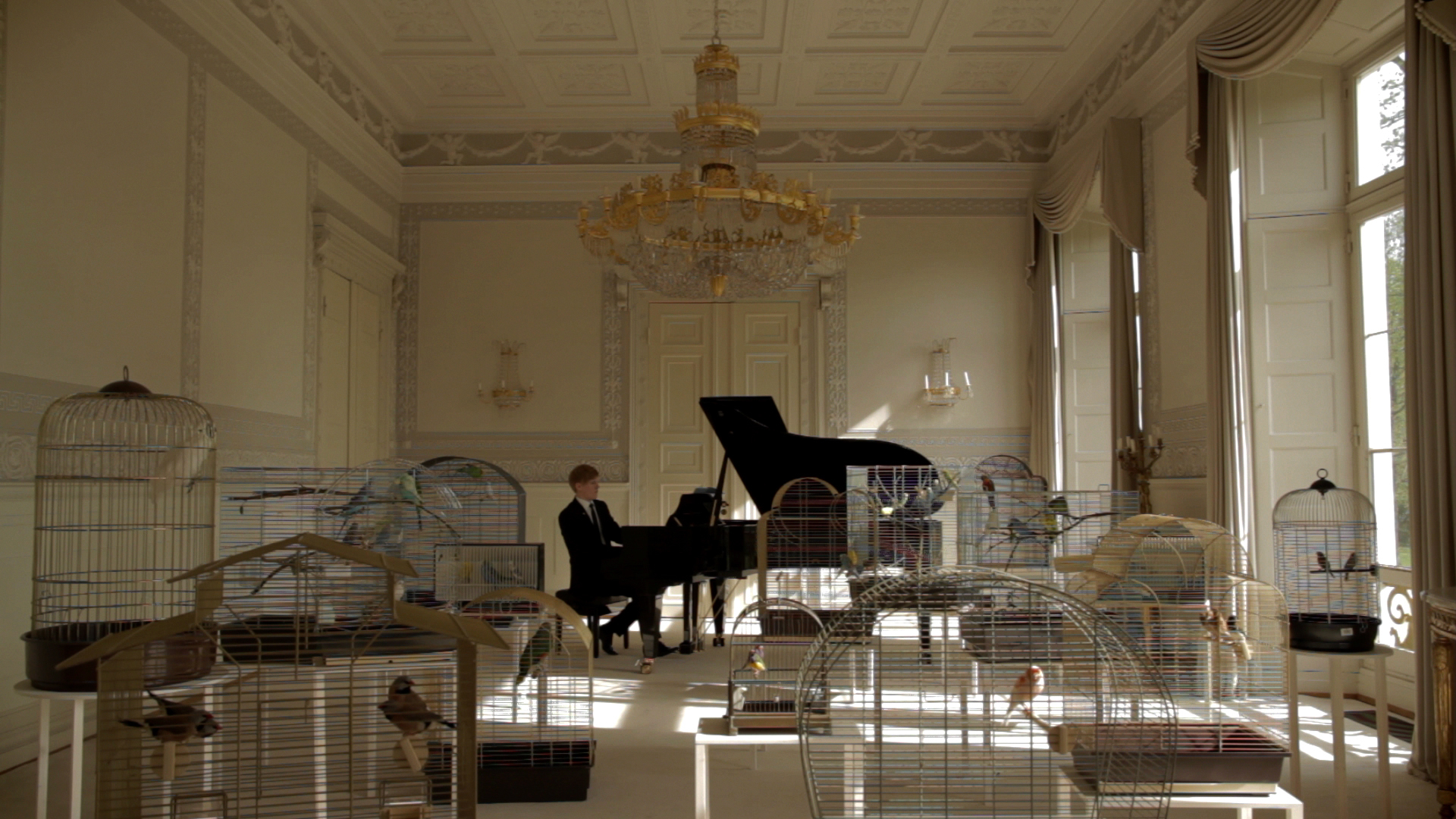
a beautiful video  installation in the ground floor of the museum “Playing to the Birds” by Annika Kahrs  captures the moment and the beauty;  on view  (6 March-5 June 2016); pianist: Lion Hinnricks; camera:Lars-Peter Prigge

09-kahrs-Still_4Annika Kahrs, Playing to the Birds, 2013
HD film, colour, sound (14 mins), courtesy of the artist and Produzentengalerie Hamburg

This  video installation shows a pianist in a bright room playing “Legend No. 1, St. Francis of Assisi’s sermon  to the Birds” by Franz Liszt, surrounded by birds in cages. With this image of birds listening to music (or the sermon) Annika Kahrs references St. Francis directly. “….Since his death on 4 March 1916 in Wold War I the artist has been compared to the saint. The legend of St. Francis who withdrew from the world to live close to nature, attuned only to god and his creatures, is equally  applicable to Franz Marc.  He too withdrew from the ‘blighted’city of Munich to the ‘Blue Land’ of Upper Bavaria to lead a simple, ‘pure’ life in natural surroundings close to the animals he loved so dearly. “(museum press text) 


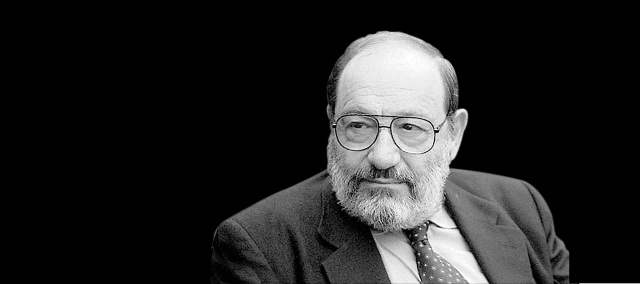
Umberto Ecco: literary critic, author and essayist “The Name of the Rose” to be remembered

umberto-eco-640x280

Last week in New York, “The History of Beauty” edited by Umberto Ecco, kept me wonderfully busy till last night I heard of his death in Milano.

He was “an extraordinary example of a European intellectual, combining unique intelligence of the past with a limitless capacity to anticipate the future”, said Italy’s prime minister, Matteo Renzi. “It’s an enormous loss for culture, which will miss his writing and voice, his sharp and lively thought, and his humanity,” 

………………………………………………………………………………………………….

What is beauty? What is art? What is taste and fashion? Is Beauty something to be observed cooly and rationally or is it something dangerously involving?  So begins Umberto Eco’s intriguing journey in which he explores the ever-changing concept of the beautiful from the ancient Greeks to today and questions the values that accompany the  way we register  beauty, both past and present. (publisher’s note, ‘History of Beauty’) 

 While closely examining the development of the visual arts, and drawing on works of literature from each era, he broadens his inquiries to consider a range of concepts, including the idea of love, the unattainable woman, natural inspiration, versus numeric formulas, and the continuing importance of ugliness, cruelty, and even the demons. 

Professor Ecco here takes us step by step through many historical eras, from Classical Antiquity to the present day, dispelling many preconceptions along the way and concluding that the relevance of his research is urgent because we live in an ager of great reverence for beauty, “an orgy of tolerance, the total syncretism and the absolute and unstoppable polytheism of Beauty.” (notes from the publisher, ‘History of Beauty’) 

to be continued on my reading.. “On Ungliness”

index.pperl

‘On Ugliness’ is an exploration of the monstrous and the repellant in visual culture and the arts. What is the voyeuristic impulse behind our attraction to the gruesome and the horrible? Where does the magnetic appeal of the sordid and the scandalous come from? Is ugliness also in the eye of the beholder? (publisher’s note) 

This morning I am   listening to the most wonderful conversation of Umberto Ecco with Paul Holdengräber which took place in Kensigton Town Hall on 19th November 2011. https://www.youtube.com/watch?v=DuGpw0-B9-s

CementeryOfPrague

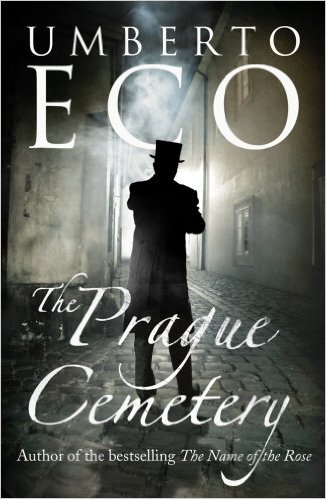
Umberto Eco on conversation with Chicago Tribune cultural critic Julia Keller  discusses his work “The Prague Cemetery”. In this conversation  he discusses the contemporary world and the span of human life .  The Prague Cemetery (Italian: Il cimitero di Praga) is the sixth novel by Italian author Umberto Eco. It was first published in October 2010; the English translation by Richard Dixon appeared a year later.

The main character in ‘The Prague Cemetery’ is Simone Simonini, a man whom Eco claims he has tried to make into the most cynical and disagreeable character in all the history of literature.

Suzene-Ang1-187x300

“When we consider a book,” he wrote in The Name of the Rose, “we mustn’t ask ourselves what it says but what it means.”

51dLXWHIREL._SX324_BO1,204,203,200_

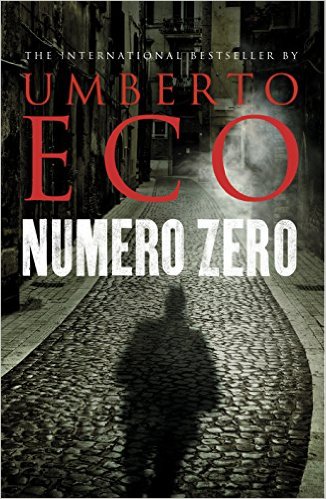
Numero Zero’ Reprises Umberto Eco’s Fascination With ‘Losers’ (published November 1, 2015) 

…….SIMON: Colonna, your journalist, says I dreamed what all losers dream, about one day writing a book that would bring me fame and fortune. Does being a loser make him vulnerable to saying yes to the schemes of the publisher?

umbertoeco-654x404

ECO: No, well, all the characters of my novel are losers (laughter). Obviously, you must be a loser in order to work for a newspaper like that. I’m always fascinated by losers, also. Also, in my “Foucault’s Pendulum,” the main characters, who are in a way losers, they are more interesting than the winners.

Pierre Bayard & Umberto Eco with Paul Holdengräber in New York Public Library, 2011 (live) 


reading today… ‘the art of Kintsukuroi’ repair with gold

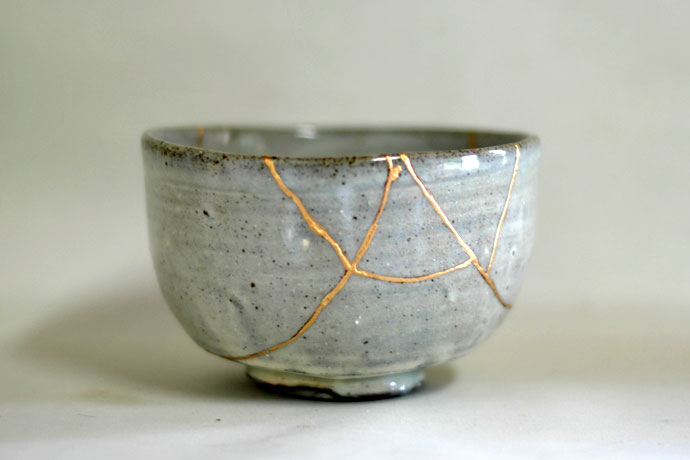
A beautiful sunny morning in Munich and finding a beautiful image waiting in my iPhone (sent by my lovely daughter);  a teacup with golden lines and a text .. ‘understanding that the piece is more beautiful for having been broken’

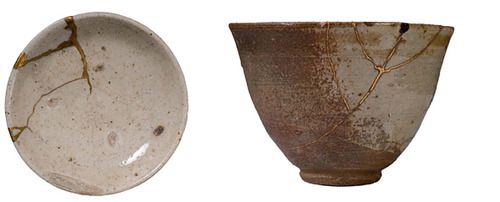
Kintsukuroi (Japanese: golden repair)or kintsugi (golden joinery) is the Japanese art repairing broken pottery with lacquer dusted or mixed with powdered gold, silver, or platinum; treating breakage and repair as part of the history of an object.

0afa3b363a73c37b1cd74f21b04576a1

(left) SAKE SAUCER (sakazuki), “Bamboo grove crane” (poetic name), 16th century, Shino ware, H.: 1 1/8 in. (2.8 cm), D.: 4 1/2 in. (11.3 cm). From the colle ion of the calligrapher Hisada Kakunan (b.1921)
(right) TEABOWL (chawan), 16th century, Karatsu ware, H.: 2 5/8 in. (6.8 cm), D.: 4 in. (10.2 cm). From the colle ion of Kokubun-ji temple in (former) Owari Province

As a philosophy kintsugi can be seen to have similarities to the Japanese philosophy of wabi-sabi, an embracing of the flawed or imperfect. Japanese æsthetics values marks of wear by the use of an object. This can be seen as a rationale for keeping an object around even after it has broken and as a justification of kintsugi itself, highlighting the cracks and repairs as simply an event in the life of an object rather than allowing its service to end at the time of its damage or breakage.

Kintsugi can relate to the Japanese philosophy of “no mind” (mushin) which encompasses the concepts of non-attachment, acceptance of change and fate as aspects of human life.

b25c5e156b847901f5b7d5c3652be8ed

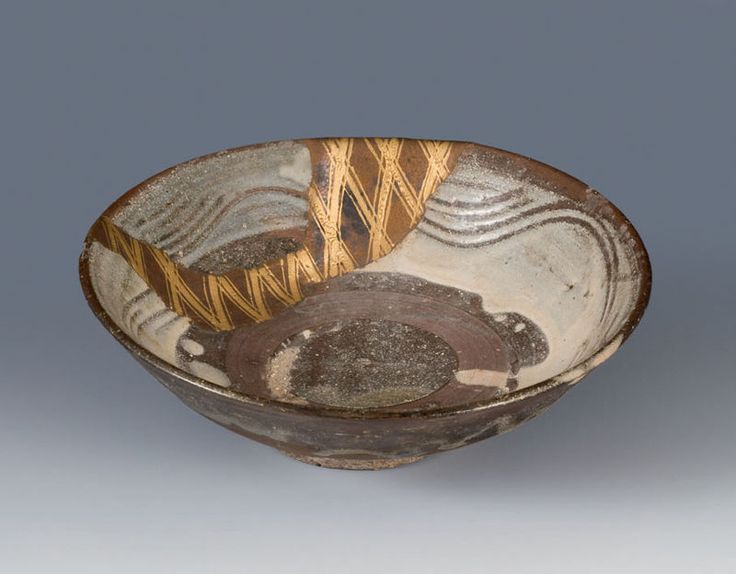
TEABOWL (chawan), 16th century, Karatsu ware, H.: 2 3/8 in. (6.0 cm), D.: 7 1/4 in. (18.5 cm)

“Not only is there no attempt to hide the damage, but the repair is literally illuminated… a kind of physical expression of the spirit of mushin….Mushin is often literally translated as “no mind,” but carries connotations of fully existing within the moment, of non-attachment, of equanimity amid changing conditions. …The vicissitudes of existence over time, to which all humans are susceptible, could not be clearer than in the breaks, the knocks, and the shattering to which ceramic ware too is subject. This poignancy or aesthetic of existence has been known in Japan as mono no aware, a compassionate sensitivity, or perhaps identification with, [things] outside oneself…the notion of rupture returns but with regard to immaterial qualities, the passage of time with relation to states of being. A mirage of “before” suffuses the beauty of mended objects. ” (Christy Bartlett, A Tearoom of Mended Ceramics, in the Aesthetics of Mended Ceramics, FlickWerk)

…..From aesthetic, technical and artistic viewpoints, the restoration of ceramics with lacquer, which has been practiced in Japan for many centuries and which has been particularly cultivated since the sixteenth century, is a highly distinctive  and extremely fascinating field of Japanese art……As collective terms for all kinds of objects  that have been restored with lacquer, the Japanese language contains the two words urushitsugi (“to patch with lacquer”) and ursuhitsukuroi (“to repair with lacquer ”), both of which have been in the language since the sixteenth century, as well as the word urushinaoshi, which denotes “lacquer repair”. (Charlie Iten, Ceramics Mended with Laquer)

David Pike, an American kintsugi expert living in Japan, claims that the theory of the “[kintsugi] process is deceptively simple: mix lacquer with a binding medium–rice or flour–and use it to stick the (ceramic) pieces back together. Then finish the break line with a metal highlight.”

Kintsugi-bowl-honurushi-number-32

An example of kintsugi repair by David Pike. (Photo courtesy of David Pike)

The fable of Kintsukuroi,………

Once upon a time, in the far, far east, east even of Eden, lived a great emperor, in a great palace, gorgeously stocked with the richest of goods. It was early spring, and the season of royal visits, when kings and princes called on one another and admired each others’ choicest possessions, gave wonderful gifts and enjoyed bountiful banquets. And this year was special, because the visitors would see the investiture of his beloved son Kintsukuroi as Crown Prince of the empire.

The emperor was excited this year because he had a new and beautiful bowl to show to his friends, specially made for him by the finest of craftsmen from the finest of materials. Imagine then his horror when on going to his cabinet he discovered that it was broken apart, into a hundred pieces. How could it have happened? No-one knew. What could be done about it before the first visitors arrived? No-one could offer any idea, for the time was too short to start again and make another one..read more…

4a0eeb03cb73f55a3854ab0636bb0b9d

TEA CONTAINER (chaire), 18th century, Karatsu ware, H.: 2 3/4 in. (6.8 cm), D.: 2 3/8 in. (6.1 cm), Museum für Lackkunst, Münster, Germany


Munich; Jorinde Voigt ‘Now’ at Klüser galleries

november 19, 2015-february 13, 2016; at Galerie Klüser -Georgenst. 15 & Galerie Klüser 2 – Türkenstr.23

‘..extraordinary, dynamic ‘drawings’

Jorinde Voigt is known for her lyrical sensibility as well as her calibrated approach to creating artwork. She is a classically trained musician from a family of scientists….

At nine years old Jorinde Voigt  began to play the cello, learnt to read music and matured into a gifted young performer. In 1996 she went to Göttingen’s Georg-August-Universität to study literature and philosophy. To help her understand the subjects she drew diagrams for herself, transforming words into idea maps. (interviewed by Rory McLean, february 2010) 

DSC_0196

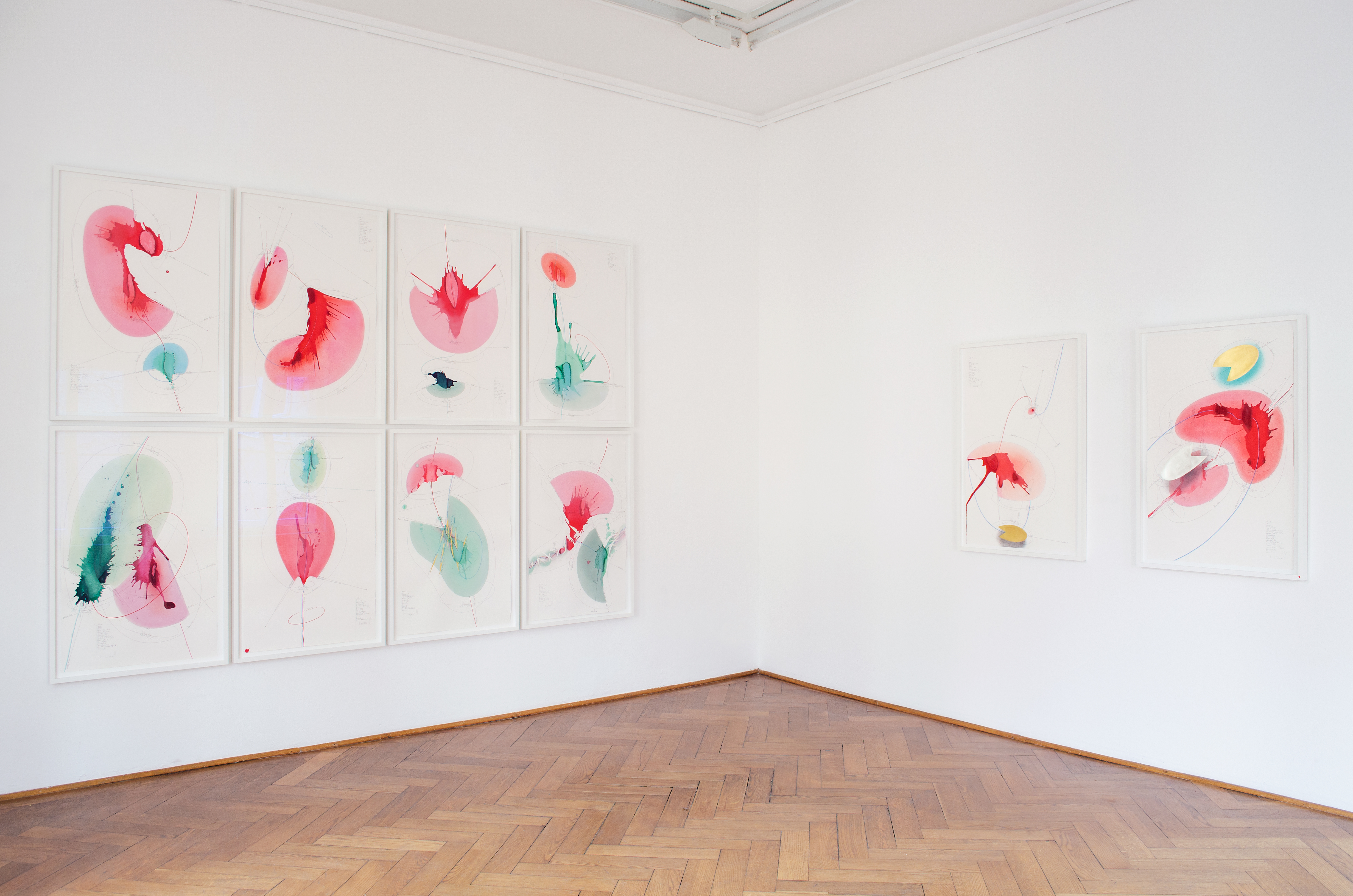
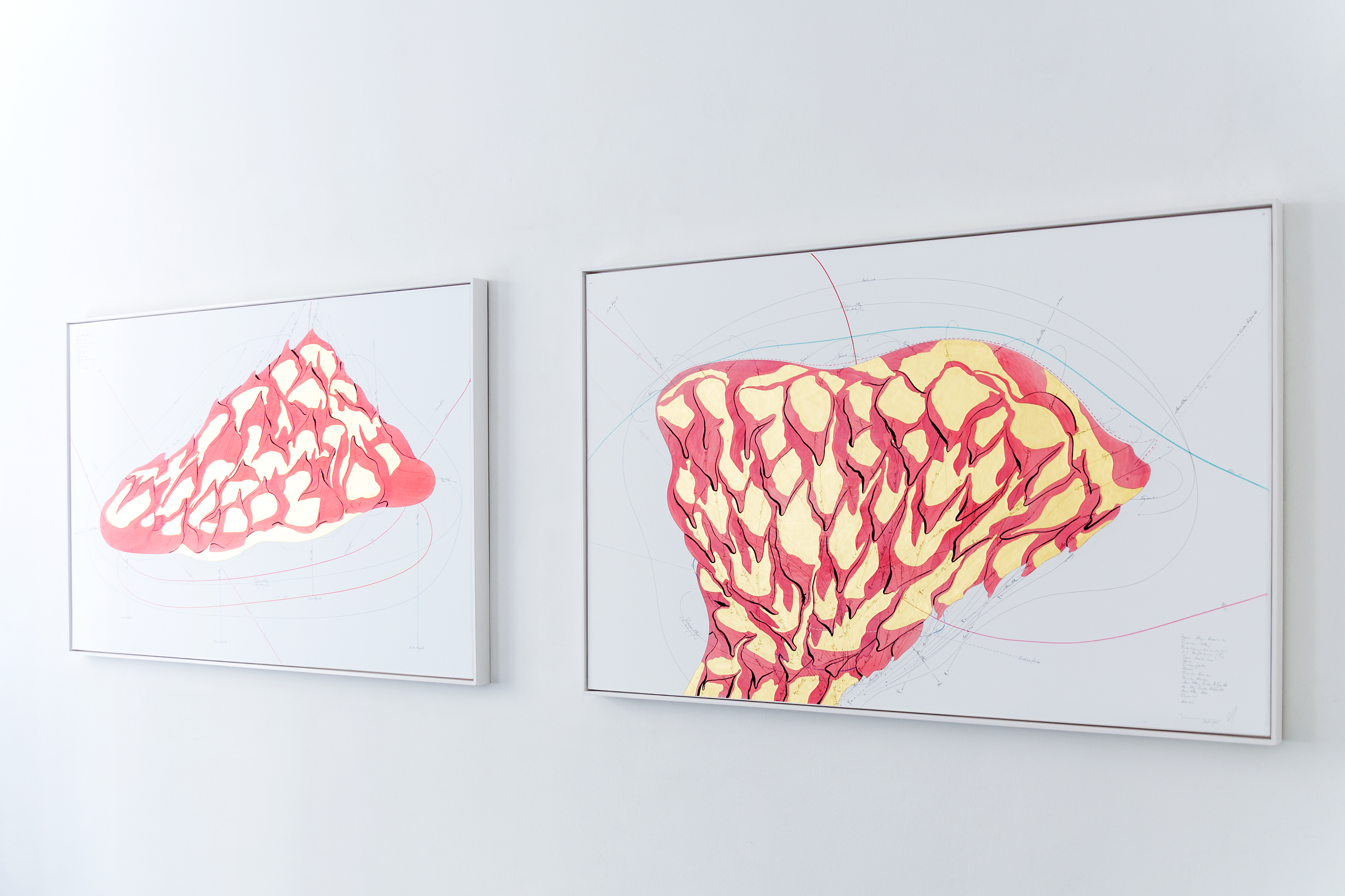
installation view “Jorinde Voigt Now”, Klüser gallery, photo@Jamie Fischer

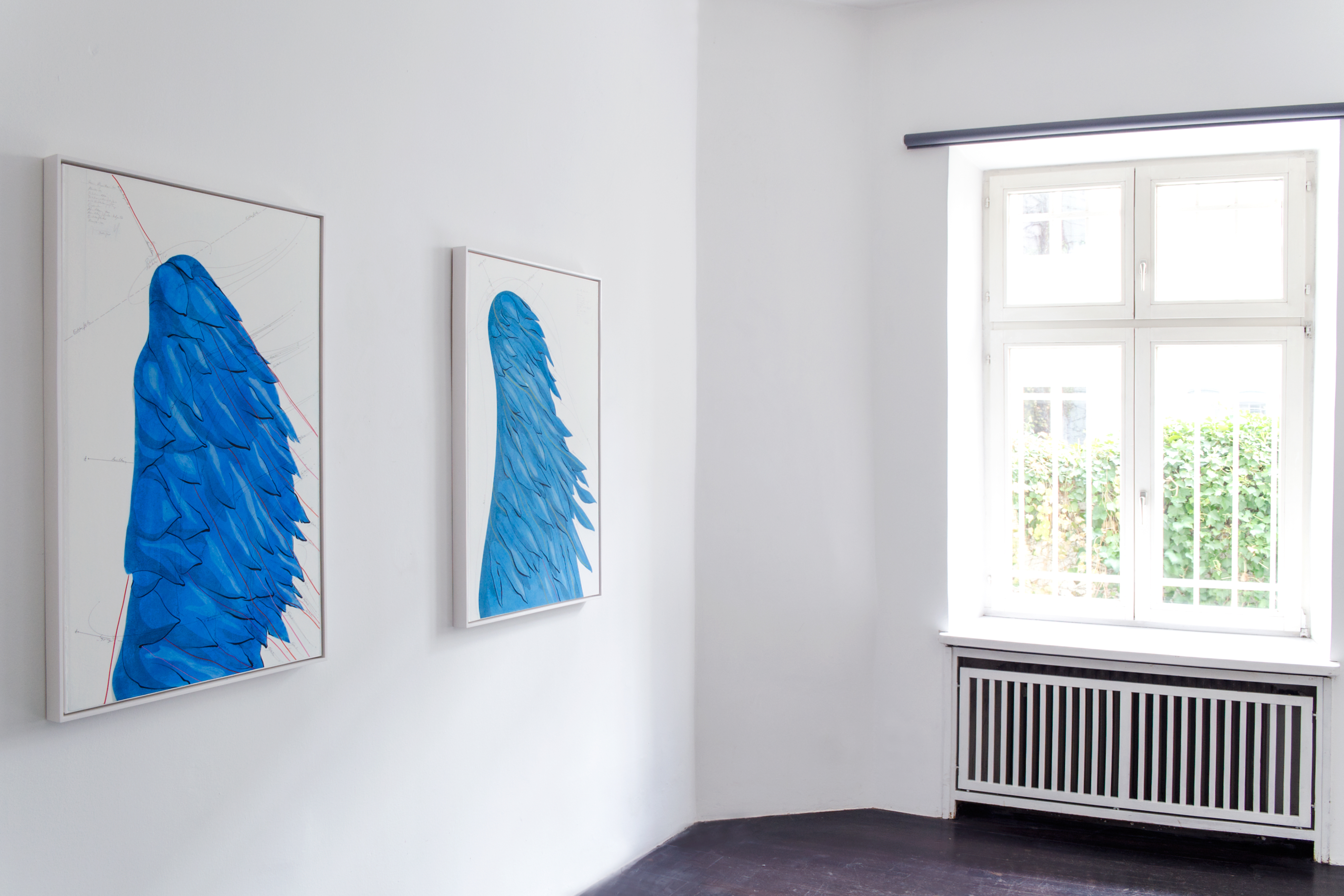
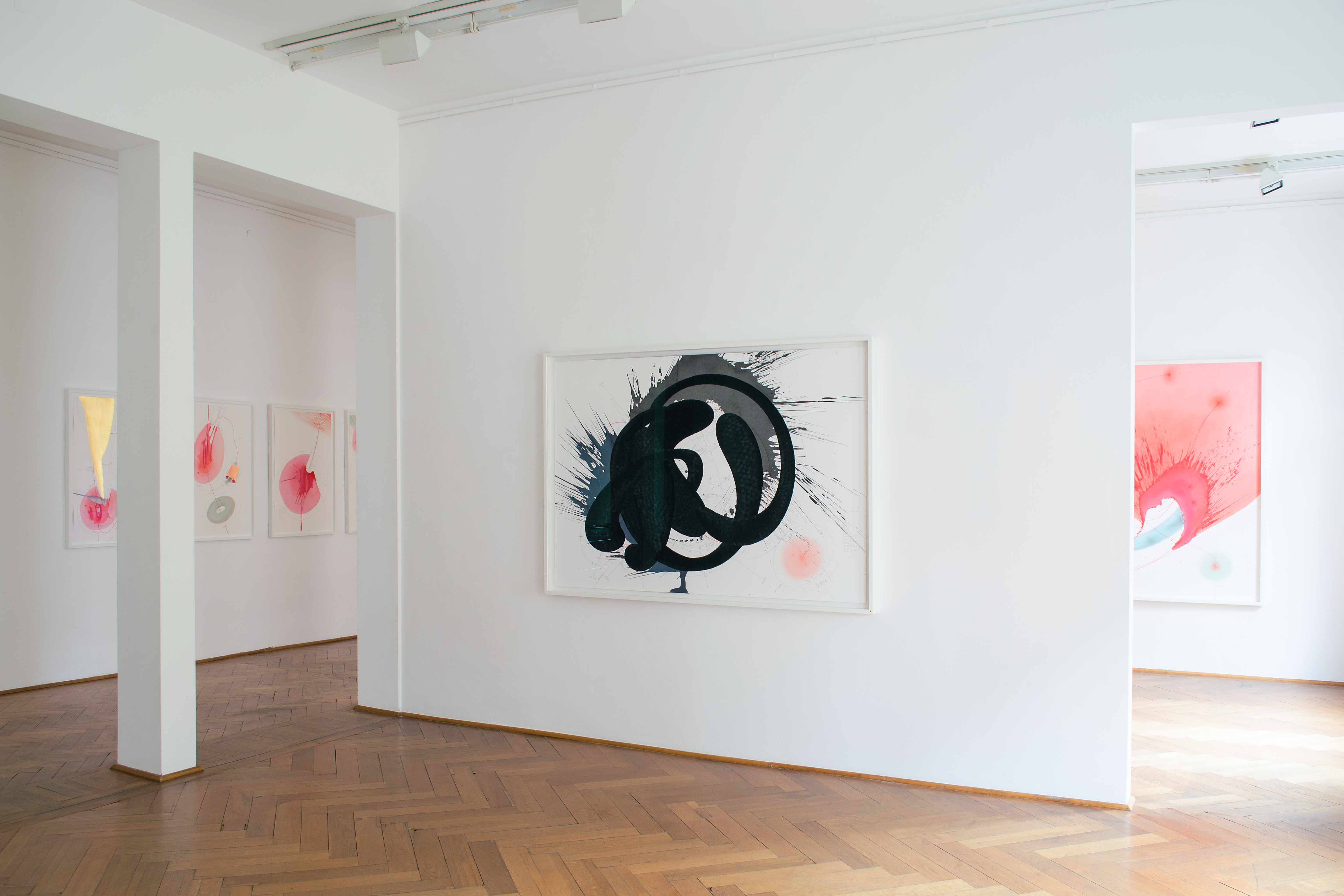
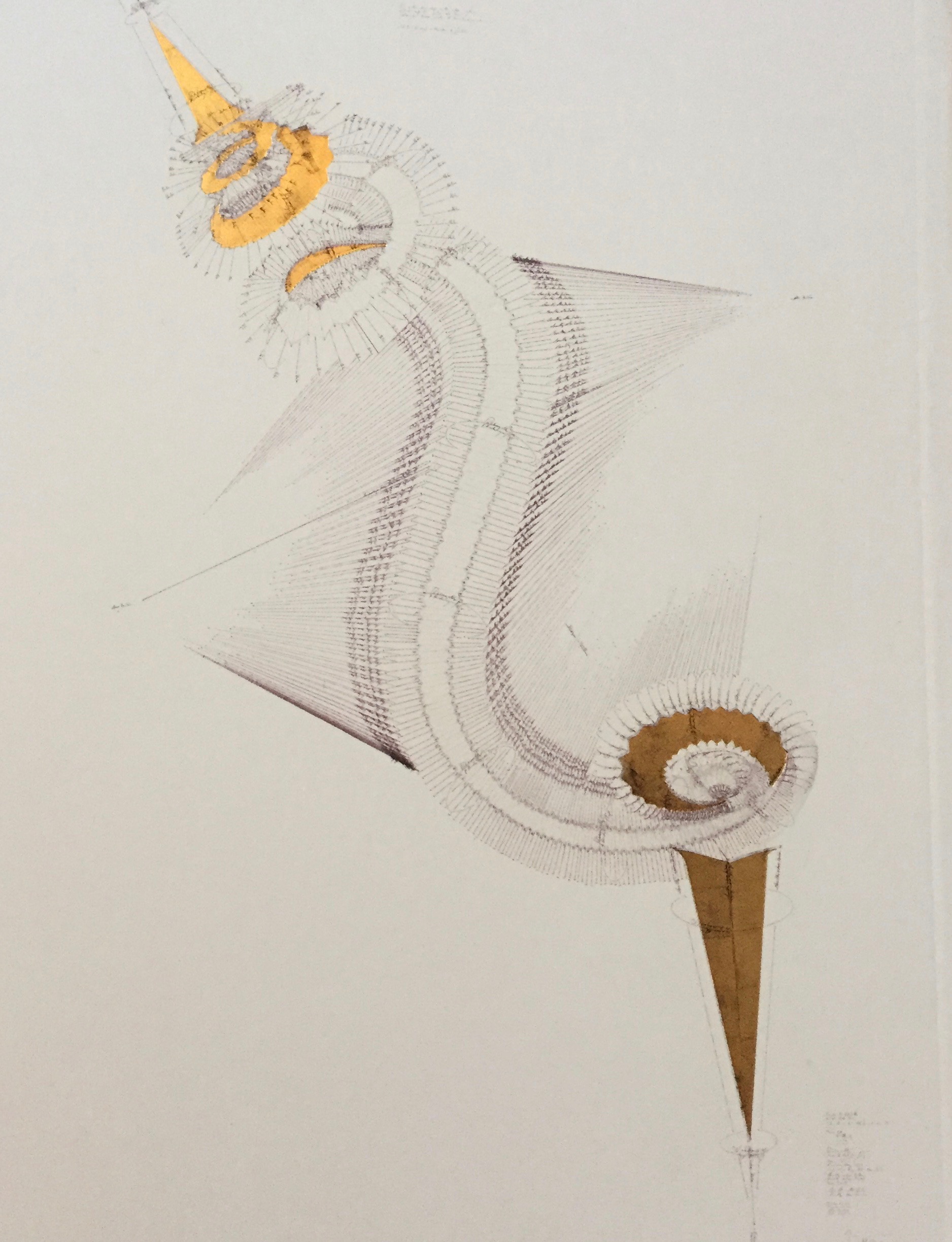
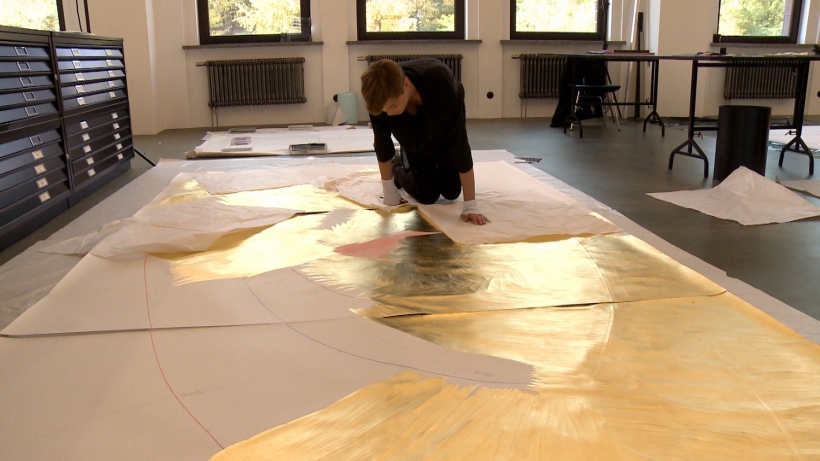
In her new exhibitions at both Klüser galleries, Jorinde  Voigt (b.1977)  shows three new groups of works; you may see the series “Now, Hauro and Synchronicity”. ….” It is getting very difficult to call Jorinde Voigt’s current works drawings; in more general terms, they should perhaps be seen as pictorial and imaginary worlds. … Voigt’s typical grid of lines, numbers and written words creates the base for emergent, exuberant, scarcely assignable constellations of colours and forms. The method of depiction varies from rough to fine, abstract to representational, painterly to plastic. The wealth of materials here seems to know no bounds: gold leaf, white gold, ink, poster paints, oil chalks, pastels, pencil, and feathers dyed black.” Lisa Sinterman, Nov. 2015)

DSC_0021

installation view “Jorinde Voigt Now”, Klüser galleries, München, photo@Jamie Fischer

DSC_0189

installation view “Jorinde Voigt Now”, Klüser gallery,München,  photo@Jamie Fischer

Voigt is best known for her graceful spiralling arcs and parallel looped lines, stretched and interwoven, bursting across the page as if caught up in a strange temporal chain reaction.

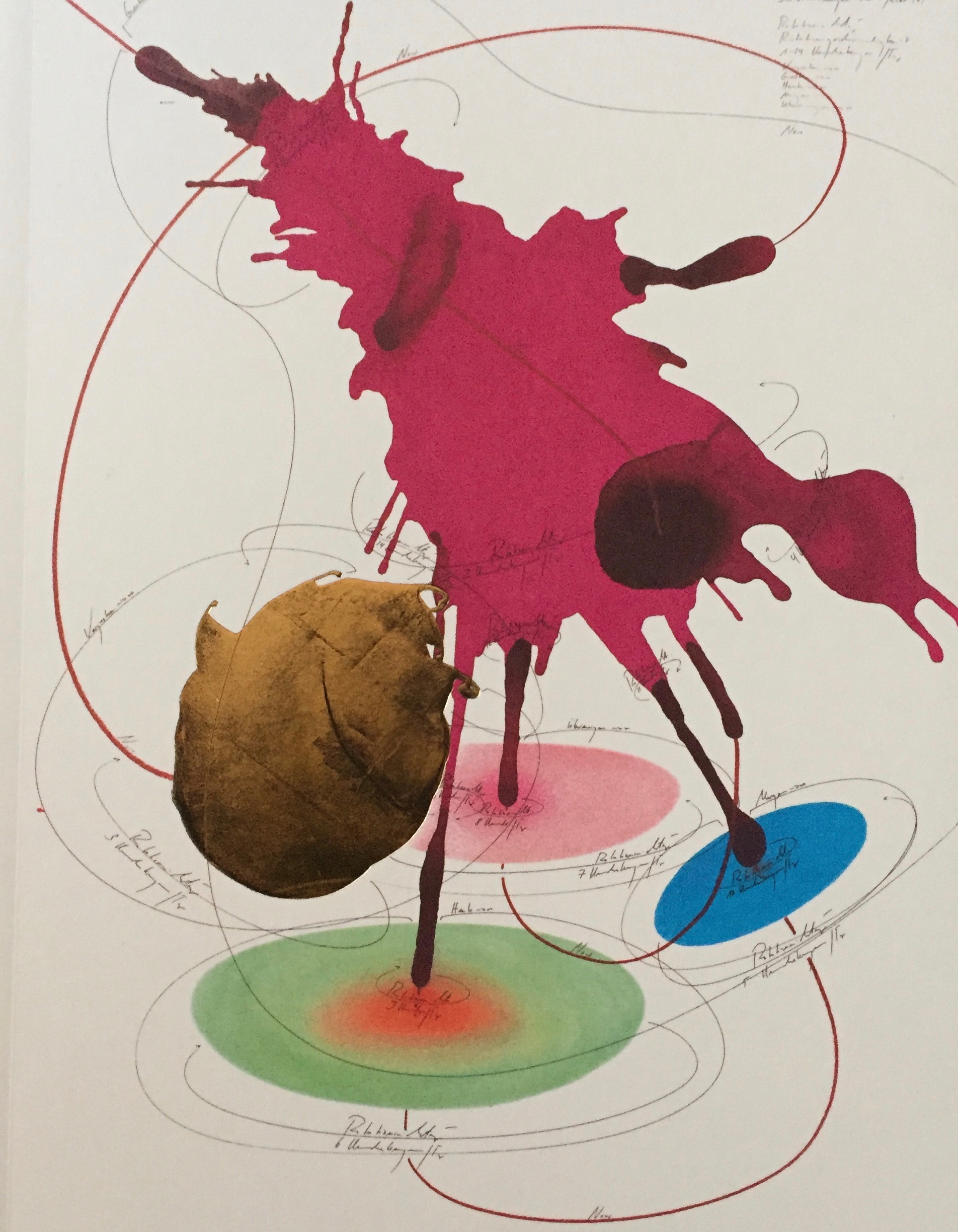
“…..her imagery has specifically conjured graph-like linear systems—based on such exact references as musical scores, sound waves, linguistic structures, and mathematical algorithms—then these new drawings, inspired by Luhmann’s nonlinear writing, evoke a more biological take, as they track the evolution from one literary moment to the next. Voigt collages metallic leaf in varying tones alongside swaths of marigold, coral, and azure to create unusual floating forms with an illustrative impishness; the resulting pictures resemble space-age landscapes occupied by mercurial creatures. Her works are innately didactic: She carefully structures the bulbous shapes, framing each with a draftsman’s delicate, curved lines and handwritten text annotations. Ultimately, her drawings function as cognitive maps, as meaning multiplies from passages of text and grows into webs of association. As Voigt regards Luhmann’s discourse on societal structures enabling love, her drawings delineate her own way of reconciling information through whimsical interpretation, shaping an elegant visual reality from the tangles of language”. (Artforum- June 13th, 2014
Critics’ Pick, By Anne Preintnieks)

I have been admiring Jorinde Voigt  some years back when David Nolan, a wonderful gallerist/New York was explaining to me her amazing drawings  at Basel art fair, as one could read as music compositions.  Since I moved and live in Munich and go often at the opera, I am once again mesmerised  with Jorinde’s great   drawings in  the Bayerische Staatsoper books , created in the most elegant way by  Mirko Borsche,  Germany’s most respected art directors. I love Jorinde Voigt’s work.

IMG_9187

Jorinde Voigt ‘Beobacktungenim Jetzt (2) Berlin 2015 -(front cover) on the book (Bayerische Staatsoper 2015/2016 Vermessen)
IMG_9188
Jorinde Voigt, ‘Douglas R. Hofstadter, Gödel , Escher, Bach,”Die Air in G”, Berlin 2013 (back cover) on the book  (Bayerische Staatsoper 2015/2016 Vermessen)

Metropolis/ArteTV steps in Jorinde Voigt’s studio in Berlin (april 2015, published september 2015)

voigt_kobalt_05

Atelier: Jorinde Voigt © ZDF/Kobalt


…Peculiar, sometimes breathtaking forms, from a gold-and-red double helix to floating clouds and virus-like spiky balls, are ringed by obsessive glosses on what Voigt, following Luhmann, calls the “codification of intimacy.” You won’t make out every detail, but her superb drawings are far more than the sum of their sometimes inscrutable parts. (The New Yorker- June 3rd, 2014, for the exhibition at David Nolan in New York) DSC_0027

 installation view “Jorinde Voigt Now”, Klüser gallery,München, photo@Jamie Fischer


14/11/2015 – 21/02/2016  exhibition of Jorinde Voigt at Kunsthalle Krems in Austria curated by Stephanie Damianitsch.  ….. Pop songs or pieces of classical music, temperature profiles, wind directions, arcs of light are systematically analyzed by the artist, as are acoustic impulses, angles of view, or colors of individual plants and the contents of philosophical texts.


… a new film about love “Carol” UK cinemas release on 27th November

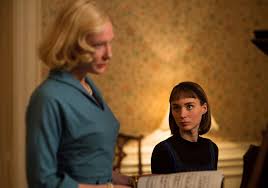
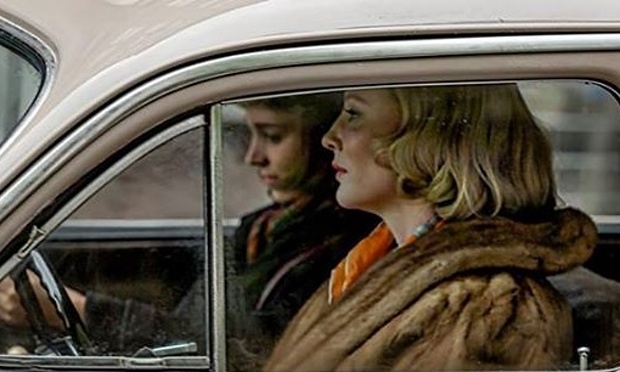
……extraordinary performances we have come to expect from Cate Blanchett, who is paired with the no less impressive Rooney Mara as Therese in the director Todd Haynes and the writer ­Phyllis Nagy’s mesmerizing and moving film adaptation of  Patricia Highsmith’s anxiety-laced romance “Carol“. (Frank Rich,’Loving Carol‘) at  New York Magazine,  November 15, 2015) producer; Dorothy Berwin.

In early December 1948, Patricia Highsmith took a Christmas-season temp job as a shopgirl in the children’s toy department at Bloomingdale’s. Highsmith, a 27-year-old native of Fort Worth, Texas, and a 1942 Barnard graduate, was a budding novelist who had been supporting herself for five years as a freelance action-comic-book writer, concocting stories for lesser superheroes like Spy Smasher and Black Terror — a rare gig for a woman in the golden age of comics. 

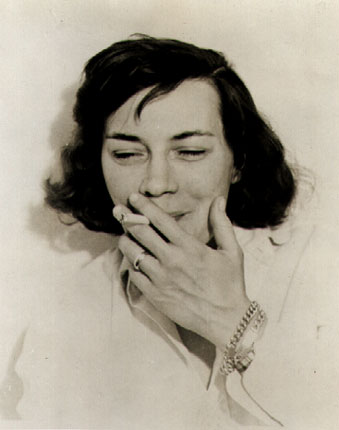
Pathigh                                                                                           Patricia Smith, publicity photo, 1966

Patricia Highsmith (19 January 1921 – 4 February 1995) was an American novelist and short story writer, known for her psychological thrillers, which led to more than two dozen film adaptations. Her first novel, Strangers on a Train, has been adapted for stage and screen numerous times, notably by Alfred Hitchcock in 1951. In addition to her series with Tom Ripley as protagonist, she wrote many short stories. Michael Dirda observed, “Europeans honored her as a psychological novelist, part of an existentialist tradition represented by her own favorite writers, in particular Dostoyevsky, Conrad, Kafka, Gide, and Camus.”[2]

51lL4Q+YU+L._SX322_BO1,204,203,200_

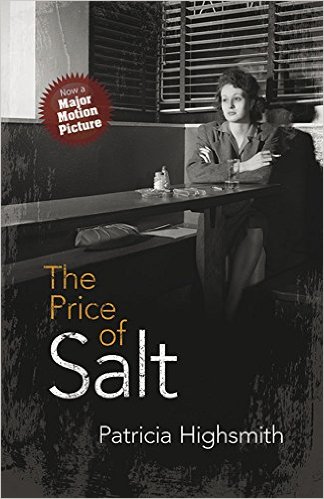
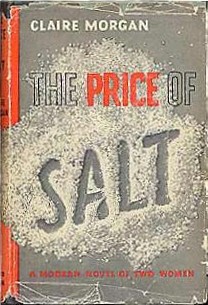
The Price of Salt (later published under the title Carol) is a 1952 romance novel by Patricia Highsmith, first published under the pseudonym Claire Morgan.

PriceOfSalt

“Carol’  is certain to bring new readers to Highsmith, and once they dig in, they will be ravenous for more.

Highsmith was a lifelong diarist. She left behind eight thousand pages of handwritten notebooks and diaries.[6] After graduating from college, she started applying for work in various magazines, such as Harper’s Bazaar, Vogue, The New Yorker, Mademoiselle, Good Housekeeping and others, carrying “impressive” recommendations from “highly placed” professionals, and was getting rejected.[4] Her short stories started appearing eventually in Ellery Queen’s Mystery Magazine, in the early 1950s.

f014bc63-deb3-443d-9039-16a60e0c1f15-bestSizeAvailable

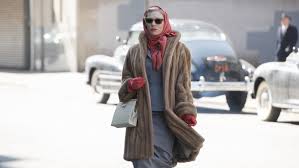
The simple use of color for Blanchett and Mara’s clothing says plenty about the characters, especially in the silences the movie wanders into for extended periods. If there’s one complaint, and it’s just a personal preference, it’s the use of filters. (Lesley Coffin, movie Review, ‘Carol’ is a Beautiful, Composed Slow-Burn)

….But then you look at a film like Carol, and peer through the windows it opens onto both cultural history and actual history, and you realize how much we don’t know about a past that unfolded in the shadows until not very long ago. You also start to wonder how many cultural treasures and figures are buried in that antiquity, invisible to most of heterosexual America and perhaps to much of younger gay America, too. Highsmith’s “lesbian book,” its million paperback copies of six decades ago notwithstanding, is just such a case.(Frank Rich, ‘Loving Carol’at New York Magazine,  nov 15, 2015) 

…..Throughout, Haynes’s direction translates Highsmith’s hushed, spare, unnerving narrative voice into visual terms reminiscent of James Stewart’s feverish fixation on Kim Novak in Vertigo. (Frank Rich, ‘Loving Carol,at New York Magazine)

images

20-minute interview, Cate Blanchett, Rooney Mara, director Todd Haynes and screenwriter Phyllis Nagy talk about making the 1950s-set romantic drama Carol, adapted from the novel by Patricia Highsmith
Anatomy of a scene “Carol” at New York Times/Culture

images-1

What Haynes gets so perfectly right with this film really is the very specific sense of time and place, the urban life of those torn between domestic life and beat culture, before public and vocal feminist and LGBT activism. (Lesley Coffin, movie Review)

The greatest credit needs to be addressed to the producer of ‘Carol’, Dorothy Berwin, a dynamic London-born, New York based producer who as the Hollywood Reporter says, ‘has never been one to chase trends. She began developing the Cate Blanchett-Rooney Mara love story Carol, another TWC title, nearly two decades ago — long before there was a box-office appetite for such fare…

On the Q of Hollywood Reporter to Dorothy Berwin, “You spend 19 years developing the Patricia Highsmith novel ‘Carol’. Why did it take so long? Dorothy Berwick answers; ” I was working on it with (playwright) Phyllis Nagy, who wrote the script and kept refining it. And Todd Haynes worked to make it his own, though it was very much Phyllis ‘ script. I used to love pitching it as;  “It’s 1950s New York. Grace Kelly walks into department store and falls in love with Audrey Hepburn.”


Generated by IJG JPEG Library

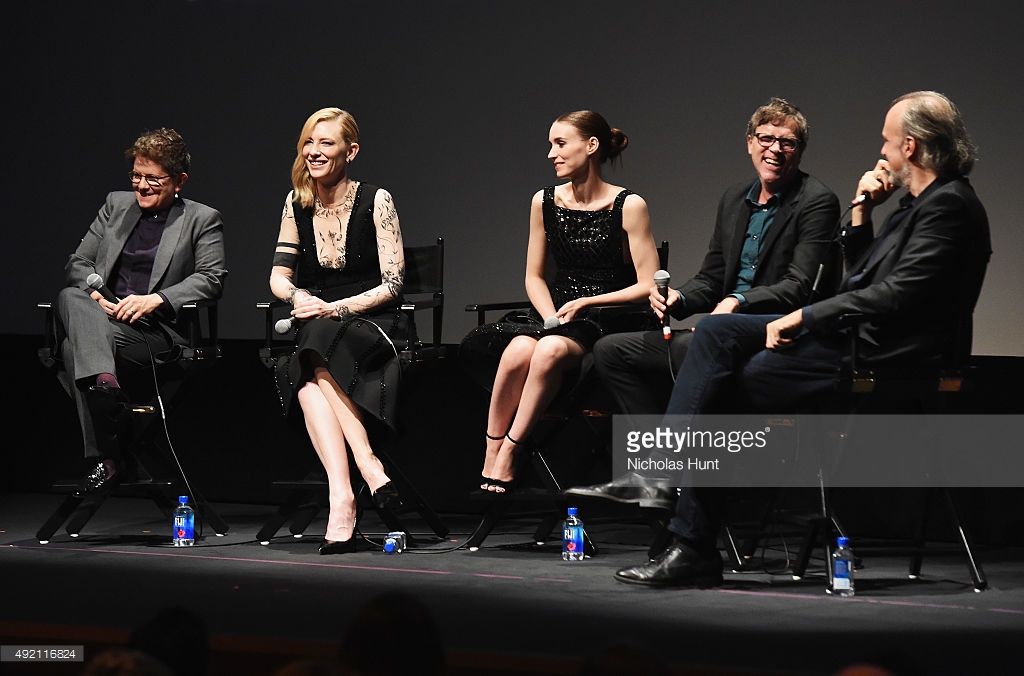
Phyllis Nagy, Cate Blanchett, Rooney Mara, Todd Haynes and Kent Jones attends a Q&A for the film ‘Carol” during the 53rd New York Film Festival at Alice Tully Hall, Lincoln Center on October 8, 2015 in New York City


IMG_9064 (1)

IMG_9063

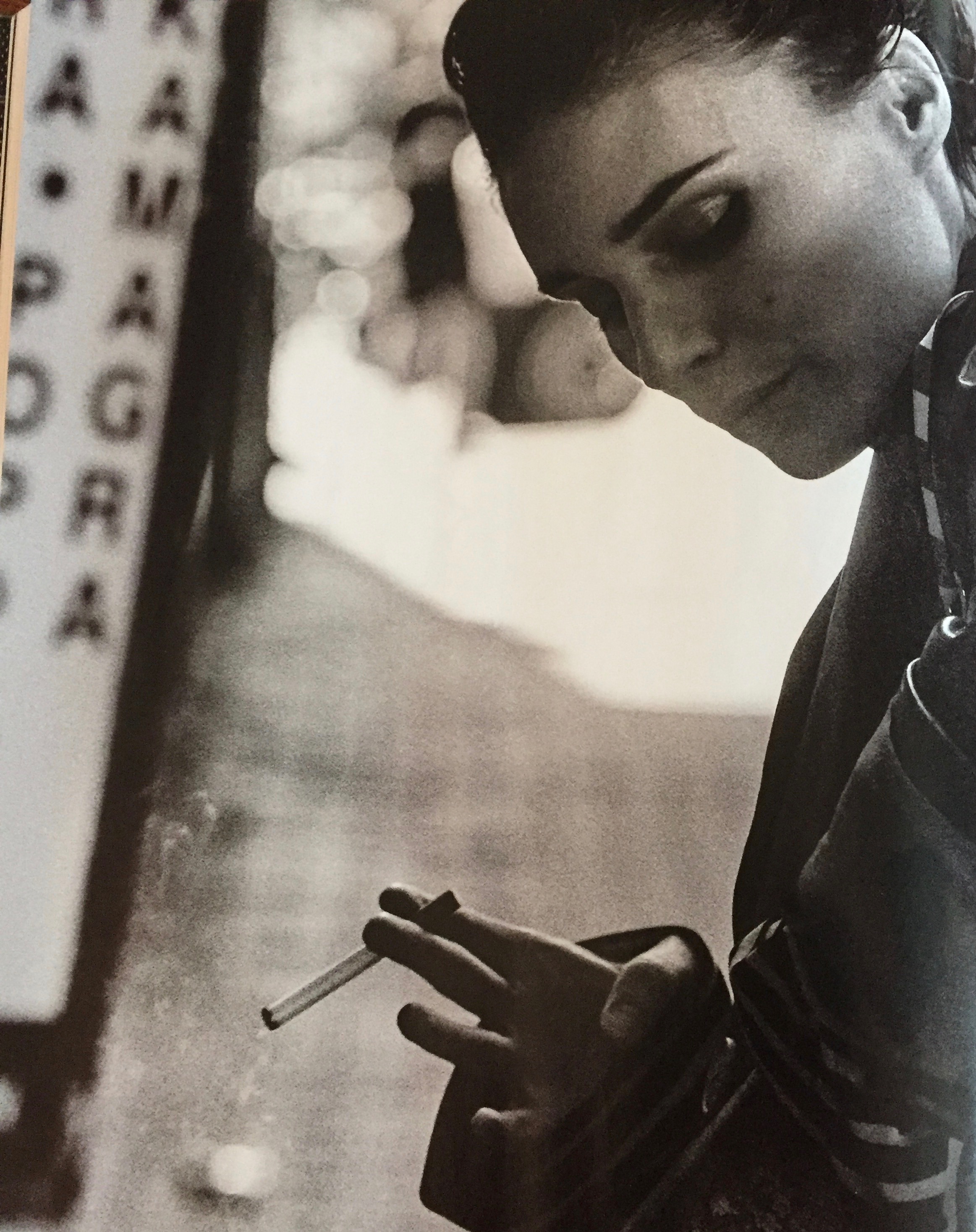
Rooney Mara, beautifully  photographed by Peter Lindberg at the recent (December 2015/Jan 2016) German  Interview

Director Todd Haynes on film Carol/BBC radio /Film Programme,’Radio in Four’, 6min


‘Munich; ‘Aida’ at Bayerische Staatsoper

csm_12_0188dde15c

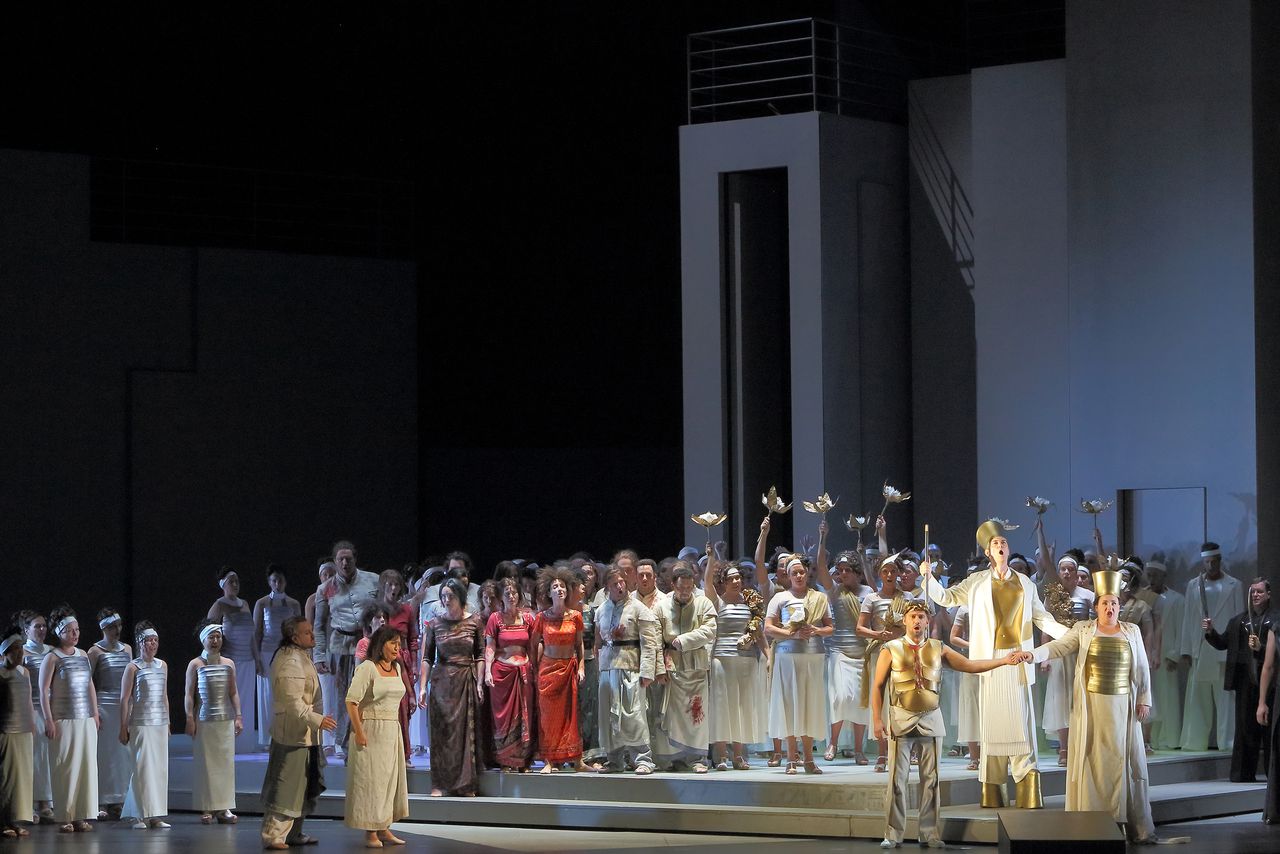
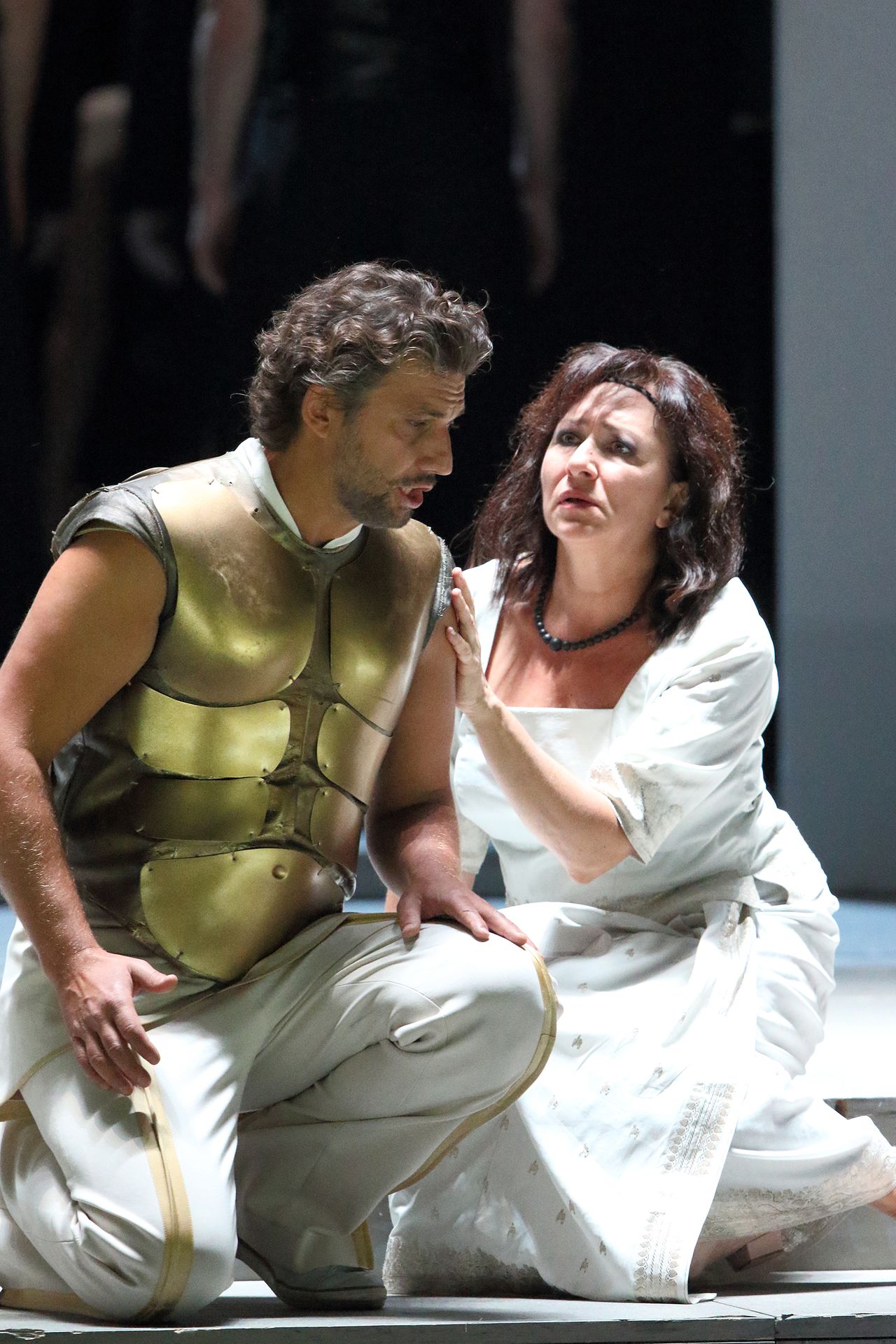
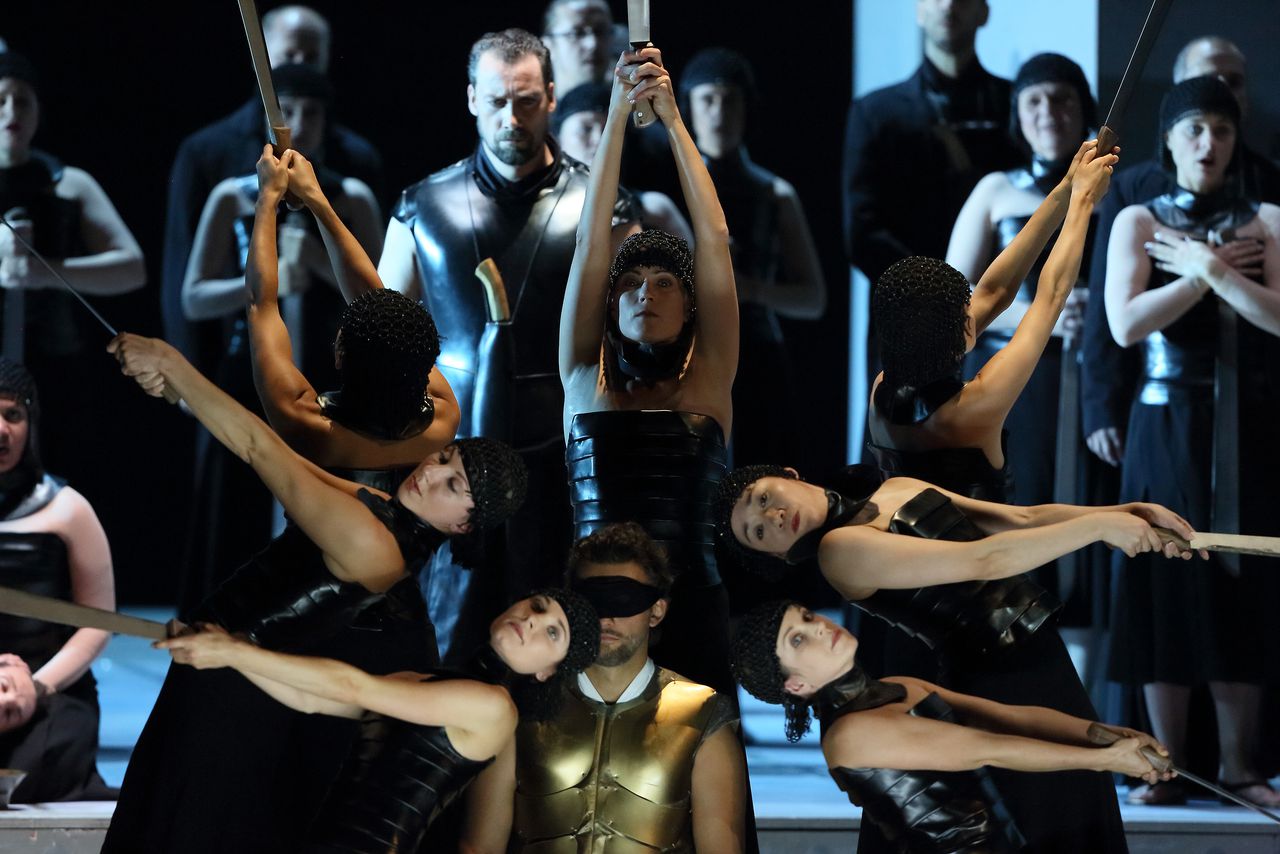
An amazing  night at the opera (monday, sept 29th)  “Aida” at Bayerische Staatsoper, opera in four act, by Giuseppe Verdi (libretto by Antonio Ghislanzoni after Auguste Mariette Bey and Camille du Locle) and in the role of Ramades the amazing Jonas Kaufman.

A work that gravitates back and forth between the grandest of grand opera and intimate drama. Over and over again, we hear the sound of singing behind walls. Don’t these walls also have ears? The pharaoh’s daughter Amneris is to marry. She has been offered to the officer Radames as a reward for his victory in battle over the enemy. Whom would Aida love if she were not a war prisoner? … The effect of state power and war on human relationships. (Bayerische Staatsoper, press)

Fabulous performances  by Krassimira Stoyanova as Aida and Anna Smirnova as Amneris. Ain Anger as Ramfis and Franco Vassallo as Amonastro

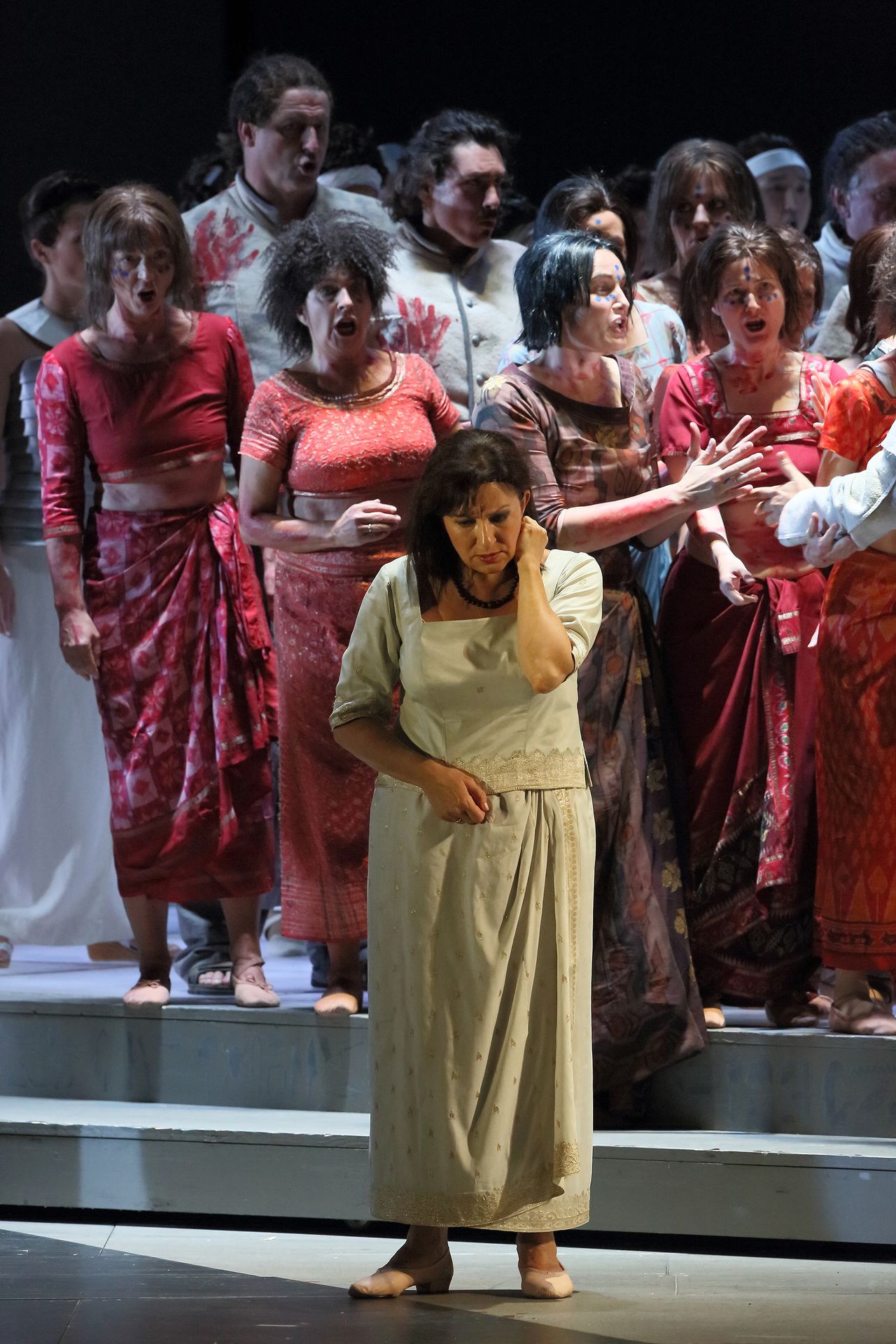
csm_10_e32ac7b09f@opera media center: Anna Smirnova (Amneris) and Krassimira Stoyanova(Aida)
csm_07_448abed44d@Bayerische Staatsoper media center:Jonas Kaufmann (Radames) and Krassimira Stoyanova (Aida)
Musikalische Leitung: Dan Ettinger; Kostüme: Ilse Welter-Fuchs; Choreographische Arbeit : Valentí Rocamora i Torà ;
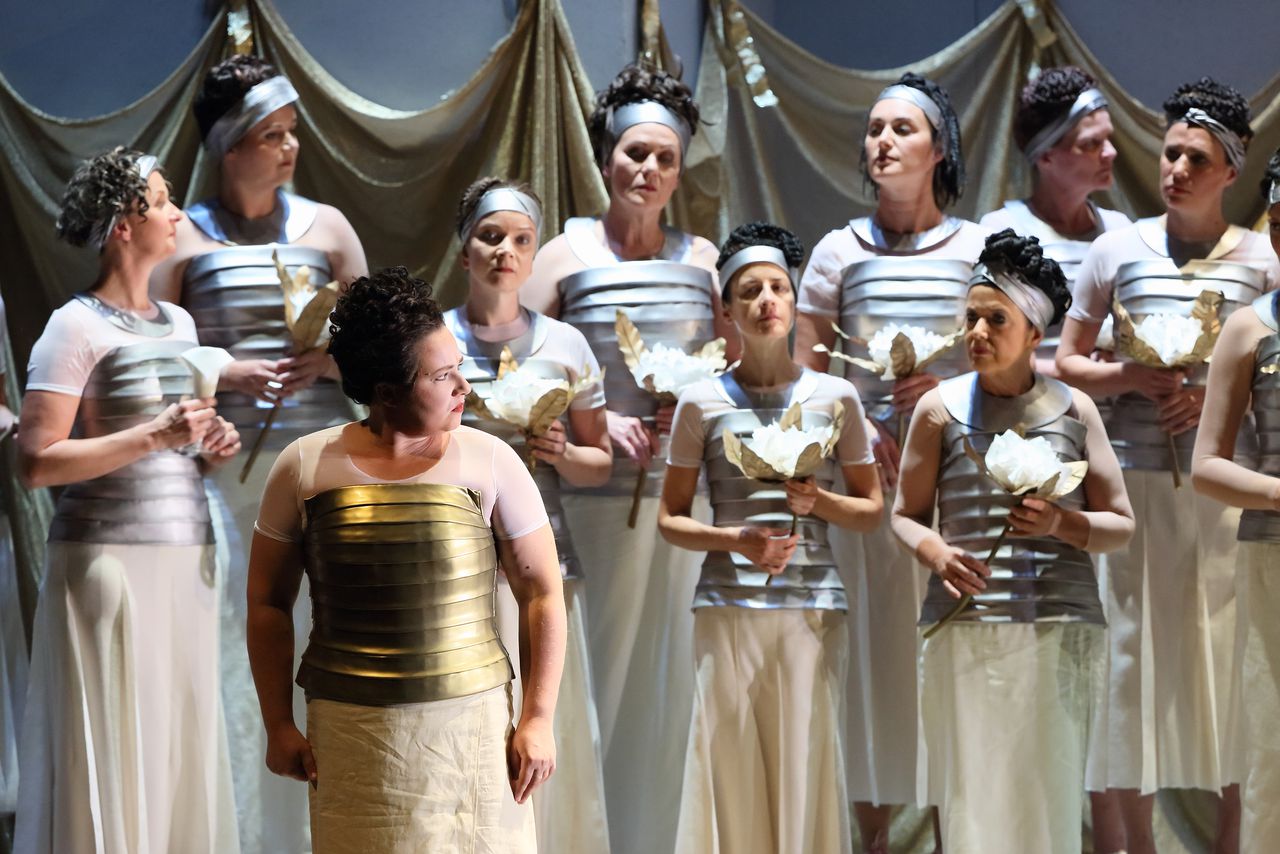
csm_04_e1bff066a6@Bayerische Staatsoper media center : Ain Anger (Ramfis), Jonas Kaufmann (Radamès), Chor und Opernballett der Bayerischen Staatsoper

Act Two: Amneris has the slaves dance for her and dress her for the festivitiy with which the victorious army will be welcomed. She tricks Aida into admitting her secret love. Amneris taunts her slave with the fact that she is her rival and this makes Aida both proud and afraid at the same time. In order to demonstrate her superiority, Amneris orders Aida to accompany her to the festivities……

csm_05_b81f70dc32@Bayerische Staatsoper media center :Krassimira Stoyanova (Aida), Chor der Bayerischen Staatsoper

Act Three
On the eve of her wedding, Amneris is taken to the Temple of Isis by Ramfis. She is to prepare herself for marriage by praying there. Aida and Radamès have arranged to meet not far away from the temple. Amonasro, who knows of her secret love, appears and uses his knowledge to put Aida under pressure to discover from Radamès the Egyptians‘ plan for the the next battle. When she refuses he reminds her of her duty to her country and threatens to disown her as his daughter…

csm_06_a136d23cf4@Bayerische Staatsoper media center: Jonas Kaufmann (Radamès), Marco Spotti (Der König), Anna Smirnova (Amneris), Chor der Bayerischen Staatsoper

Act Four
In spite of the fact that he is a traitor, Amneris still loves Radamès and wants to save his life at all costs. She wants to beg for mercy for him if he will only give up Aida. But Radamès spurns her, all he wants now is to die and he is led before the priests‘ court, accused of being a traitor. He remains silent in the face of the priests‘ accusations and is condemned to be locked up alive and left to die in a dungeon under the temple. Amneris curses the priests and maintains again and again that Radamès is innocent.
Radamès is awaiting death when he sees Aida, who has crept in to be with him. She wants to die in his arms. In their imagination they see the heavens opening to them. Aida collapses in his arms. Amneris begs for peace for Radamès.

csm_17_517ef497d4@Bayerische Staatsoper media center: Krassimira Stoyanova (Aida), Jonas Kaufmann (Radamès)

IMG_7642

IMG_7641

IMG_7635

photos@VK
csm_09_e497548ce8@Bayerische Staatsoper media center;Anna Smirnova (Amneris), Chor der Bayerischen Staatsoper


Munich; a melancholic sunday afternoon reading “Το Παραμυθι της Βροχης” της Τεσυ Μπαιλα

A melancholic Sunday afternoon in Munich glancing again this marvelous book, “Το παραμυθι της βροχης” της Τεσυ Μπαιλα, εκδοσεις  Δοκιμακης.

11902390_933843583323943_614799817886400499_n

«Μια φορά κι έναν καιρό», άρχισε να σιγοψιθυρίζει η Χριστίνα, «ήταν μια όμορφη κοπέλα. Φορούσε ένα καφέ φόρεμα και περπατούσε μόνη της σ’ ένα κάμπο. Την έλεγαν Γη. Είχε περάσει πολύς καιρός από τότε που είχε για τελευταία φορά καρπίσει. Τότε που καταπράσινα χορτάρια είχαν φυτρώσει στο μακρύ της φόρεμα και κόκκινες παπαρούνες είχαν γεμίσει όλο τον ποδόγυρό της. Μέσα στη γη, κρυμμένο βρισκόταν ένα σποράκι, ένα τόσο δα σποράκι, που όμως το καημένο δεν μπορούσε να βλαστήσει. Χρειαζόταν νερό πολύ, μια γερή κατεβασιά νερού που θα πλημμύριζε το χώμα της γης και θα το έκανε να ζήσει. Ένα περαστικό συννεφάκι άκουσε το παράπονό του. Στάθηκε πάνω από το χώμα και το ρώτησε γιατί κλαίει. Το σποράκι τού είπε τι συνέβαινε. Με λίγο νερό θα μπορούσε να γίνει ένα κατακόκκινο λουλούδι και να στόλιζε τη Γη. “Και γι αυτό στενοχωριέσαι;” το ρώτησε το συννεφάκι. “Περίμενε και θα δεις”. Έβαλε τα δυνατά του το σύννεφο να κλάψει, σφίχτηκε, ξανασφίχτηκε, φούσκωσε τα μάγουλά του, κόντεψε να σκάσει, μα τίποτα δεν κατάφερε. “Τα βλέπεις;” είπε το σποράκι. “Τίποτα δε γίνεται”. Μάταια προσπαθούσε για ώρα το σύννεφο. Δεν κατάφερνε να κλάψει. Άρχισε να θυμάται πράγματα που είχε δει από ψηλά και το είχαν στενοχωρήσει, μήπως και καταφέρουν τα δάκρυα να βρουν το δρόμο τους προς τη γη. Και πάλι τίποτα. Εκείνη την ώρα έφτασε κοντά στο σύννεφο ένα άλλο συννεφάκι. Το αδελφάκι του ήταν. Ήταν γκρίζο και με δυσκολία μπορούσε να κινηθεί στον ουρανό. “ Τι κάνεις εσύ εδώ;” ρώτησε απορημένο που τόση ώρα το έβλεπε να στέκεται εκεί αμετακίνητο. Το λευκό συννεφάκι τού εξήγησε τι συνέβαινε, του είπε για το σποράκι, του είπε για το κλάμα που δεν ερχόταν.
“Θα σε βοηθήσω εγώ”, του είπε κι άρχισε σιγά-σιγά να κλαίει με ευκολία. Το σποράκι δέχτηκε το νερό που το γκρίζο σύννεφο του χάριζε και μέσα στη δροσιά που εισχώρησε στο χώμα άρχισε να φουσκώνει, να φουσκώνει όλο και πιο πολύ, ώσπου στο τέλος έσκασε, κι ένα μικρό, πράσινο φυλλαράκι, σαν κεραία φύτρωσε στο κεφάλι του. Λίγο καιρό μετά μέσα από το χώμα ξεπετάχτηκε ένα τόσο όμορφο, κόκκινο λουλούδι που άλλο όμοιό του κανείς δεν είχε δει. Το φόρεμα της Γης είχε γεμίσει μαργαρίτες, παπαρούνες και τριαντάφυλλα αλλά όλοι μιλούσαν για το παράξενο λουλούδι που είχε φυτρώσει. Τα συννεφάκια αγκαλιασμένα στον ουρανό καμάρωναν, και το λουλούδι λικνιζόταν στον άνεμο που απαλά φυσούσε τα φύλλα του».

Από το ” παραμύθι της βροχής’ της Τέσυ Μπάιλα!

51

Η Τέσυ Μπάιλα κατάγεται από τις Κυκλάδες;  γεννήθηκε στον Πειραιά. Σπούδασε Ιστορία Ελληνικού Πολιτισμού και μετάφραση Λογοτεχνίας. Ασχολείται με τη φωτογραφία και ατομικές της εκθέσεις έχουν φιλοξενηθεί στο πανεπιστήμιο Gakugei της Ιαπωνίας και στην Αθήνα. Είναι συντάκτρια του λογοτεχνικού περιοδικού Κλεψύδρα. Παράλληλα δημοσιεύει δοκίμια σε εφημερίδες και περιοδικά. Κυκλοφορούν τα βιβλία της: Το πορτρέτο της σιωπής, εκδ. Έναστρον, ‘Το παραμύθι της βροχής’, εκδ. Δοκιμάκης και ‘Το μυστικό ήταν η ζάχαρη’ και “Ουίσκι μπλε’ εκδ.Ψυχογιός.

11953189_933823886659246_6632716132931727146_n

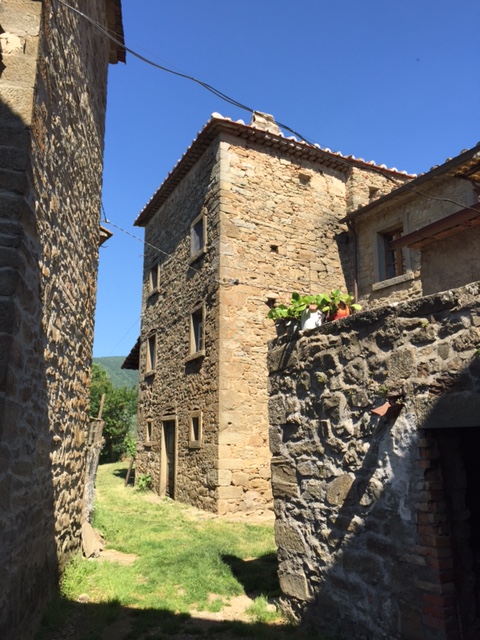
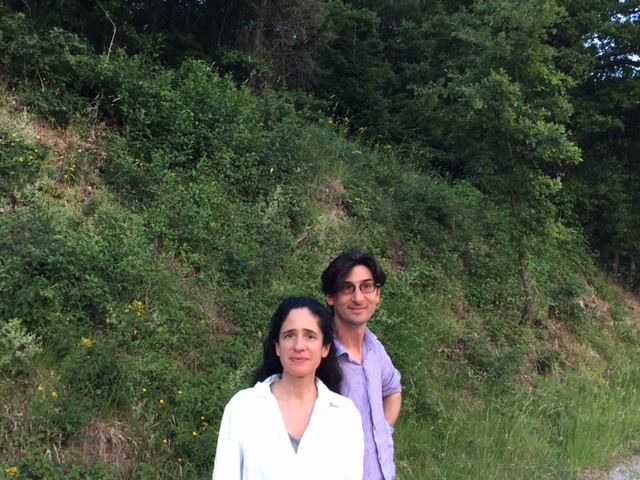
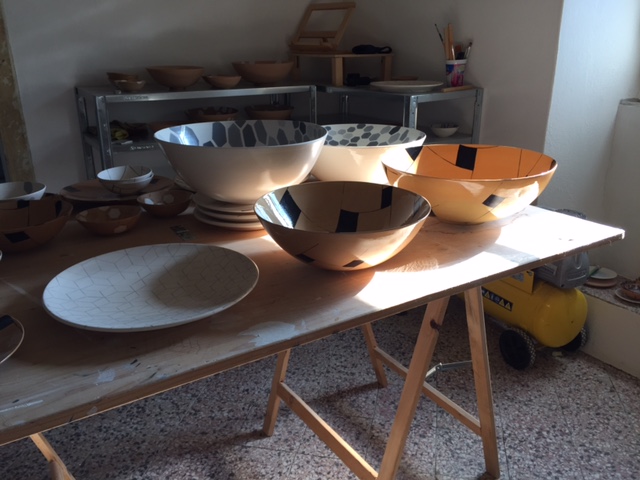
Toscana; Teverina mountains_Cortona: Deanna Maganias and Francesco Nevola’s house and studio

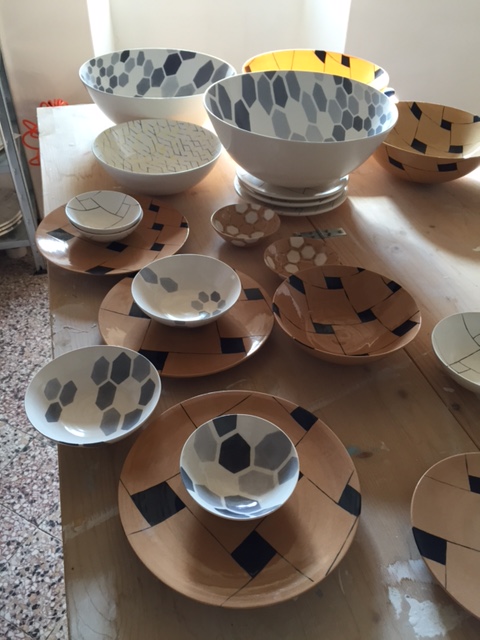
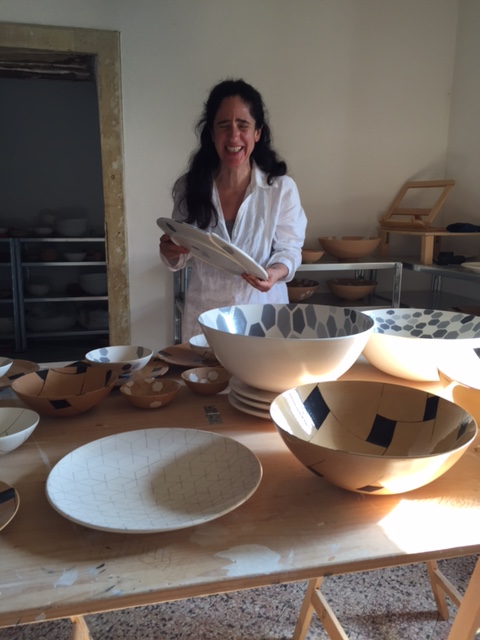
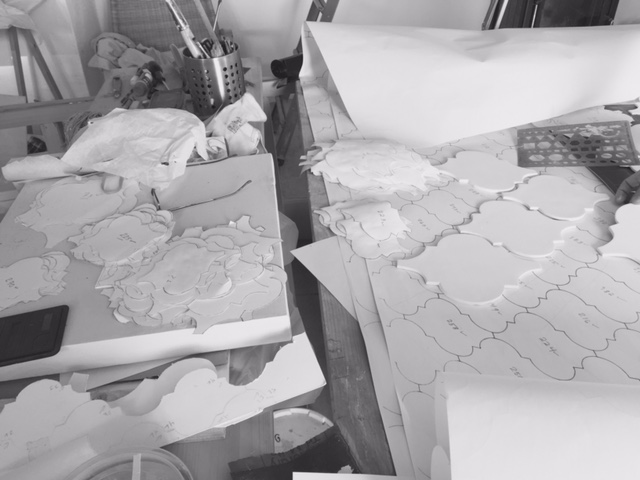
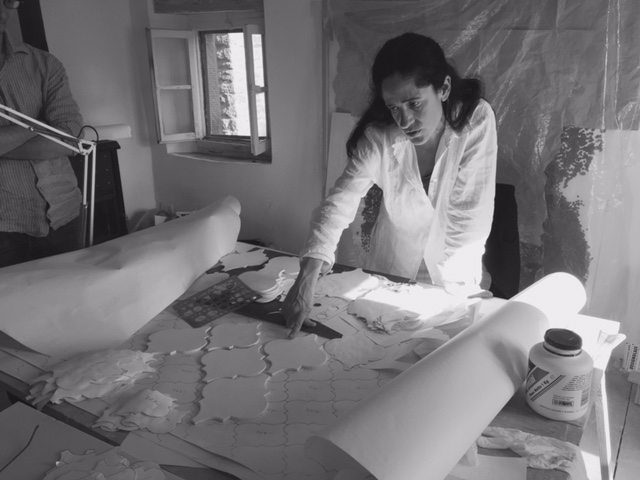
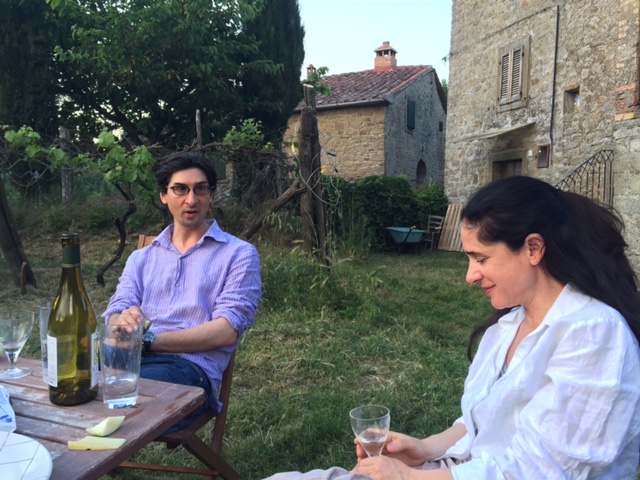
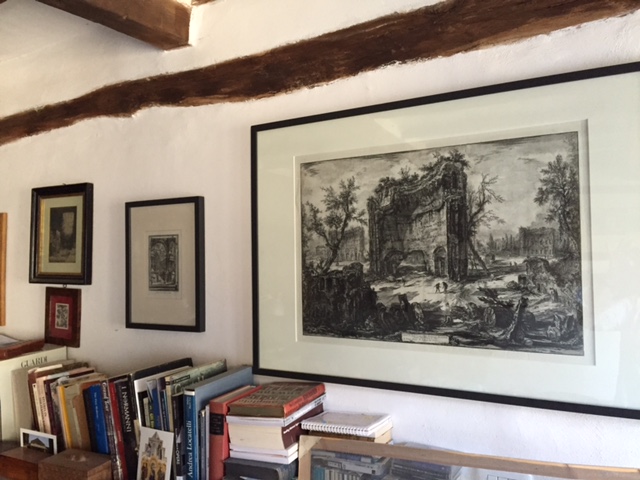
An inspiring and enjoyable driving day from Maremma to Teverina mountains to visit my my lovely friends, Deanna Maganias, a great sculptor, painter and pottery porcelain maker and her partner Francesco Nevola, a fabulous scholar of Piranesi.

IMG_4750

IMG_4718

IMG_4668

IMG_4672

IMG_4674

IMG_4678

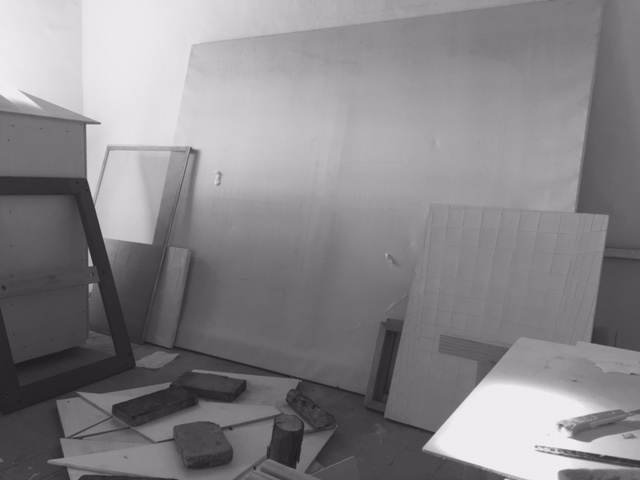
Deanna’s studio is under hot steam preparation for her next art exhibition, October 2015 at the Rebecca Camhi gallery in Athens.

FullSizeRender copy 2

FullSizeRender copy 3

FullSizeRender copy 4

FullSizeRender copy 5

IMG_4698

My days were full with great challenging conversations over pottery, architecture and philosophy and food and fabulous italian wine; their  fabulous old house is located in a small community of a village of 4 houses ;  while many rooms and additions still remain to finish by the own hands of Francesco; hard working lovely  Francesco and Deanna; few years ago both were running an  art gallery center in Cortona, with wonderful young  artists the  Cortona, Teverina Fine Arts. where their intellect and energy contributed largely to  the regional  art community.

IMG_4710

IMG_4730

FullSizeRender copy 7


slide_piranesi_eng-1

Giovanni Battista Piranesi. The Grotteschi” the early years 1720 to 1750 , Ugo Bozzi Editore, Roma 2009

“The suite of etchings called by Piranesi the Grotteschi, published in 1750 in the compilation volume Opere Varie, have for more than two-hundred and fifty years eluded interpretation. Long recognised by scholars as being ‘touched by the artist’s tragic imagination’, more recent ‘attempts to reduce the Grotteschi collectively or individually, to a specific, hermetic philosophical system have met with little success…’ In this volume these four magnificent prints are viewed as pivotal works in Piranesi’s early output and a comprehensive narrative interpretation of their meaning is proposed adopting an approach, analogous to that applied by Wilton- Ely to explain the iconography of the Piazza dei Cavalieri di Malta, or that used by Gavuzzo-Stewart in her clear penetration of the Carceri. This study which follows step-by-step Piranesi’s youthful artistic and intellectual endeavours between the Venice of Scalfarotto and Tiepolo and the Rome of Gian Battista Nolli, Giovanni Gaetano Bottari and the enlightened Corsini court proposes the Grotteschi as both testament and culmination of his first decade’s experiences. For Piranesi the years upto1750 were particularly fecund: they are marked by apprenticeships in Venice and Rome, by economic difficulties, by successes and failures, and incessant travels in search of vocational fulfilment. In following these important years we are able to trace how they contribute to Piranesi’s rapid intellectual development and to his evolution of an original, vital, graphic idiom that finds its first mature expression in the Grotteschi universally recognised as the artist’s most ‘venetian’ works. Considered through the viewing filter of the paragone the Grotteschi are presented as Piranesi’s expression of direct rivalry with the great etching masters of the past: from Mantegna, Durer and Rembrandt to Salvator Rosa, Castiglione, della Bella and Tiepolo, as well as his bid to establish his own place among their revered ranks. These works also represent the culmination and conclusion of a series of experiments, protracted over the course of a decade, in which Piranesi appears to have attempted to develop the picturesque capriccio of ruins into a type of image capable of bearing specific meaning, thereby giving visual form to his idea of ‘ruine parlanti’. In conclusion, following a close reading of the visual and textual sources that inform Piranesi’s Grotteschi, the impact of these etchings is assessed on the artist’s work of the 1760s, in particular on his only built edifice, the church of the Knights of Malta, Santa Maria del Priorato, which is the culmination of a second phase of intense creativity in the artist’s career”.  text @Francesco Nevola

IMG_4699

all photos@VK

Keith York City

History made interesting

VK

visits on art, design, architecture and literature

Eclectic Trends

Interior Design and Lifestyle Trends

maria sarri Art projects

#art_projects, #public_art, #site_specific, #post_colonial, #urban_art

Η καλύβα ψηλά στο βουνό

Σε κοίταζα μ' όλο το φως και το σκοτάδι που έχω

tangledjourneys

A personal perspective on human interest stories from an American journalist living abroad

An Englishman in Berlin

Blog about life and culture in Berlin, Germany

nefeliatelier

bits and pieces that interest me

A R T L▼R K

An Alternative Cultural Daybook

Venetian Red Art Blog

Art, the resplendent light that illuminates the world

The School Of Life

visits on art, design, architecture and literature

IGNANT

visits on art, design, architecture and literature

βλέμμα

visits on art, design, architecture and literature

λεξήματα

visits on art, design, architecture and literature

flaneries

This WordPress.com site is the bee's knees

βλέμμα

gaze at Greece

SOUZY TROS

the new T.A.M.A platform